• About WordPress
    • WordPress.org
    • Documentation
    • Learn WordPress
    • Support
    • Feedback
  • Log In
  • LinkedIn
  • Facebook
  • X
p: 866.311.2514
First Sun Consulting, LLC | Outplacement Services and Career Transition Firm
  • Home
  • About
  • Services
    • Outplacement Services
    • Executive Coaching
    • Career Transition
  • Locations
  • Blog
    • Best of FSC Career Blog
    • FSC Career Blog
  • Members
    • FSC Career Modules
    • FSC LinkedIn Network
    • New! FSC AI Tools – Latest Technology for Resumes & Search
  • Our Clients
  • Contact Us
  • Menu Menu

Archive for category: First Sun Blog

You are here: Home1 / FSC Career Blog – Voted ‘Most Read’ by LinkedIn.2 / First Sun Blog

#Strategy : Former FBI Hostage-Negotiation Trainer Shares 6 Tricks for Getting People to Do What you Want…When you’re Trying to Persuade People, more Often than Not they Feel you’re Being Pushy. When you Focus on Influencing Them, They’re much Less Defensive & Open to Hearing What you Have to Say.

January 24, 2016/in First Sun Blog/by First Sun Team

Mark Goulston spent two years role-playing for a living. He’d pretend to be a suicidal policeman, holding a gun to his neck, threatening to take his own life.  His job was to challenge his audience — a room full of FBI agents and police officers — to talk him out of it.

Free- Barbed Wire

“In the end, I always pulled the trigger, and then, from the point of view of that role play, I would tell them what they could have asked and could have said that would have caused me to give up and surrender,” explains Goulston, a psychiatrist and former FBI hostage-negotiation trainer.

Today, Goulston is a business adviser and consultant, using the skills he honed in his negotiation-training job to coach executives and employees at big corporations, including GE, IBM, and Goldman Sachs. He’s also the author of “Talking to Crazy: How to Deal with the Irrational and Impossible People in Your Life.”

We recently spoke to Goulston to learn how to get people — clients, colleagues, employees, or a boss — to do what you want at work. Here’s what he said:

1. Get them to talk

After you make a request — or subtly hint at what you want someone to do — stop and let that person do all the talking.

“When they start talking, they will self-discover the urgency of your request,” he explains. They’ll decide on their own that they should oblige, without you having to beg.

If you do all the talking, they may tune you out or feel like they’re being told (rather than asked) to do something, which will make them not want to do it.


Like this Article ?  Share It !    You now can easily enjoy/follow/share Today our Award Winning Articles/Blogs with Now Over 800K+ Growing  Participates Worldwide in our various Social Media formats below:

FSC LinkedIn Network: (Over 10K+ Members & Growing !)   www.linkedin.com/in/frankfsc/en

Facebook:   http://www.facebook.com/pages/First-Sun-Consulting-LLC-Outplacement-Services/213542315355343?sk=wall

  • Google+: https://plus.google.com/115673713231115398101/posts?hl=en
  • Twitter: Follow us @ firstsunllc

educate/collaborate/network….Look forward to your Participation !

Continue of article:

2. As they are speaking, pay attention to the adjectives and adverbs they use 

“An adjective is a way to embellish a noun, and an adverb is a way to embellish a verb — and both modifiers indicate something that the person has some ’emotional juice’ on,” Goulston explains. “After the other person stops talking — even if they ask you a question — pause for a few seconds, and instead of answering it, respond with: ‘Hmmm …’ (This communicates that you have listened and considered what they are saying.) Then, say more about the adjective or adverb they used.”

By doing this they will reveal what really matters to them and be more invested in the conversation, and therefore more interested in helping you.

For example, if someone you are speaking to uses the adjective “amazing” with regard to an opportunity and asks you a question after they finish speaking, try responding with, “I can answer your question, but before I do, tell me more about this amazing opportunity.”

“This will cause them to open up more to you and at a deeper level than if you had just directly answered their question,” Goulston says. “The more they open up to you, the more invested they’ll be in hearing what you have to say.”

3. Use ‘fill in the blanks’

“When you ask someone a question, you trigger an unconscious flashback of their having been put on the spot earlier in life by a teacher, parent, or coach, and you create a syntactical ‘you versus me’ disconnect,” Goulston says. This can lead to a reflexive “pull back” by them, he explains.

To avoid this, mix in with questions or requests a “fill in the blank,” he suggests. “For instance, it is more confrontational to ask someone, using a ‘you better know the answer to this’ tone, ‘What are you going to do about x situation?’ than it is to say, using and inviting ‘want to know’ tone, ‘What you’re planning to do about x situation is … ?'”

When you use the latter approach you have syntactically invited the other person into a sentence with you instead of asking a question, “which may cause them to think it is you versus them,” says Goulston.

4. Try to trigger positive flashbacks

Believe it or not, whenever you say, do, or ask something, you almost always trigger unconscious flashbacks for the person you’re speaking to. “The key is to try to trigger positiveflashbacks, not negative ones,” Goulston says.

If the person associates you, your question, or your request with something good, they’re more likely to comply.

For instance, when making a request of a colleague you can try something like: “The last time we worked together on a pitch, we secured three new clients. So I’m wondering if you’d be able to help me with this project?”

5. Be a ‘plusser,’ not a ‘topper’

One key to getting people to do what you want is to make them feel good and important.

“In conversations, ‘plussers’ build on or add to what the other person is saying; while ‘toppers’ either hijack the conversation abruptly to make it be about them or try to top what the other person is saying as in, ‘Ah, that sounds like a nice trip you took to Florida. We went to Fiji.'”

Plussers, he says, cause others to feel that what they’re saying matters; toppers cause others to think that you were only listening to them to get your turn to speak “and even worse, make them feel less than,” Goulston says.

For an example, a plusser would say: “Wow, that’s a great idea! Really smart and creative. We could even go one step further and try X, if you think that would work.” While a topper would say: “Your idea is good but I actually ran my idea by our CEO already and he loved it — so maybe we should go with mine.”

6. Focus on the future — not past failures

People don’t love criticism. They tend to get defensive when you bring up any situation in which they failed, Goulston says. So if you’re trying to get someone to do something differentlyin the future, don’t focus on the past.

Try something like, “Going forward, something that I would greatly appreciate would be if you could do X because it would be really helpful to the entire team.”

“Letting them know you’d appreciate it, and why, is important because it allows them to feel like they’re making a valuable contribution and a positive impact,” Goulston explains.

“When you’re trying to persuade people, more often than not they feel you’re being pushy,” he says. “When you focus on influencing them, they’re much less defensive and open to hearing what you have to say.”


Businessinsider.com | January 19, 2016 | Jacquelyn Smith

https://www.firstsun.com/wp-content/uploads/2018/05/logo-min-300x123.jpg 0 0 First Sun Team https://www.firstsun.com/wp-content/uploads/2018/05/logo-min-300x123.jpg First Sun Team2016-01-24 13:45:042020-09-30 20:54:08#Strategy : Former FBI Hostage-Negotiation Trainer Shares 6 Tricks for Getting People to Do What you Want…When you’re Trying to Persuade People, more Often than Not they Feel you’re Being Pushy. When you Focus on Influencing Them, They’re much Less Defensive & Open to Hearing What you Have to Say.

#Leadership : 9 Important Things Leaders Do to Create Amazing Teams…Loved Leaders are Often the Best Whole Brain Thinkers on the Planet. They Combine a Mysterious Mix of Logic & Emotion to Get the Job Done & Learning From them Can Up your Game Too.

January 22, 2016/in First Sun Blog/by First Sun Team

When you see someone who knows how to grab a group and make it a team, stop and pay attention. It doesn’t matter if it’s a sports team, work team or even an elementary school spelling bee team. Look for the characteristics that make that leader stand out. Listen for the words they use to encourage their players. Feel the sense of elation just being in their presence.

Free- Pull Tab on Can

Here are the key areas that make outstanding leaders and amazing teams.

1- They really care about growing those they manage. They encourage and are not afraid to speak out and put in place a corrective action. They understand that behavior patterns from our original organization, the family show up at work and they help staff transform what is outdated and no longer useful.The ‘all about me’ types are helped to become collaborators. Those filled with fear transcend this scary place and become filled with confidence. Those who are always arguing and fighting back, learn about cooperation. The ‘blame game’ crew gets taught the language of accountability.


Like this Article ?  Share It !    You now can easily enjoy/follow/share Today our Award Winning Articles/Blogs with Now Over 800K+ Growing  Participates Worldwide in our various Social Media formats below:

FSC LinkedIn Network: (Over 10K+ Members & Growing !)   www.linkedin.com/in/frankfsc/en

Facebook:   http://www.facebook.com/pages/First-Sun-Consulting-LLC-Outplacement-Services/213542315355343?sk=wall

  • Google+: https://plus.google.com/115673713231115398101/posts?hl=en
  • Twitter: Follow us @ firstsunllc

educate/collaborate/network….Look forward to your Participation !

Continue of article:

2-They challenge the status quo. This is the key to honest feedback. Everyone gets stuck with old ways of doing things and these behaviors are so constant they become invisible. Asking the “why” question is a start and then listening without judging is the next step. Great leaders help victims who are too timid, to move to new ways of thinking and to become explorers. This means that fear is eradicated and replaced with at least three suggestions of how to do things differently. Then at least one new option is put into place and even the weakest victim learns to be stronger.

3- They encourage passion and opportunities. The rebels on the team who cannot accept authority are given the opportunity to become community builders and pull people together for positive change. Rather than send the rebels or the bullies to HR to get reprimanded, these folks are helped to become the visionaries of the team and use their forceful personalities to keep going in a forward direction that will benefit everyone.

4- They hold people accountable: The natural tendency to play ‘see ya’ at work stems from the childhood fear of being sent to your room or having toys, phones, car keys, or other special privileges taken away. It is easier to judge, blame or attack others rather than own up to what is not working properly for oneself. Leaders help martyrs who always do someone else’s work and want extreme recognition, share the work load. No martyr buttons on this team.

5-They recognize contributions and give positive awards. There is a healthy systems of rewards and earned pats on the back. This is where appreciation is distributed so there are no favorites. Everyone is encouraged and applauded in the right time and in the right way. Super achievers are respected more for working together than playing the “me, me, me” card. And rescuers are only offered a high five when they change their ‘jumping in too fast to help’ manner, to asking the right questions and letting someone else figure out what needs to be done.

6- They let conflict take place and teach others how to stay present and resolve issues. When procrastinators keep holding up the team projects great leaders permit honest dialogue to come forward so that these folks who have some deep behavior patterning of fearful to finish, can begin to see the important role they are playing in the success or failure of the team. Telling the truth in a disciplined way helps the ‘never get it done on time folks‘ become strong enough to see new routes to completing what they start. The avoiders learn to stay rather than run and find strength in actually initiating difficult conversations. Pleasers are encouraged to tell the truth rather than stay in the no-man’s land of saying yes to everything.

7- They know when it is time to “un-hire” the wrong fit for the team. Not everyone is willing to change and when there is a team member who is tainting the rest of the mixture, the leader is compassionate, yet clear about what is not working. Thus, splitters who are the most divisive members of a team are offered an opportunity to change and yet if they continue to undermine the good will of the rest, they are helped to leave and it is done with honorable closure.

8- They know good fun from excessive drama and over the top humor. While emotional outbursts can show up in even the most cooperative work settings the overuse of drama and clowning is put to rest quickly. It gets in the way of real work and emotional scenes along with an overdose of clever comments can become boring. Drama queens and kings are helped to become good story tellers. That way the adrenaline can still be pumped up, however time is not wasted. And the comic in the group takes a lesson from Jon Stewart and makes a few sharp pithy statements and then stops so work can get done.

9- They are eager to create a fair work life balance. There are always times when there is an all hands on deck requirement. However, this is occasional and teams will show up if there is an emergency. Leaders who discuss the issues with the team and tell them straight out what is needed and why, are the winners. They face all problems with confidence and do not hide behind the denier mask (think Captain of the Titanic). They know that family is as important as work and that there is no amount of money that can replace the health and happiness that comes with a fair balance of important relationships.

Moving forward.

Look again at the list and at the behavior patterns and see which ones you need to work on to change for yourself or to help those you work with. I can promise you that teams treated with dignity and respect, and given the opportunity to grow personally and professionally, are the ones that are the most successful.

What other important aspects of leadership do you think make for extraordinary teams? I know the list could be much longer and would love to have your input.

The opinions expressed here by Inc.com columnists are their own, not those of Inc.com.
PUBLISHED ON: JAN 22, 2016
Inc.com |

BY SYLVIA LAFAIR

President, Creative Energy Options@sylvialafair


https://www.firstsun.com/wp-content/uploads/2018/05/logo-min-300x123.jpg 0 0 First Sun Team https://www.firstsun.com/wp-content/uploads/2018/05/logo-min-300x123.jpg First Sun Team2016-01-22 17:14:422020-09-30 20:54:08#Leadership : 9 Important Things Leaders Do to Create Amazing Teams…Loved Leaders are Often the Best Whole Brain Thinkers on the Planet. They Combine a Mysterious Mix of Logic & Emotion to Get the Job Done & Learning From them Can Up your Game Too.

#Leadership : 15 Surprising Things Productive People Do Differently…Interview of over 200 Ultra-Productive People & Simply asked an Open-Question: “What is your Number One Secret to Productivity?”

January 21, 2016/in First Sun Blog/by First Sun Team

I recently interviewed over 200 ultra-productive people including 7 billionaires, 13 Olympians, 20 straight-A students and over 200 successful entrepreneurs. I asked a simple, open-ended question, “What is your number one secret to productivity?” After analyzing all of their responses, I coded their answers into 15 unique ideas.

Free- Door to Building

SECRET #1: They focus on minutes, not hours.

Average performers default to hours and half-hour blocks on their calendar. Highly successful people know there are 1,440 minutes in every day and there is nothing more valuable than time. Money can be lost and made again, but time spent can never be reclaimed. As legendary Olympic gymnast Shannon Miller told me, “To this day, I keep a schedule that is almost minute by minute.” You must master your minutes to master your life.

SECRET #2: They focus only on one thing.

Ultra productive people know their Most Important Task (MIT) and work on it for one to two hours each morning, without interruptions. Tom Ziglar, CEO ofZiglar Inc., shared, “Invest the first part of your day working on your number one priority that will help build your business.” What task will have the biggest impact on reaching your goal? What accomplishment will get you promoted at work?

SECRET #3: They don’t use to-do lists.

Throw away your to-do list; instead schedule everything on your calendar. It turns out only 41% of items on to-do lists are ever actually done. And all those undone items lead to stress and insomnia because of the Zeigarnik effect. Highly productive people put everything on their calendar and then work and live from that calendar. “Use a calendar and schedule your entire day into 15-minute blocks. It sounds like a pain, but this will set you up in the 95th percentile…”, advises the co-founder of The Art of Charm, Jordan Harbinger.


Like this Article ?  Share It !    You now can easily enjoy/follow/share Today our Award Winning Articles/Blogs with Now Over 800K+ Growing  Participates Worldwide in our various Social Media formats below:

FSC LinkedIn Network: (Over 10K+ Members & Growing !)   www.linkedin.com/in/frankfsc/en

Facebook:   http://www.facebook.com/pages/First-Sun-Consulting-LLC-Outplacement-Services/213542315355343?sk=wall

  • Google+: https://plus.google.com/115673713231115398101/posts?hl=en
  • Twitter: Follow us @ firstsunllc

educate/collaborate/network….Look forward to your Participation !

Continue of article:

SECRET #4: They beat procrastination with time travel.

Your future self can’t be trusted. That’s because we are “time inconsistent”. We buy veggies today because we think we’ll eat healthy salads all week; then we throw out green rotting mush in the future. I bought P90x because I think I’m going to start exercising vigorously and yet the box sits unopened one year later. What can you do now to make sure your future self does the right thing? Anticipate how you will self-sabotage in the future, and come up with a solution to defeat your future self.

SECRET #5: They make it home for dinner.

I first learned this from Intel’s Andy Grove, “There is always more to be done, more that should be done, always more than can be done.” Highly successful people know what they value in life. Yes, work, but also what else they value. There is no right answer, but for many, values include: family time, exercise, giving back. They consciously allocate their 1440 minutes a day to each area they value (i.e., they put it on their calendar) and then they stick to the schedule.

SECRET #6: They use a notebook.

Richard Branson has said on more than one occasion that he wouldn’t have been able to build Virgin without a simple notebook, which he takes with him wherever he goes. In one interview, Greek shipping magnate Aristotle Onassis said, “Always carry a notebook. Write everything down…That is a million dollar lesson they don’t teach you in business school!” Ultra-productive people free their mind by writing everything down.

SECRET #7: They process email only a few times a day.

Ultra-productive people don’t “check” email throughout the day. They don’t respond to each vibration or ding to see who has intruded their inbox. Instead, like everything else, they schedule time to process their email quickly and efficiently. For some that’s only once a day, for me, it’s morning, noon and night.

SECRET #8: They avoid meetings at all costs.

When I asked Mark Cuban to give me his best productivity advice, he quickly responded, “Never take meetings unless someone is writing a check.” Meetings are notorious time killers. They start late, have the wrong people in them, meander in their topics and run long. You should get out of meetings whenever you can, hold fewer of them yourself, and if you do run a meeting, keep it short.

SECRET #9: They say “no” to almost everything.

Billionaire Warren Buffet once said, “The difference between successful people and very successful people is that very successful people say ‘no’ to almost everything.” And James Altucher colorfully gave me this tip, “If something is not a “hell, YEAH! Then it’s a “no!”

Remember, you only have 1440 minutes in every day. Don’t give them away easily.

SECRET #10: They follow the 80/20 rule.

 Known as the Pareto Principle, in most cases 80% of outcomes come from only 20% of activities. Ultra-productive people know which activities drive the greatest results, and focus on those and ignore the rest.

SECRET #11: They delegate almost everything.

Ultra-productive people don’t ask, “How can I do this task?” Instead they ask, “How can this task get done?” They take the “I” out of it as much as possible. Ultra-productive people don’t have control issues and they are not micro-managers. In many cases good enough is, well, good enough.

SECRET #12: They theme days of the week.

Highly successful people often theme days of the week to focus on major areas. For decades I’ve used “Mondays for Meetings” and make sure I’m doing one-on-one check-ins with each direct report. My Friday afternoons are themed around financials and general administrative items that I want to clean up before the new week starts. I’ve previously written about Jack Dorsey’s work themes, which enable him to run two companies at once. Batch your work to maximize your efficiency and effectiveness.

SECRET #13: They touch things only once.

How many times have you opened a piece of regular mail—a bill perhaps—and then put it down only to deal with it again later? How often do you read an email, and then close it and leave it in your inbox to deal with later? Highly successful people try to “touch it once.” If it takes less than five or ten minutes—whatever it is—they’ll deal with it right then and there. It reduces stress since it won’t be in the back of their mind, and is more efficient since they won’t have to re-read or evaluate the item again in the future.

SECRET #14: They practice a consistent morning routine.

My single greatest surprise while interviewing over 200 highly successful people was how many of them wanted to share their morning ritual with me. Hal Elrod, author of The Miracle Morning, told me, “While most people focus on ‘doing’ more to achieve more, The Miracle Morning is about focusing on ‘becoming’ more so that you can start doing less, to achieve more.” While I heard about a wide variety of habits, most people I interviewed nurtured their body in the morning with water, a healthy breakfast and light exercise. They nurtured their mind with meditation or prayer, inspirational reading, and journaling.

 SECRET #15: Energy is everything.

You can’t make more minutes in the day, but you can increase your energy which will increase your attention, focus, decision making, and overall productivity. Highly successful people don’t skip meals, sleep or breaks in the pursuit of more, more, more. Instead, they view food as fuel, sleep as recovery, and pulse and pause with “work sprints”.

Tying It All Together

You might not be an entrepreneur, Olympian, or millionaire—or even want to be—but their secrets just might help you to get more done in less time, and help you to stop feeling so overworked and overwhelmed.

–

Kevin Kruse is the author of the bestselling book 15 Secrets Successful People Know About Time Management and the free online “How Millionaires Schedule Their Day: A 1-Page Planning Tool.”


Forbes.com |  January 20, 2016 | Kevin Kruse

https://www.firstsun.com/wp-content/uploads/2018/05/logo-min-300x123.jpg 0 0 First Sun Team https://www.firstsun.com/wp-content/uploads/2018/05/logo-min-300x123.jpg First Sun Team2016-01-21 15:09:162020-09-30 20:54:09#Leadership : 15 Surprising Things Productive People Do Differently…Interview of over 200 Ultra-Productive People & Simply asked an Open-Question: “What is your Number One Secret to Productivity?”

#Leadership : How to Transform Habitual Negativity at Work…Here are some Simple Strategies to Transform Negativity at Work, Which can Slow Down Productivity & Sabotage Results.

January 21, 2016/in First Sun Blog/by First Sun Team

I wish I had a penny for every leader or manager I worked with who accepted some form of negativity at work, simply because it had become familiar. Like a persistent background noise, often negativity is tolerated until the impact becomes too hard to ignore. This might be when someone complains, or results are massively affected, or a customer notices and gives you feedback.

Free- Barbed Wire

Negativity at work does impact results. This study by Michigan State University found productivity was directly affected, as “negative-minded workers are more likely to become mentally fatigued and defensive and experience a drop-off in production”.

I was called in to work with a business which was missing shipping deadlines, customer complaints were escalating and arguments at work leading to discipline interviews were becoming the norm. Things had become untenable and the CEO was at a loss as to how to stop this downward spiral into negativity. The business was expanding internationally and they had come to a point where they knew they were heading towards a big fail because of the internal problems.

What I found out from the CEO was negativity had almost always been the cultural norm, but it had not been a big problem until recently. Like a rolling snowball, the negativity had grown and accelerated until it could no longer be ignored.

Examples of negativity at work

The worst extremes of negativity at work like bullying and harassment usually come to light fairly quickly. Research shows other poor behaviors, outlined below, cause almost as much distress to fellow workers as bullying, but they are often not viewed as seriously:

  • Claiming credit for someone else’s work;
  • Setting out to make a member of staff appear incompetent and/or make their lives miserable through persistent criticism;
  • Deliberately withholding information/providing incorrect information; and
  • Isolating/deliberately ignoring/excluding someone from activities.

The behaviors I encountered in the example I mentioned above were far more subtle, frequently seen in the workplace and most tolerated.  These showed up as:

  • Blaming each other and overreacting when things went wrong
  • Defensiveness, with a refusal to learn from mistakes
  • Gossiping
  • Jumping to negative conclusions and being negative about each other
  • Black and white thinking
  • Focusing on problems, without striving for solutions
  • Juggling for status
  • Cultivating a bleak and depressing outlook for the business
  • Blaming management
  • Agreeing to actions in a meeting, only to come out and complain

When you see these actions in the workplace, many managers feel their hands are tied as often the work still appears to be getting done, negativity is seen as human nature or managers don’t have the tools to help make positive changes.


Like this Article ?  Share It !    You now can easily enjoy/follow/share Today our Award Winning Articles/Blogs with Now Over 800K+ Growing  Participates Worldwide in our various Social Media formats below:

FSC LinkedIn Network: (Over 10K+ Members & Growing !)   www.linkedin.com/in/frankfsc/en

Facebook:   http://www.facebook.com/pages/First-Sun-Consulting-LLC-Outplacement-Services/213542315355343?sk=wall

  • Google+: https://plus.google.com/115673713231115398101/posts?hl=en
  • Twitter: Follow us @ firstsunllc

educate/collaborate/network….Look forward to your Participation !

Continue of article:

How to link negativity to poor performance

When negative behaviors are more serious, it’s relatively easy to link with misconduct and dignity at work type policies. When the negative behaviors are subtle, it’s more difficult.

Some leaders and managers don’t think they are able to link such negative behaviors with poor performance.  Performance criteria are often based on results, competencies or skills and so it’s difficult to quantify the impact of subtle negativity on performance in any meaningful way.

The way to link these subtle negative behaviors to performance is to assess the impact they have in terms of:

  • Productivity – How much time is wasted complaining, blocking a solution-orientated approach or resulting disputes
  • Cost – How much does it cost to bicker, moan and de-motivate people with a stream of negativity?
  • Motivation – What is the impact of negativity on employee motivation and effort?

How to transform negativity

Raising awareness and set standards is a must as well as an ability to transform negativity to more positive thinking and behaviors. Here are 6 ways to you can make the switch.

1.       By identifying the negative behaviors, you don’t want to see, you can describe positive behaviors you do want and incorporate these behaviors in your value statement or behavioral competencies.

2.       Set positive standards for the whole team, resisting the urge to identify individuals at this stage.

3.       Leaders model the behaviors you want to see; it starts at the top.

4.       Teach people how to get what they want in a constructive way, for example, show them effective ways of voicing views which engage rather than disengage.

5.       Empower people to have their say by asking them to offer solutions.

6.       Develop a “no blame” culture, using errors and mistakes as opportunities to learn.

Pivoting subtle negativity isn’t always easy, but there are ways you can channel the energy to be a positive force if you have an intention for positive change.

The opinions expressed here by Inc.com columnists are their own, not those of Inc.com.

PUBLISHED ON: JAN 21, 2016
Inc.com  | 

BY CHRISTINA LATTIMER

Founder, People Development Network@pdiscoveryuk
https://www.firstsun.com/wp-content/uploads/2018/05/logo-min-300x123.jpg 0 0 First Sun Team https://www.firstsun.com/wp-content/uploads/2018/05/logo-min-300x123.jpg First Sun Team2016-01-21 14:13:352020-09-30 20:54:10#Leadership : How to Transform Habitual Negativity at Work…Here are some Simple Strategies to Transform Negativity at Work, Which can Slow Down Productivity & Sabotage Results.

#Leadership : Top 15 Apps To Make Your Life Easier Everyday…..2015 was a Year of Huge Advances in the World of Apps. They’ve Gone from a “Fun” addition to a Smartphone to Being a Useful, Necessary & even Revolutionary Way of doing Business, Among other Things.

January 20, 2016/in First Sun Blog/by First Sun Team

According to Apple, at the start of 2015, there were 1.4 million apps available for download and the 100 billion download mark was surpassed. In addition, by May of 2015, there were 40,000 new apps that were submitted to be released. With the abundant uprise in development and use, it has become almost impossible to spend time figuring out which apps are worth it and which are just not up to par.

Free- Biz Man on Cellphone

I’ve broken it down and found some of the top business apps that will not only help you to be more organized, but could even change the way your business operates, saving you time and money.

Expensify: This app provides an easy to use interface that allows you to scan and categorize your receipts automatically. This app is clean and very intuitive.

Trello: If organization is your problem, Trello is your solution. This app allows you to keep up with ongoing projects without having to hop around to multiple places. You can even interact with others who are working on that project. According to Trello, “Trello is the free, flexible, and visual way to organize anything with anyone.”

GoToMeeting: This app was updated this year and it has made online meetings extremely efficient. It’s fast, reliable, and extremely simple to use, making it an ideal platform to hold meetings and conferences. If you’re always on the go or work with people in other cities, this is especially for you.

Like this Article ?  Share It !    You now can easily enjoy/follow/share Today our Award Winning Articles/Blogs with Now Over 800K+ Growing  Participates Worldwide in our various Social Media formats below:

FSC LinkedIn Network: (Over 10K+ Members & Growing !)   www.linkedin.com/in/frankfsc/en

Facebook:   http://www.facebook.com/pages/First-Sun-Consulting-LLC-Outplacement-Services/213542315355343?sk=wall

  • Google+: https://plus.google.com/115673713231115398101/posts?hl=en
  • Twitter: Follow us @ firstsunllc

educate/collaborate/network….Look forward to your Participation !

Continue of article:

Apple Pay: 2015 was the year it happened. We can now pay for goods and services with our iPhones. The security features are top-notch and since Apple partnered with Visa, Mastercard and American Express, it is widely accepted in a growing number of places.

Wordswag: Need a nifty little graphic to post online? Enter Wordswag. Take any photo, slap a cool font on it, and you’ve got a professional looking image to post on all of your social media sites. This app allows you to instantly create word art and images with text using their cool font and style options.

Office Mobile: The Microsoft Office suite is one of the most widely used bundles of software in the world. Now you can access it all on your phone, too! Microsoft released the mobile version of their Office Suite, allowing you to create and edit documents no matter where you are in the world.

IFTTT: This app hasn’t received the credit it deserves. It allows you to create your own personalized app by creating “recipes” that will alert you whenever you want. For example, if you want to be emailed every time the Lakers win a game, you could create that recipe. The options are endless and while it takes a little playing around with, it’s well worth it to have a completely customized alerting system.

Asana: This team management app allows you to easily communicate with your employees, no e-mails required. You can assign tasks, keep track of everyday, update projects, and have discussions with your team with the touch of a button.

TripIt: Traveling as you know it has changed for good. Who wants to sift through emails to figure out what flight they’re on, the hotel they’re staying at, and where to get their rental car? This app organizes everything into one place so that you can easily access everything you need. It also allows you to share your itineraries with friends and family, alerts you when other flights that might serve you better come up, and my favorite: helps you snag the best seat on the plane!

RescueTime: This is one of my favorite apps on this list. We are all guilty of spending too much time on social media, and it can be hard to resist. RescueTime holds you accountable by breaking down how you spend your time. It lets you set goals, shows you how much time you’re spending on social media, and even allows you to block certain sites if you’ve been on them for too long.

Square: This is one of the easiest payment systems you can get that requires almost no equipment, can be done from your phone, and is set up completely online. When you sign up for Square, you’ll be sent a small card reader that plugs right into your smartphone. You can send receipts via email and text messages, allow customers to leave tips, and the charge fees are extremely reasonable. This is also a great tool for your employees to use if they’re on the go and making point of sale transactions while out of the office.


Forbes.com | January 20, 2016 |  Jennifer Cohen CONTRIBUTOR, I help executives & entrepreneurs boost productivity through wellness.

https://www.firstsun.com/wp-content/uploads/2018/05/logo-min-300x123.jpg 0 0 First Sun Team https://www.firstsun.com/wp-content/uploads/2018/05/logo-min-300x123.jpg First Sun Team2016-01-20 15:59:202020-09-30 20:54:10#Leadership : Top 15 Apps To Make Your Life Easier Everyday…..2015 was a Year of Huge Advances in the World of Apps. They’ve Gone from a “Fun” addition to a Smartphone to Being a Useful, Necessary & even Revolutionary Way of doing Business, Among other Things.

#Leadership : Why Attitude Is More Important Than IQ. Which Side of the Chart you Fall on?…By Keeping Track of How you Respond to the Little Things, You can Work every Day to Keep Yourself on the Right Side of the Chart.

January 19, 2016/in First Sun Blog/by First Sun Team

When it Comes to Success, it’s Easy to Think that People Blessed with Brains are Inevitably Going to Leave the Rest of Us in the Dust. But New Research from Stanford University will Change your Mind (& your Attitude).

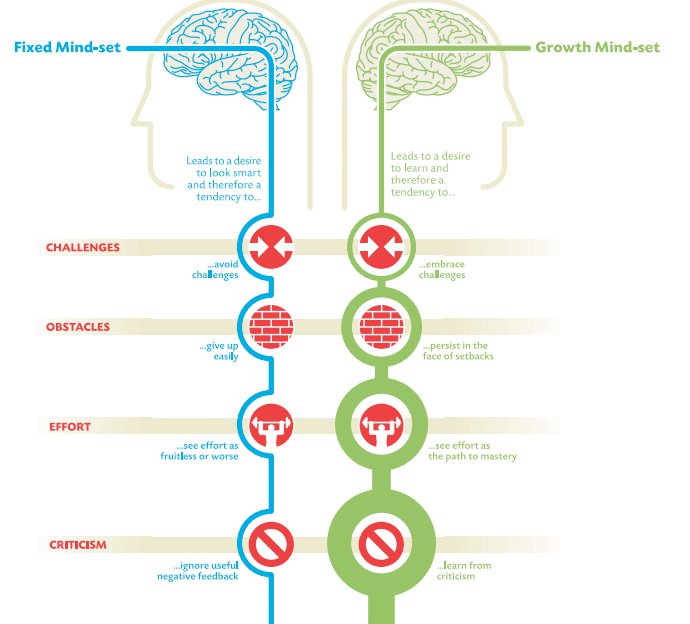
Psychologist Carol Dweck has spent her entire career studying attitude and performance, and her latest study shows that your attitude is a better predictor of your success than your IQ.Dweck found that people’s core attitudes fall into one of two categories: a fixed mindset or a growth mindset.

Free- Direction Rail Tracks

With a fixed mindset, you believe you are who you are and you cannot change. This creates problems when you’re challenged because anything that appears to be more than you can handle is bound to make you feel hopeless and overwhelmed.

People with a growth mindset believe that they can improve with effort. They outperform those with a fixed mindset, even when they have a lower IQ, because they embrace challenges, treating them as opportunities to learn something new.

Common sense would suggest that having ability, like being smart, inspires confidence. It does, but only while the going is easy. The deciding factor in life is how you handle setbacks and challenges. People with a growth mindset welcome setbacks with open arms.

According to Dweck, success in life is all about how you deal with failure. She describes the approach to failure of people with the growth mindset this way,

“Failure is information—we label it failure, but it’s more like, ‘This didn’t work, and I’m a problem solver, so I’ll try something else.’”

Regardless of which side of the chart you fall on, you can make changes and develop a growth mindset. What follows are some strategies that will fine-tune your mindset and help you make certain it’s as growth oriented as possible.

Don’t stay helpless. We all hit moments when we feel helpless. The test is how we react to that feeling. We can either learn from it and move forward or let it drag us down. There are countless successful people who would have never made it if they had succumbed to feelings of helplessness: Walt Disney was fired from the Kansas City Star because he “lacked imagination and had no good ideas,” Oprah Winfrey was fired from her job as a TV anchor in Baltimore for being “too emotionally invested in her stories,” Henry Ford had two failed car companies prior to succeeding with Ford, and Steven Spielberg was rejected by USC’s Cinematic Arts School multiple times. Imagine what would have happened if any of these people had a fixed mindset. They would have succumbed to the rejection and given up hope. People with a growth mindset don’t feel helpless because they know that in order to be successful, you need to be willing to fail hard and then bounce right back.


Like this Article ?  Share It !    You now can easily enjoy/follow/share Today our Award Winning Articles/Blogs with Now Over 800K+ Growing  Participates Worldwide in our various Social Media formats below:

FSC LinkedIn Network: (Over 10K+ Members & Growing !)   www.linkedin.com/in/frankfsc/en

Facebook:   http://www.facebook.com/pages/First-Sun-Consulting-LLC-Outplacement-Services/213542315355343?sk=wall

  • Google+: https://plus.google.com/115673713231115398101/posts?hl=en
  • Twitter: Follow us @ firstsunllc

educate/collaborate/network….Look forward to your Participation !

Continue of article:

Be passionate. Empowered people pursue their passions relentlessly. There’s always going to be someone who’s more naturally talented than you are, but what you lack in talent, you can make up for in passion. Empowered people’s passion is what drives their unrelenting pursuit of excellence. Warren Buffet recommends finding your truest passions using, what he calls, the 5/25 technique: Write down the 25 things that you care about the most. Then, cross out the bottom 20. The remaining 5 are your true passions. Everything else is merely a distraction.

Take action. It’s not that people with a growth mindset are able to overcome their fears because they are braver than the rest of us; it’s just that they know fear and anxiety are paralyzing emotions and that the best way to overcome this paralysis is to take action. People with a growth mindset are empowered, and empowered people know that there’s no such thing as a truly perfect moment to move forward. So why wait for one? Taking action turns all your worry and concern about failure into positive, focused energy.

Then go the extra mile (or two). Empowered people give it their all, even on their worst days. They’re always pushing themselves to go the extra mile. One of Bruce Lee’s pupils ran three miles every day with him. One day, they were about to hit the three-mile mark when Bruce said, “Let’s do two more.” His pupil was tired and said, “I’ll die if I run two more.” Bruce’s response? “Then do it.” His pupil became so angry that he finished the full five miles. Exhausted and furious, he confronted Bruce about his comment, and Bruce explained it this way: “Quit and you might as well be dead. If you always put limits on what you can do, physical or anything else, it’ll spread over into the rest of your life. It’ll spread into your work, into your morality, into your entire being. There are no limits. There are plateaus, but you must not stay there; you must go beyond them. If it kills you, it kills you. A man must constantly exceed his level.”

If you aren’t getting a little bit better each day, then you’re most likely getting a little worse—and what kind of life is that?

Expect results. People with a growth mindset know that they’re going to fail from time to time, but they never let that keep them from expecting results. Expecting results keeps you motivated and feeds the cycle of empowerment. After all, if you don’t think you’re going to succeed, then why bother?

Be flexible. Everyone encounters unanticipated adversity. People with anempowered, growth-oriented mindset embrace adversity as a means for improvement, as opposed to something that holds them back. When an unexpected situation challenges an empowered person, they flex until they get results.

Don’t complain when things don’t go your way. Complaining is an obvious sign of a fixed mindset. A growth mindset looks for opportunity in everything, so there’s no room for complaints.

Bringing It All Together

By keeping track of how you respond to the little things, you can work every day to keep yourself on the right side of the chart above.

Do you have a growth mindset? Please share your thoughts in the comments section below as I learn just as much from you as you do from me.


Forbes.com | January 19, 2016 | Travis Bradberry


https://www.firstsun.com/wp-content/uploads/2018/05/logo-min-300x123.jpg 0 0 First Sun Team https://www.firstsun.com/wp-content/uploads/2018/05/logo-min-300x123.jpg First Sun Team2016-01-19 21:07:222020-09-30 20:54:10#Leadership : Why Attitude Is More Important Than IQ. Which Side of the Chart you Fall on?…By Keeping Track of How you Respond to the Little Things, You can Work every Day to Keep Yourself on the Right Side of the Chart.

Your #Career : 4 Mistakes That Are Sabotaging Your Work-Life Balance…Do you Practically Live at Work? Better question: Do you Constantly Think about your Work away from Work (i.e. home, vacations, family gathering, etc.) ?

January 17, 2016/in First Sun Blog/by First Sun Team

Achieving a healthy balance between work and your personal life is possible, but it can be difficult. If you want to overcome those difficulties, you’ll have to make an effort to put an end to some of your bad habits. It’s possible you could be standing in your own way.

Free- Lock on Fence

Here are four behaviors you must change if you want to create symmetry between your work and personal life.

1. Not using your vacation days

Failing to use vacation time will leave you stressed out, overwhelmed, and more likely to make mistakes on the job. While you may be concerned about returning to a pile of work, you need time to recharge. Research published by Project Time Off found that employees are also hesitant to take vacation because they fear they will be seen as replaceable. Furthermore, employees are leaving vacation days on the table in response to concerns they will be seen as less dedicated to their company.

 However, the results of giving in to these fears and concerns can have negative effects on your overall well-being. Studies have found that overwork can make you sick. If you want to have a more balanced life, it will be important for you to get away from the office from time to time. You’ll be happier, healthier, and have more energy to enjoy life.

Like this Article ?  Share It !    You now can easily enjoy/follow/share Today our Award Winning Articles/Blogs with Now Over 800K+ Growing  Participates Worldwide in our various Social Media formats below:

FSC LinkedIn Network: (Over 10K+ Members & Growing !)   www.linkedin.com/in/frankfsc/en

Facebook:   http://www.facebook.com/pages/First-Sun-Consulting-LLC-Outplacement-Services/213542315355343?sk=wall

  • Google+: https://plus.google.com/115673713231115398101/posts?hl=en
  • Twitter: Follow us @ firstsunllc

educate/collaborate/network….Look forward to your Participation !

Continue of article:

2. Relying too heavily on technology

Technology is a great way to stay on top of your work and communicate with co-workers, but it can rob you of sleep and productivity. Between answering emails all day and constantly checking your mobile phone for updates, it can be hard to get quality down time or rest. A Bank of America trends report found that 71% of respondents sleep with their smartphones and about 23% fall asleep with their devices still in their hand. Set aside some time each day where you abandon all the tech in your life. Resisting the impulse to stay connected 24 hours a day will help you have more peace of mind.

3. Saying ‘yes’ when you should be saying ‘no’

You don’t have to accept every special project or do every favor that comes your way. It is important to set boundaries so you can avoid spending every waking moment at work. While being a team player is great, you also have to recognize when you are being stretched too thin.

“Keep in mind that being overloaded is individual. Just because your co-worker can juggle 10 committees with seeming ease doesn’t mean you should be able to. Only you can know what’s too much for you,” said the Mayo Clinic.


4. Not planning ahead

Your work will start to melt into your personal life if you don’t engage in proper planning. One way to achieve some sense of balance is to draft a to-do list. This list will keep you on track and help you make room for things outside of work.

“At its most basic form, planning is nothing more than figuring out how you will get from one place to another. Every day people plan: people make a list of things to buy at the grocery store, workers determine the best route to travel to and from work each day, and we plan out how to finance that new car,” said management expert John R. Knotts.

Follow Sheiresa on Twitter and Facebook.


 CheatSheet.com | January 2016 |  Sheiresa Ngo

https://www.firstsun.com/wp-content/uploads/2018/05/logo-min-300x123.jpg 0 0 First Sun Team https://www.firstsun.com/wp-content/uploads/2018/05/logo-min-300x123.jpg First Sun Team2016-01-17 15:33:122020-09-30 20:54:11Your #Career : 4 Mistakes That Are Sabotaging Your Work-Life Balance…Do you Practically Live at Work? Better question: Do you Constantly Think about your Work away from Work (i.e. home, vacations, family gathering, etc.) ?

Your #Career : How Winning Professionals Manage The Three Eras Of Their Careers…How Winning Professionals Manage their Careers through Lifetime Eras—Early, Mid, & Later Career, or Roughly Speaking, in your 20s, 30s, & then 40s & Beyond.”

January 16, 2016/in First Sun Blog/by First Sun Team

If you cut your finger, reach for a Band-Aid. Wake up with a headache, grab two aspirins. But quick remedies aren’t a regime for managing overall health. Nor for managing a career. You can power pose like Wonder Woman to boost your self-confidence, or  tweak your mornings to be more productive. Helpful stuff, but not the same as a conscious, long-term plan to develop professionally over a lifetime.

Free- Bridge in Fog

OK, how to think about that?

I recently put that question to Kathy Gallo, Founder and Managing Partner of theGoodstone Group. Kathy has developed business professionals for some twenty years, and now oversees a global network of 65 professionals who coach leaders at all levels, in companies ranging from start-ups to Fortune 50 corporations. She answered with an eager smile.

Learning From Patterns

“Well, we shouldn’t paint with too broad a brush. Everyone must build their own plan over time. But you can learn from patterns, for example how winning professionals manage their careers through lifetime eras—early, mid, and later career, or roughly speaking, in your 20s, 30s, and then 40s and beyond.”

Gallo began with a few cross-cutting themes. “Throughout a career, three leadership competencies are always a focus: problem-solving, executional capabilities, and people skills, especially “emotional intelligence” (leaders’ ability to read other people and connect it with what’s inside their own head and heart.) Then context—being aware of your organization’s culture; and changing it for the better when you can. Great performers work on all of these in every era.”


Like this Article ?  Share It !    You now can easily enjoy/follow/share Today our Award Winning Articles/Blogs with Now Over 800K+ Growing  Participates Worldwide in our various Social Media formats below:

FSC LinkedIn Network: (Over 10K+ Members & Growing !)   www.linkedin.com/in/frankfsc/en

Facebook:   http://www.facebook.com/pages/First-Sun-Consulting-LLC-Outplacement-Services/213542315355343?sk=wall

  • Google+: https://plus.google.com/115673713231115398101/posts?hl=en
  • Twitter: Follow us @ firstsunllc

educate/collaborate/network….Look forward to your Participation !

Continue of article:

Because It’s Different Today

Listening to this prologue, I had a whiff of Mom’s apple pie, and asked: Is professional development really different today? The Goodstone Managing Partner pushed back. “Yeah, it is. The best jobs are much more competitive—twenty top-qualified people are going for every good position. And candidates are already well-coached—it’s how they excelled in college admissions, sports, music lessons. The most successful are now constantly improving themselves in a fiercely intentional way.”

So how does the game change as you move through the three eras?

Kathy described the classic matrix pairing consciousness and competence. “The best competitors co-develop self-knowledge and capabilities. At each step they are working to understand more about themselves and their goals, and the skills and knowledge needed to get there.”

Your 20s: Building Baseline Awareness And Competence

“Imagine a child first learning to walk,” she continued. “Not only does she not know how to tie a shoe, she doesn’t understand that shoes need to be tied. In your early jobs, you’re both learning what success in a would-be career is going to take, and then assessing your assets and gaps against that. The average performer bumbles along, trial-and-error. The top professionals are much more intentional.”

Kathy elaborated. “The rising stars relentlessly clarify expectations for winning. They are metrics-oriented, and constantly seek feedback, from supervisors, other colleagues, even clients. They develop a picture of success, then go after it. They ask, ‘if I want to head a sales division, what do l I need to do?’”

Are You Ready To Hear The Feedback?

But it’s not as simple as it sounds, she added. “Most organizations are not very good at giving feedback— timely, critical, actionable—which is what you need to raise your personal performance. In most cultures you have to work hard to get that kind of feedback. Women and multicultural talent usually have to work even harder for it.”

She offered a further warning. “Younger professionals often don’t want to hear the answer if it’s negative. They aren’t emotionally ready to hear anything less than ‘awesome.’” So success in your early career depends on learning both to seek and take feedback. And then building the discipline to act and improve upon what you learn.”

Gallo then noted the importance of recruiting sponsors, informal or otherwise. “As you start to grow, you need some“As you start to grow one with power and credibility in the organization who can advocate for you—to get you staffed on the right projects. As with getting feedback, this is particularly critical and often more difficult for young women and multicultural professionals.”

But even enlisting support has its pitfalls. “Millennials are so social-media-wired, they’re always reaching out for help and suggestions. But they can lack discrimination—they don’t realize that some sources aren’t as reliable as others. Or that friends may not be totally candid. It’s a big issue for young CEOs. They buttress their managerial inexperience with all sorts of advisers. But they aren’t critical enough in choosing or using them. Great professional development in your twenties depends on learning how to judge and leverage the right people.”

Your 30s: Rounding Out Your Skill Set

Kathy continued the metaphor of the newly walking child. “So in the next era you know how to put on your shoes, you can loop the laces and tie them on your own. Now you want to get good at it, so it becomes automatic.”

“In your middle career,” she went on to explain, “you’re now established in at least one of the three leadership competences; and you’re clearer about aspirations and what it will take to get there. You develop plans to better leverage your strengths, and also address your particular short-comings.”

I pressed this coach for the real headline.

“For most people,” Kathy continued, “this middle phase means strengthening EQ. Typically they’re getting their first 360 evaluations. And they’re shocked to learn that maybe they have a reputation for being difficult, uncaring, or communicating poorly. It can be a real wake-up call—but the winners hear it and work on the problems.”

It’s also in this middle era that the best professionals start to look beyond themselves. As Gallo explained, “Even if people work on their EQ, progress can be limited by the culture of the organization. Some companies don’t care if you run over people to get results.”

So what then?

Kathy continued: “Losers are complainers. Winners face reality. You don’t have to be a jerk to succeed, but you do need to understand the cultural context. Sometimes that means getting better at playing the game (authenticity can be over-rated!); or better yet, changing the culture by bringing in more like-minded people. If necessary, they’re willing to leave for another company more suited to their values.”

Your 40s (And Beyond): Impact And Still More Self-Knowledge

Great maturing professionals don’t sit back and smell the roses—they continue the self-improvement that’s by now second nature. They seek out new assignments, different experiences, and look for innovative ways to “sharpen their saws.”

But, Gallo cautioned, they now face a different set of challenges. “Accomplished leaders are under more pressure to create impact; they have to project a certain gravitas, inspire talent, excite and align stakeholders, as never before. It’s a world of maximum transparency and like it or not, leaders today must have some level of charisma. And not just CEOs—everyone on their way to the top too.”

I asked the enduring question—can charisma be learned?

“Yes, up to a point,” she offered. “You can do a lot by working on public speaking, posture and style. But charisma can mean different things. The real strategy comes down to finding and developing the right version that suits who you are. If you’re more introverted or analytical, for example, you can get better in projecting confidence and impressing stakeholders with your expertise; or learning to speak more openly and firmly about yourself. If you’re an internal candidate for a top job, you can seek out a particularly difficult assignment, to show your courage and skill for tackling a big problem. That’s worth more to a board search committee than ‘flashy showmanship.’”

The Potentially Isolated Leader

Kathy continued with a final warning. “Another challenge for senior professionals is difficult and even dangerous. Successful leaders can become isolated without knowing it. People shy away from disagreeing with them, or won’t ‘speak truth to power.’  So suddenly these leaders are back to where they started twenty-five years before: they’re ‘unconsciously incompetent’, they no longer know what they don’t know—and nobody is going to tell them. If the world is changing around them, or they’re creating dysfunction in the organization they lead, they might be totally oblivious. They think everything is fine, when it might be catastrophe. Great leaders force themselves to keep learning, including the hardest of truths about themselves.”

Kathy finished by reflecting on one particularly effective CEO she knows. “He’s at the top of his game, but he won’t let up, even though he realizes more self-knowledge could be pretty painful. I’ll never forget what he confided to me: ‘If I want to be the best possible leader, I have to be willing to travel to the ‘Dark Side’—the part of who I am that I really don’t like. And then commit to improving that too.”


Forbes.com | January 16, 2016 | Brook Manville

https://www.firstsun.com/wp-content/uploads/2018/05/logo-min-300x123.jpg 0 0 First Sun Team https://www.firstsun.com/wp-content/uploads/2018/05/logo-min-300x123.jpg First Sun Team2016-01-16 13:08:452020-09-30 20:54:11Your #Career : How Winning Professionals Manage The Three Eras Of Their Careers…How Winning Professionals Manage their Careers through Lifetime Eras—Early, Mid, & Later Career, or Roughly Speaking, in your 20s, 30s, & then 40s & Beyond.”

#Strategy : One Thing I Did Last Year That Nearly Doubled My Productivity…Adopting this Schedule has Helped me Become more Efficient, But it wasn’t Necessarily my Output that Saw a Spike this Year; It was More of an Increase in Quality.

January 13, 2016/in First Sun Blog/by First Sun Team

It’s difficult to nail down an effective, efficient workflow. There are many things to take into account – your diet, your environment and immediate surroundings, even the temperature in the room can impact how much, or how little, you’re getting done. We can spend a lot of time studying different strategies and attempting to make everything perfect, but sometimes no matter what we do, we just don’t see the results we’re hoping for in terms of increased productivity and output.

Free- Iphone with Gadgets

Well, last year I added something to my daily routine that helped me increase the quality of my work, function in a more clear-headed way, and ultimately become much more productive: I started working out in the middle of the workday.

The change

I have to begin with the admission that I’m fortunate in that I am able to work remotely, and more or less dictate how, when, and where I do my job. That’s an advantage a lot of people don’t have, so it’s important to mention. I also have access to a gym, 24 hours a day, seven days per week, in my apartment building.

And I must bring up the circumstances under which I added my mid-day workout, and that allowed me to act as an observer as well as participant in seeing how it impacted my workflow. Due to a lingering (but relatively minor) medical issue, I had pretty much given up on serious exercise for a couple of years. After having said issue surgically repaired earlier this year, with ample recovery time, I was able to devise an exercise strategy with the intent of not only getting back into shape, but also seeing how physical activity affected my productivity.

I’m happy to say it’s paid off.

I suspected it would, as science backs up the notion that physical activity is closely associated with improved cognitive ability. When I exercise, I find that my head clears, and I’m able to think with improved clarity. It also opens me up to an influx of ideas – something else that researchers have linked to exercise. But the real trick, I think, was adding the workout into my routine during the middle of the day, rather than in the morning (I would become exhausted earlier), or after work (I would miss out on the boost in cognitive function).


Like this Article ?  Share It !    You now can easily enjoy/follow/share Today our Award Winning Articles/Blogs with Now Over 800K+ Growing  Participates Worldwide in our various Social Media formats below:

FSC LinkedIn Network: (Over 10K+ Members & Growing !)   www.linkedin.com/in/frankfsc/en

Facebook:   http://www.facebook.com/pages/First-Sun-Consulting-LLC-Outplacement-Services/213542315355343?sk=wall

  • Google+: https://plus.google.com/115673713231115398101/posts?hl=en
  • Twitter: Follow us @ firstsunllc

educate/collaborate/network….Look forward to your Participation !

Continue of article:

My routine

I came up with an exercise plan (including both weight lifting and cardio), and set the wheels in motion. It took a while to get the right pieces in place through trial and error, but I finally figured out what worked best for me.

First, I worked out at night. Then I tried going to the gym early in the morning. Finally, I settled into a routine at which I was going at around 11 a.m. or so, which is about five hours after I typically begin my work day (I’ve become a morning person). This, I found, was the ‘sweet spot’.

Essentially, I would (and do) spend the first chunk of my day responding to emails, outlining, and doing other tasks that don’t require my brain to be firing on all cylinders – all while waking up, drinking coffee, and eating my daily breakfast: three eggs, no yolk, on an English muffin. I am able to get the lion’s share of my work done this way, and leave the ‘surgical strikes’, or things that require some serious critical thought, for the post-workout period.

This is reminiscent of the time management hacks brought up in Tim Ferriss’ book The Four Hour Workweek, in so much that I was basically minimizing the time I was really ‘working hard’ throughout the day. It’s not an exacttranslation, but a similar principle for those of you familiar with the book.

I then head to the gym around the middle of the day, laptop in hand. I continue to work from the gym, finish up, head back, eat, drink, shower, and then tackle the tasks I had been putting off. That’s my workflow, in a nutshell.

The results

Adopting this schedule has helped me become more efficient, but it wasn’t necessarily my output that saw a spike this year; it was more of an increase in quality. In fact, if I look back at the amount of work I was doing last year, I’m probably doing less. But I’m getting more bang for my buck. I’ve merely found a way to get the most out of the hours I am spending on the clock.

The difference has really been in quality. I’ve made fewer mistakes, and have been able to work more efficiently, think with more clarity, and even be more assertive and confident. The big difference has been in the intangibles, which can be hard to describe or measure – but I’m able to better get in ‘the zone’, for lack of a better term.

This was a big change, and it’s not something that everyone is going to be able to incorporate into their daily routine, unfortunately. And it was coupled with changes to my diet and sleeping patterns as well. But once I was able to nail it down, I’m reaping the benefits.

Will it work for you? The science suggests it should. But then again, everyone is different. Either way, if you’re looking to boost your productivity, try giving your routine a shakeup, or adding exercise if you aren’t already.

Follow Sam on Facebook and Twitter @SliceOfGinger


CheatSheet.com | January 12, 2016 | Sam Becker

https://www.firstsun.com/wp-content/uploads/2018/05/logo-min-300x123.jpg 0 0 First Sun Team https://www.firstsun.com/wp-content/uploads/2018/05/logo-min-300x123.jpg First Sun Team2016-01-13 21:18:532020-09-30 20:54:12#Strategy : One Thing I Did Last Year That Nearly Doubled My Productivity…Adopting this Schedule has Helped me Become more Efficient, But it wasn’t Necessarily my Output that Saw a Spike this Year; It was More of an Increase in Quality.

Your #Career : New Year, New Strategy, New Job…So the Good News for Job Seekers is that Many People are Looking & Planning to Leave their Current Positions, which in Turn Creates Turnover

January 13, 2016/in First Sun Blog/by First Sun Team

Whether you are thinking about finding a new job or contemplating a career shift to another field, the start of a new year is actually a good time to embark upon your search. Making a career change ranks high on many people’s list of New Year’s resolutions. A large spike in people searching on-line job boards, reaching out to contacts on various social platforms, and applying for new positions has marked the first week in January during the last three years.

Free- Lock in Door

So the good news for job seekers is that many people are looking and planning to leave their current positions, which in turn creates turnover and an enormous number of openings. The number of people leaving their jobs voluntarily in the U.S. has been increasing steadily. Once the impact of these resignations is felt, many companies will be searching for new talent to fill these vacant slots and it is expected to create a very robust job market in a wide range of industries.

There is also a sense that this year, more young and mid-level professionals will be looking for the “next” job or making a change, faster than previous generations. As Millennials are now the largest generation represented in the work-place, there is a great deal of evidence to suggest that Gen Y professionals get “job restless” quickly, especially if they feel under-valued, perceive that they don’t have enough visibility, and don’t feel that they are challenged and are learning enough from their current employer. Quite frankly, even if they are happy and like the people they work with, Millennials are often seeking to make a change because they have FOMO (fear of missing out) more than any other generation in history.

Like this Article ?  Share It !    You now can easily enjoy/follow/share Today our Award Winning Articles/Blogs with Now Over 800K+ Growing  Participates Worldwide in our various Social Media formats below:

FSC LinkedIn Network: (Over 10K+ Members & Growing !)   www.linkedin.com/in/frankfsc/en

Facebook:   http://www.facebook.com/pages/First-Sun-Consulting-LLC-Outplacement-Services/213542315355343?sk=wall

  • Google+: https://plus.google.com/115673713231115398101/posts?hl=en
  • Twitter: Follow us @ firstsunllc

educate/collaborate/network….Look forward to your Participation !

Continue of article:

Whether you are part of this demographic or not, all of this means an extremely positive outlook for would-be job seekers. So now that the conditions are positive for your job search, how do you make it happen? What will it really take? Here are some tips that should help you land a great new job in the New Year: 

  1. First, even though there are positive conditions for job seekers, don’t be over confident and make the mistake of under preparing or under estimating the amount of time and energy a true job search takes.
  2. Do your research when you are applying for jobs and demonstrate a real interest and knowledge of the employer. Elevate this to an even higher level of preparation for an interview. Recruiters are completely turned off when you don’t even know what the company does.
  3. Make sure that you have “good job search habits”. What I mean by this is that you should view your search as a job that you literally get up for each day of the week, get dressed and get to work. You set goals for the day of applying for positions that aren’t random, but you are truly interested in and qualified for and you keep a record of these and dates to follow up. You reach out to a number of contacts in your network and set up as many calls and “coffees” as possible.
  4. If you haven’t already, establish an email account that is professional and can handle large files. If you have been using your nickname @ AOL AOL +%, it’s time to set up a Gmail or similar large email account with your real name.
  5. Make sure you name your resume with your actual name, not “my resume”. You would be shocked at how many job seekers don’t do this and then wonder why they never hear back on a job they seem qualified for. It’s often because recruiters can’t find them.
  6. Master social. Utilize social media in strategic ways. Find companies and organizations that you are interested in and follow them on Twitter TWTR +0.00% andLinkedIn LNKD +0.00% and comment appropriately. Look out for tweets or job announcements and follow up.
  7. Utilize your college/university connections. The career center, alumni relations, and LinkedIn university pages are fantastic ways to find alumni from your Alma Mater who may be working in companies or industries that you are interested in. They can often offer advice and support as well as help connect you to additional opportunities.
  8. Speaking of networking, do it in person as well as online. Getting in front of people and being able to articulate what you are interested in, and a little about your background in a short amount of time (60-90 seconds), is an important “pitch” strategy to develop.
  9. Always be ready. Whether it’s a phone call, text, or other communication. In other words don’t pick up the phone if you are half asleep or at some loud social gathering. Rather, let the call go to your professional voice mailbox and then call the recruiter back when you have had a cup a coffee and are in a quiet area with strong cell phone reception.
  10. Keep up your energy, determination, and positive attitude. Job searching can be a very humbling experience, but no one wants to hire someone who appears frustrated and desperate.  Demonstrating your genuine interest and enthusiasm are key. Exercise, get plenty of sleep and talk to friends and job search professionals to get encouragement, vent and keep up your spirits.Depending on what positions and organizations you are applying for, your geographic location, and your flexibility, job searches can take a while. The good news is that there is a great deal of movement and opportunity on the horizon, and if you follow these tips, you can land that great new job in 2016.

    Forbes.com | January 13, 2016 | Trudy Steinfeld @nyuwasserboss

https://www.firstsun.com/wp-content/uploads/2018/05/logo-min-300x123.jpg 0 0 First Sun Team https://www.firstsun.com/wp-content/uploads/2018/05/logo-min-300x123.jpg First Sun Team2016-01-13 14:55:072020-09-30 20:54:12Your #Career : New Year, New Strategy, New Job…So the Good News for Job Seekers is that Many People are Looking & Planning to Leave their Current Positions, which in Turn Creates Turnover
Page 183 of 235«‹181182183184185›»

Blog Search

Login/Register

  • Log in
  • Entries feed
  • Comments feed
  • WordPress.org

FSC Career Videos

  • Job Search Techniques | Start Here
  • Resume/Cover Letter
  • Interviewing
  • Additional Career Videos
  • FSC Career Blog – #1 Career Library LinkedIn

Recent Posts

  • #Resume : How To Start A Resume To Secure Interviews For $100,000+ Jobs. A MUst REad! March 12, 2026
  • #JobOpenings : 3 Fully Remote Jobs Just Doubled Hiring And Pay Up To $100,000+. Curious About Which Roles have Doubled in Remote Hiring?  Great Read! March 10, 2026
  • #YourCareer : AI Won’t Decide Your Career. Your Habits Will. Four AI Practices Worth Considering Now! MUst REad! February 24, 2026
© Copyright - First Sun Consultation - Website Maintained by BsnTech Networks - Enfold WordPress Theme by Kriesi
Scroll to top