Posts

#Leadership : How to Manage Your Team’s Calendar During the Holidays

The end of the last quarter is a time of rest for many, but founders and their teams keep working hard to set up their companies for success in the new year. Just because the grind never stops, however, does not mean that founders should take their teams for granted. But there are ways to manage your team’s calendar during the holidays.

[fusion_builder_container hundred_percent=”yes” overflow=”visible”][fusion_builder_row][fusion_builder_column type=”1_1″ background_position=”left top” background_color=”” border_size=”” border_color=”” border_style=”solid” spacing=”yes” background_image=”” background_repeat=”no-repeat” padding=”” margin_top=”0px” margin_bottom=”0px” class=”” id=”” animation_type=”” animation_speed=”0.3″ animation_direction=”left” hide_on_mobile=”no” center_content=”no” min_height=”none”]

The Team here at FSC LinkedIn Network would like to wish you/yours a Wonderful Christmas & a Happy, Healthy, & Prosperous 2019!  Our best to you, www.firstsun.com 

My companies are closing for 10 full days during the holiday season. I want our employees to know that we recognize their value and respect them enough to provide a manageable work-life balance.

We aren’t closing shop for 10 days without proper preparation, of course. Until those 10 days arrive, our teams from top to bottom are working tirelessly to ensure that we won’t leave anything unfinished. Our break will be much more enjoyable with the knowledge that we did everything necessary before closing shop for the season.

Managing a team’s calendar during the holidays is a delicate task. Some people want to work more in a quiet office, while others want to take long breaks. The key to managing a holiday calendar is to treat employees with respect without compromising on the company’s goals in the bargain.

Related: The Best Founders Are Already Planning How to Thank Their People During the Holiday Season

Follow these scheduling tips to manage a team through the turmoil of the holiday season:

1. Understand what they want.

Rather than announce the office will close for two weeks without discussing it with anyone, talk to people about what they would like to do for the holidays. Some teams would prefer to grind it out for a few weeks to earn a long break, like we’re doing, but others would rather take it slow. Keep in mind that not all employees celebrate the same holidays.

Employees respond better to leaders who involve them in the decision-making process. Involve them, but don’t let them run the show on their own. Paula Santonocito of Recruiting Daily Advisorargues that, while employee involvement can provide a sense of value and ownership to employees, it can also lead to decision paralysis within the organization.

Find the balance by soliciting employee input then making the call that’s best for the company. Maybe that means going with what the majority wants. Maybe it means allowing people to opt-in to an alternative holiday schedule. Whatever the decision, don’t let one group saddle another with extra responsibilities.

Related: 6 Ways to Keep Employees Engaged During the Holiday Season


Like this Article ?  Share It !    You now can easily enjoy/follow/share Today our Award Winning Articles/Blogs with Now Over 2.5 Million Growing  Participates Worldwide in our various Social Media formats below:

FSC LinkedIn Network:   www.linkedin.com/in/fscnetwork

Facebook:  http://www.facebook.com/pages/First-Sun-Consulting-LLC-Outplacement-Services/213542315355343?sk=wall

Google+:  https://plus.google.com/115673713231115398101/posts?hl=en

Twitter: Follow us @ firstsunllc

Question: Want the ‘the best/current articles/blogs on the web’ on Job Search, Resume, Advancing/Changing your Career, or simply Managing People?

Answer: Simply go to our FSC Career Blog below & type(#career, #leadership, #life) in Blog Search:  https://www.firstsun.com/fsc-career-blog/

What Skill Sets do You have to be ‘Sharpened’ ?

Continue of article:

2. Lean on freelancers to fill the gaps.

Freelancers are always available to help small companies meet goals when internal employees don’t have the capacity. This is especially true during the holidays when entire teams can disappear for days at a time.

Reach out to trusted freelancers early in the month to ask about their capacity. If they have some room on their schedules, talk to teams about their holiday plans to coordinate projects. Keep track of this in a calendar app so that you don’t forget. We get so busy these days that we often don’t message till it’s too late.

Of course you don’t rely on freelancers to do jobs that would be better handled internally. You can take this opportunity to tackle some projects that might not come up during the rest of the year. Work with contractors to come up with creative pieces of content. Trust freelancers with big tasks to learn which ones are dependable, then give them more work during the coming year.

Don’t worry about the potential cost of a freelancer/full-timer mix. Michael Solomon, co-founder of 10x Management, broke down the budget on Huffington Post and found that mixing freelance with full-time is the most cost-efficient management method.

Related: 7 Ways to Manage Employee Holiday Time Off

3. Relax work-from-home policies.

Remote workers are typically more productive than their in-office counterparts, as Harvard Business Review discussed back in 2014. Now that telecommuting tools have gotten even better, that productivity gap is even wider. That goes double for the holidays when office workers take every opportunity to talk about gift recommendations and football.

Encourage employees to work from home whenever necessary during the holiday season. If the company has a rule about needing an excuse, drop that rule (permanently if possible, but definitely for December). When parents don’t have to worry about their kids’ school schedules and travelers are free to work from the road, companies reap the benefits of anytime, anywhere productivity. It also cuts down on all of the extra office-holiday-chatter that is a huge time-suck.

Maintain a semblance of order by clearly communicating expectations and reminding employees of work-from-home guidelines. People still need to attend important meetings and meet productivity goals at the end of the year. Treat people with respect and assume they want to do good work. If the team is a good one, it will reward that faith many times over.

The holidays are almost here, so don’t delay. Work with teams to create a schedule (scheduling beats hustling) that works for everyone, set expectations and treat employees with the respect they deserve. When the holidays end, return to work refreshed and ready to tackle the new year.

Entrepreneur.com | December 11, 2018 | John Rampton VIP CONTRIBUTOR

[/fusion_builder_column][/fusion_builder_row][/fusion_builder_container]

#Leadership : #EmployeeRetention – Plan your New Hire’s Next Job from the Moment they Start… Here’s how Here are Three Ways to Start Preparing your #TeamMembers for New and Different Roles Inside the Company (before they find other opportunities outside it).

Remember when staying in a job for less than a few years was considered a stain on your resume? That’s no longer the case. By one recent estimate, the average length of time people now spend in a given role is just a little over two years among workers ages 25–39. And who can blame them?

Baseless millennial stereotypes notwithstanding, it’s people earlier in their careers who tend to fill lower-level positions, which typically involve at least a few unexciting tasks. I’ve noticed entry-level employees at my own company getting anxious to take the next step in their careers even sooner than they’d used to. Many of our sales reps now start eyeing their next internal moves after just six to eight months.

So lately I’ve had to think creatively about ways to keep new hires engaged while extending their professional lives inside the company. Here are a few methods we’ve come up with.

BREAK ROLES INTO TIERS

The most employee movement we see here at Vidyard is in our sales department. As with a lot of front-line jobs, it’s hard to keep this area dynamic because sales isn’t necessarily a role where you can rotate people through varied projects, like we do with our developers. So instead we’ve introduced tiers to certain sales positions, transparent step-ups that come with added responsibilities and pay. Importantly, these aren’t promotions out of a role that somebody has only started to master. Rather, we’re building discrete new functions into that role.

A higher-level tier might include new responsibilities like mentoring newer hires, taking on bigger accounts, or shadowing more senior team members. Yet each new level comes with commensurate pay increases to reflect the advancement.

Having clear tiers for sales jobs lets our new hires see from the outset that they’re never “stuck” in an entry-level role, and it shows them exactly what they need to do to make it to the next level. They get the support and encouragement to add to their skill sets while also getting better at selling–the critical function they were hired for. For now, we’ve limited this “slice-and-dice” approach to sales, where there are clear, repeatable duties. But it’s not hard to see how it could be useful elsewhere.

Like this Article ?  Share It !    You now can easily enjoy/follow/share Today our Award Winning Articles/Blogs with Now Over 2.5 Million Growing  Participates Worldwide in our various Social Media formats below:

FSC LinkedIn Network:   www.linkedin.com/in/fscnetwork

Facebook:  http://www.facebook.com/pages/First-Sun-Consulting-LLC-Outplacement-Services/213542315355343?sk=wall

Google+:  https://plus.google.com/115673713231115398101/posts?hl=en

Twitter: Follow us @ firstsunllc

Question: Want the ‘the best/current articles/blogs on the web’ on Job Search, Resume, Advancing/Changing your Career, or simply Managing People?

Answer: Simply go to our FSC Career Blog below & type(#career, #leadership, #life) in Blog Search:  https://www.firstsun.com/fsc-career-blog/

What Skill Sets do You have to be ‘Sharpened’ ?

Continue of article:

ASK AMBITIOUS EMPLOYEES TO SELF-ASSESS

As any manager knows, dealing with an employee who’s pushing for a promotion before they’re ready can be a tricky (and common) situation. The challenge is to be realistic without dismissing their desire to advance. Simply telling someone they’ll have to stay put will only breed resentment and accelerate a move–likely outside your company.

So we’ve tried to develop what I think of as a readiness pulse-check. Flip the tables and give eager team members a chance to assess their own readiness for a promotion (or lack thereof). A little while ago, one new hire joined Vidyard as a “concierge,” helping direct customer inquiries to the right place, but his heart was set on getting into sales. When he pleaded with me after just a couple months to make the move, I assigned him some homework: I asked him to spend some time with other leaders in the company to learn exactly what his dream job entailed.

He soon realized he still had some work to do, but he now knew exactly which skills and qualifications he’d need to move forward. Within little more than a year, he successfully made the switch and has continued to move up the ranks. In fact, using this same approach, he went on to segue into a product manager role, where he’s in charge of bringing our tools from ideation to market.

Putting the onus on your ambitious employees to figure out whether they’re truly ready for the next step is a great way to give them some control over their career paths. Some may resent the perceived roadblock. But those that rise to the occasion will be doubly dedicated to their jobs, and double their value to you by learning more about how the company works.

EXPERIMENT WITH SWAPS AND LOANS

Indeed, sometimes the best ways to keep team members happy is to encourage internal mobility across functional areas. Jumping to a new role or department can revitalize enthusiasm and preserve institutional know-how while also busting up silos.

We recently began experimenting with a loaner program to let employees cross departmental lines in their work, something that other tech companies have been doing for years. Right now, our initiative is admittedly small and operating on a four-month trial, but I’m excited to see where it leads in the future. Other times a change of scenery is all it takes to renew someone’s enthusiasm for their job. We have a satellite office in another city on the West Coast, and we’ve had a few team members request to make the move. While this doesn’t always entail a change in job description, the shift in setting is often a welcome change, with the added benefit of strengthening our company culture through cross-pollination between offices.

In my opinion, keeping a good employee for many years is important; it’s the goal of every great leader I know. The key is to creating a climate where people hungry to amass new skills can genuinely see a path forward. In the end, a stifled, inflexible workplace only leads to the exodus of your best and brightest. The earlier you start thinking about where your newest hires might be headed, the sooner you’ll start seeing them maximize their potential and make your organization stronger–no matter how long they’re there.

ABOUT THE AUTHOR

Michael Litt is cofounder and CEO of the video marketing platform Vidyard. Follow him on Twitter at @michaellitt.

 More


FastCompany.com | July 20, 2018

#CareerAdvice : #JobSearch -The Best #JobSearchAdvice from Top CEOs at GM, 23andMe, Hilton & More… Best of FSC Blog! Great Read.

There’s no doubt about it: the job search is tough. You have to spend time and energy revamping your resume, writing cover letters and practicing for interviews, and even then, you’re not guaranteed a position. The good news, though, is that you get a little bit savvier at every step. With each interview needed to get to the next level, you get better at marketing yourself, communicating confidently and reflecting on your experiences thus far. So by the time you’re at the top of the company ladder, you’re practically an expert at what it takes to get a job.

With this in mind, we chatted with and researched the best job search advice from the Top CEOs of 2018. If your job search strategy hasn’t been working out so far, one of these tips might just do the trick.

1. Find a Mentor

It’s a well-known fact that personal connections are one of the most effective ways to find a job. If you develop a strong relationship with an industry mentor, they’re often able to connect you to people, companies and opportunities that can advance your career. Even if they can’t directly hook you up with a job, though, they can serve as a fantastic reference who can speak to your work ethic and personal character. But make sure you choose the right one, advises Mary Barra, CEO of General Motors.

“There are mentors in the workspace all around you — peers, the seasoned professional, your supervisor, the supervisor one desk over,” Barra said in an interview with the Women@Work podcast. “People often reach out [fusion_builder_container hundred_percent=”yes” overflow=”visible”][fusion_builder_row][fusion_builder_column type=”1_1″ background_position=”left top” background_color=”” border_size=”” border_color=”” border_style=”solid” spacing=”yes” background_image=”” background_repeat=”no-repeat” padding=”” margin_top=”0px” margin_bottom=”0px” class=”” id=”” animation_type=”” animation_speed=”0.3″ animation_direction=”left” hide_on_mobile=”no” center_content=”no” min_height=”none”][to me] saying, ‘Will you be my mentor?’ And I say, ‘Let’s talk about that, because the better person to be your mentor in the organization is someone who sees you every day, someone who knows you at your best, and someone who can give you opportunities to improve.’ So I always redirect them: Find mentors in the people around you who you respect.”

See Open Jobs at GM 

Like this Article ?  Share It !    You now can easily enjoy/follow/share Today our Award Winning Articles/Blogs with Now Over 2.5 Million Growing  Participates Worldwide in our various Social Media formats below:

FSC LinkedIn Network:   www.linkedin.com/in/fscnetwork

Facebook:  http://www.facebook.com/pages/First-Sun-Consulting-LLC-Outplacement-Services/213542315355343?sk=wall

Google+:  https://plus.google.com/115673713231115398101/posts?hl=en

Twitter: Follow us @ firstsunllc

Question: Want the ‘the best/current articles/blogs on the web’ on Job Search, Resume, Advancing/Changing your Career, or simply Managing People?

Answer: Simply go to our FSC Career Blog below & type(#career, #leadership, #life) in Blog Search:  https://www.firstsun.com/fsc-career-blog/

What Skill Sets do You have to be ‘Sharpened’ ?

Continue of article:


2. Try a Little Bit of Everything While You Still Can

When you’re just beginning your career, you might not know for sure what you want to do yet. And really, that’s okay. You don’t have to go looking for your dream job right away. In fact, trying out many different fields can be an asset, believes Anne Wojcicki, CEO of 23andMe. Not only does this make you more marketable in the future — the more skills you have, the more doors open for you — but you’ll also have a better chance of identifying what you really love doing.

“Enjoy the uncertainty and the adventure of figuring out the world and what you want to do. 20-year-olds can get away with adventure and exploration in a way 40+-year-olds can not. So enjoy asking all the questions and trying all the different jobs and realize that each new experience helps shape your views of the world and what you want to do in it,” Wojcicki said in an interview with Glassdoor.

See Open Jobs at 23andMe 

3. Give Lesser-Known Companies a Chance

If you’re only applying to Fortune 500 companies or tech titans, don’t get discouraged when you don’t hear back. The name recognition and prestige of these companies lead to hundreds, thousands or even millions of candidates applying to them — Google, for example, sees about two million applicants each year — so your odds may be better if you explore more under-the-radar companies. You’ll also gain exposure to multiple roles at smaller companies, helping you discover what you enjoy doing and increase your skill stack.

“My suggestion is to visit the websites of the top-tier [venture capital firms] and click through their portfolio companies, and apply to a few that seem especially interesting,” Sanjit Biswas, CEO of Samsara, told Glassdoor. “High-growth tech companies are a great place to accelerate career growth — you’ll get to see decisions up close, and the short feedback loops are some of the best ways to learn what works and what doesn’t.”

See Open Jobs at Samsara 

4. Show You’re a Team Player

It’s hard to think of any job nowadays that doesn’t require some degree of teamwork, and because of this, companies expect candidates to be adept collaborators. Lean into the opportunities you have to work with others at your current job, Hilton CEO Chris Nassetta advises.

“Make sure that you contribute in every way that you can, and really become a team player. Nothing gets done in today’s world without a village, so to speak. While we all make individual contributions, ultimately it’s about how you as a component, particularly as you’re getting started, work with other people,” Nassetta shared with Glassdoor. Employers want to see “ways where obviously you’re contributing and you’re creating significant value, but you’re doing it as a member of a team and not just as an individual contributor.”

Learning to work well with others, and then drawing on these experiences in your cover letter or when answering behavioral interview questions like “Tell me how you handled a difficult situation” or “What are some of your leadership experiences?” can really make you stand out to recruiters.

See Open Jobs at Hilton 

5. Follow Your Passion

You may not end up in your ideal job right away, but when you’re thinking of settling down at a job or company for the long haul, make sure that it’s one you’re passionate about. For one, we spend about a third of our waking lives at work, so it’s worth spending that time doing something you enjoy. But for another reason, you simply tend to be better at what you do when you find a job you’re passionate about.

“My #1 job tip is to look for a job that you want to do. We spend a lot of time at work, and it’s important that we enjoy what we’re doing. We only go around once, and we’ve got to keep that in perspective,” said Bernard J. Tyson, Chairman and CEO of Kaiser Permanente, in an interview with Glassdoor. “Nothing is promised to any of us [at] the end of the day. The key to that is to be in step with the culture of the organization where you work.”

See Open Jobs at Kaiser Permanente 

6. Consider Alternate Paths

Following your passion, though, doesn’t always mean rigidly clinging onto one idea of The Perfect Job — there are often multiple ways to explore the fields you’re most passionate about, Michael Mahoney, CEO of Boston Scientific, explained to Glassdoor.

“I knew from a young age that I wanted to get into healthcare. I was inspired by my grandpa who was a pediatric cardiac surgeon. I grew up admiring how he helped so many children. I remember sneaking into his library when I was a kid. I’d sit in his chair surrounded by all his medical books and dream about being a doctor,” Mahoney shared. “After earning a solid C- in organic chemistry, I elected to change course and approach healthcare a little differently. It was a great lesson for me.”

Rather than pursuing a different field entirely, Mahoney chose to go into the business side of healthcare — and his decision paid off. Today, Mahoney oversees an organization of 29,000 that helps create lifesaving medical devices.

See Open Jobs at Boston Scientific 

7. Do Your Research

We’ve said it before and we’ll say it again: recruiters want informed candidates, the kind of people who look up a company beforehand and gather information on its culture, products, business model and more. Because by researching a company, you don’t just show that you’re knowledgeable about it — you also show that you care about and believe in it.

Brian Halligan, CEO of HubSpot, mentioned in an interview with Glassdoor that his company specifically looks for candidates who have taken it upon themselves to learn about his company and its products.

“One tip I’d give all applicants is to review HubSpot’s culture code before interviewing and to use the software — we give tons of it away for free,” Halligan said.

See Open Jobs at HubSpot 

8. Take Risks

Whether you’re on the fence about applying to a position you’re slightly underqualified for or reaching out to a coworker you haven’t spoken with in years for an informational interview, don’t let a fear of failure hold you back.

“The biggest risk is not taking any risk,” said Facebook CEO Mark Zuckerberg in a 2011 interview. “In a world that’s changing really quickly, the only strategy that is guaranteed to fail is not taking risks.”

Sure, there’s no guarantee that any one particular risk will pay off — but if you keep swinging big, you’re bound to reap the rewards eventually.


GlassDoor.com |  |

[/fusion_builder_column][/fusion_builder_row][/fusion_builder_container]

#CareerAdvice : #SuccessfulLeaders -7 Warning Signs that Your #Career is Stalling…What Got you Here won’t Get you There. After you’ve Achieved #Success , it’s Common to Stagnate. Look Out for These Signs & Turn Things Around.

It’s not unusual to see a leader turn a company around and bring it to success, only to fail at the next challenge. Some call it the sophomore slump, but it’s really a case of, “What got you here won’t get you there,” says John Hillen, coauthor of What Happens Now? Reinvent Yourself as a Leader Before Your Business Outruns You.

“Leaders are often victims of their own success,” says Hillen. “They wanted the change; they put the business plan in place. Then they themselves don’t make parallel plans to change with the organization. That’s why leaders often stall on the other side.”

What it takes to become a successful leader is not what you need to remain a leader. Playing at the higher level requires different skills, capabilities, mind-sets, behaviors, and attitudes. “Most leaders get it intellectually,” says Hillen, executive in residence and professor of practice in the School of Business at George Mason University. “Unfortunately, what they often do is focus energy on tinkering with the organization instead of reinventing themselves.”

Only a small percentage of organizations make deliberate plans to grow their executives alongside their business. As a result, leaders need to take it upon themselves to adapt to the new playing field, or they’re at risk of hitting one of seven career stalls, says Hillen.

1. YOU HAVEN’T RE-ESTABLISHED YOUR PURPOSE

Leaders often fail to establish new purpose and direction once they succeed. “When things change and new people are coming on board, purpose and direction must be modified,” says Hillen. “Leaders often struggle to tell a coherent narrative, and people start making decisions at odds with culture or value.”

A warning sign that you’re hitting the purpose stall is when you think you need to hire an outsider to get to the next level. Break through by holding a story-creation session with people from all levels of the organization, suggests Hillen.

“Ask, ‘What are we about here?’” he says. “Engage teams to rearticulate values and purpose that will be easy to communicate to the ranks and out to multiple stakeholders.”

Like this Article ?  Share It !    You now can easily enjoy/follow/share Today our Award Winning Articles/Blogs with Now Over 2.5 Million Growing  Participates Worldwide in our various Social Media formats below:

FSC LinkedIn Network:   www.linkedin.com/in/fscnetwork

Facebook:  http://www.facebook.com/pages/First-Sun-Consulting-LLC-Outplacement-Services/213542315355343?sk=wall

Google+:  https://plus.google.com/115673713231115398101/posts?hl=en

Twitter: Follow us @ firstsunllc

Question: Want the ‘the best/current articles/blogs on the web’ on Job Search, Resume, Advancing/Changing your Career, or simply Managing People?

Answer: Simply go to our FSC Career Blog below & type(#career, #leadership, #life) in Blog Search:  https://www.firstsun.com/fsc-career-blog/

What Skill Sets do You have to be ‘Sharpened’ ?

Continue of article:

2. YOUR TEAM ISN’T WORKING TOGETHER ON GOALS

After a success, team members can start acting like freelancers, concerned with their own departments and not agreeing on priorities or strategies, says Hillen.

“The single most critical success factor for high-performing teams is having a shared understanding of why the team exists, what it is trying to accomplish, and how it will work together,” he says.

Work through this career stall by holding frequent meetings or off-sites to ensure team alignment, suggests Hillen. “Create team ‘rules of engagement’ and require team members to hold each other (and you) accountable to them,” he says. “Be explicit about the culture that ties the team together.”

3. YOU AREN’T TALKING TO THE RIGHT PEOPLE

Working at a new level can cause leaders to not make good use of their time. If you feel frustrated that people aren’t following your orders, or if you’re too busy to talk to stakeholders, you’re career’s in danger.

Push through by creating a stakeholder management plan, Hillen suggests. “Who will you put on your calendar regularly?” he asks. “What kinds of conversations should you be having with them?” Concentrate on developing a strategic network, allocating time for people who control your future.

4. YOU CAN’T ARTICULATE YOUR VISION AND MOTIVATE PEOPLE

If you can’t seem to energize employees to own the strategy or spring into action to tackle a new initiative, you’re at risk of another career stall. Instead of blaming others for their inability to “get” it, reassess your communication skills and think of yourself as the “chief explaining officer,” says Hillen.

“Whenever possible, make communication two-way; achieve true communication, not mere transmission,” he says. Communicate more than you believe is necessary to ensure sufficient understanding, and change your style of communication to reach different people.

5. YOUR AUTHORITY IS WANING

Once you’ve achieved success, you need to keep performing at a high level to maintain your team’s respect. If you give people direction but they don’t follow through, or you start getting passed over for promotion, you may have hit a career stall.

“Shift your actions and behaviors to come across to followers in a more authentically and emotionally,” he says. “Empathy works, and builds character.”

Accept a position on the board of a nonprofit, for example, take a community leadership role, or be more involved in your industry, Hillen suggests.

6. YOU FEEL EXHAUSTED AND OVERWHELMED

Once you’re operating at a new level, it can be easy to lose sight of your focus. The danger signs of a career stall here are feeling exhausted and overwhelmed, and less energetic and passionate about what you’re doing and its impact, says Hillen.

Decide which tasks to do, which to delegate, and which to drop. “Allocate your time as if you’re going to ‘make history,’” he says. “Enforce, with the help of an accountability partner, rational percentages of time on your calendar to the leadership work that matters most.”

7. YOU’VE ABANDONED LEADERSHIP DEVELOPMENT

A successful leader’s job is to be a leader of leaders, says Hillen. If you’re unsure of your current leadership team and are starting to no longer trust their capabilities, you could be about to hit a career stall.

“Take command of shaping your organization’s leadership-development programs and play a meaningful role in leading them,” he says. “Commit to becoming a coach as well as a boss, and dedicate discrete time for both.”

While every stall is different, every leader will stall at some point, says Hillen. “They might not hit all of them and not all at once,” he says. “When you’re in a meeting where you are the decision maker, but everybody else has more information at hand, you’re at risk. It should be an epiphany that it’s you and your behavior that needs to be changed.”


FastCompany.com | July 9, 2018 | CAREER EVOLUTION

#Leadership : #WorkPlace Evolution- Your #TeamMembers Need To Disagree More. Here’s How To Help Them…You Do Want Everyone to Get on Board with Whatever Decision they Ultimately Reach Together. You just Don’t Want that to Happen Right Away.

The most effective teams have regular, intense debates. The ability to disagree without causing offense is a crucial precondition for good communication and problem-solving. Yet whenever we ask the managers we speak with what they’d prefer–a team that’s almost always harmonious or one that has conflicts and arguments–the vast majority vote for the latter.

Not only is harmony overrated, but it undermines innovative thinking, particularly the kind that diverse work cultures are supposed to generate. Rather than encourage your team members to come to agreements quickly, effective managers do the reverse: They help their teams disagree–productively.

GROUND RULES FOR HEALTHY DEBATE

Teammates want the opportunity to challenge each other. As long as discussions are respectful and everyone gets a chance to contribute equally, most people thrive on this kind of debate, finding it not only intellectually stimulating but also helpful for unearthing the best solutions.

What’s more, teams typically feel more bonded and more effective when they have challenging discussions regularly, trading a wide range of ideas and perspectives. That’s even true when those debates get a little heated. After all, this is the whole point of diversity and inclusion–it’s about bringing in people whose points of view differ in order to spark new ideas and ways of looking at things. But facilitating these conversations takes some ground rules, like these:

  • Treat each other with respect, and challenge the position, not the person.
  • Listen to one another carefully before responding, and ask for clarification if needed. Gather facts; don’t jump to conclusions.
  • Come to the debate ready to present facts and data, not suppositions.
  • Do not compete to “win.” Debates are a chance to find and test the best ideas and to learn, not to score points.
  • After the team makes a decision collaboratively, everyone needs to respect and support it, even if they have their own reservations.

Like this Article ?  Share It !    You now can easily enjoy/follow/share Today our Award Winning Articles/Blogs with Now Over 2.5 Million Growing  Participates Worldwide in our various Social Media formats below:

FSC LinkedIn Network:   www.linkedin.com/in/fscnetwork

Facebook:  http://www.facebook.com/pages/First-Sun-Consulting-LLC-Outplacement-Services/213542315355343?sk=wall

Google+:  https://plus.google.com/115673713231115398101/posts?hl=en

Twitter: Follow us @ firstsunllc

Question: Want the ‘the best/current articles/blogs on the web’ on Job Search, Resume, Advancing/Changing your Career, or simply Managing People?

Answer: Simply go to our FSC Career Blog below & type(#career, #leadership, #life) in Blog Search:  https://www.firstsun.com/fsc-career-blog/

What Skill Sets do You have to be ‘Sharpened’ ?

Continue of article:

SIX QUESTIONS FOR FACILITATING SMART DEBATES

Mark Beck is the CEO of JELD-WEN, a global window and door manufacturer with 20,000 employees. He believes it’s leaders’ jobs to step in and protect people when things get heated–which they sometimes still do, even after laying down solid guidelines.

In some cases, Beck says, he might take the side of a person whose view is under assault, even if he personally doesn’t necessarily agree with it. This isn’t gamesmanship, it’s to show that the person is offering up a reasonable way of thinking that should be respected. “The attacker usually steps back a little and softens their tone when a leader does that,” he told us.

And, Beck adds, managers must take the lead in getting everyone to participate by posing the right questions. Here are six great questions we’ve heard effective team leaders like Beck throw out in debates:

  1. That’s a good thought. Could you walk us through the process you went through to reach that conclusion?
  2. What rules should we be breaking here?
  3. What’s our biggest risk in this, and what’s our fallback position?’
  4. What if we did nothing at all–what would happen then?
  5. Are we missing or forgetting anything?
  6. Aside from earning us a profit, how would this decision change lives and make the world a better place?

Beck said that smart questions can encourage active debate when a team has plateaued or is stuck in a safe zone. At times of such inertia, he’ll tell his direct reports, “The only way you can get your topic on the management-team agenda is to frame it out as a question, and collectively we have to come up with an answer.”

CHANGING THE QUESTION

These six questions aren’t the end-all-be-all, though. Sometimes you need to reframe a question you’ve already asked and revisit it from a new angle.

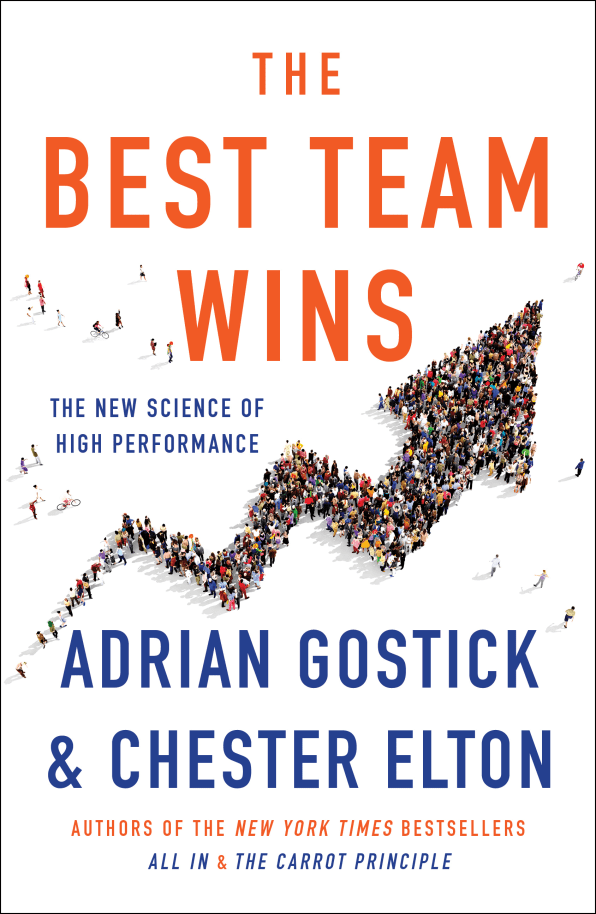
The Best Team Wins: The New Science Of High Performance by Adrian Gostick and Chester Elton

When Beck arrived at JELD-WEN, the company’s focus was on getting ready to issue an initial public offering (IPO). He changed the question to, “How do we get ready to become a Fortune 500 company?” JELD-WEN did wind up issuing a very successful IPO in 2017, “but,” says Beck, “that’s been because we were focused on building a Fortune 500 company,” he said. “If we had just focused on the IPO and seen that as the finish line, I don’t think our story would have resonated with investors in the same way.”

And ironically enough, because his teams stick to respectful ground rules while they disagree, Beck estimates that they’re able to come to a consensus about 99% of the time. “If it’s done right, there’s usually no need for a leader to have to make a decision–it’s become obvious to everyone.”

And from there, Beck says, his job is actually pretty easy: “I might just say, ‘Let me summarize what I think we are all saying’.”


This article is adapted from The Best Team Wins: The New Science of High Performance by Adrian Gostick and Chester Elton. Copyright © 2018 by Gostick & Elton, IP, LLC. Reprinted by permission of Simon & Schuster, Inc.


FastCompany.com | March 5, 2018 | BY ADRIAN GOSTICK AND CHESTER ELTON 4 MINUTE READ