Posts

#CareerAdvice : #Networking -5 Types of Connections you Need in your #LinkedInNetwork .

Having a robust professional network can be a game changer when thinking about your career journey. The people in your network can help make future connections, refer you for a job, provide advice, and so much more. But building a thoughtful–and more importantly, actionable–professional network, can seem daunting. Who should you connect with and why?
Based on our research, the number of connections to kick-start the value of LinkedIn’s network is 30. Once you hit this many connections, you should start to see a more relevant news feed and engagement on your posts and new opportunities start to open up. However, this only works if you connect with people you know, as this ensures the notifications and information coming through are relevant to you.

With that in mind, here are the five types of people we recommend you connect with and nurture a relationship with on LinkedIn.

FRIENDS AND FAMILY MEMBERS

This might seem like overkill to some folks, but it’s important to consider your family members and friends as part of your professional network. Yes, you can probably pick up the phone and give your relatives a call for some professional assistance or call your friend who works at your dream company to help you get your foot in the door.

But, by actually adding your friends and family members to your LinkedIn network you will get insight into their unique professional network that you might not have known about otherwise. Maybe your father-in-law actually knows the hiring manager at that dream company, and he might be the best person to engage with to get your foot in the door. Or, your good friend has an old classmate who is on the career journey you’re aspiring to be on and is happy to connect you two for a coffee meeting. That’s the power of a robust professional network.

Like this Article ?  Share It !    You now can easily enjoy/follow/share Today our Award Winning Articles/Blogs with Now Over 2.5 Million Growing  Participates Worldwide in our various Social Media formats below:

FSC LinkedIn Network:   www.linkedin.com/in/fscnetwork

Facebook:  http://www.facebook.com/pages/First-Sun-Consulting-LLC-Outplacement-Services/213542315355343?sk=wall

Google+:  https://plus.google.com/115673713231115398101/posts?hl=en

Twitter: Follow us @ firstsunllc

Question: Want the ‘the best/current articles/blogs on the web’ on Job Search, Resume, Advancing/Changing your Career, or simply Managing People?

Answer: Simply go to our FSC Career Blog below & type(#career, #leadership, #life) in Blog Search:  https://www.firstsun.com/fsc-career-blog/

What Skill Sets do You have to be ‘Sharpened’ ?

Continue of article:

CLASSMATES OR SCHOOL ALUMNI

Whether you’re currently a student or have recently graduated, connecting with your classmates (present or former) is another great way to build your professional network. Find people you worked with on a group project or studied with for that big final exam you aced. Your classmates are also looking ahead at their career paths, so it’s a good chance to help each other find new opportunities.

CURRENT AND PAST COLLEAGUES

The people we work with are more than just teammates–they help us make it through the day and can also help us get ahead in our careers. We spend the bulk of our day with these folks. In fact, 95% of working professionals think it’s a good idea to have friends at work, and 63% say they have relationships with their coworkers outside the office, according to LinkedIn’s data.

We all spend a lot of time each week interacting with our teams at work. But you can strengthen relationships by liking, commenting on, or even resharing what your teammates are sharing online.

Another benefit of connecting and engaging with your current colleagues on LinkedIn? If someone on your team is leaving the company (or if you are leaving), it will be easier to stay connected for the long-term. With messaging on LinkedIn, it doesn’t matter if contact information changes from job to job, you can always stay connected—which is why it’s also important to connect with your past colleagues. Whether you’ve only had that one summer internship, or you’ve held numerous roles in your career, we recommend connecting with your old colleagues on LinkedIn and staying in touch.

Previous colleagues can serve as a great reference for future job opportunities or can help talk through job challenges with an outside perspective you can trust. This is how you can turn a handful of meaningful relationships at one company into a powerful network of connections all across your industry.

SOCIAL ACQUAINTANCES

It’s important to have a diverse professional network, including people from different backgrounds and working in different industries and roles as you. This might seem like a difficult task since most of the people you interact with might be at your current job or past job (so same industry), but it’s time to think outside of the workplace.

So, you are part of an evening soccer league, a volunteer team, or a local church group? Put these social connections to work in your professional career. The people you meet through these types of organizations are a great addition to your network, since they likely add new perspectives and diversity to your current network.

SOMEONE YOU CAN HELP IN THEIR CAREER

Your professional network shouldn’t just be about adding people who can help you with your career. It’s about both getting and giving help. Make sure you consider accepting invitations or reaching out to people who are looking for career advice you can provide or to open the door for those who might be looking for a new gig.

These should still be people you actually know, such as a former coworker who is earlier in their career journey and might need advice, someone you met at a conference or networking event who is looking to build their career, or even someone you’ve interacted with via Linkedin Groups or InMail. Pay it forward, and pass along the professional goodness you’ve received in your career to date.

These are just a few of the types of connections you should be making on LinkedIn, but this is a great place to start as you build and nurture your professional network. As your career changes direction and evolves, your network is there to help you. The stronger your network, the further everyone goes.

FastCompany.com | June 26, 2019 | BY LIZ LI  4 MINUTE READ
#CareerAdvice : #JobSearch -This is the Easiest Way to Make your #LinkedInProfile Stand Out…One Small Tweak can Make a Big Difference.

Whenever I deliver my LinkedIn workshop, I get a lot of pushback on the following point: How to write your headline on the social network.

A LinkedIn headline is the line directly under your name–on your profile page, in the sidebar of people similar to you, and what people see in search results when they type your name. It’s the thing that people view the most after your name and headshot.

But most people don’t exploit this opportunity. Instead, they fall back on LinkedIn’s default settings–which copy and paste your job title and employer into this critical field.

A JOB TITLE TELLS YOU NOTHING

My “official” title is president of the Jonathan Rick Group. But if I’d put that on my LinkedIn headline, most people will probably look at it and have no idea what that means.

Sure, the word “president” may be impressive, but it doesn’t give you any clue about what the job involves or what I can do for you. As much as I’d love to flatter myself, it’s unlikely that a prospective client would see the headline, “JRG president,” and instantly think, “This guy can solve all my digital marketing needs!”

I’d go so far as to say that the same thing would apply to my previous jobs, such as “senior strategist at Rock Creek Strategic Marketing,” and “senior consultant at Booz Allen Hamilton.” You may have heard of Booz Allen, but unless you’re a senior consultant at Booz Allen, you probably have no idea what my responsibilities looked like.

There’s a simple solution to this–customize your headline. Instead of meekly recording your title and company, try following the tried-and-true strategy of describing what you do and who you help. This is your elevator pitch in 120 characters.

Here are a few examples:

  • I help trade associations raise mountains of money.
  • I help Fortune 500 CEOs and tech entrepreneurs navigate and influence Washington, D.C.
  • Whatever the subject, I’ll make your message UBER: Understood, Believed, Enjoyed, and Remembered.

Earlier, I said that some folks rebel at the idea of a personalized headline. Let’s review their four strongest objections.

1. “MOST PEOPLE DON’T CUSTOMIZE THEIR HEADLINE”

This is true–but it’s because most people don’t know any better, just like they might not know the difference between a hashtag and a handle.


 Like this Article ?  Share It !    You now can easily enjoy/follow/share Today our Award Winning Articles/Blogs with Now Over 2.5 Million Growing  Participates Worldwide in our various Social Media formats below:

FSC LinkedIn Network:   www.linkedin.com/in/fscnetwork

Facebook:  http://www.facebook.com/pages/First-Sun-Consulting-LLC-Outplacement-Services/213542315355343?sk=wall

Google+:  https://plus.google.com/115673713231115398101/posts?hl=en

Twitter: Follow us @ firstsunllc

Question: Want the ‘the best/current articles/blogs on the web’ on Job Search, Resume, Advancing/Changing your Career, or simply Managing People?

Answer: Simply go to our FSC Career Blog below & type(#career, #leadership, #life) in Blog Search:  https://www.firstsun.com/fsc-career-blog/

What Skill Sets do You have to be ‘Sharpened’ ?

Continue of article:

2. “A CUSTOM HEADLINE TYPICALLY MEANS THE HEADLINER IS UNEMPLOYED”

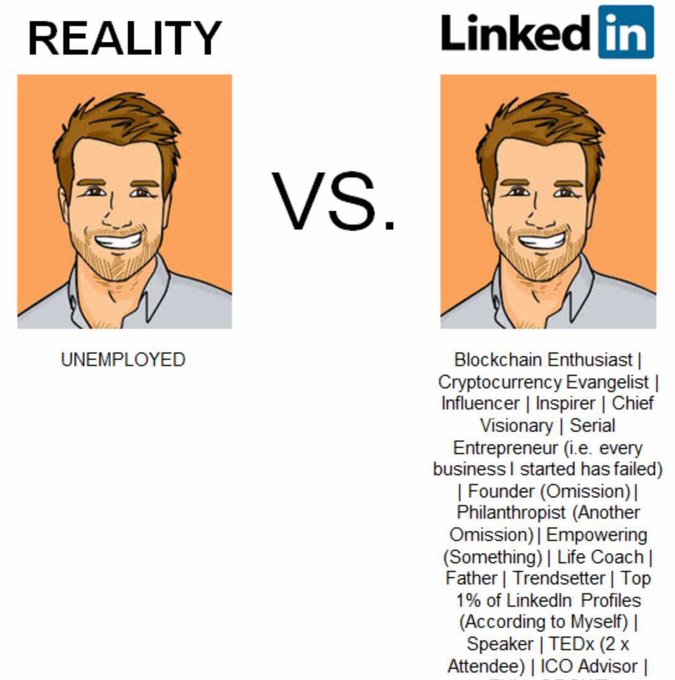
Yes, plenty of people position themselves as consultants when in fact, they aspire to be consultants. An image I recently saw on Twitter captures the point poetically.

Don’t let that put you off, though. Let’s not let these self-proclaimed influencers/evangelists/whisperers ruin a good thing. After all, puffery tends to dissolve upon impact: Spend a few seconds scrolling through someone’s profile, and it’ll be clear whether they’re living up to their title, or whether they’re lying about it.

3. “THEY’RE TOO FLOWERY”

I’ve also heard plenty of people claiming that while a custom headline may be a good idea, in theory, people use it in off-putting ways. In short, they think that these made-up banners are too flowery or pretentious–and often both.

Again, I sympathize with this viewpoint. But just because someone else’s headline is fluffy doesn’t mean your headline needs to be. I’ve long railed against what I call the “laundry listers” (who can’t decide who they are, so they throw in everything) and the “keyword stuffers” (who use jargon instead of English to seduce the algorithms).

Here are some examples of a straightforward and not flowery headline:

  • Public policy advocate for the greater protection of our civil liberties
  • Licensed mental health social worker, treating trichotillomania and OCD
  • CPA, with 20 years of experience, specializing in real estate

To me, these lines sound far more intriguing and substantive than an unclear job title at a company people might or might not have heard of.

4. “I WORKED HARD TO GET HERE”

This objection seems to be one that people are extremely passionate about. If the first thing someone learns about me is that that I work at, say, the White House, he’s more likely to browse through my profile than if he sees I work at the White Group.

People argue that if they spend their days at a prestigious place, they shouldn’t obscure this accomplishment. After all, it takes talent to land at Goldman Sachs or Google, and isn’t LinkedIn all about showcasing that?

There are two issues here–one technical and one philosophical. Both revolve around prioritization.

The thing is, a custom headline doesn’t replace your title and company. The latter still very much forms part of your profile, at the top of your “experience” section. They’re just not the first thing people see.

When you value the institution over the individual, you also convey your insecurity. This mind-set suggests that you tie your professional identity to the company you work for, and that where you work is more important than what you do.

Instead of yoking yourself to your employer, cultivate your own identity. Recognize that your worth doesn’t require external validation. Your business card doesn’t bind you. It’s great to say, “I went to Harvard,” and that’s definitely something you should be proud of. But don’t let it define you. You’re much more valuable than that.


Author: Jonathan Rick is the president of the Jonathan Rick Group, a consultancy that helps people overhaul and optimize their LinkedIn profile. Follow him on Twitter at @jrick, where he tweets about the latest tricks in professional branding.


FastCompany.com | October 21, 2018

#CareerAdvice : #JobSearch – How to Use #LinkedIn to Add Cold Contacts…Your #Career is About Who you Know, Sure. But it’s Also about Who You can Get to Know. That’s where LinkedIn Comes In.

With over 400 million users, there’s no question LinkedIn reigns supreme as the go-to professional network. From your former roommate to the stranger with your dream job, every savvy woman (and man) seems to have an active account where they regularly post references, professional recommendations, and recommended reads.

If you’re like most users, you’ve probably taken a laissez-faire approach to LinkedIn networking up until now, accepting connection requests from friends or former coworkers when they turn up in your inbox or maybe using LinkedIn’s recommendations to add some people yourself. But that means you’re missing a hugely underutilized opportunity: the network of professionals in your field who you just haven’t met yet.

Navigating that world of untapped connections with poise often brings uncertainty. After all, it’s arguably as hard to reach out to strangers online as it is in person. That’s exactly why we’re breaking down how to use LinkedIn to add cold contacts to three easy steps. Follow these and you’ll significantly up your LinkedIn game. Ready?

HOW TO USE LINKEDIN TO ADD COLD CONTACTS (3 STEPS)

1. FIND A SHARED LINKEDIN CONNECTION OR GROUP

One of the biggest benefits of using LinkedIn to make new contacts? You can visually see connections that you share with others. For example, if you come across a profile of someone you’d like to contact, LinkedIn offers a convenient chart of your mutual connections. Use this to your advantage by reaching out to one of these shared contacts to ask for a virtual introduction, either through LinkedIn or via email.

Obviously, you won’t always have a direct personal connection with someone you’d like to meet, but that’s not the only way forward. Next up, check to see if you’re part of any of the same LinkedIn groups as the person in question. Perhaps you’re members of a professional association, or maybe you both graduated from the same university.

Finding common ground can quickly evolve a cold contact into a warm one. In fact, if you and the person are both members of a group, you can send them a message directly through LinkedIn without having to connect first. Think of it as cutting out the social media middle man.

Charm cold contacts with a personalized connection request. LinkedIn limits you to 300 characters here, but that’s still plenty of space to impress.

Like this Article ?  Share It !    You now can easily enjoy/follow/share Today our Award Winning Articles/Blogs with Now Over 2.5 Million Growing  Participates Worldwide in our various Social Media formats below:

FSC LinkedIn Network:   www.linkedin.com/in/fscnetwork

Facebook:  http://www.facebook.com/pages/First-Sun-Consulting-LLC-Outplacement-Services/213542315355343?sk=wall

Google+:  https://plus.google.com/115673713231115398101/posts?hl=en

Twitter: Follow us @ firstsunllc

Question: Want the ‘the best/current articles/blogs on the web’ on Job Search, Resume, Advancing/Changing your Career, or simply Managing People?

Answer: Simply go to our FSC Career Blog below & type(#career, #leadership, #life) in Blog Search:  https://www.firstsun.com/fsc-career-blog/

What Skill Sets do You have to be ‘Sharpened’ ?

Continue of article:

2. PERSONALIZE YOUR CONNECTION REQUEST

If you aren’t able to turn the cold contact into a warm one through a virtual introduction, your next step is to send a personalized connection request.

LinkedIn allows you to send a connection request when you’d like to add someone new to your network. These potential connections will then receive a notification asking them to accept or decline your invitation. Because the process counts on their approval, without any type of background or explanation, many people are likely to decline an invitation from a stranger.

For this reason, under no accounts send the default “I’d like to add you to my professional network on LinkedIn” message. Trust us on this.

Instead, charm them with a personalized one. LinkedIn limits you to 300 characters here, but that’s still plenty of space to impress them with a short and sweet intro.

The Classic Approach

Hi Jane,
Came across your profile and work at XYZ Company. I’m a fellow aspiring marketing professional and would love to connect.
Regards, 
[fusion_builder_container hundred_percent=”yes” overflow=”visible”][fusion_builder_row][fusion_builder_column type=”1_1″ background_position=”left top” background_color=”” border_size=”” border_color=”” border_style=”solid” spacing=”yes” background_image=”” background_repeat=”no-repeat” padding=”” margin_top=”0px” margin_bottom=”0px” class=”” id=”” animation_type=”” animation_speed=”0.3″ animation_direction=”left” hide_on_mobile=”no” center_content=”no” min_height=”none”][Your Name]

The Admirer Approach

If you’ve seen the person’s work elsewhere (i.e. a publication, conference, networking event, or even through social media), mention it. People love when someone appreciates their hard work. Try something like this:
Hi Jane,
Saw your recent presentation at XYZ conference. I got a lot out of it and would love to chat with you to discuss some questions I had about your work.
Regards,
[Your Name]
Once you’ve successfully connected to someone, you can now send the person a direct message—and you should take advantage of this opportunity every time.

3. SEND A FOLLOW-UP LINKEDIN MESSAGE OR EMAIL

Once you’ve successfully connected to someone, don’t call it a day. You can now send the person a direct message, and you should take advantage of this opportunity every time. Let her know you admire her work or would like to learn more about her career path.

Ask for either an in-person or phone meeting where you can gain more information. Here are some approaches:

The Classic Reach-Out

Hi Jane,
Thank you for connecting with me on LinkedIn. I see that you’ve had a lot of work experience in corporate marketing, a field that I’m hoping to break into. I’ve done a couple of internships in the field and would love your advice on this topic. Would you be willing to speak with me over the phone for 20-30 minutes in the next few weeks? Thanks for your consideration.
Regards,
[Your Name]

The Hybrid Reach-Out

In the case where you’re able to send a message directly without connecting first (i.e., you both share a group), your initial message will look a bit different. Think of it as a combination of Steps 2 and 3. Here’s a good example:
Hi Jane,
I’m a fellow Rice University alumnus who recently graduated with a degree in Marketing. I came across your LinkedIn profile through our alumni group and was intrigued by your work experience in marketing.
I’d love to learn more about your career path and get your perspective on how to best break into the field as a new grad. Would you be willing to speak with me over the phone for 20-30 minutes in the next few weeks? Thanks for your consideration.
Regards,
[Your Name]

BONUS: THE SINGLE BEST TIP WE’VE GOT

In no context should your end goal of adding cold contacts be asking for a job.

You read that right. That part comes later, long after a cold contact warms up. Treat this as your opportunity to ask instead for information and learn more about the person. Informational interviews are great relationship builders, which both expand your network and provide you with tons of helpful career advice and insight from others.

Adding cold contacts on LinkedIn takes more time and effort than simply hitting the “connect” button over and over, but you reap what you sow. Put the time into turning a cold contact into a strong connection that you can keep in touch with over time.

Still feeling shaky about how to master the art of LinkedIn? Enroll in our online course, The LinkedIn Lab, and become a LinkedIn master.
CareerContessa.com | August 29, 2016 | BY KATHERINE NOBLES 

[/fusion_builder_column][/fusion_builder_row][/fusion_builder_container]

Your #Career : 3 Ways To Develop #TransferrableSkills In Your Current #Job …This Google #Recruiter Shares How he Leveraged his #Skills to #ChangeCareers , from #Sales to #Recruiting .

My first job out of college was in sales. Today I’m a recruiting manager at a global tech company in Silicon Valley. I’m also a podcaster. The one thing that connects the dots of my career trajectory and every job move in between: transferrable skills.

At the point that I decided sales wasn’t for me, I reflected on what I enjoyed (helping people), what I wanted to do next (HR), and what would be the stepping stone role to help me get there. It turned out that recruiting at a staffing agency was a good middle ground. Recruiting meant I’d sell companies to candidates and candidates to companies. I’d help job seekers take the next step in their careers while ensuring hiring managers had access to great people.

But before I landed a job as a recruiter at Google, I teased out the skills I needed to highlight in my resume and interviews–skills like the ability to build relationships, persuade others, and provide a high level of customer service. All skills that continue to prove key to this day, even as a podcaster. Here are a few ways you can identify and leverage transferrable skills to help you secure your next opportunity.


Related:This Is How To Land Your First-Ever Management Role 


TRACK YOUR TASKS AND ACCOMPLISHMENTS

One of the biggest challenges I had for years was recalling everything I accomplished when it came time for performance review season. I’d sit there wracking my brain in hopes of recovering all I’d done over the past 6 to 12 months so I could write a stellar self-evaluation. Then one day I decided to start a project and task log that I’d update throughout the year. Recalling the details of projects became much easier.

This log also helped me identify skills and themes that’d be transferrable if and when I decided to make a move. It was easier to update my resume and speak to these skills during interviews because everything was already written down. Instead of searching for examples, I was picking from a list I’d already created.

I also encourage you to include projects, tools, and accomplishments from your extracurriculars, especially if you hold a role in a club, organization, or have a side project. Skills picked up outside the office can be just as valuable. For example, producing and releasing podcast episodes has required me to create workflows to get tasks done. Since I’ve documented them, a new team member can be dropped in and become productive right away. Creating and improving processes to drive efficiency is a key skill that’s transferrable to a wide range of jobs. It also speaks to problem-solving, as you’re usually identifying something that isn’t working well and then fixing it.

Podcasting has also provided me public speaking opportunities that have in turn made me a better presenter at work. I’ve learned the importance of storytelling, which is just as valuable when talking about data as it is when you’re trying to motivate a team to overcome a major hurdle.


Related:Here’s What To Do When Common Career Advice Doesn’t Work For You 


Like this Article?  Share It !    You now can easily enjoy/follow/share Today our Award Winning Articles/Blogs with Now Over 2.5 Million Growing  Participates Worldwide in our various Social Media formats below:

FSC LinkedIn Network:   www.linkedin.com/in/fscnetwork

Facebook:  http://www.facebook.com/pages/First-Sun-Consulting-LLC-Outplacement-Services/213542315355343?sk=wall

Google+:  https://plus.google.com/115673713231115398101/posts?hl=en

Twitter: Follow us @ firstsunllc

Question: Want the ‘the best/current articles/blogs on the web’ on Job Search, Resume, Advancing/Changing your Career, or simply Managing People?

Answer: Simply go to our FSC Career Blog below & type(#career, #leadership, #life) in Blog Search:https://www.firstsun.com/fsc-career-blog/

What Skill Sets do You have to be ‘Sharpened’ ?

Continue of article:

LEVERAGE LINKEDIN AS YOUR CAREER CONSULTANT

LinkedIn is great for networking, but it’s also a great way to research what skills and experiences you need beyond what you find in job descriptions. For example, when searching for new positions, I’ve made it a habit to look up various versions of the job title and find people already in the role. Their career history and current responsibilities give me a blueprint for my resume and LinkedIn profile. I can create a list of the common themes across profiles and cross-reference my log to find relevant examples.

BE PROACTIVE ABOUT YOUR NEXT STEP AND NEW SKILLS

Even if you’re happy in your current position, you should consistently revisit what’s next in your career and if you have the skills to get there. After doing role research, you’ll sometimes realize you don’t have everything in the job description or all the skills you saw in other profiles. That’s okay. When you’re moving into something new–even if it’s within your field–there will be gaps. Your goal is to minimize these gaps by picking up news skills that can be transferred to your next job.

Maybe you realize the next target role requires in-depth quantitative analysis skills, which you don’t get to flex in your current position. You could survey what’s happening around the company and ask to be involved in a project that gives you more exposure to Excel or the opportunity to track and report on key metrics. Maybe you do the weekly or monthly team reporting in collaboration with your manager.


Related:Changing Careers? Here’s Exactly What To Put On Your Resume


Perhaps there’s someone whose spreadsheet abilities make you wonder what you’ve been doing all your life? Compliment them on the great work they’ve done and ask if they can show you some of the basics. Nearly a year ago, I asked a respected program manager to show me how she keeps various projects and deadlines organized. With her help, I ended up developing a project tracker that’s helped me manage large cross-functional initiatives that involve many moving parts and people. This speaks to taking the initiative to develop myself and the ability to manage complex projects and deliver results–two things that are expected in nearly every professional position.

These are just a few ways to help you think about transferrable skills and navigate your career development. You’ll be surprised by how relatable your skills are to many different fields. The first step is to write things down. Once you do that, it becomes a game of plug and play. Happy hunting!


This article originally appeared on The Well, Jopwell’s digital magazine and is reprinted with permission.Jopwell is the career advancement platform for Black, Latino/Hispanic, and Native American students and professionals.

FastCompany.com | May 11, 2018 | BY RICH JONES—JOPWELL 4 MINUTE READ

Your #Career : The Three Smartest Ways To Use #LinkedIn Early In Your Career…Why Bother using LinkedIn. When you Don’t have Much #JobExperience to Put On your #ProfilePage ? Here’s Why–and How to Do It.

LinkedIn is a great place to build a network, diversify your knowledge, and find new career opportunities–even when you’re early in your career. Students and recent grads may neglect LinkedIn, thinking it’s premature to start investing time into the platform before actually building up a solid amount of work experience. That’s a mistake.

I’ve found unexpected opportunities lurking within LinkedIn that simply require some ingenuity to take advantage of. Here are a few tips that have worked for me in the past few years I’ve spent in the tech industry after graduating.


Related: How To Update Your LinkedIn Profile At Every Stage Of Your Career


1. START NETWORKING CONVERSATIONS YOU CAN TAKE OFFLINE

Yes, LinkedIn is kind of like a database. You load it up with information on your interests, objectives, skills, and accomplishments so the leaders and peers you connect with can tell what you’re all about. Obviously, when someone checks out your profile, you’ll want it to be thorough and compelling.

But all the work you put into your profile is just a springboard for reaching out to other professionals in your industry. Whenever you come across someone you’d like to connect with on LinkedIn, your real objective should be to take the conversation you strike up offline as quickly as possible. Don’t treat LinkedIn the way you might operate on Instagram, racking up contacts you have no intention of interacting with in the real world.

LinkedIn is a means to an end, and that end goal should always be real-time conversations–ideally face to face, or by phone if necessary when you live in different places and don’t plan to visit soon. Using LinkedIn to set up face-to-face meetings with new people is a crucial and underutilized tactic for younger professionals working to build their networks in a meaningful way.


Related: Recruiters Explain What The Worst LinkedIn Profiles Have In Common


2. TREAT LINKEDIN LIKE A FREE SEMINAR

Learning quickly at a new job is one of the most exciting and daunting tasks entry- and associate-level workers usually face. First you have to learn your role and size up the work culture. Then you’ve got to get a handle on the industry and understand how your company is competing in the market. LinkedIn can actually help you with all of that.

So search for and join groups, follow leaders, comment on conversations, and share interesting stories. You can start by following industry-specific groups, first as an observer, and then as a participant as you get more comfortable. Make sure you also pay attention to what your company and its competitors are posting. Staying engaged–even by checking in on the chatter just once a week or so–can help you stay informed and ahead of the game.


Like this Article ?  Share It !    You now can easily enjoy/follow/share Today our Award Winning Articles/Blogs with Now Over 2.5 Million Growing  Participates Worldwide in our various Social Media formats below:

FSC LinkedIn Network:   www.linkedin.com/in/fscnetwork

Facebook:  http://www.facebook.com/pages/First-Sun-Consulting-LLC-Outplacement-Services/213542315355343?sk=wall

Google+:  https://plus.google.com/115673713231115398101/posts?hl=en

Twitter: Follow us @ firstsunllc

Question: Want the ‘the best/current articles/blogs on the web’ on Job Search, Resume, Advancing/Changing your Career, or simply Managing People?

Answer: Simply go to our FSC Career Blog below & type(#career, #leadership, #life) in Blog Search:  https://www.firstsun.com/fsc-career-blog/

What Skill Sets do You have to be ‘Sharpened’ ?

Continue of article:

3. SCOUT FOR JOB OPPORTUNITIES WHEN YOU AREN’T ACTIVELY LOOKING

Even if you’re not actively looking for a new job, you should be using LinkedIn to reel in potential opportunities pretty much all the time.

How? The first part is just network building: Add the people you meet through work and at industry events on LinkedIn, and follow up with personalized notes. This might not feel like job searching, but it’s a crucial precondition to hearing about openings that may bubble up. Plus, if you want to reach out later when you are ready to job search, they’ll remember who you are. The second step is to keep putting yourself out there. Write articles, comment on your connections’ posts, and share interesting news stories you read. This is another great way to lay a breadcrumb trail that potential employers can find.

When you’re early in your career, recruiters and search firms might not be as likely to land on your doorstep–they’re often retained to help organizations fill higher-level roles. So it’s all the more important to be proactive, treating pretty much all LinkedIn activity as a potential step toward your next role. With that said, when you do get contacted about job opportunities on LinkedIn, make sure to respond even if you aren’t interested. You never know if you might want to work with that organization some other time.

In short, LinkedIn is a great place to learn, grow, and build relationships–even when you don’t have the most impressive credentials to plaster your profile with. It’s a competitive business world out there, and early-career professionals should get engaged early in order to get an edge over those who don’t bother to do the same.


Stephanie Glass is the head of product marketing for Aera Technology’s AI solutions, where she’s responsible for product strategy and the execution of product marketing programs. She brings to Aera experience in AI, machine learning, planning, and analytics, with past roles at Anaplan, GoodData, and Jive Software.


FastCompany.com | April 25, 2018 | BY STEPHANIE GLASS 3 MINUTE READ

Your #Career : Four Things You Must Do On #LinkedIn Once A Week…Think of #LinkedInGroups as Online Professional Associations.

It’s been a decade since LinkedIn starting adding features that help you do your job better, but many people still aren’t taking advantage of those features. They only visit LinkedIn when something big happens, like a job promotion or a move to a new company.

To start getting the most out of LinkedIn, here are four things you should do each week.

1. Review what’s happening in your groups.

Think of LinkedIn groups as online professional associations. When you want to know what’s on the minds of the decision makers in your field, groups are a great place to start. You can learn and grow, adopt best practices, and get some fodder for your next meeting. Here’s the best way to do it – so it doesn’t feel overwhelming and so you can zoom ahead to the important stuff. Click on “Work” in the upper right corner of the home page (it looks like a 3×3 box with nine little squares). You’ll get a page with two columns. Use the one on the left to scroll through the latest posts from your groups. Use the one on the right to help you determine which groups are most active. Just like with real-world professional associations, you want to participate in the groups that have the most activity and engagement.

Like this Article ?  Share It !    You now can easily enjoy/follow/share Today our Award Winning Articles/Blogs with Now Over 2.5 Million Growing  Participates Worldwide in our various Social Media formats below:

FSC LinkedIn Network:   www.linkedin.com/in/fscnetwork

Facebook:  http://www.facebook.com/pages/First-Sun-Consulting-LLC-Outplacement-Services/213542315355343?sk=wall

Google+:  https://plus.google.com/115673713231115398101/posts?hl=en

Twitter: Follow us @ firstsunllc

Question: Want the ‘the best/current articles/blogs on the web’ on Job Search, Resume, Advancing/Changing your Career, or simply Managing People?

Answer: Simply go to our FSC Career Blog below & type(#career, #leadership, #life) in Blog Search:  https://www.firstsun.com/fsc-career-blog/

What Skill Sets do You have to be ‘Sharpened’ ?

Continue of article:

2. Respond to messages

You get notified in your email when someone sends you a LinkedIn message, but should you go to the message right away? Probably not. Save them up and go in once weekly instead – after all, lots of them are “thanks for connecting” messages and others that don’t require a response.

And just because someone is connected to you in LinkedIn does not mean you need to do what they ask in their message or even respond. You shouldn’t feel guilty if you don’t. That might be the protocol with other forms of communication, but it’s just not realistic in LinkedIn – especially if you have a lot of connections. You have limited time. Because of the work I do, I get at least a dozen requests to “please check out my LinkedIn profile and tell me what you think.” And as much as I would love to do that – I love looking at LinkedIn profiles, and I love helping people – I would have to give up my day job to accommodate each request. Even responding to let people know I don’t have the time would take too much time.

3. Check out who has viewed your profile.

When you’re looking at the home page, you can see a snapshot of your profile in the left column on the screen. Right below your headline, you can see “who’s viewed your profile.” If your privacy settings are not set to “private mode,” LinkedIn will show you a subset of the people who have visited your profile during the previous 90 days. This is important because it helps you determine if you are attracting the right people – the decision makers and influencers who can help you expand your success. When you check this out monthly, you start to get a feel for the impact of your activities.

4. Measure your activity.

You spend time updating your network and posting articles, but are they working for you? When you click on “views of your post” in your profile the left column of the LinkedIn home page, you’re brought to a page that shows you the impact of your communications. If you’re using the LinkedIn blogging feature, you can check stats on your articles. You can do the same with your updates. It shows you the number of views, likes, and comments. When you click on the number of views, you get valuable information about the impact of your communications. There are three key pieces of data you receive about the viewers: What company they work for, what their job title is, and where they are located. When you view this, ask yourself: Am I attracting the right people to my profile? Then adjust your communications (both the content and the groups to which you post) accordingly.

To make all four of these actions happen, start the week off by scheduling some time in your calendar so you commit to this, just as you would to any meeting or conference call you have. You only need 15 – 30 minutes a week to start getting the most out of LinkedIn!

William Arruda is the cofounder of CareerBlast and creator of the complete LinkedIn quiz that helps you evaluate your LinkedIn profile and networking strategy.


Forbes.com | March 26, 2018 | 

Your #Career : Do This To Write A More #EmotionallyIntelligent #LinkedInProfile ….Don’t just List Out Skills Associated with Emotional Intelligence. Here’s How to Adapt a Technique from Psychology to appear More Approachable on LinkedIn.

LinkedIn is a great place to network and look for jobs, but a lot of people’s profiles feel stiff and standoffish–at least compared with other social media platforms. We talk all the time about the rising value of emotional intelligence in the workforce, and there’s lots of advice on how to show it off on a job interview.

But that doesn’t often carry over to LinkedIn, which often just presents a litany of information about people’s accomplishments: what they’ve done, which jobs they’ve worked, the schools they’ve attended. It’s hard to get a sense of who they are. Ideally, your LinkedIn account should be just as good at making interpersonal connections as you are in real life. Here’s how to get that to happen.


Related: This LinkedIn Recruiter’s Tips For Showcasing Soft Skills On Job Interviews


TWO WAYS TO DESCRIBE YOURSELF

Some of the challenge here is LinkedIn’s format. The easiest things to add to your profile are straightforward data like your employment and education history. Sections like your “Headline” and “Summary” are harder to fill in, because it’s not always clear what you’re supposed to say about yourself.

It’s true that you’ll want to use keywords so recruiters and hiring managers can find you, but it’s also crucial to simply appear personable. And to do that, it helps to understand some of the psychology around how people define themselves. Researchers on self-concept have found that we typically use two distinct modes, called “self-construals.”

An “independent self-construal” involves defining your sense of self in terms of the qualities you possess without reference to other people. If you describe yourself as smart, a hard worker, or someone who gets things done, then you’re focusing on independent properties–the stuff that has to do with just you. With an “interdependent self-construal,” on the other hand, you define yourself according to the qualities that do refer to others. If your self-concept prominently includes your role as a parent, then you’re prioritizing your relationship with your kids. If you describe yourself as a mentor, then your sense of self arises from your experiences interacting with them.

If you look at many LinkedIn profiles (my own included), some will be heavier on independent self-construals than interdependent ones, and vice versa. One isn’t necessarily “better” than the other in every context; some cultures (both within a given organization and across entire societies) lean more individualist than collectivist, so what flies in one environment may weigh you down in another. And in a more in individualistic culture, researchers have found that people are more prone to independent self-construals. Generally speaking, though, if you describe yourself in more interdependent terms, then other people will likely feel more welcomed by you.

It’s pretty intuitive, really: If you include your reader in part of the self-construal you present on LinkedIn, they’ll have a better chance of seeing how they can relate to you.

Like this Article ?  Share It !    You now can easily enjoy/follow/share Today our Award Winning Articles/Blogs with Now Over 2.5 Million Growing  Participates Worldwide in our various Social Media formats below:

FSC LinkedIn Network:   www.linkedin.com/in/fscnetwork

Facebook:  http://www.facebook.com/pages/First-Sun-Consulting-LLC-Outplacement-Services/213542315355343?sk=wall

Google+:  https://plus.google.com/115673713231115398101/posts?hl=en

Twitter: Follow us @ firstsunllc

Question: Want the ‘the best/current articles/blogs on the web’ on Job Search, Resume, Advancing/Changing your Career, or simply Managing People?

Answer: Simply go to our FSC Career Blog below & type(#career, #leadership, #life) in Blog Search:  https://www.firstsun.com/fsc-career-blog/

What Skill Sets do You have to be ‘Sharpened’ ?

Continue of article:

REVERSE-ENGINEERING AN EMOTIONALLY INTELLIGENT LINKEDIN PROFILE

How do you actually put this into practice? Work backwards.

For decades, psychologists have used the so-called “Twenty Statements Test,” one of a few leading instruments to assessing people’s self-concepts. It’s extremely simple: The test requires you to come up with 20 different answers to the question, “Who am I?” Instead of answering this question generally, though, answer it for your work-self–that is, “Who am I at work?”

Chances are many of the descriptions you come up with for yourself are independent, but you’ll probably also hit upon a few that are interdependent as well. Now go back through your list and see if there are ways of turning some of the independent descriptors you used into interdependent ones: How does this skill or attribute you possess help or relate to that other person?

This exercise can leave you with a richer, more conversational means of describing yourself than just listing out the job skills associated with emotional intelligence. As you rewrite your headline, summary, and other sections on LinkedIn, hang onto that interdependent mind-set. It’ll make you seem more approachable and worth connecting with.


FastCompany.com | March 19, 2018 | BY ART MARKMAN 3 MINUTE READ