Posts

#CareerAdvice : #SalaryNegoiations – Four Things you Absolutely Must Do in your #SalaryNegotiation …Keep These Tips on Hand the Next Time you’re #Interviewing for a #NewJob or Angling for a #Raise .

Countless job seekers and employees still struggle with negotiating salaries and advocating for themselves. But let’s say you’ve worked yourself up to asking for a higher salary. You could still be missing out on perks that can further enhance your compensation package–and they may not be that far out of reach.

“The whole salary negotiation process is a conversation,” says Jacqueline Twillie, a negotiation expert and founder of leadership development firm ZeroGap. “It’s not a battle.” With that in mind, here are some negotiation tricks to keep in mind the next time you’re interviewing for a new job or angling for a raise.

NEVER ACCEPT A VERBAL OFFER

“Don’t just flat out accept it, even if it sounds great and you’re really excited,” Twillie says. She recommends that job seekers always hold off on saying yes to a verbal offer, even in cases where they feel sure about the job. “I would always ask for an opportunity to review everything in writing–but express enthusiasm so that they know that you’re interested,” she says. The money might sound good at first blush, but when you look at benefits like healthcare, you may find the coverage is less than you anticipated; if so, you may want to negotiate a better salary.

“It’s much harder to come back and negotiate after you’ve already accepted,” Twillie says. “And it puts you in a stronger position when you haven’t accepted yet.”


Like this Article ?  Share It !    You now can easily enjoy/follow/share Today our Award Winning Articles/Blogs with Now Over 2.5 Million Growing  Participates Worldwide in our various Social Media formats below:

FSC LinkedIn Network:   www.linkedin.com/in/fscnetwork

Facebook:  http://www.facebook.com/pages/First-Sun-Consulting-LLC-Outplacement-Services/213542315355343?sk=wall

Google+:  https://plus.google.com/115673713231115398101/posts?hl=en

Twitter: Follow us @ firstsunllc

Question: Want the ‘the best/current articles/blogs on the web’ on Job Search, Resume, Advancing/Changing your Career, or simply Managing People?

Answer: Simply go to our FSC Career Blog below & type(#career, #leadership, #life) in Blog Search:  https://www.firstsun.com/fsc-career-blog/

What Skill Sets do You have to be ‘Sharpened’ ?

Continue of article:

DO YOUR RESEARCH ON PAY PARITY

In states like California, pay parity laws that have gone into effect over the past few years could help women negotiate salary increases, according to Tracy Saunders, a former recruiter who started the Women’s Job Search Network. The Equal Pay Act in California states that employees who do “substantially similar work” must be paid equally, even if their job titles are not identical. “Companies are actually adjusting women’s salaries outright,” Saunders says. “Understanding those laws is one way to receive a more substantial kind of increase.”

The same is true of another law that seeks to address the gender pay gap, which prohibits employers from asking about a prospective employee’s salary history in states like Massachusetts and California. In the event that a recruiter does ask for your current salary, try to shift the conversation to your salary expectations; Saunders and Twillie also recommend talking about salary expectations early in the interview process. “It’s really important that in the first phone screen, when they bring up the money, you talk about the market rate and not your current salary–especially if your first salary is less than the market [fusion_builder_container hundred_percent=”yes” overflow=”visible”][fusion_builder_row][fusion_builder_column type=”1_1″ background_position=”left top” background_color=”” border_size=”” border_color=”” border_style=”solid” spacing=”yes” background_image=”” background_repeat=”no-repeat” padding=”” margin_top=”0px” margin_bottom=”0px” class=”” id=”” animation_type=”” animation_speed=”0.3″ animation_direction=”left” hide_on_mobile=”no” center_content=”no” min_height=”none”][rate],” Twillie says.

FIGURE OUT WHAT YOU NEED TO BE SUCCESSFUL–AND ASK FOR IT

As you go through an interview process or negotiation, it’s important to get as much information as you can about the role you’re up for. “Try to ask questions that give you a deeper understanding of the work you’ll be doing beyond the job description,” Twillie says. “If you can understand what you’ll be doing upfront, you’ll be able to negotiate for different things.”

That could include a travel allowance or a certification–or it could be as simple as the right equipment. “People think they’ll be provided with the tools,” Twillie says, “but if you don’t ask for those things, you’re not going to get them.” Asking for what you need during the negotiation process, she argues, can prove more effective.

One of the best ways to figure out what a new role may entail is talking to employees. According to Twillie, some companies have started allowing people they’re interviewing to shadow employees, which she suggests job seekers try to do. “If you spend more than 10 minutes with a person, they’re going to drop their guard and be more open,” she says. “So if you can spend that half day on site, it really gives you an opportunity to learn about the culture and to talk to employees.”

GET CREATIVE WITH BENEFITS

As companies race to snag the best employees, many have rounded out their compensation packages with more attractive benefits and perks–say, a flexible vacation policy or the ability to work remotely. Some employers are even offering to assist with student loan repayments. Twillie notes that there are countless ways to negotiate benefits, and that would-be employees can even repurpose a perk that they don’t need: One person she coached asked to put a superfluous relocation package toward repaying her student loans. “If they’re giving you a bucket of money,” she says, “see if you can use it in a different area.”

For parents, another option is to request a bump in pay over the summer, to account for the cost of childcare; and for employees who yearn to be parents, employers might help subsidize fertility treatments or adoption assistance. (“These are really high-ticket, high-price benefits,” Saunders adds.) Both Twillie and Saunders urge job seekers to think outside of the box and ask for benefits that aren’t necessarily included in the “standard” compensation package. “When you’re starting to think about negotiating, it just depends on what your goals are,” Saunders says. “There are some new benefits coming into play that are intangibly valuable–or priceless.”

ABOUT THE AUTHOR

Pavithra Mohan is an assistant editor for Fast Company Digital. Her writing has previously been featured in Gizmodo and Popular Science magazine.

 More

FastCompany.com | September 24, 2018

[/fusion_builder_column][/fusion_builder_row][/fusion_builder_container]

#CareerAdvice : #JobSearch – 9 Important Things to Discuss With #HR Before Accepting a #NewJob …If you are Offered a #NewPosition, Here are Nine Important Things that you Need to Talk With HR about Before you Accept the Offer.

At one time, many people had the mindset that jobs were hard to come by, so they should take whatever was offered to them with no questions asked. Today, people are becoming choosier about their career paths, and they know that they are deserving of more than the bare minimum.

In our job seeker-driven labor market, people aren’t content to take anything that is being offered, and they know that they need to ask certain questions to make sure that they are going to be treated like a valued employee and not just a number. 

If you are offered a new position, here are nine important things that you need to talk with HR about before you accept the offer.

1. Ask About Benefits 

It is important to know what is included in the benefits package. If the benefits are not appealing, this may not be the right company for you to work at. Find out about provider options, how much you have to pay into the health plan yourself, what is covered (including prescriptions and specialty services), if dental and vision care is covered, etc. These days, with the high cost of health care, it is important to know that you have excellent health care coverage through your employer.

Like this Article ?  Share It !    You now can easily enjoy/follow/share Today our Award Winning Articles/Blogs with Now Over 2.5 Million Growing  Participates Worldwide in our various Social Media formats below:

FSC LinkedIn Network:   www.linkedin.com/in/fscnetwork

Facebook:  http://www.facebook.com/pages/First-Sun-Consulting-LLC-Outplacement-Services/213542315355343?sk=wall

Google+:  https://plus.google.com/115673713231115398101/posts?hl=en

Twitter: Follow us @ firstsunllc

Question: Want the ‘the best/current articles/blogs on the web’ on Job Search, Resume, Advancing/Changing your Career, or simply Managing People?

Answer: Simply go to our FSC Career Blog below & type(#career, #leadership, #life) in Blog Search:  https://www.firstsun.com/fsc-career-blog/

What Skill Sets do You have to be ‘Sharpened’ ?

Continue of article:

2. Ask if the Salary Is Negotiable

Depending on the employer, and the job being offered, the salary may or may not be set in stone. Most employers aren’t going to come right out and tell you that salaries are negotiable because they want to pay as little as possible. This is information you are going to need to dig for, so you are just going to have to come right out and ask. You will never know unless you do, after all. Besides, you may be pleasantly surprised by the answer. In many cases, if the candidate has enough to offer an employer, the employer is going to be more than willing to negotiate the salary a little bit.

3. Ask About Other Perks

These days, it is not always enough for companies to offer competitive wages and benefits packages. The more perks a company offers, the more attractive the job offer is going to be. So, you need to find out what other perks might be available to you should you decide to accept the position being offered. Perks can be anything from flexible shifts and working hours to office parties to paid time off and more. Some of the best perks to ask about are advancement training and promotion opportunities.

4. Ask about Vacation Time

Now may not seem like the most appropriate time to ask about vacations, but it is as good a time as any. Plus, you need to know before you take the job if you are going to actually be able to take vacations at all. Some companies only let you take time off that is unpaid, while others offer paid vacations once you have worked for them for a certain amount of time. Don’t forget to ask if you can roll over any unused vacation days and use them in the following year.

5. Ask What Other Employees Say About the Company

You can tell a lot about a company by listening to what current and past employees have to say about it. If it is a good company to work for, the HR person should have no problem telling you what employees are saying about the company, and even find people within the company for you to talk to. (Of course, you can always check Glassdoor reviews as well!) If you find out that the employees are happy in their jobs, chances are you will be as well, and that this is a company that you would like to work for.

6. Ask About Incentive Compensation 

Some companies will give bonuses to their employees as compensation for certain incentives, such as taking on additional responsibilities, pay raises based on performance, etc. Find out if monetary bonuses are offered, and if so, what the criteria are to be eligible for these bonuses. The more you know about how you will be compensated, the more you will strive to really earn those bonuses and be the very best that you can be when it comes to doing your job.

7. Ask About Relocation Expenses 

If you are going to have to relocate in order to take the position, you need to find out if the company is going to help with any of the relocating expenses. Obviously, they are not going to pay for everything, but if they expect you to move for them, they should be expected to help in some way. For instance, they may offer to pay a percentage of the actual moving expenses or put you up in a rental unit until you are able to find an appropriate and affordable place to live.

8. Ask About Education Opportunities

Many companies will offer incentives for employees to go back to school or receive additional training that is going to help them advance in their careers. In fact, this is one way that companies can ensure long-term employees, because these employees are grateful for the help, and want to give back. Some companies will pay for a portion of tuition, and some even allow you to take a leave of absence in order to get your degree. The more education you have, the more you will have to offer your employer, and they often recognize this and will help.

9. Ask for Everything in Writing 

Ask if you can have the job offer, and everything that you have agreed on, in writing. This way, there is little chance that the employer is going to pull back on the offer. A written agreement is much more binding than an oral agreement, and if you have everything on paper, they can’t turn around later and say that something wasn’t part of the offer, add work that isn’t in the job description. If they don’t want to give you anything in writing, it is a good sign that this may not be the best company for you to work at.

GlassDoor.com |  |


#CareerAdvice : #Networking – Should You Join a Professional Group? …Here are Three Questions you Can Ask Yourself Before Joining a Group to Make Sure it will Deliver Clear #CareerBenefit .

When I was first laid off and trying to build up my professional network as a newly self-employed person, I had the bright idea to join a Meet Up group called “Small Business Owners & Entrepreneurs” that met once a month at a local restaurant to talk about business, marketing and growth.

So you can imagine my surprise when later that week I sat down to dinner with a handful of multi-level-marketing salespeople who were sure their product was the one I should start selling!

If you’re interested in joining a professional group to expand your network or ramp up your development, you’ll need to do some research in order to avoid making my mistake. Because whether you’re considering a free or paid membership to a professional group, it can be difficult to understand whether the benefits are really worth it, or if you’re walking into a scam.

Here are three questions you can ask yourself before joining a group to make sure it will deliver clear career benefits.

1. Is it a legitimate group or a scam?
The Internet is connecting people faster than ever before. Most of the time, that’s a good thing. But in the case of professional organizations, it can create a lot of confusion as you sort the legitimate professional groups that will reflect well on you from the overnight scams that just pad your resume.

To make sure the group you’re considering is a legitimate one that will deliver on its promises, ask yourself the following questions:

Does it have membership requirements?
The most in-demand groups often have membership requirements such as having a certain amount of experience in the field or a certain degree. For example, Licensed Members of the National Society of Professional Engineers (NSPE) must hold a valid license or certificate of registration as a professional engineer or the equivalent. If there are absolutely no requirements for membership besides paying the fee, that could be a sign it’s more likely to be a hobby group rather than a professional group.

Does it explain membership fees?
High-priced memberships that don’t explain their fees are a big red flag. Look for details about how the association spends the membership money or what you get for it, such as a membership fee explanation or benefits page like this one from the Society for Human Resources Management (SHRM).

Is it well-represented in my current network?
Social proof can be a good indicator that the professional organization you’re considering is a legitimate one, so take a look at your current connections and see which groups they’ve chosen to join.

For example, if you’re a teacher connected with other teachers, the odds are incredibly high that you know several people who are members of the National Education Association (NEA). If you’re considering a group and you can’t find anyone you know who is a member, contact a school or work mentor to ask their opinion — you never know what you might find out about how your industry perceives the organization.

Like this Article ?  Share It !    You now can easily enjoy/follow/share Today our Award Winning Articles/Blogs with Now Over 2.5 Million Growing  Participates Worldwide in our various Social Media formats below:

FSC LinkedIn Network:   www.linkedin.com/in/fscnetwork

Facebook:  http://www.facebook.com/pages/First-Sun-Consulting-LLC-Outplacement-Services/213542315355343?sk=wall

Google+:  https://plus.google.com/115673713231115398101/posts?hl=en

Twitter: Follow us @ firstsunllc

Question: Want the ‘the best/current articles/blogs on the web’ on Job Search, Resume, Advancing/Changing your Career, or simply Managing People?

Answer: Simply go to our FSC Career Blog below & type(#career, #leadership, #life) in Blog Search:  https://www.firstsun.com/fsc-career-blog/

What Skill Sets do You have to be ‘Sharpened’ ?

Continue of article:

2. Will I participate in the group?
It’s one thing to join a group because they host a wide variety of trendy and on-point events. It’s another thing entirely to join a group because you actually want to attend those events.

Before you spring for a group membership, consider the schedule of activities and whether or not you would really participate. Do you see yourself making time for events each month, quarter or year? Remember, this doesn’t just mean putting it on your calendar, but making all the other little arrangements to your schedule that it takes to prioritize going to a professional meeting in your personal time.

If you’re not sure, reach out to your local chapter head and ask if you can attend a session or two as a trial to make sure you’ll participate. If not, you might be better off pocketing your money and focusing on building your network solo.

3. Will it grow my network with authentic connections?
Finally and most importantly, consider whether or not being active in this group will give you the opportunity to make authentic connections with other people. Because as nice as it is to be invited to free online webinars or in-person presentations, the professional groups that can change your life are the ones that give you the opportunity to meet and engage with new people in your industry. They provide more than just free appetizers and company swag — they become the backdrop for forging new relationships based on common interests and goals over the course of your career.

Beyond providing plenty of opportunities to make new connections, also make sure the group will connect you with the specific people you want to meet, which will depend on your goals.

For example, if you’re a freelancer, you could be looking for a professional organization that can connect you with fellow freelancers so you can build a support network and grow your business. Or you might be looking for an organization within your freelancing niche that can keep you up to date in your industry and make connections with new customers. These are two very different goals, and what’s right for you will depend on what kind of connections you’re looking to make.


Glassdoor.com | September 18, 2018 | Posted by 

#CareerAdvice : #JobSearch – How to Find—and Make the Most of—a #Recruiter or #Headhunter …Headhunters are #Recruiters for Hire. Often they Work for an Outside Agency and are Hired by Companies (usually the Big Guys) to Find them #Talent ASAP. The Keyword here is “ASAP

You probably know someone who knows someone who landed a great gig by working with a recruiting agency or professional headhunter.
Maybe you’ve picked up the phone to a recruIter’s call for a reference on one of your former employees or coworkers. Maybe you’ve considered applying to a job listing through a recruiting agency. But at the end of the day, do you actually know what a recruiting agency is, let alone how to best take advantage of one?
Honestly, we weren’t so sure either. It’s a complex and foreign world of negotiation, phone screens, and email blasts so it’s natural if you feel like avoiding recruiters entirely, but this is also your career on the line. We set out to find out exactly how to use (and make the most of) an all-too-often underutilized resource.
In This Article

WHAT IS A HEADHUNTER?

Headhunters are recruiters for hire. Often they work for an outside agency and are hired by companies (usually the big guys) to find them talent ASAP. The keyword here is “ASAP”—which is exactly why job searchers often have a negative impression of them. They get paid faster if they make a hire faster, which means they might drop in, ask for your resume, and then professionally ghost you if you’re not the right fit.
Still, there’s a benefit to talking to them. For you, working with a headhunter can be a great opportunity because they bring you positions, cutting down on your time spent job hunting. And if you’re ultimately hired for one, the company pays the recruiter’s fees, not you. These for-hire headhunters often also have access to positions that aren’t posted to the usual job boards, meaning you could beat out the competition early if you are the right person for the job.

Like this Article ?  Share It !    You now can easily enjoy/follow/share Today our Award Winning Articles/Blogs with Now Over 2.5 Million Growing  Participates Worldwide in our various Social Media formats below:

FSC LinkedIn Network:   www.linkedin.com/in/fscnetwork

Facebook:  http://www.facebook.com/pages/First-Sun-Consulting-LLC-Outplacement-Services/213542315355343?sk=wall

Google+:  https://plus.google.com/115673713231115398101/posts?hl=en

Twitter: Follow us @ firstsunllc

Question: Want the ‘the best/current articles/blogs on the web’ on Job Search, Resume, Advancing/Changing your Career, or simply Managing People?

Answer: Simply go to our FSC Career Blog below & type(#career, #leadership, #life) in Blog Search:  https://www.firstsun.com/fsc-career-blog/

What Skill Sets do You have to be ‘Sharpened’ ?

Continue of article:

WHAT IS A RECRUITER (AND WHAT’S THE DIFFERENCE BETWEEN RECRUITERS AND HEADHUNTERS?)

Recruitment agencies—or individual recruiters—are essentially intermediaries between you and potential employers slash hiring managers.
Recruiters might work for a firm that’s hired by companies to help them fill open positions or (maybe more often) they might work in-house for a single company. Because of this, there are a few positive elements: they know the company better than a headhunter would, and they’re also interested in finding candidates who fit with the company culture—which they know well since they’re a part of it.
Still, for the sake of how thorough this article is, here are the three types you’ll most likely encounter: 

Corporate Recruiters

These are in-house recruiters who are tasked with finding talent for the company where they work, and they’re everywhere. Facebook has a whole team of them. Our founder, Lauren McGoodwin, used to work as a corporate recruiter at Hulu. Some recruitment teams even have their own Instagram accounts.
Typically, these recruiters will contact you—often through your LinkedIn profile, so make sure it’s optimized—but you can also reach out directly to a recruiter about a specific position you find on a Careers page or to request an informational interview.
If you want to get deep into the corporate recruiting process, our friends at The Muse have some in-depth tips for working with one.

Contingency Recruiters

Okay, so this is a bit of trick. “Contingency recruiter” is another word for headhunter, i.e. an independent professional who doesn’t work for a specific company but is hired by various teams to find the best talent. They’re compensated only if and when they find a candidate to fill the role. Just make sure you pick the right agency to work with—but more on that later in our section, “How To Find The Right One.”

Freelance Recruiters

Less common than the other two, but worth considering if you’re trying to make a living by working for yourself. Freelance recruiters can put you in touch with clients who need contract work. This is especially common in the design and web development industries. In the interest of brevity, we won’t go too much into this type of recruiting, but here’s a great resource if you’re freelancing.

WHY (OR WHEN) SHOULD YOU USE A RECRUITER?

You’re Looking in a Specific Industry

There are some definite advantages to using a recruiter or agency, especially if you’re in certain industries. Many companies in the fashion and beauty industries work exclusively with recruiters to hire new talent. The same goes for many web design, development, and technology jobs.

You Don’t Have a Strong Personal Network (or Just Want to Better Your Odds)

Often, recruiters have contacts at the places you’re applying (or in the case of corporate recruiters, they’re actually working for the company already) so chances are they can bump your resume to the top of the pile if they like your style.

You Want to Leave It to the Experts

Consider this too: a recruiter’s blessed with the stellar ability to sell you. It’s their job. We’re not always our best representatives during a job search (consider any interview you ever botched, and you’ll see what we mean), but it’s in the recruiter’s best interest to get you the optimal gig, and they do it with great form and style.

You’re Moving to a Strange City or New Industry

Then there’s the advantage of someone knowing the environment and competition. While I bounced ideas for this article off a close friend, who works in fashion as a Creative Director, she pointed out that it was in her best interest to go through a recruiter when she decided to move from the East to West Coast. “I had no idea what companies were working out of Los Angeles beyond two or three big names, and I didn’t know many people in my industry working out here,” she explained, “but my recruiter gave me all sorts of insight about my options, in addition to setting up some interviews. Then I started combing through LinkedIn.”
Still not sure whether you need one? Watch this in-depth discussion with Lisa Hall, a partner at VonChurch Recruiting to determine whether a recruiter is a good option for you.

HOW TO FIND A RECRUITER OR HEADHUNTER FOR YOUR HIRING NEEDS

How to Contact a Recruiter

Sometimes you know exactly which company you want to work for (some of us are just meant to work at Github or Everlane, you know?). If you’re after the environment and work style more than the job title or salary, you’re probably primed for reaching out to a corporate recruiter who works in-house at your dream company. Consider optimizing your LinkedIn profile for, and reaching out to, a company’s recruiting team via a carefully crafted cold email or LinkedIn message. If you have a few companies in mind, reach out to each of their recruiters as you see fit.

How to Find a Headhunter

The good news is, they’re everywhere. If you’re at a point where you have no idea what you want to do exactly, but you know you’re ready for a change, try reaching out to a contingency agency in your field (or the field you’d like to enter). Chances are they’re aware of some positions you don’t even know exist yet—and those positions might be a perfect match for your background and goals.
You can start by doing some research just by searching terms like “Fashion recruiting in Los Angeles” or “marketing headhunters in Chicago” whatever it might be. Just keep your expectations in check—if you understand that it’s a bit of stretch for a headhunter to come through for you, you won’t be disappointed if it doesn’t pan out.

BONUS: HOW TO GET (AND KEEP) A RECRUITER’S ATTENTION

Corporate Recruiters

As we mentioned earlier, corporate recruiters tend to reach out to you and not the other way around, but here are a few ways to up your chances of grabbing their attention:
  • Optimize your LinkedIn profileWe can’t say this enough. We know it’s a headache to navigate the various LinkedIn settings and sections, but it’s also the social platform that recruiters use most often. Make sure you have a killer LinkedIn summary, that all your information is updated, that you’ve optimized your skills list for the roles your seeking (see next bullet), and that you’ve requested as many connections in your field as appropriately possible.
  • Include resume keywords you know recruiters love. The keywords you use are completely dependent on your industry, but you can glean some insight by studying job listings that interest you. Update the experience and skills sections on your resume to include terms that a recruiter might be seeking for a specific role. If you’re applying for more than one type of job in your industry, create multiple versions of your resume and tailoring them depending on need. And consider these other tips that one Facebook recruiter suggests when optimizing your resume.
  • Treat any phone call like an interview. When a recruiter does reach out via email or phone, take the process very seriously. Their screening call may mean the difference between never hearing from the company again and landing your ideal job. Even if you don’t fit the open position, a recruiter may go out of their way to find you a place at their company if they like your personality and experience. A friend in the art industry once interviewed with a recruiter for a position at a museum—but they ultimately offer the position to someone in-house. That same recruiter, though, called her in for three more interviews over the next four months until finally, they found her a position that suited her needs and theirs.

Contingency Recruiters

  • Ask as many questions of the recruiter as they ask of you. The goal is to find a good fit for your goals and industry, so make sure the recruiter you go with has your best interests in mind during the process by asking them detailed questions. You’re kind of like a rising actor picking the right agent.
  • Don’t be afraid to pick their brain. Just like my friend who asked her recruiter for details on companies in Los Angeles, remember that your agency is working for you as much as potential companies. Don’t be afraid to ask their advice or suggestions on companies that might be a good fit or how they think you can optimize your resume for their field.
  • Make sure you pick the right recruitment agency for your field. Often recruiting agencies are industry-specific and that’s a great thing. No one wants to go through a Walmart-esque staffing agency to find a job. Trust us, it won’t be good. If you’re unsure what the best recruiting agencies are in your industry try these three tricks:
    1. Start by talking with people in your network. See if anyone has worked with recruiters in the past.
    2. As you’re scanning job boards, take note of any positions that look industry that were posted by a particular agency. When you start to see patterns, that’s the agency for you.
    3. You can also do a Google search and reach out for a screening interview at a firm that looks promising, then browse through their site listings to see if anything appeals to you before contacting them.

FINAL TIPS

Return a recruiter’s calls or emails promptly and please spell check. Even if you don’t think the job they’re pitching sounds like your style, take the time to answer. They’ll have other jobs to fill in the near future, and they’re working hard just like you.
Don’t exaggerate or lie. Recruiters are there to find the right person for the job. Eventually, there will be a right job for you. By being as honest a possible, you ensure you won’t end up in the wrong position and you won’t burn any bridges with the recruiter who you might need to use again in the future.
Include links to your web presence. Recruiters see a lot of resumes and cover letters. In fact, some of them even hate receiving cover letters because going through them is such a time suck. By including clear links to your web presence like your LinkedIn, portfolio, or even an Instagram account, you help recruiters easily access and see your working style, background, and talent in a more digestible way. Include links wherever applicable.
Careercontessa.com| August 24, 2018 | BY KIT WARCHOL 

#CareerAdvice : #CoverLetter -How to Write a Letter of Interest in 2018… You can Have a Great #Resume but IF you Can’t get the #Recruiter to Read it, you Have Nothing. That’s What a Great Cover Letter does.

It’s one of the worst feelings in the world.

You’ve spent weeks perfecting your resume and crafting the perfect cover letter, and you’re finally ready to submit your application for your dream job.

But when you scan the company’s careers page, panic starts pouring over you. The job you wanted to apply for is no longer open. It’s gone. And as you stare at your laptop screen in shock, you can’t help but think you’ll never be able to join your dream company.

What should you do in this situation? You can’t just put your job search on pause until the company opens the position again. How do you express interest in joining a company when the position you want isn’t currently available?

One of the most effective ways to grab a hiring manager’s attention and get your foot in the door is by writing a letter of interest to the company.

Sending a letter of interest is a great way to introduce yourself to a company, and it shows them you’re willing to take the initiative to proactively reach out. This can keep you top of mind when the company starts recruiting for the job you inquired about or if they have any upcoming job opportunities that could be a good fit. If you’re really impressive, some companies might even create a position just for you.

Other times, sending a letter of interest can lead to a coffee chat or an informational interview with the hiring manager of the team you want to work for.

Writing a letter of interest sounds like an easy way to get your foot in the door at any company, but it’ll only pique a hiring manager’s interest and elicit a response if it actually resonates with them.

To do so, we recommend following a formula called problem-agitate-solve. It’s modeled after an old copywriting framework and has helped one job seeker skyrocket her cover letter response rate from zero percent to 55 percent. We’ll flesh it out below.


Like this Article ?  Share It !    You now can easily enjoy/follow/share Today our Award Winning Articles/Blogs with Now Over 2.5 Million Growing  Participates Worldwide in our various Social Media formats below:

FSC LinkedIn Network:   www.linkedin.com/in/fscnetwork

Facebook:  http://www.facebook.com/pages/First-Sun-Consulting-LLC-Outplacement-Services/213542315355343?sk=wall

Google+:  https://plus.google.com/115673713231115398101/posts?hl=en

Twitter: Follow us @ firstsunllc

Question: Want the ‘the best/current articles/blogs on the web’ on Job Search, Resume, Advancing/Changing your Career, or simply Managing People?

Answer: Simply go to our FSC Career Blog below & type(#career, #leadership, #life) in Blog Search:  https://www.firstsun.com/fsc-career-blog/

What Skill Sets do You have to be ‘Sharpened’ ?

Continue of article:

How to Write a Letter of Interest

To compel a hiring manager to read your letter, respond to it, and consider you for a job, there are four crucial elements you need to include in your letter of interest:

1. Hook the hiring manager with proof that you understand their problem.

Hiring managers don’t hire people just to be nice. They hire people to help them run their team better. To immediately grab a hiring manager’s attention, you should show how you understand the problems they’re trying to solve, like the hook below:

“As a two-year blogging veteran in the marketing technology industry at companies like Return Path and SlideBatch, I know how hard it is to write well. I also know how challenging it is to get found on Google.”

By describing a similar experience you’ve had at your current or prior job, you can relate to them on a deep level, which will engage and prompt them to read the rest of the letter.

The hardest part of this step is discovering the hiring manager’s problems. One way to figure it out is by listing off the job’s responsibilities and asking yourself why these tasks are important to their team. If you keep analyzing until you reach a dead end, you’ll usually find their needs there.

2. Agitate the problem to remind the hiring manager they need a solution.

How do you make a hiring manager realize how valuable a solution could be? You remind them just how painful them problems are. And to make them visualize their dreaded problem as vividly as possible, you need to be specific, just like the example below:

“According to HubSpot’s careers page, you’re not currently hiring, but, in the future, if you’re looking for someone who can not only engage an audience with clear, concise and compelling blog posts, but also optimize them for search engines, while hitting every deadline, you can count on me.”

When they realize how much pain they’re actually in, they’ll have more of a sense of urgency to resolve it. And this’ll push them to respond to you because you might be their fastest route to a solution.

3. Prove that you’re the solution with an example of your skills and experience.

If you’re really the solution to their problems, you must prove to the hiring manager how you’ve used your skills to solve similar paint points in previous experiences. Then, you should describe how you’ll be able to use those learnings to help solve their current problems. Check out the example below:

“Last year, at Return Path, I was the top performing blogger, writing weekly posts that averaged 7,500 views, 1,000 social shares and 35 new blog subscribers gained. The year before, at SlideBatch, I devised and implemented a new keyword strategy that increased organic page views for our Visual Marketing 101 blog series by 15 percent.

I’ve read HubSpot’s blog every day since I started my content marketing career, and I’m inbound, content and email marketing certified, so I strongly believe I’ll be able to hit the ground running if I were to work on HubSpot’s blog team one day.

Whether I’d be uncovering high opportunity keywords or crafting blog posts to support and develop your team’s new pillar cluster model, I’m confident my skills and experience can help your team crush their goals.”

By quantifying your accomplishments and researching the company’s pain points, you’re proving your worth. But if you just list your skills and work experience, you’re only proving to the hiring manager that you’ve failed to make an impact.

4. Confidently request to move on to the next step.

At the end of your letter, you should express your interest in exploring upcoming opportunities or ask them to keep you top of mind when an opportunity opens up, like the call-to-action below:

“I’d love to learn about any upcoming roles on your team or be considered for a position later down the road. My resume is attached, and my contact details are listed in my email signature below. Thank you for your time! It was a pleasure connecting.”

These call-to-actions are crucial because they tell them how to get the ball rolling. If you don’t tell the hiring manager what to do next, then nothing will happen.

Letter of Interest Example

All together, a successful letter of interest looks like this:

Letter of Interest Template

Hi [fusion_builder_container hundred_percent=”yes” overflow=”visible”][fusion_builder_row][fusion_builder_column type=”1_1″ background_position=”left top” background_color=”” border_size=”” border_color=”” border_style=”solid” spacing=”yes” background_image=”” background_repeat=”no-repeat” padding=”” margin_top=”0px” margin_bottom=”0px” class=”” id=”” animation_type=”” animation_speed=”0.3″ animation_direction=”left” hide_on_mobile=”no” center_content=”no” min_height=”none”][Hiring Manager’s First Name],

As a [X]-year [Your Profession] veteran in the [Space You Work In] industry at [Most Prominent Companies You’ve Worked For], I know how hard it is to [Pain Point #1]. I also know how challenging it is to [Pain Point #2].

According to [Company] careers page, you’re currently not hiring, but, in the future, if you’re looking for someone who can not only [Solution for Pain Point #1], but also [Solution for Pain Point #2], you can count on me.

Last [Specific Timeframe], at [Current or Old Company], I was the best performing [Your Profession], [List Your Responsibilities and Describe the Impact You Made]. The [Specific Timeframe] before, at [Current or Old Company], I [List Your Responsibilities and Describe the Impact You Made].

[Show Hiring Manager that You’re a Voracious Learner and You Regularly Keep Up with Company News], so I strongly believe I’ll be able to hit the ground running if I were to work on [Company] team one day.

Whether I’d be [What the Team is Working on Now], I’m confident my skills and experience can help your team crush their goals.

I’d love to learn about any upcoming roles on your team or be considered for a role later down the road. My resume is attached, and my contact details are listed in my email signature below. Thank you for your time. It was a pleasure connecting!

Sincerely,

[Your Name]

Steps to Take Before You Send Your Letter of Interest

After you finish writing your letter of interest, you need to make sure the company will actually open it. So before you send your letter, it’d be ideal if someone on the team personally knows who you are.

To do so, ask your connections or alumni that work at the company to introduce you to the team’s hiring manager. If you can’t do that, you could add the hiring manager on LinkedIn, tell them why you want to connect and send them your letter of interest.

Getting your foot in the door will ultimately help you stand out from the crowd of job seekers who are all sending the same “hire me” pitch to them.


Glassdoor.com |  

[/fusion_builder_column][/fusion_builder_row][/fusion_builder_container]

#CareerAdvice – #JobSearch -The Best and Worst Times to #JobHunt by Season…..We Break it Down by Seasons so you Know What to Expect while Searching for That Next Key Position.

When you have long-term career goals, job-hunting is more than a matter of making a slightly higher salary or having a slightly shorter commute. It’s about finding the role that will help you grow, whether it’s taking on new responsibilities, learning and applying new skills, or entering entirely new fields.

With that in mind, job-hunting is an ongoing and potentially never-ending process. Still, some times of the year are generally better than others to get a new job. We break it down by seasons so you know what to expect while searching for that next key position:

Summer: Keep a Steady Pace

During the summer, hiring slows down, but that doesn’t mean you should. Sure, there won’t be as many opportunities, but there won’t be as much competition either. For career-focused individuals, summer may be that best time to job-hunt. So take some time in June, July, and August to work on your resume, build your network, and keep your stream of job applications from drying up.

Like this Article ?  Share It !    You now can easily enjoy/follow/share Today our Award Winning Articles/Blogs with Now Over 2.5 Million Growing  Participates Worldwide in our various Social Media formats below:

FSC LinkedIn Network:   www.linkedin.com/in/fscnetwork

Facebook:  http://www.facebook.com/pages/First-Sun-Consulting-LLC-Outplacement-Services/213542315355343?sk=wall

Google+:  https://plus.google.com/115673713231115398101/posts?hl=en

Twitter: Follow us @ firstsunllc

Question: Want the ‘the best/current articles/blogs on the web’ on Job Search, Resume, Advancing/Changing your Career, or simply Managing People?

Answer: Simply go to our FSC Career Blog below & type(#career, #leadership, #life) in Blog Search:  https://www.firstsun.com/fsc-career-blog/

What Skill Sets do You have to be ‘Sharpened’ ?

Continue of article:

Fall: Pick Up the Pace

Come fall, most people have finished with vacation and business ramps up again. It’s also the time when many organizations take a good look at their financial performance and buckle down on budget planning for the next year. They’re making all kinds of decisions that lead to job openings – not only to replace workers who resign or retire, but to fill positions that haven’t existed before, that require specialized skills. The fall — September, October, November — is a prime job-hunting season, so make the most of it.

Winter: Slow Down If You Need To

Job-hunting in the winter is a mixed bag. If you’re job-hunting, there’s no perfect time (or reason) to stop looking, but if you’re going to take a break, this is probably the best time to do it. The surge of hiring activity in the fall drops off significantly during the holiday season, roughly December through the mid-January. On the other hand, the New Year is a time when lots of people resolve to find a new job. By the time February rolls around, workers are shuffling to new jobs, creating openings that organizations need to fill. Make sure you’re ready when that happens.

Spring: Ramp It Up Again

Comparable to the fall, spring coincides with organizations’ needs for new employees. Through March, April and May, companies are filling positions left open by workers who made good on their New Year’s resolution to take new jobs. They’re also trying to get positions filled before summer vacations start happening and hiring naturally slows down. If you took a break from job-hunting during the winter, now is the time to devote your restored energy to finding your next great opportunity.

All-Year-Round: Work with Revature

As a strategic partner to Fortune 500 companies, Revature places emerging talent in enterprise-level organizations all-year-round. If you’re interested in a long-term career in software development, programming, or information technology, we can help accelerate your path to success. Revature pays its recruits to attend an intense and customized 12-week program, where they develop the skills necessary to excel in a real-world enterprise-level environment. Afterward, we place them in a promising job with one of our many clients.

GlassDoor.com | August 27, 2018 | 

#CareerAdvice – #JobInterviewingQuestions – How to answer these 10 tricky questions tactfully in a job Interview …Don’t Panic–Consider these Things First Before you Answer.

We’ve all been there—pleased that an interview was going really well until the interviewer threw out a real doozy of a question that you just don’t know how to answer. But you don’t have to panic.

We asked career coach Hallie Crawford to give us advice on how to answer the most difficult questions you’ve ever been asked. (Yes, we pulled them from real interviews.) Here’s how to answer each really well.

While it may seem silly, “this question is designed to reveal how you think your manager perceives you,” Crawford says. “Before answering, ask yourself: How do your coworkers describe you? What did your manager commend you on recently?” With the answers to these questions in mind, “don’t be afraid to get a little creative with your reply,” Crawford says. But don’t be too verbose either. “You don’t want to give the impression that your anniversary cake would be too big,” she says, “so try and keep the words short and sweet.”


Related: This is how you should end your four most common work conversations


2. WHO IN HISTORY WOULD YOU WANT TO GO TO DINNER WITH AND WHY?

Before you answer this one, ask yourself whom you admire, past and present. “Perhaps a writer, an actor, a scientist, or even someone from your industry,” suggests Crawford. Then consider, “What do you appreciate about their accomplishments? Why do they inspire you? Why do you feel that you would be friends? What would you want to discuss with them at dinner?” Crawford prompts you to ask yourself. “Use these elements when answering.”

Like this Article ?  Share It !    You now can easily enjoy/follow/share Today our Award Winning Articles/Blogs with Now Over 2.5 Million Growing  Participates Worldwide in our various Social Media formats below:

FSC LinkedIn Network:   www.linkedin.com/in/fscnetwork

Facebook:  http://www.facebook.com/pages/First-Sun-Consulting-LLC-Outplacement-Services/213542315355343?sk=wall

Google+:  https://plus.google.com/115673713231115398101/posts?hl=en

Twitter: Follow us @ firstsunllc

Question: Want the ‘the best/current articles/blogs on the web’ on Job Search, Resume, Advancing/Changing your Career, or simply Managing People?

Answer: Simply go to our FSC Career Blog below & type(#career, #leadership, #life) in Blog Search:  https://www.firstsun.com/fsc-career-blog/

What Skill Sets do You have to be ‘Sharpened’ ?

Continue of article:

3. NAME A BRAND THAT REPRESENTS YOU AS A PERSON.

Yep, not a brand you love—but one that embodies who you are. Now that’s a doozy. But it doesn’t have to be tough, Crawford says. “Think about your top personal values,” Crawford advises. “Now think about brands that also have those values.

For example, if you value family and ethical practice, think about companies who are family-based, or create products for families who you know don’t do testing on animals, for example. Explain the values that you feel you share with the brand and why those values are important to you.”

4. PLEASE DESCRIBE AN INSTANCE WHERE YOU HAD TO MAKE A DECISION WITHOUT ALL OF THE NECESSARY INFORMATION.

You came to the interview prepared, which means you have a list of accomplishments you can work from. Using an accomplishment for this question, “Describe the situation and what information was missing and any measurable results achieved,” Crawford instructs. By using an accomplishment, you will show a hiring manager how you can persevere.


Related: How to prepare for the three most common types of negotiation at work


5. SELL ME ON ONE IDEA, AND THEN SELL ME ON THE OPPOSITE OF THAT IDEA.

“First of all, you want to think of an idea before you can start answering the question,” says Crawford. You may not have to come up with your own idea. “Ask the hiring manager if they have a specific idea in mind,” says Crawford. “If not, consider a recent idea that you discussed with your team or with coworkers. What was your position and why? What was the opposite position and why? Use those arguments. In this question, it is important that you sound convincing when presenting both ideas. This will provide insight into whether you are able to present ideas to your team—even if you don’t agree with the idea.”

6. IF A COWORKER HAD AN ANNOYING HABIT, AND IT HINDERED YOUR QUALITY OF WORK, HOW WOULD YOU RESOLVE IT?

This may seem like a perplexing question, but it’s “designed to get to you how you deal with others,” explains Crawford. “Draw from a real-life experience if possible. What annoyed you? How did you resolve it? Is there a more effective way to handle the situation if it would happen again? Identify the annoying habit and then outline the steps you would take to try and resolve the situation while maintaining a good relationship with your coworker.”

7. WHAT PART OF THE NEWSPAPER DO YOU READ FIRST? WHAT DOES THIS SAY ABOUT YOU?

“This kind of question is asked to get to know you better as a person,” says Crawford. And while “at first glance, this seems a fairly easy question,” she says, it’s not. So, “before you answer, think about what genre of articles appeals to you: technology, fashion, current events,” Crawford advises. “Now determine if there is a way to link the genre that appeals to you as a professional. For example, if you are drawn to articles about technology, you could explain that your love of technology means that you enjoy learning new ways of doing things, you are open to change, and look to stay on top of current trends.”


Related: How to know when a seemingly great opportunity isn’t right for you


8. THROW YOUR RESUME ASIDE AND TELL ME WHAT MAKES YOU YOU.

This is another question designed not to trip you up, Crawford says, but to get to know you better. “Keep in mind that they may have looked you up online and have your cover letter, so do your best not to just repeat something they have already read about you,” she says. “Instead, is there a background story about how you got into your industry? Can you explain your unique selling proposition—why you are unique in your industry? Or, you could explain your top three values and why they are important to you.”

9. WHAT’S WRONG WITH YOUR PAST OR CURRENT EMPLOYER?

At all costs, “remember that you want to avoid bashing your current or past employer and the company,” warns Crawford. “This question is designed to find out why you are looking for a new job. Instead of focusing on them, focus on you. Are you looking for more career growth than what is offered where you currently work? Or a more challenging position?”

10. TELL ME ABOUT THE WORST MANAGER YOU EVER HAD.

Before you bash your last boss, “Remember that your hiring manager has your resume and knows where you have worked, so your managers won’t be completely anonymous,” warns Crawford. “However, you might explain a type of management style that wasn’t ideal for you. And if you haven’t had a bad manager, don’t make one up. Let the hiring manager know that you honestly have gotten along with your previous managers, and focus on how you are able to work with different personality and management styles.”


FastCompany.com | August 22, 2018 | BY JILLIAN KRAMER—GLASSDOOR 5 MINUTE READ

#CareerAdvice : 10 Toughest #JobInterviewQuestions — And How to Answer Successfully…Yes, we Pulled them from Real #Interviews . Here’s How to Answer each Really Well.

We’ve all been there—pleased that an interview was going really well until the interviewer threw out a real doozy of a question that you just don’t know how to answer. But you don’t have to panic.

We asked career coach Hallie Crawford to give us advice on how to answer the most difficult questions you’ve ever been asked. (Yes, we pulled them from real interviews.) Here’s how to answer each really well.

1. If your current employer had an anniversary party for you, what five words would be written on the cake to describe you?

While it may seem silly, “this question is designed to reveal how you think your manager perceives you,” Crawford says. “Before answering, ask yourself: how do your coworkers describe you? What did your manager commend you on recently?” With the answers to these questions in mind, “don’t be afraid to get a little creative with your reply,” Crawford says. But don’t be too verbose either. “You don’t want to give the impression that your anniversary cake would be too big,” she says, “so try and keep the words short and sweet.”


Like this Article ?  Share It !    You now can easily enjoy/follow/share Today our Award Winning Articles/Blogs with Now Over 2.5 Million Growing  Participates Worldwide in our various Social Media formats below:

FSC LinkedIn Network:   www.linkedin.com/in/fscnetwork

Facebook:  http://www.facebook.com/pages/First-Sun-Consulting-LLC-Outplacement-Services/213542315355343?sk=wall

Google+:  https://plus.google.com/115673713231115398101/posts?hl=en

Twitter: Follow us @ firstsunllc

Question: Want the ‘the best/current articles/blogs on the web’ on Job Search, Resume, Advancing/Changing your Career, or simply Managing People?

Answer: Simply go to our FSC Career Blog below & type(#career, #leadership, #life) in Blog Search:  https://www.firstsun.com/fsc-career-blog/

What Skill Sets do You have to be ‘Sharpened’ ?

Continue of article:

2. Who in history would you want to go to dinner with and why?

Before you answer this one, ask yourself whom you admire, past and present. “Perhaps a writer, an actor, a scientist, or even someone from your industry,” suggests Crawford. Then, consider, “what do you appreciate about their accomplishments? Why do they inspire you? Why do you feel that you would be friends? What would you want to discuss with them at dinner?” Crawford prompts you to ask yourself. “Use these elements when answering.”

3. Name a brand that represents you as a person.

Yep, not a brand you love—but one that embodies who you are. Now that’s a doozy. But it doesn’t have to be tough, Crawford says. “Think about your top personal values,” Crawford advises. “Now think about brands that also have those values. For example, if you value family and ethical practice, think about companies who are family-based, or create products for families who you know don’t do testing on animals, for example. Explain the values that you feel you share with the brand and why those values are important to you.”

4. Please describe an instance where you had to make a decision without all of the necessary information.

You came to the interview prepared, which means you have a list of accomplishments you can work from. Using an accomplishment for this question, “describe the situation and what information was missing and any measurable results achieved,” Crawford instructs. By using an accomplishment, you will show a hiring manager how you can persevere.

5. Sell me on one idea, and then sell me on the opposite of that idea.

“First of all, you want to think of an idea before you can start answering the question,” says Crawford. You may not have to come up with your own idea. “Ask the hiring manager if they have a specific idea in mind,” says Crawford. “If not, consider a recent idea that you discussed with your team or with coworkers. What was your position and why? What was the opposite position and why? Use those arguments. In this question, it is important that you sound convincing when presenting both ideas. This will provide insight into whether you are able to present ideas to your team—even if you don’t agree with the idea.”

6. If a coworker had an annoying habit, and it hindered your quality of work, how would you resolve it?

This may seem like a perplexing question, but it’s “designed to get to you how you deal with others,” explains Crawford. “Draw from a real-life experience if possible. What annoyed you? How did you resolve it? Is there a more effective way to handle the situation if it would happen again? Identify the annoying habit and then outline the steps you would take to try and resolve the situation while maintaining a good relationship with your coworker.”

7. What part of the newspaper do you read first? What does this say about you?

“This kind of question is asked to get to know you better as a person,” says Crawford. And while “at first glance, this seems a fairly easy question,” she says, it’s not. So, “before you answer, think about what genre of articles appeals to you: technology, fashion, current events,” Crawford advises. “Now determine if there is a way to link the genre that appeals to you as a professional. For example, if you are drawn to articles about technology, you could explain that your love of technology means that you enjoy learning new ways of doing things, you are open to change, and look to stay on top of current trends.”

8. Throw your resume aside and tell me what makes you you.

This is another question designed not to trip you up, Crawford says, but to get to know you better. “Keep in mind that they may have looked you up online and have your cover letter, so do your best not to just repeat something they have already read about you,” she says. “Instead, is there a background story about how you got into your industry? Can you explain your unique selling proposition—why you are unique in your industry? Or, you could explain your top three values and why they are important to you.”

9. What’s wrong with your past or current employer?

At all costs, “remember that you want to avoid bashing your current or past employer and the company,” warns Crawford. “This question is designed to find out why you are looking for a new job. Instead of focusing on them, focus on you. Are you looking for more career growth that what is offered where you currently work? Or a more challenging position?”

10. Tell me about the worst manager you ever had.

Before you bash your last boss, “remember that your hiring manager has your resume and knows where you have worked, so your managers won’t be completely anonymous,” warns Crawford. “However, you might explain a type of management style that wasn’t ideal for you. And if you haven’t had a bad manager, don’t make one up. Let the hiring manager know that you honestly have gotten along with your previous managers, and focus on how you are able to work with different personality and management styles.”


GlassDoor.com |  |

#CareerAdvice : #Networking – 5 Types of #NetworkingEvents Actually Worth Your Time…Who said All Networking Events were Created Equal? We Say, Pick your Poison.

The idea of networking used to produce a physical reaction in me, similar to riding a roller coaster: sweaty palms, nervous chatter, and a slightly queasy stomach.

Unless you’re a regular performer, no one relishes the idea of planting yourself in a room full of strangers and attempting to be charming—especially when your livelihood is involved!Despite the universal awkwardness that usually comes with these events, every city offers it’s unique opportunities for you to network.

Networking Events

 From happy hours to bowling matches to workshops, it seems like more options are popping up every day. Here are just a few we think you’ll like.

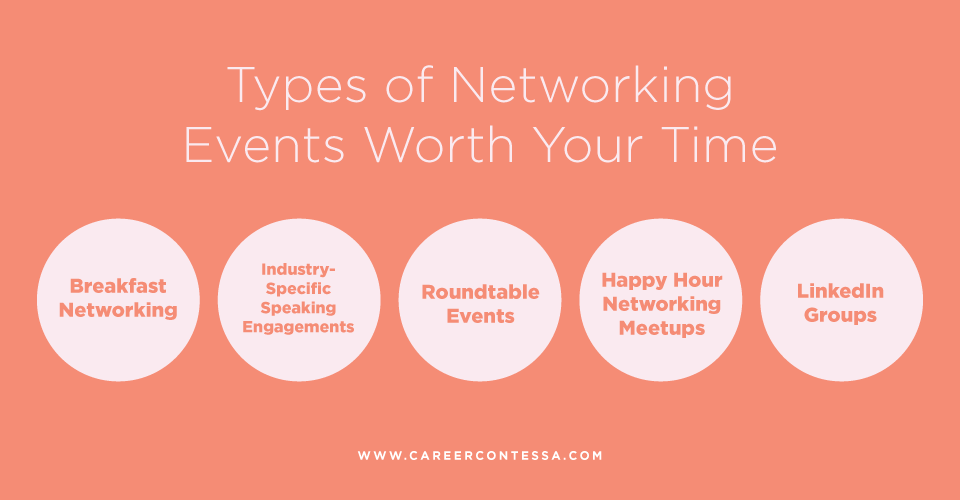
TYPES OF NETWORKING EVENTS WORTH YOUR TIME

1. Breakfast Networking

If you’re a morning person, this is a great way to start your day. What better scenario to schmooze than over egg-white omelets? Breakfast meetings allow all of the early risers to get ahead. You’re the first pitch of the day, so you get in front of potential employers or clients before they’re inundated with requests and resumes later that day. Unlike happy hours, you also get to interact with influencers before a potentially stressful workday hits (and before the alcohol starts flowing).

2. Industry-Specific Speaking Engagements

Whether you’re in marketing, retail, accounting, or another field, there are always people around to learn from. Take advantage of networking events in your area that have a speaker or speakers on a topic directly related to your position or department. You will learn from the experts themselves and ask questions you might not be able to in a webinar or online Q&A. You’ll also be surrounded by attendees in your field—take advantage of picking their brains! Bonus tip: If you have the confidence, offer to speak at one of these events yourself!

Like this Article ?  Share It !    You now can easily enjoy/follow/share Today our Award Winning Articles/Blogs with Now Over 2.5 Million Growing  Participates Worldwide in our various Social Media formats below:

FSC LinkedIn Network:   www.linkedin.com/in/fscnetwork

Facebook:  http://www.facebook.com/pages/First-Sun-Consulting-LLC-Outplacement-Services/213542315355343?sk=wall

Google+:  https://plus.google.com/115673713231115398101/posts?hl=en

Twitter: Follow us @ firstsunllc

Question: Want the ‘the best/current articles/blogs on the web’ on Job Search, Resume, Advancing/Changing your Career, or simply Managing People?

Answer: Simply go to our FSC Career Blog below & type(#career, #leadership, #life) in Blog Search:  https://www.firstsun.com/fsc-career-blog/

What Skill Sets do You have to be ‘Sharpened’ ?

Continue of article:

3. Roundtable Events

Similar to speaking engagements, roundtables are beneficial to those looking to advance their knowledge by communicating with their peers. Roundtables allow for open forums and discussions that, more often than not, lead to creative ideas and new directions. If you’re stuck on a project, story, or proposal, these are great events to get out of your rut and make some new connections in the meantime.

4. Happy Hour Networking Meetups

If you get the “roller coaster” anxiety about events that I do, happy hour is a tried-and-true tradition in the networking world. It allows for more of a relaxed atmosphere—making small talk and approaching strangers is simpler in a casual environment.
Bonus Tip: Avoid happy hours if you are actively looking for a job—given their usually laid-back nature, it might encourage you to make the wrong impression on a potential boss!

5. LinkedIn Groups

The digital age of networking is a blessing to the introvert in all of us. There are a ton of networking groups and forums on LinkedIn and other networks that allow communication, problem-solving and legitimate relationship-building (both business and personal) on a daily basis. If you’re nervous about jumping into the event pool, this is a great way to dip your toes in.
Even this list will leave you with a mind-spinning number of networking event options. So how do you decide which of them are worth your time?
Networking Events

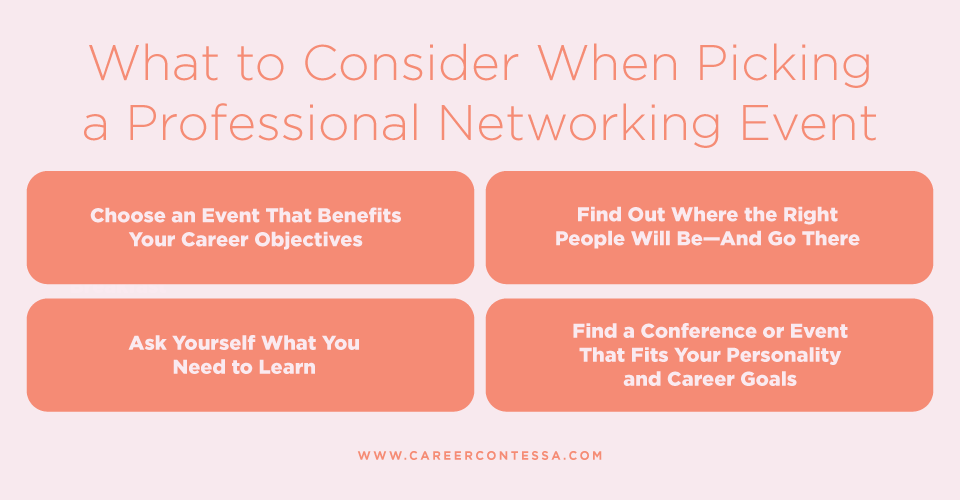
WHAT TO CONSIDER WHEN PICKING A PROFESSIONAL NETWORKING EVENT

1. Choose an Event That Benefits Your Career Objectives

Are you looking for a jobNew clientsStart-up capital? Either way, different events (especially the worthwhile ones!) are tailored to specific goals. Choose one that aligns with yours!

2. Find Out Where the Right People Will Be—And Go There

If you’re looking for a financial backer, you might want to avoid networking events that are lacking the decision-makers. If you’re looking for a job, try to find events attended by hiring managers or HR representatives. Research your favorite companies or industries, and see if there are any opportunities soon that are sponsored or managed by your dream company, or that feature your “dream role” people as keynote speakers or panelists.

3. Ask Yourself What You Need to Learn

Are you looking to attend a meetup or event in your field to escalate your growth? Check out the hosts, the speakers, and the topics being covered. If it’s something you’re already an expert on, look for a more advanced session. These are skill-specific opportunities for you to advance your career through developing and honing in on your strengths—or hey, your weaknesses!

4. Find a Conference or Event That Fits Your Personality and Career Goals

Once your objective is clear, choose an event that will give you a chance to shine. If you’re uncomfortable in big groups, look for events in more intimate settings. The last “rule” is important in our networking-cluttered world. Because the options are vast, you can—and should—attend events that will suit your needs and your A-game! If you hate ice breakers and small talk—maybe a roundtable isn’t for you. Maybe you prefer to listen to panelists, and then break into small groups to workshop specific skills. Maybe you prefer happy hours, because chit chat is your favorite thing to do.

HOW TO FIND NETWORKING EVENTS IN YOUR AREA

Okay so we’ve covered what events you should try to attend, and how to decide which ones you want to make time for—but how do you even know where to find these networking events to choose from? A quick google search of, “networking events [fusion_builder_container hundred_percent=”yes” overflow=”visible”][fusion_builder_row][fusion_builder_column type=”1_1″ background_position=”left top” background_color=”” border_size=”” border_color=”” border_style=”solid” spacing=”yes” background_image=”” background_repeat=”no-repeat” padding=”” margin_top=”0px” margin_bottom=”0px” class=”” id=”” animation_type=”” animation_speed=”0.3″ animation_direction=”left” hide_on_mobile=”no” center_content=”no” min_height=”none”][insert city here]” is a great way to start—but it can also be overwhelming with the amount of results you’ll likely get.

1. Your City Event Calendar

Your city likely has some sort of online event calendar—even if your “city” is more like a “farm” and your networking opportunities are limited to the weekly bingo competitions at one of the local churches. It’s still something, right? Your city calendar is a great starting point, because the list of events is already curated based on an important factor: distance.

2. Eventbrite

It’s an event calendar that’s super collaborative. Other people post events, and you get to search through them (you can even RSVP through the site.) Navigate to different events by date, category, event type, or price. You’ll find what you’re looking for in no time.
Pro tip: There are many websites like Eventbrite that showcase events in your area. Try Meetup and Facebook if you want more options.

3. Utilize Your Existing Network

That’s right—ask around at work! Maybe your coworkers are in industry-specific professional networks, or are secretly genius copywriters who teach multiple creative writing classes each week. Your boss might know of some local groups or meetings that you can attend.
Reach out to connections in your existing network, and see what events they’ve found helpful or exciting. You can also ask friends (especially if they’re in an industry you’re interested in) if they have any upcoming events on their radar. Even if you don’t get any recommendations right away, you’re letting everyone know you’re interested—and you’ll be the first person they call when they hear of something.
CareerContessa.com | July 31, 2018 | BY KELLY AYRES 

[/fusion_builder_column][/fusion_builder_row][/fusion_builder_container]

#CareerAdvice : #JobSearch – What #Recruiters Look at When Stalking Your #SocialMedia … You probably Already Know Recruiters are Looking at your #LinkedIn Page, but What About your Other Social Media Platforms?

You know, the ones where you post pictures of your latest vacation, share what you had for dinner and occasionally tag your friends in memes. Why, you might wonder, would a recruiter possibly be interested in viewing things like that?

As it turns out, those personal details are precisely why recruiters and hiring managers keep tabs on applicants’ social media accounts, says career coach Hallie Crawford. “It can help them get a more accurate idea about who you are outside of your resume — a more personal view into your life,” she explains. “A resume can tell them your qualifications, but your social media profile can help them determine your personality type and if you would be a good fit for company culture.”

Plus, recruiters are looking for red flags — risqué photos, bad language, signs of drugs use — that would show them you’d be a less than ideal man or woman to have in their offices.

So now that you know why they’re looking, how about knowing what they’re looking at?

Facebook

According to Crawford, recruiters and hiring managers are concentrating their efforts on two sections of your Facebook page — your “about me” section, and your photo albums.

About Me: “They will want to see how you describe yourself and if it matches up [fusion_builder_container hundred_percent=”yes” overflow=”visible”][fusion_builder_row][fusion_builder_column type=”1_1″ background_position=”left top” background_color=”” border_size=”” border_color=”” border_style=”solid” spacing=”yes” background_image=”” background_repeat=”no-repeat” padding=”” margin_top=”0px” margin_bottom=”0px” class=”” id=”” animation_type=”” animation_speed=”0.3″ animation_direction=”left” hide_on_mobile=”no” center_content=”no” min_height=”none”][with] how you have described yourself in your cover letter and resume,” Crawford says. Any discrepancies could cost you points pre-interview. What’s more, Crawford says, “they will also be looking for proper spelling and grammar” in this section, to see how seriously you take those skills.

Photos: When it comes to your photos albums, “a hiring manager will be checking not only your photos but also your descriptions,” Crawford warns. “A hiring manager wants to see if you represent yourself in a professional way.” To come off in the most positive pre-meeting light, “you will want to avoid using profanity, sexual or drug references,” Crawford says.

Like this Article ?  Share It !    You now can easily enjoy/follow/share Today our Award Winning Articles/Blogs with Now Over 2.5 Million Growing  Participates Worldwide in our various Social Media formats below:

FSC LinkedIn Network:   www.linkedin.com/in/fscnetwork

Facebook:  http://www.facebook.com/pages/First-Sun-Consulting-LLC-Outplacement-Services/213542315355343?sk=wall

Google+:  https://plus.google.com/115673713231115398101/posts?hl=en

Twitter: Follow us @ firstsunllc

Question: Want the ‘the best/current articles/blogs on the web’ on Job Search, Resume, Advancing/Changing your Career, or simply Managing People?

Answer: Simply go to our FSC Career Blog below & type(#career, #leadership, #life) in Blog Search:  https://www.firstsun.com/fsc-career-blog/

What Skill Sets do You have to be ‘Sharpened’ ?

Continue of article:

Twitter

Who You’re Following: “Recruiters like to see if you have any mutual connections and if you are connected with others in your industry,” Crawford explains. Following others in your industry is a smart thing to do no matter what — watching their feeds can give you a scoop on a new job opening, company announcements, the latest tech and much more.

Tweets: “Recruiters will be checking to see if you share useful information, if you share information relevant to your trade or if you just use tweets to fight with others,” Crawford says. If you’re applying for a job, take a look at your tweeting history and consider deleting anything that won’t show your best — and most thoughtful — self to a potential employer.

Instagram

Followers: Recruiters will check out the kind of followers you attract, Crawford says. Plus, they’ll want to see “how friendly and social you seem to be with your followers,” she says. What you say to them and what you say back, she explains, “can also give them insight [into] your personal relationships and if you would be a good cultural fit for the company.”

Pictures: You probably figured this, right? But recruiters are looking to see more than your photography skills (or lack thereof). “They will want to see how you represent yourself,” Crawford says. For example, “if you are at a party, do you represent yourself in a dignified way?” Crawford asks, or, “do you post things that others would consider inappropriate?”

GlassDoor.com | 

[/fusion_builder_column][/fusion_builder_row][/fusion_builder_container]