• About WordPress
    • WordPress.org
    • Documentation
    • Learn WordPress
    • Support
    • Feedback
  • Log In
  • LinkedIn
  • Facebook
  • X
p: 866.311.2514
First Sun Consulting, LLC | Outplacement Services and Career Transition Firm
  • Home
  • About
  • Services
    • Outplacement Services
    • Executive Coaching
    • Career Transition
  • Locations
  • Blog
    • Best of FSC Career Blog
    • FSC Career Blog
  • Members
    • FSC Career Modules
    • FSC LinkedIn Network
    • New! FSC AI Tools – Latest Technology for Resumes & Search
  • Our Clients
  • Contact Us
  • Menu Menu

Tag Archive for: #jobnetworking

You are here: Home1 / FSC Career Blog – Voted ‘Most Read’ by LinkedIn.2 / #jobnetworking

Posts

#CareerAdvice : #JobSearch -7 Perfect Questions to Ask While #Networking …Great REad!

March 5, 2019/in First Sun Blog/by First Sun Team

Odds are, you already know how important networking is. You might have leveraged your network to land a job, procure a new client or even switch careers entirely — or at the very least, you probably know someone who has. But despite the endless benefits of networking, many people still dread the experience.

Often, this is because they simply don’t know what to say. After all, approaching a stranger you know nothing about can be pretty intimidating — what in the world do you talk about?

Well, the next time you find yourself wondering this at an industry mixer, don’t fret. We talked to a handful of career experts to get their recommendations on great questions to ask while networking. Use any of these questions for a quick and painless conversation starter.

1. “What brings you here?”

This light-touch question is a great way to begin a conversation, explains Michelle Tillis Lederman, author of The Connector’s Advantage: 7 Mindsets to Grow Your Influence and Impact.

“This question shows you are interested in the other person and are not just trying to figure out how they can help you. Their response will give you a sense of what they are working on and what is on the front of their mind. That will lead you to extend the conversation and figure out how you can add value to them,” Tillis Lederman explains. “They will also likely ask you the question in return and give you an opening to share what your current objectives are.”

How to Network

2. “How did you get involved in the industry/company?”

Once you know a little bit more about somebody’s professional background, ask them how they got their start. It can provide valuable takeaways for you, as well as make you seem more likable.

“Finding out more about their journey leading up to their current role can offer an excellent insight into what you might need to do in order to work in that industry, role or company,” says Lars Herrem, Group Executive Director at recruiting agency Nigel Wright Group. “Demonstrating your interest and enthusiasm is key to creating a lasting impression and making yourself memorable, something which will prove extremely beneficial if you end up reaching out to this person in the future.”


Like this Article ?  Share It !    You now can easily enjoy/follow/share Today our Award Winning Articles/Blogs with Now Over 2.5 Million Growing  Participates Worldwide in our various Social Media formats below:

FSC LinkedIn Network:   www.linkedin.com/in/fscnetwork

Facebook:  http://www.facebook.com/pages/First-Sun-Consulting-LLC-Outplacement-Services/213542315355343?sk=wall

Google+:  https://plus.google.com/115673713231115398101/posts?hl=en

Twitter: Follow us @ firstsunllc

Question: Want the ‘the best/current articles/blogs on the web’ on Job Search, Resume, Advancing/Changing your Career, or simply Managing People?

Answer: Simply go to our FSC Career Blog below & type(#career, #leadership, #life) in Blog Search:  https://www.firstsun.com/fsc-career-blog/

What Skill Sets do You have to be ‘Sharpened’ ?

Continue of article:

3. “Since you work in the industry, how do you feel about X?”

Asking about a specific, timely event in the industry — whether it’s proposed legislation, a merger, a recent news story, etc. — is a great way to show the person you’re speaking with that you are knowledgeable and thoughtful, both of which are key to being memorable, says career coach Eli Howayeck of Crafted Career Concepts.

“First impressions matter. The best thing you can do, besides being a nice person, is to demonstrate how you think and what you know about the marketplace,” Howayeck explains. “This helps direct the conversation and informs your conversation partner that you likely know what you’re talking about or, at a minimum, pay attention to what is going on in the world and [fusion_builder_container hundred_percent=”yes” overflow=”visible”][fusion_builder_row][fusion_builder_column type=”1_1″ background_position=”left top” background_color=”” border_size=”” border_color=”” border_style=”solid” spacing=”yes” background_image=”” background_repeat=”no-repeat” padding=”” margin_top=”0px” margin_bottom=”0px” class=”” id=”” animation_type=”” animation_speed=”0.3″ animation_direction=”left” hide_on_mobile=”no” center_content=”no” min_height=”none”][are] not only focused on yourself and your advancement.”

4. “How would someone get their foot in the door in your company/industry?”

The ultimate objective of networking is often to get a new job, but coming out and asking somebody you just met to help you get one can be pretty off-putting. However, that doesn’t mean you can’t approach the topic at all — you just have to do so delicately.

This question “is a subtle way to ask about opportunities without coming right out and saying, ‘Do you know if they are hiring?’” says career coach Madelyn Mackie. “If you are lucky, they will ask you if you are interested and then provide you with a business card to follow-up with them after the event.”

Even if they aren’t able to help you out directly, though, you will likely gain some valuable insight that will help you in your job search process.

5. “Based on your journey, what do you wish someone would have told you earlier in your career?”

This is a great question to ask if you’re speaking with somebody who is more senior than you are. It allows them to impart the knowledge they’ve acquired over the years with you, as well as appeals to their ego.

“People are way more comfortable sharing their wisdom than they are sharing their contacts, and both can be very valuable,” Howayeck says. “Seeking to learn from others honors them and shows that you’re invested in growth. It also shows deference and can endear the person to you and deepen the connection.”

5 Ways to Grow Your Network From Scratch In a New Industry

6. “How do you spend your time outside of work?”

At its heart, networking is all about forming connections with others, so don’t be afraid to veer towards lighthearted chitchat. Questions like this one help people open up, and make it clear that you don’t expect the interaction to be purely transactional.

“This kind of question lowers the stakes and also gives the other person a chance to discuss what they’re passionate about,” Howayeck explains. “It also shows that you are actually interested in them as a person, and not just what they do and how it could help you.”

Who knows? You may even bond over a shared interest or activity!

7. “What’s the best way for me to get in touch/follow up with you?”

Ask this question, and you’re guaranteed to avoid one of the biggest mistakes that novice networkers make, according to career coach Nikki Bruno: “Beginning networkers often make the mistake of giving away a stack of business cards but gathering none. The only way to ensure that you’ll be able to follow up with new contacts is to get their information; it keeps you in the driver’s seat.”

“Note that this question is intentionally different from ‘May I have your card?’” Bruno adds. “Asking to stay in touch or to follow someone shows that you view him/her as a human being, not as a mere contact.”


GlassDoor.com | March 5, 2019 | Posted by Emily Moore

[/fusion_builder_column][/fusion_builder_row][/fusion_builder_container]

https://www.firstsun.com/wp-content/uploads/2015/10/Networking-Diverse-Group.jpg 450 970 First Sun Team https://www.firstsun.com/wp-content/uploads/2018/05/logo-min-300x123.jpg First Sun Team2019-03-05 22:16:362020-09-30 20:44:58#CareerAdvice : #JobSearch -7 Perfect Questions to Ask While #Networking …Great REad!

#CareerAdvice : 14 #JobSearch Tips Everyone Should Know. A #MustRead !

December 19, 2018/in First Sun Blog/by First Sun Team
Getting a new job is one of the most common New Year’s resolutions, with as many as 14 percent of people saying they’d like to change employers when they change their calendars.

Sound like you? If you’re ready for 2019 to be the year you finally find the right job, keep reading! We’ve curated 14 of the best job search tips from the past year to help you start your New Year’s job hunt off on the right foot, featuring advice from CEOs, celebrities and job coaches who know exactly what it takes to succeed.

1. Don’t wait until you have all of the qualifications to apply

“If you have all the qualifications you may actually be overqualified! Go ahead and apply if you have the core requirements.” —Jenn Lofgren, Incito Executive & Leadership Development

2. Explore your network — or make new connections — to get an internal referral

“Companies always give preferential treatment to employee referrals. If you don’t know someone there, then volunteering at a company’s local charity event can also be a great way to meet people.” —Carolyn Thompson, executive recruiter and managing principal atMerito Group

How to Ask for a Referral Without Embarrassing Yourself

Like this Article ?  Share It !    You now can easily enjoy/follow/share Today our Award Winning Articles/Blogs with Now Over 2.5 Million Growing  Participates Worldwide in our various Social Media formats below:

FSC LinkedIn Network:   www.linkedin.com/in/fscnetwork

Facebook:  http://www.facebook.com/pages/First-Sun-Consulting-LLC-Outplacement-Services/213542315355343?sk=wall

Google+:  https://plus.google.com/115673713231115398101/posts?hl=en

Twitter: Follow us @ firstsunllc

Question: Want the ‘the best/current articles/blogs on the web’ on Job Search, Resume, Advancing/Changing your Career, or simply Managing People?

Answer: Simply go to our FSC Career Blog below & type(#career, #leadership, #life) in Blog Search:  https://www.firstsun.com/fsc-career-blog/

What Skill Sets do You have to be ‘Sharpened’ ?

Continue of article:

3. Make LinkedIn work for you

“Make your online network reflect your offline connections. Once you set up your profile, start connecting with everybody you know: current and former colleagues, past employers, people in your industry, neighbors, family, friends, former classmates. —Donna Serdula, LinkedIn expert and author

4. Pursue a job that means something to you

“Do the work that comes from the soul of you… The key to fulfillment, success and contentment in life is aligning your personality with what your soul came to do.” —Oprah Winfrey, Oprah Winfrey Network

5. Tout your soft skills

“Instead of calling them soft skills, I would actually call them essential skills… Some of the most crucial of these skills include communication, teamwork, leadership, relationship-building, balance, reliability and dependability.” —Greg Muccio, Director of People at Southwest

6. Prepare, prepare, prepare — and then prepare some more

“The best way to calm the nerves is by adequately preparing for your interview. Control the controllables. Do your research, hone your stories and schedule a practice interview.” —Sarah Johnston, The Briefcase Coach

Are You Prepared for Your Job Interview? Don’t Say Yes Before Reading This

7. But make sure to remain authentically you

“There is no replacement for 100% authenticity in interactions with people, and the same is true of interviews, as they are simply an interaction with someone you don’t know [fusion_builder_container hundred_percent=”yes” overflow=”visible”][fusion_builder_row][fusion_builder_column type=”1_1″ background_position=”left top” background_color=”” border_size=”” border_color=”” border_style=”solid” spacing=”yes” background_image=”” background_repeat=”no-repeat” padding=”” margin_top=”0px” margin_bottom=”0px” class=”” id=”” animation_type=”” animation_speed=”0.3″ animation_direction=”left” hide_on_mobile=”no” center_content=”no” min_height=”none”][yet]… Remember that this is about assessing fit for you too, and the only way to truly assess fit for yourself is to be fearlessly and authentically you.” —Amanda Gulino, Founder of A Better Monday

8. When it comes to salary, don’t ask for what you’d be willing to take — ask for what you’re worth

“Decide what you think you’re worth and then ask for what you think you’re worth. Nobody’s just going to give it to you.” —Shonda Rhimes, Award-winning producer and scriptwriter

9. Step into an interview with as much self-awareness as possible

“Know what you’re good at, and know what you’re not good at. Don’t pretend you’re something that you’re not. Always ask for help. The smartest people ask questions; the people who are the most ignorant think they know it all.”  —Jessica Alba, actress and Co-Founder of The Honest Company

10. If you work with a recruiter, look beyond the one job listing

“[Our] intent is always to form lasting personal relationships, whether that be to help you find a permanent job or if you want to deploy from assignment to assignment. [Most good firms are searching for] people who want to have a mutually beneficial relationship to help them achieve their career goals while solving problems for our clients.” —Ryan Lynch, Client Relationship Executive atKforce

10 Career Experts Share Their #1 Piece of Job Search Advice

11.  Don’t let rejections derail your job search

“Don’t be afraid of the word no. It doesn’t mean it’s a bad result. It just means try again. You can’t be afraid to ask, because if you don’t, no one else is… If you just go out there and not be afraid of the negative result, you’ll be surprised. You may get a positive result.” —Serena Williams, Professional tennis player

12. And don’t let fear derail it, either

“Stop being so afraid! That’s really what strikes me when I look back — the sheer amount of time I spent tangled up in fears and doubts that were entirely of my own creation… Instead, what matters are the true friends you make, the activities you throw yourself into, the books you read, the skills and knowledge you acquire. Those experiences — the ones that make you stronger, smarter and braver — are what really matter.” —Michelle Obama, author, activist & former First Lady

13. Don’t just read blogs — find a mentor

“Find mentors in the people around you who you respect… There are mentors in the workspace all around you — peers, the seasoned professional, your supervisor, the supervisor one desk over… [The best] person to be your mentor in the organization is someone who sees you every day, someone who knows you at your best and someone who can give you opportunities to improve.” —Mary Barra, CEO ofGeneral Motors

14. Keep learning – your resume is never done

“Learning is the true currency in today’s economy… Employees need to constantly refresh their skills to stay relevant.” —Michael Fraccaro, Mastercard’sChief Human Resources Officer

If you’re going to finally find the right job for you in 2019, you’ll need to lead your job search with the best advice you can find. Use these pro tips to make sure your 2019 job search is as effective as possible!


GlassDoor.com | December 19, 2018 | Posted by Sarah Greesonbach

[/fusion_builder_column][/fusion_builder_row][/fusion_builder_container]

https://www.firstsun.com/wp-content/uploads/2017/07/man-at-couch-with-laptop.jpg 350 525 First Sun Team https://www.firstsun.com/wp-content/uploads/2018/05/logo-min-300x123.jpg First Sun Team2018-12-19 17:01:052020-09-30 20:45:24#CareerAdvice : 14 #JobSearch Tips Everyone Should Know. A #MustRead !

#BestofFSCBlog : #JobSearch – What is Internal Networking & Why It Matters?

October 17, 2018/in First Sun Blog/by First Sun Team

Surveys show that nearly 85% of employees have found or obtained their job via networking. Additionally, it’s estimated that referrals are associated with a 2.6 to 6.6 percent higher chance of an accepted job offer, however, all of these statistics are referencing external networking.


External networking refers to broadening your network of industry professionals and other individuals for mutually beneficial purposes including searching for a job or looking for a referral.

Internal networking refers to reaching out and connecting with colleagues within your organization, even if your job doesn’t require you to do so.

What is internal networking? Why is internal networking so important?

Company culture has become increasingly important in the workplace, and part of that is having a strong team of employees who are comfortable collaborating and working between departments and disciplines. When you continually network with other employees within your company, you’re building relationships, establishing rapport, and cultivating a mutual trust and respect that will enable higher productivity and a better overall work experience.

The Right Way to Network With a Recruiter

Like this Article ?  Share It !    You now can easily enjoy/follow/share Today our Award Winning Articles/Blogs with Now Over 2.5 Million Growing  Participates Worldwide in our various Social Media formats below:

FSC LinkedIn Network:   www.linkedin.com/in/fscnetwork

Facebook:  http://www.facebook.com/pages/First-Sun-Consulting-LLC-Outplacement-Services/213542315355343?sk=wall

Google+:  https://plus.google.com/115673713231115398101/posts?hl=en

Twitter: Follow us @ firstsunllc

Question: Want the ‘the best/current articles/blogs on the web’ on Job Search, Resume, Advancing/Changing your Career, or simply Managing People?

Answer: Simply go to our FSC Career Blog below & type(#career, #leadership, #life) in Blog Search:  https://www.firstsun.com/fsc-career-blog/

What Skill Sets do You have to be ‘Sharpened’ ?

Continue of article:

Internal networking could give you a leg up on job openings

Networking with others in your organization can provide exclusive knowledge on job opportunities before they are public knowledge. If you work for a great company that you want to grow with, knowing about internal positions as early as possible could be a key factor in your career development. Building interdepartmental relationships will help you with that.

Internal networking can help you when you’re trying to make a career shift

When you’re trying to make a career shift, often one of the hardest parts is catering your resume to your new field of work. If you don’t have related work experience on your resume, it can be very difficult for a hiring manager or recruiter to see how you’d be a good fit for the position you’re applying to. This is where internal networking comes in.

If you’re trying to develop more experience in a different area of business, network with other employees in that department. Reach out and make it known that you’re interested in learning more about what they do. Conduct informational interviews or even ask to shadow or take on a small role in a project they might be working on. Even if it is a small role, getting exposure to a different sector of your company will give you more related experience to integrate into your resume.

Sponsors vs. Mentors: What’s the Difference & Why It Matters

Simple ways to network internally

This first internal networking trick sounds simple because it is. Say hi to people in the halls and introduce yourself! It could be as casual as “hey, I always see you around and wanted to actually introduce myself! My name is x. What’s your name?”

This will open up the conversation so you can ask what department they’re in and establish rapport. From there, you can gradually build a stronger bond and point out that you’d love to grab coffee and chat about projects in your respective departments.

Once you’ve opened up a dialogue with your colleagues, pay attention to little details they share with you. If someone mentions that their child was sick, make it a point to ask how the child is feeling in the following days. If someone also mentions a big project or meeting, ask how it’s going. Paying attention to little details shows others that you care, that you pick up on a lot of information, and makes people feel heard. This will help you network internally and will help build your reputation in a positive light.

Often when people think about networking, external networking comes to mind, but internal networking can be extremely beneficial. The stronger your inter-office relationships are, the more success you’ll have with collaboration. This will benefit you in your current role, and can also be a big help when you’re up for a promotion or looking to make a lateral move to a different area of work.

GlassDoor.com | October 17, 2018 | Posted by Michele Lando

https://www.firstsun.com/wp-content/uploads/2017/12/woman-red-lips.jpg 653 981 First Sun Team https://www.firstsun.com/wp-content/uploads/2018/05/logo-min-300x123.jpg First Sun Team2018-10-17 16:00:122020-09-30 20:45:42#BestofFSCBlog : #JobSearch – What is Internal Networking & Why It Matters?

#CareerAdvice : #JobSearch – Most People Are Looking for Jobs the Wrong Way. Heather Hund Wants to Fix That… Write a #Resume . Send it to a Couple Dozen Different Companies. Receive Zero Responses. If this Sounds Familiar, you’re Not Alone.

October 15, 2018/in First Sun Blog/by First Sun Team

One of the most common frustrations job seekers have is sending out tons of applications, only to hear nothing back in return. And as a result, many of them view the job search as near-impossible. But the truth is, finding a great job isn’t as hard as most people think it is — or at least, it doesn’t have to be.

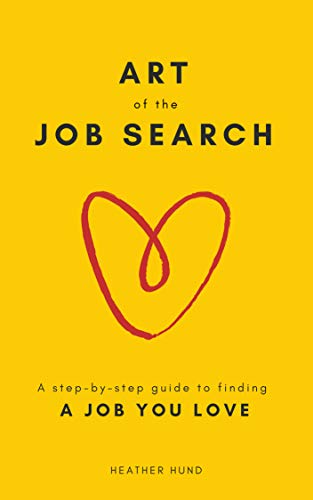
Art of the Job Search: A Step-By-Step Guide to Finding a Job You Love by [fusion_builder_container hundred_percent=

heather hund

That’s the central theme behind Heather Hund’s new book, Art of the Job Search. Hund believes that finding a job isn’t so much about what you do — it’s about how you do it. And as long as you pay attention to the details, you can find a job you love in record time.

We reached out to Hund to learn more about her best job search tips, why finding a job you love is an investment in your career and how job seekers have more power than they might think — here’s what she had to say.

Glassdoor: What inspired you to write this book?

Heather Hund: I left my job and didn’t have another one, and realized that I really wanted to find a job that I loved, but also that I had no idea how to do it. So, my first step in the job search was actually interviewing people about how they found a job that they loved. Then, I used that information at each step of the process, and ended up getting several offers and, even more importantly, finding a job that I really loved, and it changed my life. And I thought that was information that needed to be out into the world.

How to Find a Job You’ll Want to Stay at for Good

Like this Article ?  Share It !    You now can easily enjoy/follow/share Today our Award Winning Articles/Blogs with Now Over 2.5 Million Growing  Participates Worldwide in our various Social Media formats below:

FSC LinkedIn Network:   www.linkedin.com/in/fscnetwork

Facebook:  http://www.facebook.com/pages/First-Sun-Consulting-LLC-Outplacement-Services/213542315355343?sk=wall

Google+:  https://plus.google.com/115673713231115398101/posts?hl=en

Twitter: Follow us @ firstsunllc

Question: Want the ‘the best/current articles/blogs on the web’ on Job Search, Resume, Advancing/Changing your Career, or simply Managing People?

Answer: Simply go to our FSC Career Blog below & type(#career, #leadership, #life) in Blog Search:  https://www.firstsun.com/fsc-career-blog/

What Skill Sets do You have to be ‘Sharpened’ ?

Continue of article:

Glassdoor: You make it clear off the bat that there’s a big difference between the act of the job search, and the art of the job search. How would you describe the differences between the two?

Heather Hund: When I began looking for a new job after I left my old one, I dropped my resume online for all sorts of things — some looked interesting, and some didn’t. And after a few weeks of that, I realized that wasn’t actually moving me in the right direction. So I then took a giant step back and took a self-assessment, similar to the one included in the book, to figure out “What do I actually want to do? What are my strengths? How do I want to apply those?” Then I applied that same bit of strategy throughout the search, from writing my resume to applying to interviewing to negotiating. So I think being strategic is what makes the difference between ending up at a job, and finding a job that you really love.

Glassdoor: Job seekers often view employers as the ones wielding all the power in the job search. Why do you think that is, and what can job seekers do to counter this mindset?

Heather Hund: As humans, we’re wired to avoid rejection. I think it’s biological, and probably helped keep us alive at some point. But I also think that today, it doesn’t help us much, and it prevents us from going for the things we really want. So it’s about flipping the dialogue — instead of thinking, “Do they want me?” Ask yourself, “Do you actually want to work there?” Do you like the culture, do you feel good about the role, do you like the people that are interviewing you? Remember, you’re interviewing them.

While it’s important to answer the person’s questions, when you take control and start asking more questions, it can actually make you a more attractive candidate. It shows that you can problem solve, and that you’re thinking about things from a higher level — from an ownership perspective — which I think is super powerful.

Yes, they have the job that they can offer you, but you have the skills, the ability, the talent to offer them. You’re a giant asset as well. People often undervalue themselves, and don’t realize how valuable they are.

Glassdoor: That’s definitely one thing we’ve heard before — when recruiters ask if you have any questions for them, it’s not just an opportunity for you to determine fit. It’s also an opportunity to prove yourself, and show that you’ve done the research.

Heather Hund: Absolutely. I think the most powerful thing to do in that situation is to ask questions that you would ask if you were already in the role, like “What are the priorities right now, and what will they be in a year?”

Top Questions to Ask in an Interview, According to a Hiring Manager

Glassdoor: Many job seekers prioritize income and stability over finding a job they love. But you make the case that finding a job you love isn’t a luxury — it’s an investment in your career. Can you talk a little more about that?

Heather Hund: It’s so true — people often see loving your job as an indulgence, like “You shouldn’t love your work, it’s work!” But think about it: When you were doing something that you loved, either at work or as a hobby, were you better at it? I would guess yes. When I was writing this book, I definitely found that research backed this up. People who love their job get more raises, they get promoted more, they have better relationships with their managers, and they’re just happier, which is a huge, huge benefit. I think loving your job really is an investment in your career.

Glassdoor: I loved your commentary on having a growth mindset in which “failures” are rebranded as learning experiences. Why, in your opinion, is this so critical for job seekers to understand?

Heather Hund: The growth mindset is so powerful. If I could recommend one other book, it would be Carol Dweck’s Mindset. Basically, she argues that with a growth mindset, there’s no such thing as failure — everything becomes learning. It enables you to take more risks and to go after the things you really want, even when you’re afraid, and I think this includes finding a job you really love. People don’t really acknowledge how hard job searching is emotionally, and that’s why I decided to devote an entire chapter to talking about how to get into that growth mindset before you start job searching. It’s funny — I know it doesn’t have to do with the tactics of job searching, but I actually think this chapter might be the most important one in the book.

Glassdoor: At one point in the book, you state that “networking is more important than the work itself.” That’s a pretty shocking statement! Can you expand on that?

Heather Hund: Like many other people (and often women in particular), at my first job I thought “If I just put my head down and work super hard, I’ll get noticed.” But what I started noticing was that the people who got the coolest projects and the special opportunities and the fast promotions were often the ones that had relationships with the people who were making the decisions. That was a hard thing to notice, because the truth is I hate networking. Most people kind of balk when they hear ‘networking’. No one wants to network, and I think it has a bad reputation — people just think of awkward conversation.

For me, it took a reframe of what networking is. Really, it’s just talking to people. And what I realized over the course of my career was that I don’t like “networking”, but I love talking to people and getting to know them. Building those relationships is why networking is often more important than the work itself.

To be clear, it is actually important to be good at your job, but it’s also really important to build strong relationships so that you get to know when cool things are happening that you might be excited about, or that you could contribute toward. Networking can lead to not only opportunities, but also long-term mentors and friendships. And it can often last beyond just one job, which is pretty awesome.

Glassdoor: One thing you mention is that you can still be an introvert and network. What are some of the tips that you have for those people who really dread the thought of networking?

Heather Hund: I like to start with small talk for two reasons: one, I think it helps you build the relationship, and two, I think talking about your weekend or your family or your hobbies just takes the pressure off of the conversation. Don’t go into it with an outcome-based mindset — just have a conversation.

I find it quite helpful to write out questions (there are a few that I include in the book), not so much to bring with me, but just to get me thinking, “What are the things that I want to cover in this conversation?”

The biggest hurdle honestly is just doing it. In my first real networking conversation, I was waiting for the elevator after work and my colleague was just standing there, and we struck up a random conversation. After a while I said, “Hey, do you want to grab coffee?” And he said “Sure.” And I remember thinking, “Ah, that’s so easy! You just ask somebody if they want to grab coffee.”

8 Networking Strategies You Haven’t Thought of Yet

Glassdoor: I found it interesting that you chose to close a book all about the art of the job search with a chapter on what to do after you get the job. Why did you feel that was so important to include, and what are your top tips for new employees?

Heather Hund: One of the things that stuck with me from business school was when a friend told me, “Whenever I start a new job, I make sure to be incredible for the first six months.” I’d never thought about it before, but he was totally right. First impressions are very real, and very lasting.

A lot of people go into a new job thinking, “I need to figure out exactly what my boss wants me to do, and I need to do those things.” But what people don’t realize is that often, their boss doesn’t know what they want. They’re super busy, and they really just need somebody to take something and run with it. So it’s more about how you frame yourself as someone who can be a problem-solver and a real thought partner — that’s what sets apart the amazing people from the good people.

Another huge thing is feedback. Some companies are great about having feedback structures in place, and then some aren’t. If feedback is not a regular thing at your company, take initiative and lead a feedback discussion with your boss. Feedback, when done in the right way, builds much stronger relationships, helps you develop and improve faster and can take you further in your career.

Then the last thing I talk about in the book is promotions. Marissa Mayer once said, “I got every single one of [my promotions] by asking and getting feedback and planning for it.” You need to start thinking about your new career path — you don’t necessarily need to have an answer, but think of where you want to go and what you need to do to get there before you even want to make that transition.

Check Out Art of the Job Search on Amazon Today


GlassDoor.com | October 15, 2018  Posted by Emily Moore

[/fusion_builder_column][/fusion_builder_row][/fusion_builder_container]
https://www.firstsun.com/wp-content/uploads/2018/05/logo-min-300x123.jpg 0 0 First Sun Team https://www.firstsun.com/wp-content/uploads/2018/05/logo-min-300x123.jpg First Sun Team2018-10-15 21:02:412020-09-30 20:45:43#CareerAdvice : #JobSearch – Most People Are Looking for Jobs the Wrong Way. Heather Hund Wants to Fix That… Write a #Resume . Send it to a Couple Dozen Different Companies. Receive Zero Responses. If this Sounds Familiar, you’re Not Alone.

#CareerAdvice : #Networking – Should You Join a Professional Group? …Here are Three Questions you Can Ask Yourself Before Joining a Group to Make Sure it will Deliver Clear #CareerBenefit .

September 20, 2018/in First Sun Blog/by First Sun Team

When I was first laid off and trying to build up my professional network as a newly self-employed person, I had the bright idea to join a Meet Up group called “Small Business Owners & Entrepreneurs” that met once a month at a local restaurant to talk about business, marketing and growth.

So you can imagine my surprise when later that week I sat down to dinner with a handful of multi-level-marketing salespeople who were sure their product was the one I should start selling!

If you’re interested in joining a professional group to expand your network or ramp up your development, you’ll need to do some research in order to avoid making my mistake. Because whether you’re considering a free or paid membership to a professional group, it can be difficult to understand whether the benefits are really worth it, or if you’re walking into a scam.

Here are three questions you can ask yourself before joining a group to make sure it will deliver clear career benefits.

1. Is it a legitimate group or a scam?
The Internet is connecting people faster than ever before. Most of the time, that’s a good thing. But in the case of professional organizations, it can create a lot of confusion as you sort the legitimate professional groups that will reflect well on you from the overnight scams that just pad your resume.

To make sure the group you’re considering is a legitimate one that will deliver on its promises, ask yourself the following questions:

Does it have membership requirements?
The most in-demand groups often have membership requirements such as having a certain amount of experience in the field or a certain degree. For example, Licensed Members of the National Society of Professional Engineers (NSPE) must hold a valid license or certificate of registration as a professional engineer or the equivalent. If there are absolutely no requirements for membership besides paying the fee, that could be a sign it’s more likely to be a hobby group rather than a professional group.

Does it explain membership fees?
High-priced memberships that don’t explain their fees are a big red flag. Look for details about how the association spends the membership money or what you get for it, such as a membership fee explanation or benefits page like this one from the Society for Human Resources Management (SHRM).

Is it well-represented in my current network?
Social proof can be a good indicator that the professional organization you’re considering is a legitimate one, so take a look at your current connections and see which groups they’ve chosen to join.

For example, if you’re a teacher connected with other teachers, the odds are incredibly high that you know several people who are members of the National Education Association (NEA). If you’re considering a group and you can’t find anyone you know who is a member, contact a school or work mentor to ask their opinion — you never know what you might find out about how your industry perceives the organization.

Like this Article ?  Share It !    You now can easily enjoy/follow/share Today our Award Winning Articles/Blogs with Now Over 2.5 Million Growing  Participates Worldwide in our various Social Media formats below:

FSC LinkedIn Network:   www.linkedin.com/in/fscnetwork

Facebook:  http://www.facebook.com/pages/First-Sun-Consulting-LLC-Outplacement-Services/213542315355343?sk=wall

Google+:  https://plus.google.com/115673713231115398101/posts?hl=en

Twitter: Follow us @ firstsunllc

Question: Want the ‘the best/current articles/blogs on the web’ on Job Search, Resume, Advancing/Changing your Career, or simply Managing People?

Answer: Simply go to our FSC Career Blog below & type(#career, #leadership, #life) in Blog Search:  https://www.firstsun.com/fsc-career-blog/

What Skill Sets do You have to be ‘Sharpened’ ?

Continue of article:

2. Will I participate in the group?
It’s one thing to join a group because they host a wide variety of trendy and on-point events. It’s another thing entirely to join a group because you actually want to attend those events.

Before you spring for a group membership, consider the schedule of activities and whether or not you would really participate. Do you see yourself making time for events each month, quarter or year? Remember, this doesn’t just mean putting it on your calendar, but making all the other little arrangements to your schedule that it takes to prioritize going to a professional meeting in your personal time.

If you’re not sure, reach out to your local chapter head and ask if you can attend a session or two as a trial to make sure you’ll participate. If not, you might be better off pocketing your money and focusing on building your network solo.

3. Will it grow my network with authentic connections?
Finally and most importantly, consider whether or not being active in this group will give you the opportunity to make authentic connections with other people. Because as nice as it is to be invited to free online webinars or in-person presentations, the professional groups that can change your life are the ones that give you the opportunity to meet and engage with new people in your industry. They provide more than just free appetizers and company swag — they become the backdrop for forging new relationships based on common interests and goals over the course of your career.

Beyond providing plenty of opportunities to make new connections, also make sure the group will connect you with the specific people you want to meet, which will depend on your goals.

For example, if you’re a freelancer, you could be looking for a professional organization that can connect you with fellow freelancers so you can build a support network and grow your business. Or you might be looking for an organization within your freelancing niche that can keep you up to date in your industry and make connections with new customers. These are two very different goals, and what’s right for you will depend on what kind of connections you’re looking to make.


Glassdoor.com | September 18, 2018 | Posted by Sarah Greesonbach

https://www.firstsun.com/wp-content/uploads/2016/04/free-meeting-top-veiw2.jpg 4250 6500 First Sun Team https://www.firstsun.com/wp-content/uploads/2018/05/logo-min-300x123.jpg First Sun Team2018-09-20 20:39:152020-09-30 20:45:48#CareerAdvice : #Networking – Should You Join a Professional Group? …Here are Three Questions you Can Ask Yourself Before Joining a Group to Make Sure it will Deliver Clear #CareerBenefit .

#CareerAdvice : #Networking – 5 Types of #NetworkingEvents Actually Worth Your Time…Who said All Networking Events were Created Equal? We Say, Pick your Poison.

August 6, 2018/in First Sun Blog/by First Sun Team
The idea of networking used to produce a physical reaction in me, similar to riding a roller coaster: sweaty palms, nervous chatter, and a slightly queasy stomach.

Unless you’re a regular performer, no one relishes the idea of planting yourself in a room full of strangers and attempting to be charming—especially when your livelihood is involved!Despite the universal awkwardness that usually comes with these events, every city offers it’s unique opportunities for you to network.

Networking Events

 From happy hours to bowling matches to workshops, it seems like more options are popping up every day. Here are just a few we think you’ll like.

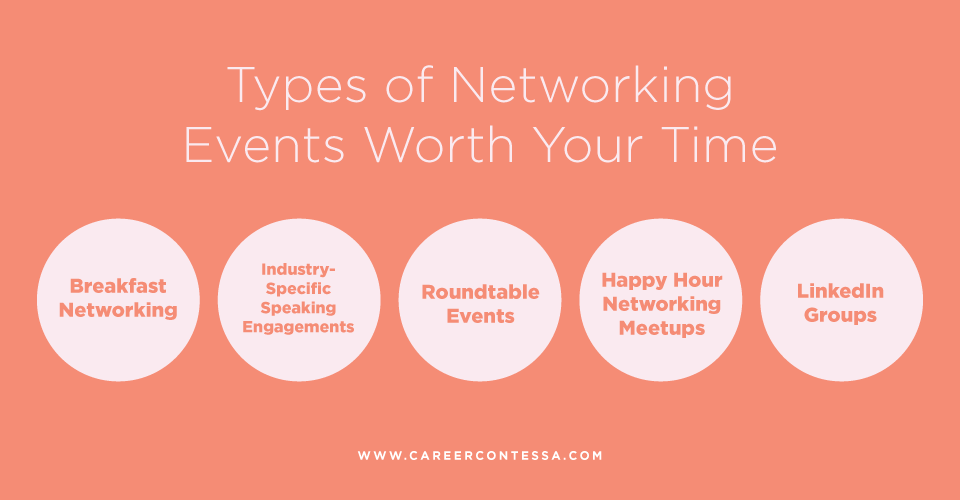
TYPES OF NETWORKING EVENTS WORTH YOUR TIME

1. Breakfast Networking

If you’re a morning person, this is a great way to start your day. What better scenario to schmooze than over egg-white omelets? Breakfast meetings allow all of the early risers to get ahead. You’re the first pitch of the day, so you get in front of potential employers or clients before they’re inundated with requests and resumes later that day. Unlike happy hours, you also get to interact with influencers before a potentially stressful workday hits (and before the alcohol starts flowing).

2. Industry-Specific Speaking Engagements

Whether you’re in marketing, retail, accounting, or another field, there are always people around to learn from. Take advantage of networking events in your area that have a speaker or speakers on a topic directly related to your position or department. You will learn from the experts themselves and ask questions you might not be able to in a webinar or online Q&A. You’ll also be surrounded by attendees in your field—take advantage of picking their brains! Bonus tip: If you have the confidence, offer to speak at one of these events yourself!

Like this Article ?  Share It !    You now can easily enjoy/follow/share Today our Award Winning Articles/Blogs with Now Over 2.5 Million Growing  Participates Worldwide in our various Social Media formats below:

FSC LinkedIn Network:   www.linkedin.com/in/fscnetwork

Facebook:  http://www.facebook.com/pages/First-Sun-Consulting-LLC-Outplacement-Services/213542315355343?sk=wall

Google+:  https://plus.google.com/115673713231115398101/posts?hl=en

Twitter: Follow us @ firstsunllc

Question: Want the ‘the best/current articles/blogs on the web’ on Job Search, Resume, Advancing/Changing your Career, or simply Managing People?

Answer: Simply go to our FSC Career Blog below & type(#career, #leadership, #life) in Blog Search:  https://www.firstsun.com/fsc-career-blog/

What Skill Sets do You have to be ‘Sharpened’ ?

Continue of article:

3. Roundtable Events

Similar to speaking engagements, roundtables are beneficial to those looking to advance their knowledge by communicating with their peers. Roundtables allow for open forums and discussions that, more often than not, lead to creative ideas and new directions. If you’re stuck on a project, story, or proposal, these are great events to get out of your rut and make some new connections in the meantime.

4. Happy Hour Networking Meetups

If you get the “roller coaster” anxiety about events that I do, happy hour is a tried-and-true tradition in the networking world. It allows for more of a relaxed atmosphere—making small talk and approaching strangers is simpler in a casual environment.
Bonus Tip: Avoid happy hours if you are actively looking for a job—given their usually laid-back nature, it might encourage you to make the wrong impression on a potential boss!

5. LinkedIn Groups

The digital age of networking is a blessing to the introvert in all of us. There are a ton of networking groups and forums on LinkedIn and other networks that allow communication, problem-solving and legitimate relationship-building (both business and personal) on a daily basis. If you’re nervous about jumping into the event pool, this is a great way to dip your toes in.
Even this list will leave you with a mind-spinning number of networking event options. So how do you decide which of them are worth your time?
Networking Events

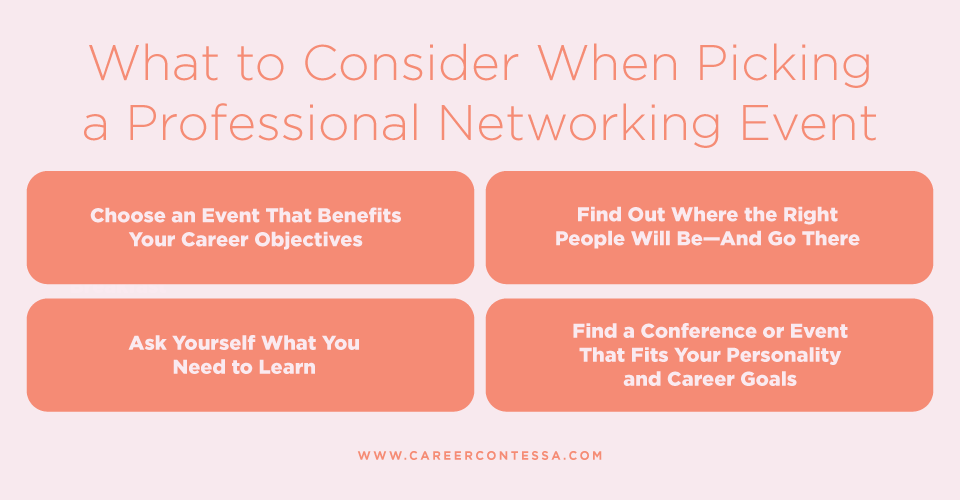
WHAT TO CONSIDER WHEN PICKING A PROFESSIONAL NETWORKING EVENT

1. Choose an Event That Benefits Your Career Objectives

Are you looking for a job? New clients? Start-up capital? Either way, different events (especially the worthwhile ones!) are tailored to specific goals. Choose one that aligns with yours!

2. Find Out Where the Right People Will Be—And Go There

If you’re looking for a financial backer, you might want to avoid networking events that are lacking the decision-makers. If you’re looking for a job, try to find events attended by hiring managers or HR representatives. Research your favorite companies or industries, and see if there are any opportunities soon that are sponsored or managed by your dream company, or that feature your “dream role” people as keynote speakers or panelists.

3. Ask Yourself What You Need to Learn

Are you looking to attend a meetup or event in your field to escalate your growth? Check out the hosts, the speakers, and the topics being covered. If it’s something you’re already an expert on, look for a more advanced session. These are skill-specific opportunities for you to advance your career through developing and honing in on your strengths—or hey, your weaknesses!

4. Find a Conference or Event That Fits Your Personality and Career Goals

Once your objective is clear, choose an event that will give you a chance to shine. If you’re uncomfortable in big groups, look for events in more intimate settings. The last “rule” is important in our networking-cluttered world. Because the options are vast, you can—and should—attend events that will suit your needs and your A-game! If you hate ice breakers and small talk—maybe a roundtable isn’t for you. Maybe you prefer to listen to panelists, and then break into small groups to workshop specific skills. Maybe you prefer happy hours, because chit chat is your favorite thing to do.

HOW TO FIND NETWORKING EVENTS IN YOUR AREA

Okay so we’ve covered what events you should try to attend, and how to decide which ones you want to make time for—but how do you even know where to find these networking events to choose from? A quick google search of, “networking events [fusion_builder_container hundred_percent=”yes” overflow=”visible”][fusion_builder_row][fusion_builder_column type=”1_1″ background_position=”left top” background_color=”” border_size=”” border_color=”” border_style=”solid” spacing=”yes” background_image=”” background_repeat=”no-repeat” padding=”” margin_top=”0px” margin_bottom=”0px” class=”” id=”” animation_type=”” animation_speed=”0.3″ animation_direction=”left” hide_on_mobile=”no” center_content=”no” min_height=”none”][insert city here]” is a great way to start—but it can also be overwhelming with the amount of results you’ll likely get.

1. Your City Event Calendar

Your city likely has some sort of online event calendar—even if your “city” is more like a “farm” and your networking opportunities are limited to the weekly bingo competitions at one of the local churches. It’s still something, right? Your city calendar is a great starting point, because the list of events is already curated based on an important factor: distance.

2. Eventbrite

It’s an event calendar that’s super collaborative. Other people post events, and you get to search through them (you can even RSVP through the site.) Navigate to different events by date, category, event type, or price. You’ll find what you’re looking for in no time.
Pro tip: There are many websites like Eventbrite that showcase events in your area. Try Meetup and Facebook if you want more options.

3. Utilize Your Existing Network

That’s right—ask around at work! Maybe your coworkers are in industry-specific professional networks, or are secretly genius copywriters who teach multiple creative writing classes each week. Your boss might know of some local groups or meetings that you can attend.
Reach out to connections in your existing network, and see what events they’ve found helpful or exciting. You can also ask friends (especially if they’re in an industry you’re interested in) if they have any upcoming events on their radar. Even if you don’t get any recommendations right away, you’re letting everyone know you’re interested—and you’ll be the first person they call when they hear of something.
CareerContessa.com | July 31, 2018 | BY KELLY AYRES 

[/fusion_builder_column][/fusion_builder_row][/fusion_builder_container]

https://www.firstsun.com/wp-content/uploads/2015/10/Networking-Diverse-Group.jpg 450 970 First Sun Team https://www.firstsun.com/wp-content/uploads/2018/05/logo-min-300x123.jpg First Sun Team2018-08-06 21:22:402020-09-30 20:46:14#CareerAdvice : #Networking – 5 Types of #NetworkingEvents Actually Worth Your Time…Who said All Networking Events were Created Equal? We Say, Pick your Poison.

Your #Career : Three Insanely Simple Email Templates For #Networking With Strangers…When you Know What (not) to Say, Reaching out to Strangers for your #JobHunt Becomes Less Awkward & More Effective.

April 2, 2018/in First Sun Blog/by First Sun Team

Maybe it’s been a few months since you’ve graduated and you’re getting anxious to land a job. Or maybe you’re further on in your career and looking to move into a new industry. In either case, there’s one major hitch: You’ve heard how helpful it can be to reach out to people outside of your network. But the idea of cold-emailing old contacts and people you don’t know at all seems awkward, uncomfortable, and–let’s be honest–pretty much hopeless.

It doesn’t have to be. In truth, contacting strangers for networking opportunities and, ultimately, job leads can actually pay off–just as long as you know what (and what not) to say. And since your goal is just to clinch an opportunity for an offline conversation, the emails you need to write are probably more straightforward–and effective–than you may think.


Related:How To Turn Your Crappy Network Into A Better One


Related:Mentorship And The Art Of The Cold Email


THE INTRO EMAIL

Your very first email should be the most thorough, but that doesn’t mean it should be long. Here’s a template you can adapt:

Dear [fusion_builder_container hundred_percent=”yes” overflow=”visible”][fusion_builder_row][fusion_builder_column type=”1_1″ background_position=”left top” background_color=”” border_size=”” border_color=”” border_style=”solid” spacing=”yes” background_image=”” background_repeat=”no-repeat” padding=”” margin_top=”0px” margin_bottom=”0px” class=”” id=”” animation_type=”” animation_speed=”0.3″ animation_direction=”left” hide_on_mobile=”no” center_content=”no” min_height=”none”][first name],

My name is Samantha Daniels, and I’m a recent college graduate from the University of Southern California, which I saw you graduated from as well.

I’m reaching out because I noticed from my research on LinkedIn that you work at Edelman, and your career journey is so inspiring. I’m impressed by how quickly you’ve been able to move up within the last four years after starting as an intern before. That would be a dream come true for me.

It would be great to learn more about your experience in the PR industry and the qualities you feel have helped you become so successful since graduating from USC. I’d especially love to hear what it was like starting out as a recent grad and finding your way in the industry.

I would be more than happy to meet you for coffee or at your office or wherever is more convenient for you. Or if you’d prefer a conversation over the phone, please just let me know. I’m very flexible, and even just 15 minutes of your time would be invaluable and greatly appreciated.

Would it be possible for us to find a time to chat?

Thanks so much,

[Your name]

There are three straightforward rules to remember for writing introductory emails like this one:

1. Keep it short—four paragraphs tops—and specific. The purpose of this email is to explain how you found them, why they caught your interest, and what you’d like to discuss with them, without overloading them with too much information.

Start off with who you are and what you have in common. This helps the person feel comfortable and (hopefully) makes them want to continue reading. Plus, relaying why you’re attracted to the person will make later conversations and interactions more sincere and authentic.

But to be clear, your reason for reaching out should be more than, “Can you help me land my dream job?” or, “Will you hire me?” Avoid any wording that sounds like you’re asking for a job interview.


Related:The Networking Secret That Only Requires Writing Four Emails A Year


Like this Article?  Share It !    You now can easily enjoy/follow/share Today our Award Winning Articles/Blogs with Now Over 2.5 Million Growing  Participates Worldwide in our various Social Media formats below:

FSC LinkedIn Network:   www.linkedin.com/in/fscnetwork

Facebook:  http://www.facebook.com/pages/First-Sun-Consulting-LLC-Outplacement-Services/213542315355343?sk=wall

Google+:  https://plus.google.com/115673713231115398101/posts?hl=en

Twitter: Follow us @ firstsunllc

Question: Want the ‘the best/current articles/blogs on the web’ on Job Search, Resume, Advancing/Changing your Career, or simply Managing People?

Answer: Simply go to our FSC Career Blog below & type(#career, #leadership, #life) in Blog Search:https://www.firstsun.com/fsc-career-blog/

What Skill Sets do You have to be ‘Sharpened’ ?

Continue of article:

2. Do your research and share what caught your attention.It could be something that inspires you, intrigues you, or motivates you about their career journey. By being explicit about what caught your eye, you’ll have greater chances of building mutually beneficial and genuine relationships with the right people–rather than firing off dozens of scattershot messages to the wrong ones.

3. Always close with a question. In the last paragraph, be sure to always make the ask. Ask to meet in person if you live in the same city, or suggest a phone call if that would be more convenient.

When asking for a meeting or phone call, you want to make it as easy as possible for the person to say yes without having to do too much thinking. Remember, this person is probably busy. The last thing you want is for them not to respond because you made them think twice about how easy it’ll be to fit you into their schedule. That’s why closing the email with the question, “Would it be possible for us to meet?” works, because they can easily reply, “Yes!”

Don’t worry about the specific time and location of the meeting just yet; you just want them to agree to talk with you first. Fingers crossed, once they do, you can then share times that work best for you.


Related:Mentorship And The Art Of The Cold Email


THE SCHEDULING EMAIL

If you reach that stage, congrats! The key here is not to overthink it. Once someone has offered to meet up or chat, keep your second email limited strictly to pinning down logistics. Resist the temptation to dig into any of the topics you’re planning to discuss face-to-face (that will be your chance to impress them, not right now). Try this:

Hi [first name],

So great to hear from you! I would love to meet next week. I’m happy to find a location that’s most convenient for you. I’m free after 5 p.m. on Monday and I’m pretty flexible on Tuesday and Wednesday, but if another day works best I can work around your schedule.

Looking forward to meeting you soon,

[your name]

Done! Leave it at that.

THE FOLLOW-UP EMAIL

However, if you don’t receive a response in one to two weeks, don’t take it personally, and don’t be afraid to follow up. Chances are the person may have gotten busy, or your email could’ve been buried in their inbox. I can’t tell you how many times I’ve followed up with someone and received an immediate response. Here’s what to say:

Hi [first name],

I hope your week is going well. I wanted to follow up with you to see if you’d be interested in meeting with me. I’m so impressed by [the reason you stated you were attracted to them in the first email], and I’d love to learn more about [the key thing that you initially mentioned].

I’d be more than happy to meet with you whenever is most convenient for you. However, I’m sure you’re busy, so if your schedule does not permit, I completely understand.

Many thanks again,

[your name]


Related:How To Write A Follow-Up Email That Isn’t Annoying


Be sure to also include the previous email beneath your follow-up email to make it easy for them to refer back to it in case they missed it the first time.

The scary part is drafting an email and pressing “send.” But when you know exactly what to say–and what to avoid–reaching out to people you don’t know becomes a whole lot easier.


Adunola Adeshola is a millennial career strategist and the founder of employeeREDEFINED.com.

FastCompany.com | 9-13-2017  | BY ADUNOLA ADESHOLA 5 MINUTE READ

 [/fusion_builder_column][/fusion_builder_row][/fusion_builder_container]

https://www.firstsun.com/wp-content/uploads/2018/02/man-on-laptop2.jpg 720 1080 First Sun Team https://www.firstsun.com/wp-content/uploads/2018/05/logo-min-300x123.jpg First Sun Team2018-04-02 15:51:482020-09-30 20:48:12Your #Career : Three Insanely Simple Email Templates For #Networking With Strangers…When you Know What (not) to Say, Reaching out to Strangers for your #JobHunt Becomes Less Awkward & More Effective.

#CareerAdvice : #BestofFSCBlog -The Simple Trick that has Helped me #LandJobs Without Having to Apply….Must REad!

April 2, 2018/in First Sun Blog/by First Sun Team
  • Author Anna Davies hasn’t applied for a job through a portal in over a decade.
  • Instead, every few years, she sends our her a “hire me” email and sends it to her contacts — including old coworkers, bosses, neighbors, landlords, people she trained with for a marathon, and more — via BCC.
  • To keep up your own network, Davies recommends helping people out when you can, becoming a mentor, and volunteering.

Networking is simply tapping into your social circle and the people you already know, to try to find the best fit for a position that aligns to your interests and abilities,”


Every few years, I pull out my “hire me” email and bcc it to my contacts, which includes old coworkers and bosses — but also former neighbors, landlords, people I trained with for a marathon, and so on. It looks like this:

Hi all,

After a really fun two years of traveling and freelancing — currently sitting in a cafe in gloomy Edinburgh — I’m planning to settle back in New York City on 10/5 and am looking for a full-time job in editorial or copywriting. Above all, really looking for a position at the senior-editor level or above with challenging work and great coworkers.

A bit about my resume: Was last a senior editor in magazines, but left my last job in November 2012, and since then have been freelancing for magazines and websites, as well as writing YA novels — 13 published for various houses. Interests include brand copywriting — can turn around copy fast — health, psychology and relationships.

Resume attached, and thanks in advance for any leads!

Thanks to this email template, I haven’t applied for a job via a job portal in a decade — I’ve always been able to find opportunities through my network. But my confidence in the approach took a dive when I shared it with a former coworker recently. She was job-hunting and frustrated by the lack of response from sending applications through online forms.

“It’s like I’m sending them into a black hole,” she said. “I don’t even know if they get read.”

When I suggested my email trick, she wrinkled her nose.

“Doesn’t that sound desperate?”

I flushed. I hadn’t thought so, but did it? The technique had been successful, but what if it seemed like I was just begging for a job?

Like this Article ?  Share It !    You now can easily enjoy/follow/share Today our Award Winning Articles/Blogs with Now Over 2.5 Million Growing  Participates Worldwide in our various Social Media formats below:

FSC LinkedIn Network:   www.linkedin.com/in/fscnetwork

Facebook:  http://www.facebook.com/pages/First-Sun-Consulting-LLC-Outplacement-Services/213542315355343?sk=wall

Google+:  https://plus.google.com/115673713231115398101/posts?hl=en

Twitter: Follow us @ firstsunllc

Question: Want the ‘the best/current articles/blogs on the web’ on Job Search, Resume, Advancing/Changing your Career, or simply Managing People?

Answer: Simply go to our FSC Career Blog below & type(#career, #leadership, #life) in Blog Search:  https://www.firstsun.com/fsc-career-blog/

What Skill Sets do You have to be ‘Sharpened’ ?

Continue of article:

A few weeks later, I reached out to the same friend to see if she wanted to take on some freelance work. She replied back, saying she didn’t have time — she had tried the email trick, got five interviews and just started a full-time job. Even though it felt uncomfortable, it was clear: The networking approach works.

While the word “networking” may conjure up visions of people mingling around a badly lit ballroom, bedecked in name tags, it doesn’t have to feel artificial.

“Networking is simply tapping into your social circle and the people you already know, to try to find the best fit for a position that aligns to your interests and abilities,” notes J. Kelly Hoey, career expert and author of “Build Your Dream Network: Forging Powerful Relationships in a Hyper-Connected World.” Having someone vouch for your skills can go way beyond what a hiring manager gets from your resume and a 15-minute phone screen.

Today, finding jobs through who you know is easier than ever. Jane McGonigal, a video game designer and author, has gotten gigs via Twitter — simply by tweeting what she wishes she could work on. “I’m constantly tweeting about cool projects,” she says, adding that part of her success is due to her 150,000 followers. “But I think this approach can also work for other people. When you talk about the things you love, people take notice.”

RELATED: 8 Opening Lines for Fearless Networking

The other benefit of networking? It can save you hours spent on job search engines. “I’ve never applied for a job,” says Lelia Gowland, a 30-year-old entrepreneur from New Orleans. “I had a lot of internships in college, and I stayed in touch with all my hiring managers. That’s how I got my first job at the Dallas Zoo, where I stayed for a year.”

Gowland found that having a large network in her corner helped her make the leap to entrepreneurship. “My network is everything,” she says. “I think it’s all about showing interest, seeing what other people are doing, and seeing how your skills match their needs and interests. It’s a give-and-take relationship.”

Here’s what I’ve learned from tapping my network of friends and colleagues — and how you can make it work for you, too.

1. Seek out examples

Networking language varies across industries. Some, like mine, can be informal, while others are more buttoned-up. If you work in an industry like finance or law, join professional organizations and go to events, suggests Hoey. You don’t need to pitch everyone; being friendly and engaged is enough.

2. Get social

Think beyond LinkedIn — Twitter, Instagram and Facebook can be valuable platforms for networking. Having discussions, following people in your industry, and making sure your LinkedIn is up-to-date are all easy ways to stay relevant online.

3. Give in return

Remember, this is a relationship, so it’s important to give something to the other party, too. A simple “congratulations” when they’ve been promoted, for example, can keep things on good terms, Hoey suggests. Send things that don’t need a response — a short message, an article link, or a forwarded invite to a talk. The other person won’t feel like they need to do anything, but you’ll keep the conversation going.

4. Know when to take a break

It’s enticing to keep in contact with a powerful person you met, but if all you’re getting in return is radio silence, step back and focus on other connections.

5. Say ‘thank you’

“People want to help, and if their advice or introduction led to a job, tell them about it!” says Hoey. A sincere “thank you” will go a long way.

6. Keep searching job sites

If you already have a large network, it’s easy to get complacent. Don’t. Having a resume on-hand and being knowledgeable about industry news means you won’t need to play catch-up if an interview comes your way.

7. Volunteer

One of the best ways to meet people is through volunteering, especially if it’s industry-adjacent, says Hoey, who began volunteering with the group 85 Broads (now Ellevate) when she wanted to pivot from her legal background. Later, she was tapped to lead the group as president. When you show your skills in an authentic way, people want to work with you.

8. Be a mentor

Offer time to talk over coffee or help mentor people at your alma mater who want to get into your industry. They may have no power now, but you have no idea where they’ll end up a few years down the line.

RELATED: Cracking This Joke During a Salary Negotiation Can Help You Earn More


                                                                Businessinsider.com | April 1, 2018 | Anna Davies, LearnVest
https://www.firstsun.com/wp-content/uploads/2017/12/Woman-on-laptop.jpg 931 1242 First Sun Team https://www.firstsun.com/wp-content/uploads/2018/05/logo-min-300x123.jpg First Sun Team2018-04-02 13:06:042020-09-30 20:48:13#CareerAdvice : #BestofFSCBlog -The Simple Trick that has Helped me #LandJobs Without Having to Apply….Must REad!

Blog Search

Login/Register

  • Log in
  • Entries feed
  • Comments feed
  • WordPress.org

FSC Career Videos

  • Job Search Techniques | Start Here
  • Resume/Cover Letter
  • Interviewing
  • Additional Career Videos
  • FSC Career Blog – #1 Career Library LinkedIn

Recent Posts

  • #CareerAdvice – #JobSearch – #JobInterview Preparation Checklist. Must Read! July 11, 2019
  • #CareerAdvice : #ResumeWriting -How Can You Make Yourself Sound Better on Your #Resume ? July 9, 2019
  • #BestofFSCBlog : #Recruiting – Nine(9) Reasons to Hire a Candidate Without Experience. Focus on Skillsets vs. Experience. July 8, 2019
© Copyright - First Sun Consultation - Website Maintained by BsnTech Networks - Enfold WordPress Theme by Kriesi
Scroll to top