• About WordPress
    • WordPress.org
    • Documentation
    • Learn WordPress
    • Support
    • Feedback
  • Log In
  • LinkedIn
  • Facebook
  • X
p: 866.311.2514
First Sun Consulting, LLC | Outplacement Services and Career Transition Firm
  • Home
  • About
  • Services
    • Outplacement Services
    • Executive Coaching
    • Career Transition
  • Locations
  • Blog
    • Best of FSC Career Blog
    • FSC Career Blog
  • Members
    • FSC Career Modules
    • FSC LinkedIn Network
    • New! FSC AI Tools – Latest Technology for Resumes & Search
  • Our Clients
  • Contact Us
  • Menu Menu

Tag Archive for: #interviewingadvice

You are here: Home1 / FSC Career Blog – Voted ‘Most Read’ by LinkedIn.2 / #interviewingadvice

Posts

#JobSearch : What To Watch Out For When Interviewing In 2023. Interviewing is Not Easy. A MUst REad!

January 5, 2023/in First Sun Blog/by First Sun Team

Interviewing is not easy. You must remain vigilant as the hiring process is not always honest and transparent. You must be aware of misleading job advertisements, overpromises and questionable tactics used by companies to entice applicants to join their firm. Some businesses will purposely try to game the new salary disclosure laws or ghost you after 10 rounds of interviews over the course of three to six months. It wouldn’t be shocking if you receive a lowball offer and are pressured by a pushy recruiter to accept it, by being made to feel that you are lucky an offer was even extended.

One of the most common New Year’s resolutions is to find a new job. Many people who lost their positions last year are highly motivated to start interviewing now that the wheels of commerce are starting up again. However, be prepared. Due to the current economic situation and the likelihood of an upcoming recession, finding a new role may not be as easy as it used to be.

Companies have held off hiring during the holiday season, as both potential candidates and internal corporate professionals, including human resources, talent acquisition, hiring managers and executives, have been out of the office on vacation. Now that both the candidates and businesses are ready to hunt for new opportunities and fill open headcount respectively, the 2023 interview cycle begins in earnest.

Here Is What You Need To Keep An Eye Out For When Interviewing

It Starts With The Job Description

Pay close attention to the job description, as it will tell you a lot about the company and its culture. If the job ad demands too many unrealistic requirements, lacks reasons why the job is open, why you should be interested in the opportunity and circumvents the new salary transparency rule in your state by giving a vast range, it’s a red flag.

It’s rational that a job seeker will naturally anchor their expectations to the higher end of the salary band. They don’t know that the company purposely placed the lofty range to entice more candidates to apply for the role to add to its pipeline of candidates.

After going through about three to six rounds of interviewing, the internal recruiter tells you, “We’d love to offer you the role at $100K.” Believing that you’d get at least $200k, you now feel like you’ve been played. Companies hope to hook you and get away with a lowball offer, as you’ve invested a reasonable amount of time and energy into the interview process. They feel that since it’s a more challenging job market, you may jump at the opportunity, even though it is far lower than you had hoped. This works effectively when a person is in between jobs and desperately wants to return to work.


Like this Article?  Share It!    You now can easily enjoy/follow/share Today our Award-Winning Articles/Blogs with Now Over 2.5 Million Growing Participates Worldwide in our various Social Media formats below:

LinkedIn: https://www.linkedin.com/in/chris-g-laughter-b46389198/

Twitter: Follow us @ firstsunllc

Best Daily Choice: Follow the Best of FSC Career Articles/Blogs @

https://twitter.com/search?q=bestoffscblog&src=typeahead_click

Question: Want the ‘the best/current articles/blogs on the web’ on Job Search, Resume, Advancing/Changing your Career, or simply Managing People?

Answer: Simply go to our FSC Career Blog below & Type(#Jobsearch, #Resume, or #Networking) in Blog Search:  https://www.firstsun.com/fsc-career-blog/

What Skill Sets Do You have to be ‘Sharpened’ ?

Did you know?  First Sun Consulting, Llc (FSC) is celebrating over 30 years in the delivery of corporate & individual outplacement services & programs to over 1200 of our corporate clients in the U.S., Canada, the UK, & Mexico!  

We here at FSC want to thank each of our corporate partners for the opportunity in serving & moving each of their transitioning employee(s) rapidly toward employment!


Article continued …

An Annoying Application Process

When the application submission process is archaic, as it requires you to submit the résumé and also complete a glitchy, lengthy application that mirrors everything in your résumé, this is indicative that the company doesn’t care about your time. If there is no response within a few days or longer, it confirms that the company is not employee-centric.

Beware Of Sweet-Talking Headhunters

Your recruiter may be a great person, but remember that they get paid a hefty commission when the headhunter places you in a role at the company. Like a stockbroker, attorney, real estate agent or plumber, you need to be careful of their ulterior motives.

They may be more concerned about lining their own pockets than doing right by you. You want to ensure that the executive search professional is not steering you to a company that pays a higher commission than another company that offers a better opportunity but won’t compensate the recruiter at the same high level.

At the end of the interview process, you want to make sure the headhunter doesn’t pressure you into the job or is reluctant to fight hard in salary negotiations, out of fear that the firm will push back and they’ll lose their lofty placement fee.

Unprepared Interviewers

Pay attention to when interviews are scheduled. If the HR person or managers involved with the hiring process schedule times without first asking if you’re available or push you into accepting days and times that are inconvenient, it’s a red flag about how much they value your candidacy. If the scheduled meeting is canceled at the last minute or the contact person ghosts you for long periods and returns without apologizing for their absence, it’s a tell that they won’t treat you well if you decide to join the firm. Similarly, when interviewers show up late and unprepared for the interview, clearly didn’t read your résumé or check out your LinkedIn profile and then proceeded to mispronounce or call you by the wrong name, it’s a problem.

Be Prepared For Condescending And Rude Treatment

When you are hunting for a new job, it’s a stressful undertaking. It’s both daunting and pressure-filled when you’ve lost your position and are concerned about your financial situation. All it takes is dealing with someone who isn’t empathetic, polite or helpful to make your job search even more painful.

The process of selling yourself to strangers, being made to jump through hoops and contending with the rollercoaster of emotions of highs and lows can cause even the most mentally strong person to become anxiety-ridden. Condescending, rude and abusive words and actions lead to frustration and anger over the entire job-search process.

Bosses Who Don’t Really Know What’s Going On

Some managers are out of touch with the job market and reality. They lack up-to-date metrics about compensation and are not intellectually curious to perform due diligence to see if the job market and pay have changed over the years. They are blissfully unaware of how hot a sector is. Bad bosses don’t bother to gauge how many people may be in the job search that actually possess the requisite requirements and experiences needed for the job. Instead, they’ll just assume that there is a never-ending abundance of candidates waiting in line to take the position for low pay. Rather than making inquiries into competitive compensation, the boss thinks they know it all and dismisses anyone who tries to enlighten the supervisor, leading to no one getting hired and causing the existing workers to contemplate leaving.

The Long, Drawn-Out Process

Lately, the interview process has become a three-to-six-month ordeal. You’re ordered to meet with up to 10 people. Many of those involved are tangentially related to what you would be doing at the company, but are pulled into the process anyway. This happens because the hiring manager lacks confidence in their own decision-making process and needs others to validate their choice of a candidate.

The challenge is that it’s hard to get five to 10 people to agree on a candidate. If one or two people have reservations about the candidate, it’s easy for a less-than-confident manager to accept their feedback and start the search all over again—wasting the time of the person who almost got the job.


Forbes.com | January 4, 2023 | Jack Kelly 

https://www.firstsun.com/wp-content/uploads/2016/07/free-women-at-meeting.jpeg 350 524 First Sun Team https://www.firstsun.com/wp-content/uploads/2018/05/logo-min-300x123.jpg First Sun Team2023-01-05 17:12:052023-01-05 17:12:05#JobSearch : What To Watch Out For When Interviewing In 2023. Interviewing is Not Easy. A MUst REad!

#JobSearch : Five Insider Tips To Acing The Interview. You Learn That There’s a Lot you were Never Told About the Interviewing Process. A MUst REad!

July 7, 2022/in First Sun Blog/by First Sun Team

When pulling back the curtain on the interview process, you learn that there’s a lot you were never told about. Meeting the requirements listed on a job description is only one small part of the hiring process.

There are easy-to-implement actions you may be unaware of that will make you stand out and win the job offer.

Charisma, Charm And The Likability Factor

Put yourself in the place of the interviewer or hiring manager. Would you prefer to hire someone who possesses all the right skills, but comes across as arrogant and hard to work with, or would you want a person who you resonate with and visualize having a great relationship; although, they’ll need some training and upskilling?

Most people would likely go for the person that they bond with. You can always learn new skills; however, it’s hard to change a person’s personality that’s been in the workforce for a couple of decades.

The key to successfully navigating the interview process is getting everyone involved to like and want to work with you. It’s simple to do. Be present in the moment and actively listen to the interviewer. Use their name when you address the person, nod your head when they make a point you agree with, refrain from interrupting them while they’re speaking, maintain eye contact, smile and display relaxed body language. Reframe a statement made by the interviewer to show that you understand what they are saying. Instead of waiting until the end of the meeting to ask a question, treat the interview as a conversation and bring up questions to which you genuinely want to learn the answers. These actions position you as a person who is authentic, polite, curious and interested in the role. It also generates goodwill and enhances your likability.


Like this Article?  Share It!    You now can easily enjoy/follow/share Today our Award-Winning Articles/Blogs with Now Over 2.5 Million Growing Participates Worldwide in our various Social Media formats below:

LinkedIn: https://www.linkedin.com/in/chris-g-laughter-b46389198/

Twitter: Follow us @ firstsunllc

Best Daily Choice: Follow the Best of FSC Career Articles/Blogs @

https://twitter.com/search?q=bestoffscblog&src=typeahead_click

Question: Want the ‘the best/current articles/blogs on the web’ on Job Search, Resume, Advancing/Changing your Career, or simply Managing People?

Answer: Simply go to our FSC Career Blog below & Type(#Jobsearch, #Resume, or #Networking) in Blog Search:  https://www.firstsun.com/fsc-career-blog/

What Skill Sets Do You have to be ‘Sharpened’ ?

Did you know?  First Sun Consulting, LLc (FSC) is celebrating over 30 years in the delivery of corporate & individual outplacement services & programs to over 1200 of our corporate clients in the U.S., Canada, UK, & Mexico!  

We here at FSC want to thank each of corporate partners in the opportunity in serving & moving each of their transitioning employee(s) rapidly toward employment !

Article continued …

Scheduling Interviews

Defer to the interviewer the days and times of the meeting. You want to demonstrate⁠—right from the start—that you are considerate. If the company asks for your ⁠availability, do not select early Monday mornings or late times on Friday, especially in the summertime. This tone-deaf approach will create tension with the interviewer. They want to meet with you, but are not too happy about the hours you selected. It’s off-putting and makes for a bad first impression.

While it may be a burden to meet their timeline, it’s essential to show that you are a team player and want to make things easier for your new boss. You can tell the human resources person or hiring manager, “The time you offered conflicts with another meeting I have. Nevertheless, I am really excited about the role, company and opportunity. I’ll be glad to check to see how I could reschedule my appointment and circle right back to you and confirm the date.” By doing this, the supervisor will appreciate that you are highly motivated for the role and willing to take action to make this work.

Negotiating Compensation

When human resources ask how much you are looking for, don’t say the number you want. Add a 10 to 20% premium to the salary you desire. When you provide a number, the HR person automatically thinks that you are shooting too high and will scale back the offer.

For instance, if you desire a $100k salary and say that’s what you want, they’ll likely offer around $90k to $95k. Their thought is that since you likely overshot your ask, they’ll offer a lower salary and call your bluff.

If you replied by asking for a base salary of $120k, they would offer about $110k, which would be greater than what you would have settled for. Execute the same strategy for stock options, vacation time and your corporate title. Ask for more, so that you have room to negotiate.

Check Into Your New Boss

Before you accept a job, conduct due diligence on the new boss, so that you won’t be blindsided. You don’t want to resign, only to later find out that you made a major mistake once you start the new job. It is important to find a person who works at the company to gain insider information. If you don’t know anyone at the organization, tap into your network for assistance. If you have a large enough base, there will be a person who knows someone at your target company. Ask your recruiter what they know about the hiring manager. Google the person to see what comes up.

The company could be amazing and the job wonderful, but your prospective boss may be a deal killer. Some managers are great mentors and will champion your career. They’ll be empathetic and help you succeed and grow.

Sadly, there are a lot of bad bosses. They only care about themselves. The manager will take all the credit for your work. The person may disparage you in front of others. Some leaders lack clout. These professionals may not have the ear or respect of senior leadership. In this scenario, you’ll be lumped in with your manager. The chances of growing and developing will be minute.

Master The Art Of Small Talk

Both the interviewer and interviewee are nervous. The hiring process is not a natural thing to do. In a video or in-person meeting, the interviewer fires off questions and you need to answer them on the fly intelligently. It could be a cold and clinical affair. The trick is to lighten up the mood. This could be done by effectively engaging in small talk.

Here’s an example of this type of banter. First, before the interview, check out the hiring manager’s social media footprint. Find some common ground. It could be that you both attended the same university, live in a nearby neighborhood or share an enthusiasm for a certain sports team.

Armed with the knowledge that the interviewer is a Mets fan, you can break the ice by saying, “I don’t know if you are interested in sports, but did you see the Mets last night? It was an amazing game!” Since you already know that they’re an avid fan, it’s a great way to immediately forge a common connection. The same holds true for building a bond through your mutual interests in TikTok, music, movies, television shows, Netflix series and other events.

Additionally, before the interview commences, ask the interviewer some questions. It could be, “What made you decide to select my rèsumè? Why did you want to meet with me?” This will nudge the interviewer to articulate the good things they saw on your rèsumè. It starts off the interview with a positive first step.

It sounds banal, but chatting about the weather, the commute into the city or other noncontroversial matters that we all talk about takes away some of the stress on both sides of the video or table. The mission is to transform the interview from a stuffy, serious affair to a more relaxed and friendly conversation.


Forbes.com |  July 7, 2022 | Jack Kelly 

https://www.firstsun.com/wp-content/uploads/2014/03/Interview.jpg 600 904 First Sun Team https://www.firstsun.com/wp-content/uploads/2018/05/logo-min-300x123.jpg First Sun Team2022-07-07 14:37:352022-07-07 14:37:35#JobSearch : Five Insider Tips To Acing The Interview. You Learn That There’s a Lot you were Never Told About the Interviewing Process. A MUst REad!

#CareerAdvice : #InterviewingQuestions – How To Respond To Failure Questions In An #Interview .

May 22, 2019/in First Sun Blog/by First Sun Team

A scene from the NBC comedy series, The Office, parodies an interview question and answer perfectly.

America’s favorite clueless manager, Michael Scott, is interviewing for a corporate promotion with his CFO and is asked about his great strengths.

“Why don’t I tell you what my greatest weaknesses are? I work too hard, I care too much and sometimes, I can be too invested in my job.”

Puzzled by the answer, the CFO probes with, “OK. And your strengths?”

“Well, my weaknesses are actually my strengths.” Michael grins as if he just nailed the question while his CFO grimaces as if he just fell for a bad joke.

Doing the opposite of what Michael Scott does on this show is typically excellent career advice.  Any interviewer who has listened to a clever answer like this cringed when watching that scene.

Like this Article ?  Share It !    You now can easily enjoy/follow/share Today our Award Winning Articles/Blogs with Now Over 2.5 Million Growing  Participates Worldwide in our various Social Media formats below:

FSC LinkedIn Network:   www.linkedin.com/in/fscnetwork

Facebook:  http://www.facebook.com/pages/First-Sun-Consulting-LLC-Outplacement-Services/213542315355343?sk=wall

Google+:  https://plus.google.com/115673713231115398101/posts?hl=en

Twitter: Follow us @ firstsunllc

Question: Want the ‘the best/current articles/blogs on the web’ on Job Search, Resume, Advancing/Changing your Career, or simply Managing People?

Answer: Simply go to our FSC Career Blog below & type(#career, #leadership, #life) in Blog Search:  https://www.firstsun.com/fsc-career-blog/

What Skill Sets do You have to be ‘Sharpened’ ?

Continue of article:

Bad Advice Is Now Common Practice

Stop me if you’ve heard this before. When asked about your failures or weaknesses in an interview, use it as an opportunity to humble brag about a real strength.

This advice is terrible and comes across as painfully transparent to any experienced interviewer. Hoping to show off their work ethic or passion, candidates dodge, duck, dip and dive to avoid answering a question they fear.

In a survey of 570 early-career professionals, WayUp found that questions about weaknesses and failure were the second most feared query in interviews. Young professionals assume this is a trick question meant to weed out the weakest candidates.

This misunderstanding stems from the false view that those who dare to fail are weak. The opposite is more likely the truth. Those who rarely fail spend their careers playing it safe.

What Is The Interviewer Looking For?

Your interviewer got to their position by taking a risk. They took chances to move up in their organization and often failed along the way. They understand that real growth occurs when someone experiences a setback and changes behavior as a result.

Interviewers are looking for several hints in your answer:

1. Are you confident enough to share defeats? Top performers see failure as a necessary step along the path to greater success. Achievers can drown out their misfires with many more successes and are not intimidated to talk openly about foundering.

2. Are you humble enough to honestly assess your setbacks? Ego can be a limiting factor in one’s career, as you can’t grow if you can’t admit to your role in defeat. A study in the Journal of Behavioral Decision Making found that people spent 25% more time working on a solution after focusing on their emotional response to an initial failure.

3. Do you grow from failure? Everyone gets knocked down, but the response is more important than the fall. Knowing that you will suffer setbacks if you accept the role, your interviewer is keenly interested in how much resilience you have.

Focus Your Answer On The Right Type Of Failures

Remember that you are not the only person who fails. The more success your interviewer has enjoyed, the longer the list of failures they have overcome. When asked this question, embrace it with some humor. I like to say something like, “How much time do we have?” This shows your interviewer that you embrace failure as a path to personal growth.

One failure that will hurt your chances is that which involves a lack of effort. This is one of the few variables we can control in life and is a transferable behavior in any function. If you failed on a project because you chose not to put in the time, your interviewer has no choice but to envision the same effort from you in the future. We have all come up short where effort was the culprit. These instances are not the ones to share in an interview.

There are several types of situation that best share what type of person you are.

1. The Knowledge Gap Failure: You took a run at a project that you are unequipped to handle and fell on your face. Perhaps, you accepted a sales role after working in operations. Your early months were humbling as hard work didn’t translate into results. You responded by studying top performers in the office, reading sales books, and listening to sales podcasts. After a challenging first year, you came back to finish in the top ten the following year.

2. The Poor Fit Failure: You always wanted to play for the varsity basketball team but just didn’t have the athletic ability. After being cut the first three years, you finally made the team your senior year. Though you didn’t play often, you were voted team captain by your teammates. You could find a similar setback in a business setting where you initially failed in a position that didn’t highlight your strengths and flourished when you changed positions.

3. The Approach Failure: You worked hard with poor results until a manager or mentor offered some direct feedback about your approach. Taking that feedback personally, you made sweeping changes and saw your results take off. This shows your future employer that you respond well to constructive criticism, a trait admired by any manager.

Before your interview, think through several examples. Many interviewers will probe for multiple answers to this simple question. Embrace your failure with confident, honest answers. Let the other candidates roll out the nauseating Michael Scott boilerplate response.

Author: Ian Mathews  Contributor : Connect with Ian on LinkedIn and visit 5on4 Group.


Forbes.com | May 21, 2019


https://www.firstsun.com/wp-content/uploads/2014/03/interview-desk-2.jpg 360 480 First Sun Team https://www.firstsun.com/wp-content/uploads/2018/05/logo-min-300x123.jpg First Sun Team2019-05-22 20:06:412020-09-30 20:44:48#CareerAdvice : #InterviewingQuestions – How To Respond To Failure Questions In An #Interview .

#BestofFSCBlog : #InterviewingQuestions -How to Answer: What Are Your Strengths and Weaknesses? Bonus: Complete List of Other Questions Asked! A Must Read!

May 21, 2019/in First Sun Blog/by First Sun Team

Job interviews can get surprisingly intimate. You’ve only met the interviewer 10 minutes ago, and all of a sudden they’re hitting you with a very deep set of questions: What are your greatest strengths? What are your weaknesses? These questions can take enormous powers of self-reflection to give an honest answer to. Rather than making your interviewer sit silently while you parse out what your greatest weakness is and how it’s impacted your career, it’s better to think of answers to these types of questions beforehand.

In this guide, we’ll show you how to identify your strengths and weaknesses, how to frame them in a clear, compelling narrative and what common pitfalls to avoid. You may even learn some new things about yourself along the way!


GUIDE OVERVIEW

  1. What Is the “Strengths and Weaknesses” Question?
  2. Determining Your Strengths
  3. Determining Your Weaknesses
  4. How to Weave a Story
  5. What to Avoid
  6. Learn More!

What Is the “Strengths and Weaknesses” Question?

You’ll almost always hear these questions in one form or another during a job interview.

Employers want to hear in your own words why you’re a good fit for the job and for the company. They might want to assess what potential issues there could be, too. It’s a chance for them to assess your capacity to be self-reflective.

Whether the question you’re asked is “what attributes will make you shine in this role?” or “what areas of your approach to work are you looking to improve?”, taking a hard look at your strengths and weaknesses — and learning how to communicate them effectively in a professional setting — will be invaluable for your next interview.


Like this Article ?  Share It !    You now can easily enjoy/follow/share Today our Award Winning Articles/Blogs with Now Over 2.5 Million Growing  Participates Worldwide in our various Social Media formats below:

FSC LinkedIn Network:   www.linkedin.com/in/fscnetwork

Facebook:  http://www.facebook.com/pages/First-Sun-Consulting-LLC-Outplacement-Services/213542315355343?sk=wall

Google+:  https://plus.google.com/115673713231115398101/posts?hl=en

Twitter: Follow us @ firstsunllc

Question: Want the ‘the best/current articles/blogs on the web’ on Job Search, Resume, Advancing/Changing your Career, or simply Managing People?

Answer: Simply go to our FSC Career Blog below & type(#career, #leadership, #life) in Blog Search:  https://www.firstsun.com/fsc-career-blog/

What Skill Sets do You have to be ‘Sharpened’ ?

Continue of article:

Determining Your Strengths

Generally, you’ll focus on your soft skills as strengths — there are other ways for interviewers and recruiters to glean hard skills, whether it’s through take-home assignments, a coding interview or examples of your past work. But with soft skills, you have to tell them the story.

“Don’t feel that your response needs to match what you said your manager and colleagues think of you,” said Sharlyn Lauby, president of consulting firm ITM Group Inc and founder of HR Bartender, to Glassdoor. “It’s perfectly natural to say, ‘One skill I haven’t been able to use much in my current role is [fusion_builder_container hundred_percent=”yes” overflow=”visible”][fusion_builder_row][fusion_builder_column type=”1_1″ background_position=”left top” background_color=”” border_size=”” border_color=”” border_style=”solid” spacing=”yes” background_image=”” background_repeat=”no-repeat” padding=”” margin_top=”0px” margin_bottom=”0px” class=”” id=”” animation_type=”” animation_speed=”0.3″ animation_direction=”left” hide_on_mobile=”no” center_content=”no” min_height=”none”][insert skill]. I hope to use it more in the role we’re discussing.’”

Here are some examples of strengths. Which ones do you identify with? Can you think of more that have helped you shine in your career?

  • Good communicator
  • Team player
  • Time management abilities
  • Conflict resolution
  • Ability to perform under pressure

Depending on the job, you might also choose to include hard skills in your strengths, citing your ability to code in a variety of languages, your knowledge of a foreign language or your experience as a copy editor as examples of why you would be a strong candidate for the job.

Determining Your Weaknesses

Determining our strengths is generally easier; it’s fun to reflect on and celebrate our successes. But what about the areas where we struggle? Do you ever set aside the time to take a look in the mirror to see where you are letting others — and yourself — down, and how you can improve?

“Employers expect candidates to have weaknesses… so you are better served by answering the question frankly.  A candid answer will show your prospective employer your growth-mindset and will demonstrate a sense of self-awareness and honesty,” writes Jeevan Balani, Founder and CEO of Rocket Interview and frequent Glassdoor contributor.

Here are some examples of common career weaknesses. Can you identify with any of them? If so, what have you done to improve these weaknesses?

  • Wanting to control too many aspects of a situation
  • Procrastination
  • Inability to self-regulate, leading to burnout
  • Disorganized
  • Impatient

Again, you might choose to highlight some hard skills that are a weakness for you too, for example not being good with math, not being versed in a particular type of software or having trouble spelling — but only if it’s non-essential to the role.

How to Weave a Story

Now that you’ve got a solid list of your strengths and weaknesses, is it enough just to list them out when you’re asked during a job interview? Absolutely not! Backing up each strength or weakness with a relevant anecdote is critical to giving the interviewer the full picture of why you excel in one area, or what areas you’re working to get better in.

As an exercise to prepare, for every strength on your list, write down a story that showcases how you effectively used that strength to accomplish something in your career. For every weakness, write down a story about how that weakness had (or could have had) a negative repercussion in your career — then write what you learned from it, and what you’re actively doing to improve it.

Especially when answering about your weaknesses, framing is critical. You don’t want to make it seem like your flaws are immutable, or worse, incriminate yourself. You also don’t want to turn your weakness into a humblebrag, like “it’s hard for others to keep up with me because I think so fast.” So striking a reflective tone is key, which you can do by highlighting what you have learned about your weakness, and what you are doing to improve it.

On a more general note, try to match your strengths to the job description. It’s great if you’re a pro at skill X, but the job requires skills A, B and C, then your expertise in skill X might not be relevant. Similarly, keep the job description in mind when you share your weaknesses. If you’re applying for a job in copy editing, it’s probably not a good idea to say that your weakness is spelling.

Also, research on the company’s culture can help you decide which strengths and weaknesses to highlight, and how. If the company is known to be fast-paced and dynamic, you might want to highlight your strength in juggling many projects at once or your ability to pivot quickly to new tasks. But also be honest — if you find during your research that the company culture doesn’t seem like a good fit for you, then you might want to take a step back and reconsider, rather than trying to squeeze yourself into a mold that doesn’t quite fit.

Here are some example anecdotes for the strengths and weakness we defined above:

Strengths

  • I work well in teams. When my division reorganized and I was put on a team with people from different backgrounds and experience levels without a clear hierarchy, there was a lot of friction. I organized regular bonding sessions for our team that helped break down some boundaries in the office. I also took it upon myself to take some of the more cumbersome tasks that others didn’t want to do. When I left, a number of people on the team thanked me for the diplomacy and harmony I fostered in our work environment.
  • I’m good at time management. When I worked as a marketing manager, I had to schedule the release of promotional materials, get materials ready for a launch date and time when to stoke interest in my company’s products before their release. I would make detailed calendars with every step of a campaign before embarking, which included estimating time and making due dates for even the smallest of tasks. It was this ability that led to the success of the XYZ product launch, the most intensive project I worked on while at the company.
  • I perform well under pressure. When I worked as a consultant, I often had to give presentations to high-level executives at the company we were consulting at a day’s notice or less. I had to quickly learn how to speak confidently and fluently about material I had only drawn up the day before. Sometimes I would be interrupted and challenged, and I had to stand my ground, explain myself clearly and keep my cool. I believe that skill will make me a good fit in this role as a spokesperson.

Weaknesses

  • I have a tendency to procrastinate. This really came to a head when I was working on a big project, and overestimated the amount of work I could do at the last second. I ended up narrowly making the deadline, but it caused my team and my manager a lot of stress. After that, I started learning more about time management from my mentors at work, and I’ve started making detailed schedules weeks — and even months — ahead. I’m still working to create accurate timelines that I can easily follow, but I am heartened because I’ve found that it actually puts me at ease to work with a schedule.
  • I can be impatient, and this has caused me to sometimes micromanage my employees. I used to hound employees in advances of deadlines, because I was afraid if I didn’t, they wouldn’t turn in the work on time. I now see it cause a lot of stress for my employees, and I’m working to trust that they will get things in on time. So far, not a single deadline has been missed!
  • I have had a tendency to work until I reach burnout. After a while, I started noticing a pattern in my career that I would work very hard on projects, staying up all night to finish them in advance of deadlines, and making it a goal for myself to be the first one in the office every morning and the last one to leave. Ultimately, this was unsustainable, and after a big project I would often crash, and either become sick and have to miss work, or be lethargic while I was there. I’m now learning how to impose healthy limits on myself and to stick to a doable schedule so that I don’t risk burning out like that again.

What to Avoid

Told right, your answer to this question can inspire the interviewer and give them an intimate picture into how you work. It can help them assess whether your strengths and weakness will make you the right fit for your job, if your disposition will be a good fit with the team you’re working on and if you’ll fit into the company culture as a whole. But there’s a few things you need to keep in mind when delivering your answer, so that it doesn’t come off as bragging, overly humble or other common pitfalls.

  • Don’t brag.
  • Don’t minimize yourself by dwelling on your weaknesses
  • Don’t give examples that are too unrelated to work
  • Don’t ramble
  • Don’t give an example that will set off a red flag in the interviewer’s mind

“HR pros see through the, ‘I’m a perfectionist,’ response,” Lauby says. It’s still possible to keep it positive, though. For example, an answer Lauby gave: “I recently attended a customer service training program and I was reminded of some problem-solving skills that I need to start using again,” will certainly get the job done.

This interview question can be tricky, but don’t stress too much — with proper preparation, you’ve got it in the bag!

Learn More

How to Master the Art of Bragging Like a Pro

How to Answer “What Is Your Greatest Weakness?”

8 Words or Phrases to Avoid When You’re Trying to Project Confidence

How to Answer “Tell Me About Yourself”

The Dos and Don’ts of Showing Passion in an Interview

The Surprising Reason You’re Not Hearing Back After Job Interview

How to Answer the 50 Most Common Interview Questions

Learn More!

Be 150% ready for your next job interview by acing all of the common interview questions. Here are the best resources to help you:

50 Most Common Interview Questions

The 45 Questions You Should Ask In Every Job Interview

How to Prepare for a Behavioral Interview

How to Succeed in a Case Interview

How to Prepare for an Exit Interview

How to Write A Cover Letter

6 Anecdotes You Need to Rehearse Before Your Next Interview


GlassDoor.com | May 21, 2019 

[/fusion_builder_column][/fusion_builder_row][/fusion_builder_container]

https://www.firstsun.com/wp-content/uploads/2014/03/Interview.jpg 600 904 First Sun Team https://www.firstsun.com/wp-content/uploads/2018/05/logo-min-300x123.jpg First Sun Team2019-05-21 12:53:242020-09-30 20:44:49#BestofFSCBlog : #InterviewingQuestions -How to Answer: What Are Your Strengths and Weaknesses? Bonus: Complete List of Other Questions Asked! A Must Read!

#CareerAdvice : #JobInterview -#Recruiter -Approved Answers to “Where Do You See Yourself in 5 Years?” … Great Read!

February 27, 2019/in First Sun Blog/by First Sun Team

When I was job hunting and in the process of interviewing, one of the scariest questions I came across was this one — “So, Caroline, where do you see yourself in five years?”

At the time, I was a month out of graduation. I barely had an inkling of an idea what I wanted to do in six months, never mind five years.

I struggled to find the line between honesty, genuine confusion and fantasy.

I wondered if I should say, “I hope to be at your company, perhaps leading the marketing team!” to suggest my steadfast loyalty to the company for which I was interviewing.

Alternatively, perhaps I should let them know my biggest fantasy: “In five years, I hope to be traveling and writing a book.”

Sometimes, I simply settled for the truth: “In five years … huh. I have no idea.”

However, none of these responses are answers you’ll want to copy for yourself. Here, we’re going to explore what interviewers actually want to know when they ask you that question, and how you can answer it to demonstrate your value as a candidate.

Why Interviewers Want to Know “Where You See Yourself in Five Years”

When an interviewer asks you, “Where do you see yourself in five years?”, they want to know one thing: whether your goals align well with the potential career path of the role for which you’re applying.

Ultimately, they want to hire a candidate who they can hire and train for the long-haul. They’re asking this question to gauge whether you’ll likely want to stay with the company for a long time, and whether the company can fulfill some of your long-term needs.

You might be thinking — “Okay, but so what if I quit after a year or two? I still put in my hard work during that time.”

Unfortunately, it’s more expensive to replace an employee, and bring a new hire up-to-speed, than you might think. In fact, the average company loses anywhere between 1% and 2.5% of their total revenue on the time and effort it takes to train a new hire.

Additionally, companies don’t want high turnover rates, which can decrease team morale and productivity.

For instance, let’s say you’re applying for a customer service position but tell the interviewer, “In a few years, I’d like to get more involved in SEO and marketing analytics.”

This can be a great answer, if the company has a department for that.

But if the company outsources their SEO tasks, then the recruiter just learned you’ll likely become frustrated by the lack of opportunities internally, and leave the company within the next few years.

Of course, if this is the case, they’ll choose to hire a candidate whose long-term growth plan aligns well with the opportunities their company can offer.

Now that we’ve clarified that, let’s take a look at how you should answer, “Where do you see yourself in five years?”

50 Most Common Interview Questions

Like this Article ?  Share It !    You now can easily enjoy/follow/share Today our Award Winning Articles/Blogs with Now Over 2.5 Million Growing  Participates Worldwide in our various Social Media formats below:

FSC LinkedIn Network:   www.linkedin.com/in/fscnetwork

Facebook:  http://www.facebook.com/pages/First-Sun-Consulting-LLC-Outplacement-Services/213542315355343?sk=wall

Google+:  https://plus.google.com/115673713231115398101/posts?hl=en

Twitter: Follow us @ firstsunllc

Question: Want the ‘the best/current articles/blogs on the web’ on Job Search, Resume, Advancing/Changing your Career, or simply Managing People?

Answer: Simply go to our FSC Career Blog below & type(#career, #leadership, #life) in Blog Search:  https://www.firstsun.com/fsc-career-blog/

What Skill Sets do You have to be ‘Sharpened’ ?

Continue of article:

How to Answer, “Where do you see yourself in five years?”

To ensure accuracy, I spoke with internal HubSpot recruiters to find out what type of answer they deem most appropriate for this question.

Holly Peterson, a Senior Recruiter at HubSpot, told me, “A good answer to this question is an honest one. If you don’t know where you see yourself in five years, that’s okay, but you should have something prepared, to at least share your thoughts surrounding the question.”

Peterson further noted, “Responding ‘I have no idea’, isn’t ideal, but saying something like ‘I’m not sure the exact role I want to be in, but I want to continue on a growth trajectory in X field — whether that develops into a people management role, or functional expert, it’s hard to say at this point in time. Overall, I want to make sure no matter what position I’m in, I’m constantly seeking growth opportunities in and outside my role.’ That way, whether you have a concrete goal or not, you set yourself up as someone who has a growth mindset, i.e. you’re a continual learner. All employers want to hire this type of person.”

HubSpot Recruiter Rich Lapham also advises candidates to avoid making a statement if they can’t back it up. He told me, “Whatever your answer, think through the follow-up question, ‘Why?’. When candidates can’t articulate their why, it often feels as though they aren’t presenting their authentic self, and to me, that’s a red flag. For instance, if I ask a candidate and they respond with ‘I want to be a manager’ and I ask ‘Why?’, you can usually tell the difference between people who are really interested in management versus people who say it because they think it is the right thing to say.”

Additionally, Olivia Chin, a Technology Recruiter at HubSpot, said, “I like to hear tangible, measurable answers that show candidates have done their research and also have personal drive, i.e. ‘I noticed a lot of Tech Leads at HubSpot started as Software Engineers. I am interested in people management and it’d be great to develop those skills on the job.’”

Chin, who recruits for both entry-level and senior positions, also mentioned, “I always appreciate honesty. If a candidate doesn’t have a set plan or timeline, a good answer might be, ‘As a junior-level candidate, I want to learn as much as I can, and in a year or two I’ll have a better idea of what I want next’.”

Finally, Glory Montes, a HubSpot Associate Campus Recruiter, told me, “Before answering this question, think about the size and culture of the company you’re interviewing for. Are they a fast-paced startup? If so, make sure your answer aims high! If they are slower-paced, make sure you are staying realistic about what kind of progress you can make in that organization. Also, the focus doesn’t always have to be on job titles. You can also focus on hard or soft skills you want to develop, relationships you want to make or even personal goals to give the recruiter a better idea of your priorities.”

10 Toughest Job Interview Questions — And How to Answer Successfully

Sample Answers to “Where do you see yourself in five years?”

1. “As a social media manager, I’d like to focus short-term on developing my skill set to become incredibly proficient on the job. Then, in five years’ time, I’d like to have become adept at design and know how to use programs like Photoshop — ideally, I’d take online or evening courses to help with this. I have an interest in video marketing, and I think there’s a compelling alignment between social media and video, and it could be interesting to figure out how to intersect those passions long-term to help grow your social media audience.”

2. “In five years, I’d like to have completed your leadership training course. I read about it on your website and think it’s a phenomenal program. Once I’ve completed that course, I’d like to develop my skill set to eventually become a project manager for my team.”

3. “My goal is to find a company where I can grow my career and develop new professional skills. In five years, I imagine I’d like to be in a leadership position — additionally, I’m interested in learning more about the content strategy side of the business. However, I find it most important to find a company that encourages continuous learning, as yours does.”

4. “Right now I’d like to continue to develop my writing skills, which is why I’m excited about the opportunity to be a blogger at your company. In five years, I would be delighted to see this role turn into a bit more of an editorial position, where I also help edit other writers’ work, and offer ideas for the editorial strategy of the team.”

5. “In five years I’d like to have developed a deep expertise of video strategy and how to use video to promote brands, which is why I’m excited about this position. I know my role will require me to become a master at video, which aligns well with my long-term goals. Additionally, in a few years, I could see myself enjoying the project management aspect of video strategy, as well.”


GlassDoor.com | February 27, 2019 | Posted by Caroline Forsey, HubSpot

https://www.firstsun.com/wp-content/uploads/2014/05/Interviewer2.jpg 600 852 First Sun Team https://www.firstsun.com/wp-content/uploads/2018/05/logo-min-300x123.jpg First Sun Team2019-02-27 16:41:042020-09-30 20:44:59#CareerAdvice : #JobInterview -#Recruiter -Approved Answers to “Where Do You See Yourself in 5 Years?” … Great Read!

#CareerAdvice : This is How to Bring Up your Nightmare Boss During a #JobInterview … #InterviewingQuestion to You- If I Were to Ask your Former Boss to Describe you, What Would they Say? Yes, you Can Be Honest, but Within Reason.

October 24, 2018/in First Sun Blog/by First Sun Team

If I were to ask your former boss to describe you, what would they say?

Every inch of your being wants to exclaim loudly what a nutjob your horrible boss was, but you need to figure out a way to talk positivelyabout your bad experience. Come off as too critical, and recruiters won’t want to move forward with your application.

So don’t go into a job interview without thinking about how you’ll talk about your terrible boss. Having a clear plan of how you’ll answer this inevitable question can help you make the right impression in your interview.

Here are some ways to strategically talk about your bad boss:

1. BE HONEST (WITHIN REASON)

When asked about a bad employer, you should be honest, but not go overboard. Having only positive experiences with employers is not realistic, and there’s nothing wrong with talking about it in an objective, non-emotional way.

For instance, Liz got along with her boss almost all the time. However, she did not like how work schedules were chosen. In an interview, Liz could talk about how much she loved her last job and employer but didn’t care for the short notice given when her upcoming work schedule came out. This shows that she can talk about a problem in a respectful way, rather than complaining about how her boss ruined her life.


Like this Article ?  Share It !You now can easily enjoy/follow/share Today our Award Winning Articles/Blogs with Now Over 2.5 Million Growing  Participates Worldwidein our various Social Media formats below:

FSC LinkedIn Network:   www.linkedin.com/in/fscnetwork

Facebook:  http://www.facebook.com/pages/First-Sun-Consulting-LLC-Outplacement-Services/213542315355343?sk=wall

Google+:  https://plus.google.com/115673713231115398101/posts?hl=en

Twitter: Follow us @ firstsunllc

Question: Want the ‘the best/current articles/blogs on the web’ on Job Search, Resume, Advancing/Changing your Career, or simply Managing People?

Answer: Simply go to our FSC Career Blog below & type(#career, #leadership, #life) in Blog Search:  https://www.firstsun.com/fsc-career-blog/

What Skill Sets do You have to be ‘Sharpened’ ?

Continue of article:

2. AVOID GIVING UNNECESSARY INFORMATION

Sara’s situation was a little different. She really did not get along with her boss. After working at her last job for more than two years, Sara was passed over for a promotion. The job was given to Jeff. He only worked at the company for six months before becoming Sara’s manager.

Sara thought she was more qualified for the job than Jeff. But she should avoid mentioning the flaws she saw in Jeff and being passed over for the position. That could make her look bitter and immature. Instead, she should focus on the fact that she wanted to find a new challengeelsewhere.

3. TURN THE NEGATIVE INTO A POSITIVE

If every cloud has a silver lining, every bad job experience has taught you a valuable lesson. For example, Liz’s complaint about work schedules is legitimate. Finding out when you’re required to work for the coming week so late makes it difficult to schedule your life outside of work.

Liz did manage to become a pro at utilizing her limited free time. In her interview, Liz could say, “It was challenging not having a consistent schedule at work, but it allowed me to learn how to better manage my time. I’ve learned how to prioritize the tasks in my life that I need to accomplish instead of becoming overwhelmed. ”

4. REMEMBER WHAT YOU ENJOYED

It’s unlikely you hated everything about your job. The biggest reason Sara decided to pursue a new job was she felt she was not valued at work. However, she loved her actual job.

In addition to providing as little information as possible about a bad former boss, Sara should talk positively about what she enjoyed doing at her job. By turning the focus back on what she was accomplishing and away from the negatives, Sara will look like an employee who is focused on her work and not on unproductive problems.

5. SAY WHAT YOU’RE LOOKING FOR INSTEAD

A big reason people look for a new job is they want something different. The driving force behind starting your job search could include being unhappy with your employer, but rarely are people only looking for the exact same job with a new boss.

Both Liz and Sara should consider what they hope to get out of a new job. Mentioning a desire for more responsibility, a structured schedule or a better opportunity for advancement are all ways to mention negative problems from their last job but show they’re looking for solutions.

While it might feel good to tell anyone who will listen just how much you hated your boss, it’s not going to get you a job. Showing that you’re able to address a negative situation while remaining positive will help make the best impression in your interview.


FastCompany.com | October 24, 2018 | BY HEATHER HUHMAN—GLASSDOOR 3 MINUTE READ

https://www.firstsun.com/wp-content/uploads/2014/03/interview-desk-2.jpg 360 480 First Sun Team https://www.firstsun.com/wp-content/uploads/2018/05/logo-min-300x123.jpg First Sun Team2018-10-24 16:04:342020-09-30 20:45:37#CareerAdvice : This is How to Bring Up your Nightmare Boss During a #JobInterview … #InterviewingQuestion to You- If I Were to Ask your Former Boss to Describe you, What Would they Say? Yes, you Can Be Honest, but Within Reason.

#CareerAdvice – #JobInterview – How to Answer #InterviewQuestions to make #HiringManagers like You…By the Time you Reach the Interview Phase, your Prospective #Employer already Knows a Lot About you. They Know your Previous Experience. What they Don’t Know is Whether they Want to Work with You.

September 18, 2018/in First Sun Blog/by First Sun Team

After you interview for a position, you may obsess over whether you gave the interviewer the “right” answers to the questions. But rather than worrying about what you said, you might want to spend more time thinking about how you say it.

By the time you reach the interview phase, your prospective employer already knows a lot about you. They know your previous experience. They might even have recommendations that attest to your knowledge, skills, abilities, and effectiveness. They know enough about you to think that you are a good match to the position they are filling.

What they don’t know is whether they want to work with you.

That means that a lot of what your interviewer is evaluating is whether they think you will fit into the organization and people will enjoy having you around. They are trying to envision what it will be like to have you as a part of the community.


Related: These 5 interview questions reveal the most about job candidates

There are several things you can do to make them think more favorably about you.

LEAN IN — LITERALLY

You want to leave an impression that you are going to be an interested, upbeat, and engaged person to work with. That means you want your interviewer to feel good about the interaction with you.

A great way to help that along is to take advantage of the natural coordination that happens when you talk with someone else. You automatically tune yourself to what a conversation partner is doing when you converse. You match how fast they are talking. You match the pitch of their voice. You mirror their gestures. You take on their level of energy.

At your interview, lean in. Literally. Lean forward. Talk with energy. Smile. Not only does this posture convey your interest to the interviewer, it will cause your interviewer to mirror your movements. That will increase your interviewer’s enthusiasm for you when the interview is over.


Related: Be careful about answering these 5 job interview questions


BE QUICK

Lots of research suggests that fast thinking makes people feel good. That is why listening to fast music is a positive experience. It is why people often enjoy the last stages of solving a problem when the ideas are flowing. And it is why people enjoy a really good conversation.

At your interview, try to keep the conversation moving along. Prepare your responses to typical interview questions so that you have vocabulary at your disposal to talk about your qualifications, interests, and goals. That way, you can respond quickly to the questions you are asked. Those fast responses will make your interviewer feel positively about you.

Like this Article ?  Share It !    You now can easily enjoy/follow/share Today our Award Winning Articles/Blogs with Now Over 2.5 Million Growing  Participates Worldwide in our various Social Media formats below:

FSC LinkedIn Network:   www.linkedin.com/in/fscnetwork

Facebook:  http://www.facebook.com/pages/First-Sun-Consulting-LLC-Outplacement-Services/213542315355343?sk=wall

Google+:  https://plus.google.com/115673713231115398101/posts?hl=en

Twitter: Follow us @ firstsunllc

Question: Want the ‘the best/current articles/blogs on the web’ on Job Search, Resume, Advancing/Changing your Career, or simply Managing People?

Answer: Simply go to our FSC Career Blog below & type(#career, #leadership, #life) in Blog Search:  https://www.firstsun.com/fsc-career-blog/

What Skill Sets do You have to be ‘Sharpened’ ?

Continue of article:

BE POSITIVE

The word you want on your interviewer’s mind at the end of the conversation is “yes.” And that means that you want to make it as easy for your interviewer to be thinking about good things rather than bad ones.


Related: Here’s how you can prepare for these common interview questions


The best way to do that is to focus on positive elements throughout your interview. Find reasons why you can do things rather than not do them. If you interviewer asks you about problems you have encountered, find ways to turn those problems into benefits and focus on good outcomes and what you have learned.

Research on mood and memory suggests that it is easier for people to remember information that is consistent with their current mood. If you stay focused on the positive throughout your interview, you make it easy for your interviewer to think about the positive elements of your interview than the negative ones.

Obviously, throughout your interview, you also want to actually answer the specific questions you are asked. You certainly don’t want to be seen as someone who is not paying attention or won’t answer a question. But, to the extent that you can also convey how nice it would be to have you as a colleague, you will increase the chance that the next question you are asked is “When can you start?”

ABOUT THE AUTHOR

Art Markman, PhD is a professor of Psychology and Marketing at the University of Texas at Austin and Founding Director of the Program in the Human Dimensions of Organizations. Art is the author of Smart Thinking and Habits of Leadership, Smart Change, and most recently, Brain Briefs, co-authored with his “Two Guys on Your Head” co-host Bob Duke, which focuses on how you can use the science of motivation to change your behavior at work and at home.

 More


FastCompany.com | 9.17.18

https://www.firstsun.com/wp-content/uploads/2014/03/ChairsTable.jpg 367 750 First Sun Team https://www.firstsun.com/wp-content/uploads/2018/05/logo-min-300x123.jpg First Sun Team2018-09-18 13:21:572020-09-30 20:45:49#CareerAdvice – #JobInterview – How to Answer #InterviewQuestions to make #HiringManagers like You…By the Time you Reach the Interview Phase, your Prospective #Employer already Knows a Lot About you. They Know your Previous Experience. What they Don’t Know is Whether they Want to Work with You.

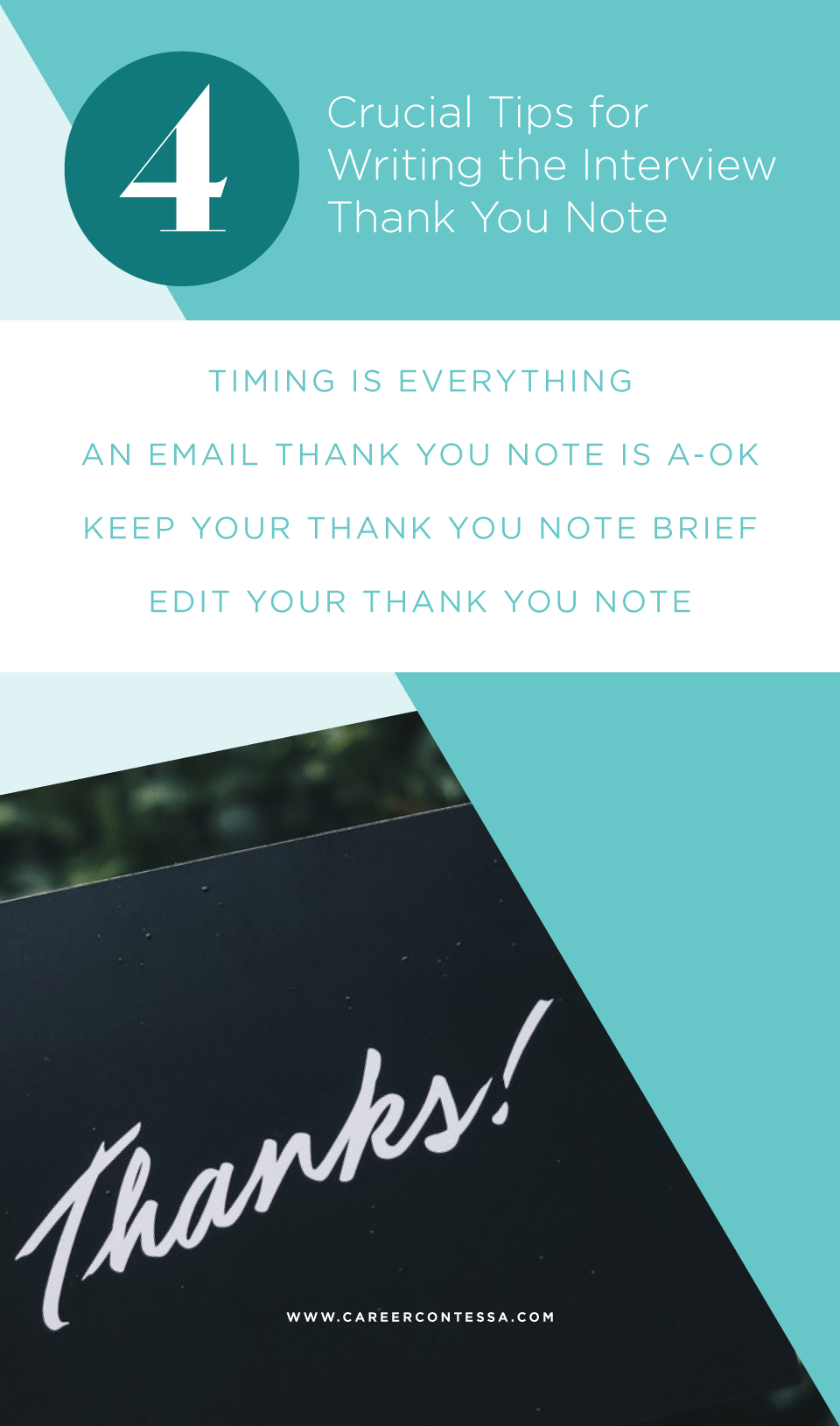
#BestofFSCBlog : #JobSearch – Four(4) Crucial Tips for Writing the Interview Thank You Note. So you Really Want this Job?  

July 30, 2018/in First Sun Blog/by First Sun Team
So you really want this job?  You have likely already written a captivating cover letter, undergone a brief phone interview and finally, were invited into the office for an interview. The interview went swimmingly (because you prepped for it like a pro)? Awesome! Now that you’re exiting the office building of your (hopeful) future job, it’s time for your next step.
Enter: the thank you note. The thank you note should be a no-brainer. It is a perfect way for a candidate to give herself the final edge over other candidates in the interview process.
Writing the thank you note does not have to be an exhaustive process. However, a candidate can (and should!) use it as an opportunity to edge out the other candidates.

TIMING IS EVERYTHING

Interviewing is an arduous process for any job candidate. In much the same way, it can be a stressful time for the hiring manager. My number one piece of advice in writing a thank you note for a job you really want?
Do it right away. Even if you killed the interview and expect a call saying “You’re hired!” by the end of the day, write the note. Express your gratitude and keep your candidacy fresh in the hiring manager’s mind. DO NOT wait until a week later when you haven’t heard anything to shoot off a “by the way, thanks” email.
A well-timed thank you note after an interview is a perfect way to reiterate your excitement to join the team. Aim to send your thank you note no within 24 hours of the end of the interview.

Like this Article ?  Share It !You now can easily enjoy/follow/share Today our Award Winning Articles/Blogs with Now Over 2.5 Million Growing  Participates Worldwidein our various Social Media formats below:

FSC LinkedIn Network:   www.linkedin.com/in/fscnetwork

Facebook:  http://www.facebook.com/pages/First-Sun-Consulting-LLC-Outplacement-Services/213542315355343?sk=wall

Google+:  https://plus.google.com/115673713231115398101/posts?hl=en

Twitter: Follow us @ firstsunllc

Question: Want the ‘the best/current articles/blogs on the web’ on Job Search, Resume, Advancing/Changing your Career, or simply Managing People?

Answer: Simply go to our FSC Career Blog below & type(#career, #leadership, #life) in Blog Search:  https://www.firstsun.com/fsc-career-blog/

What Skill Sets do You have to be ‘Sharpened’ ?

Continue of article:

AN EMAIL THANK YOU NOTE IS A-OK

We know you still have that Laura Ashley stationery your grandma gave you for your high school graduation. We know it’s embossed with your initials.
However, 87 percent of hiring managers view email as a perfectly acceptable means of delivering your thank you note. Since we have already established that timing is everything, email is going to be your best bet.

KEEP YOUR THANK YOU NOTE BRIEF

By this point in the interview process, your hiring manager has likely learned a ton about you. Do not use the thank you note to reiterate the play-by-play.
You can (and should) use it as a means to communicate one point you may have neglected to make, to expand on an idea or simply to express feelings of excitement for the job itself. Since the hiring manager is also busy interviewing, reading resumes, and communicating with other stakeholders, keep your note on point.

EDIT YOUR THANK YOU NOTE

So far, we have focused heavily on the speed and brevity of this note. But that doesn’t mean it’s informal! Make sure to use a formal greeting, write clear (and concise!) sentences, and sign off formally. This is not a one-liner to say “Thanks, Dude!”
Just as easily as a thank you note can impress a hiring manager, it can also detract from the whole process. A spelling error or flippant manner of writing can undo your progress. Write your thank you note, read it over a few times aloud, spell check it, and get a second pair of eyeballs on it if you can.
Crucial Tips Interview Thank You
CareerContessa.com | BY CAILEEN KEHAYAS  |  July 25, 2018
https://www.firstsun.com/wp-content/uploads/2017/12/Woman-on-laptop.jpg 931 1242 First Sun Team https://www.firstsun.com/wp-content/uploads/2018/05/logo-min-300x123.jpg First Sun Team2018-07-30 12:19:312021-02-24 20:43:34#BestofFSCBlog : #JobSearch – Four(4) Crucial Tips for Writing the Interview Thank You Note. So you Really Want this Job?  

#CareerAdvice : Use this 15-Minute Checklist to Prepare for a #JobInterview …In Just a Few Minutes you can Make Sure that you’ll Nail your First Impression.

July 23, 2018/in First Sun Blog/by First Sun Team

Your job interview is just days away and you’re feeling unprepared. You’ve reread the job posting about 67 times and you’re pretty clear on the role itself–but you can’t really think of much else to do to brush up.

Don’t sweat it. In fact, you may only need another 15 minutes or so in order to prep, so here’s what to do.

1. CONFIRM EVERYONE YOU’LL BE MEETING WITH

One minute. If the hiring manager or an HR officer set up your interview and didn’t explicitly tell you whom you’re going to be chatting with, don’t just assume it’s them and only them. It’s not at all uncommon for hiring managers to shuttle you off to someone else on their team who’s become available to meet you at the last minute. Firing off a quick email like this puts them on the hook to plan ahead rather than surprise you:

Hi Kamala, I’m really excited to come in on Tuesday. Just wanted to confirm that I’ll be speaking with you and Jarrod. Could you please let me know if there’s anyone else I should look forward to meeting? Thanks so much!

Hit send and move on.


Like this Article ?  Share It !    You now can easily enjoy/follow/share Today our Award Winning Articles/Blogs with Now Over 2.5 Million Growing  Participates Worldwide in our various Social Media formats below:

FSC LinkedIn Network:   www.linkedin.com/in/fscnetwork

Facebook:  http://www.facebook.com/pages/First-Sun-Consulting-LLC-Outplacement-Services/213542315355343?sk=wall

Google+:  https://plus.google.com/115673713231115398101/posts?hl=en

Twitter: Follow us @ firstsunllc

Question: Want the ‘the best/current articles/blogs on the web’ on Job Search, Resume, Advancing/Changing your Career, or simply Managing People?

Answer: Simply go to our FSC Career Blog below & type(#career, #leadership, #life) in Blog Search:  https://www.firstsun.com/fsc-career-blog/

What Skill Sets do You have to be ‘Sharpened’ ?

Continue of article:

2. CHECK OUT THE INTERVIEWER’S LINKEDIN AND TWITTER

Five minutes. Chances are you’re more familiar with the job description than with the roles and backgrounds of your interviewer. Once you’ve nailed down which people you’ll be talking to, it’s time to do some digging on each of them.

LinkedIn is the obvious great place to start. Skim their previous roles (including at other employers), take note of how long they’ve been with the organization, and then head way down to the bottom: If there are endorsements and recommendations, these can give you a feel for what a prospective boss might be especially good at. Any common themes in the praise their colleagues are sharing? Obviously, you’ll only find positive feedback in these sections, but that can still help you hone better questions about their management style.

Twitter is a handy guide, too: What articles is your interviewer sharing? Are their tweets opinionated and casual, or do they sound serious and formal? It’s certainly an imperfect measure, but this can still help you guess at an interviewer’s personality, interests, and values.

3. LINE UP YOUR “ABOUT ME” ANSWER

Seven minutes. Chances are your interview will open with some form of “Tell me a little about yourself” or the longer variant, “Tell me a little about yourself and what interests you about this role.” So plan your answer using a few quick bullet points in order to keep things short and concise.

As Glassdoor’s Isabel Thottam pointed out recently, it’s all about first impressions, so you’ll want to avoid sharing a lengthy backstory. “Skip your personal history and give about two to three sentences about your career path and how you ended up in this interview, applying for this job,” she explains. “You don’t need to be too detailed, there are plenty more questions coming. You just want to leave enough curiosity that the interviewer becomes excited to learn more about you throughout the interview.”

Take a few minutes to sketch out this capsule narrative and commit it (loosely, not word-for-word) to memory.

4. BRAINSTORM ONE GREAT QUESTION TO ASK

Two minutes. Get one really sharp question lined up that you can pose to the hiring manager. Sure, you can brainstorm three or five if you have time, but interviews ted to get truncated more often than they drag on longer than expected–so think about the No. 1 thing you really want to know.

Not sure what that is? Here are a few good questions you might want to pose depending on your career-stage. These are a bunch of all-around sharp questions that help you probe deeper about how performance is measured, expectations for the role, career advancement, and more, and these are a few more that can help you really dig into the company culture.

But when in doubt, just ask a question that shows off your curiosity. According to psychologist and talent expert Tomas Chamorro-Premuzic, “just being curious is a marketable job skill.” It’s “the precursor to learning faster and better, and thereby adapting to change rather than succumbing to it,” he explained in a recent Fast Company column. He suggests asking qualitative questions like, Why do you see X as important?” or “How do you see Y changing in the future?”

This can help interviewers see that you’re thinking ahead and considering how the role fits into the bigger organizational picture, but it does something much more fundamental, too: Continued curiosity is a sign that you’re actually interested in the job and giving it some serious thought. At a minimum, you want to walk out of your interview having convinced them of that.

ABOUT THE AUTHOR

Rich Bellis is Associate Editor of Fast Company’s Leadership section.

 More

You Might Also Like:

  • 3 Types Of Job Interviews And How To Handle Each Of Them
  • These Are 6 Red Flags That You Shouldn’t Take The Job


FastCompany.com | July 23, 2018

https://www.firstsun.com/wp-content/uploads/2017/10/Man-at-Desk-with-Laptop-Desktop-Cellphone.jpg 653 981 First Sun Team https://www.firstsun.com/wp-content/uploads/2018/05/logo-min-300x123.jpg First Sun Team2018-07-23 16:13:202020-09-30 20:46:27#CareerAdvice : Use this 15-Minute Checklist to Prepare for a #JobInterview …In Just a Few Minutes you can Make Sure that you’ll Nail your First Impression.

#CareerAdvice : #JobInterview – How to Practice for an #Interview in 5 Steps…Ready to Learn How to Walk into an Interview with Confidence, and Knock It Out of the Park? Follow these Five Steps.

July 18, 2018/in First Sun Blog/by First Sun Team

What if I run into traffic on my way to the interview and get there late? What if I mess up one of my answers? What if I draw a total blank when my interviewer asks me if I have any questions for them?

If you’ve ever been up for a position you really wanted before, then questions like these have probably raced through your head in the hours — or worse, throughout the night — before your big interview.

Many people think of overwhelming anxiety as an inevitable part of the interview process. But the truth is, your nerves can be greatly eased once you learn how to properly prepare for an interview. Not only will this make you feel a whole lot better going in — odds are, with a clear head, you’ll actually do a better job.

Ready to learn how to walk into an interview with confidence, and knock it out of the park?  Follow these five steps.

1. Research the Company

Recruiters and hiring managers don’t just want to know about your skills and experience — they also want to know how knowledgeable you are about the company. In fact, questions like “What is the name of our CEO?” and “Who are our competitors?” are both among the most commonly asked interview questions. But even if you don’t encounter a question like this, looking up the basics of the company is still worthwhile.

Use Glassdoor and online searches to learn about the company’s industry, products, mission, names of leaders, competitors, recent news and more. Then, you can drop these tidbits of newfound knowledge throughout your responses — e.g., when asked “Why do you want to work here?” a candidate might say, “The reason I decided to apply to this job was because of how much your mission resonates with me. I truly believe that making affordable, high-speed internet widely accessible will help bring the world closer together.” This proves a few things: a) you’re passionate about the opportunity, b) you’re a proactive self-starter with good critical thinking skills and c) you’re a good culture fit for the company.

You can also use this info to ask more informed questions of the interviewers themselves — more on that later.

What to Look for When Researching a Company: A Complete Checklist

Like this Article ?  Share It !    You now can easily enjoy/follow/share Today our Award Winning Articles/Blogs with Now Over 2.5 Million Growing  Participates Worldwide in our various Social Media formats below:

FSC LinkedIn Network:   www.linkedin.com/in/fscnetwork

Facebook:  http://www.facebook.com/pages/First-Sun-Consulting-LLC-Outplacement-Services/213542315355343?sk=wall

Google+:  https://plus.google.com/115673713231115398101/posts?hl=en

Twitter: Follow us @ firstsunllc

Question: Want the ‘the best/current articles/blogs on the web’ on Job Search, Resume, Advancing/Changing your Career, or simply Managing People?

Answer: Simply go to our FSC Career Blog below & type(#career, #leadership, #life) in Blog Search:  https://www.firstsun.com/fsc-career-blog/

What Skill Sets do You have to be ‘Sharpened’ ?

Continue of article:

2. Look Up Common Interview Questions

A lot of candidates stress out over not knowing what a recruiter or hiring manager is going to ask them. But in reality, you’ll get a lot of the same questions from one person to another. There are a few basic questions that you’ll almost certainly be asked — these include staples like “Tell me about yourself,” “Why do you want to leave your current job?” and “What are your biggest strengths and weaknesses?” If you’re a data-driven job seeker, you’ll appreciate the list of the 50 Most Common Interview Questions that Glassdoor identified after sifting through tens of thousands of interview reviews.

You can also use Glassdoor’s interview reviews to find out which questions they specifically ask at the company you’re applying to, as well as which questions are common for your job title. Sure, you might be thrown an oddball interview question every now and then, but you’ll likely find that the vast majority of questions you’re asked are ones that you can identify in advance.

3. Rehearse Your Answers

Now that you have an idea of which questions you could be asked, it’s time to think about how you will respond to them. Keep in mind that in general, interviewers want responses that are specific, positive, impactful and genuine. If you want to know what kind of answers recruiters and hiring managers are looking for from specific questions, check out Glassdoor’s How to Answer the 50 Most Common Interview Questions.

Don’t just think about what your response should entail — go ahead and write it down. You probably shouldn’t write out full answers — that can result in you memorizing the responses verbatim, which can come across as too rehearsed — but making a bulleted list of key points you want to hit is a great idea. Try using the worksheet at the bottom of this blog post to sketch out your answers.

After you’ve written down the key points you want to hit in common interview questions, it’s a good idea to hold a mock interview aloud with a friend or family member. Some people might feel a little shy about doing this, but brush these feelings aside as best you can — in my experience, this is the number one way to improve your odds of succeeding in an interview. Doing a dry run will allow you to get any mistakes you might make out of the way before it counts against you, and also helps you get valuable feedback, so don’t skip this essential step.

4. Come Up With Your Own Questions

One of the questions you’ll almost always be asked by an interviewer is “Do you have any questions for me?” It might seem innocuous, but believe it or not, this is a very common area in which candidates trip up. Interviewers aren’t just asking this question to be nice — it serves as somewhat of a litmus test for whether or not you’ve done your research, are a good culture fit and demonstrate strong critical thinking skills.

Use the research you gathered in step two to help you craft intelligent, informed questions about the role and company that will give you a fuller picture of what it’s like to work there and what it takes to be successful. For example, if you learned that the company you’re applying to is launching a new mobile app, you might say “I read that your company is launching a new mobile experience soon. Can you tell me more about that, and how it relates to this position?” You can also use this opportunity to dig into anything that hasn’t been brought up yet or covered in sufficient detail, like company culture, how the company defines success and what drew your interviewer to the company.

11 Questions to Ask In an Interview, According to a Hiring Manager

5. Hammer Out the Logistics

Congrats — if you’ve gotten through the previous four steps, you’ve already gotten the hard part out of the way! Now, all you have to do is think through all the little logistical details of your interview. These can vary depending on what kind of interview it is — phone, video, in-person, etc. Here are a few things to keep in mind for some of the most common types of interviews:

Phone Interviews

  • Pick a quiet place with good service to take the call
  • Confirm the day and time, accounting for differences in time zone
  • Confirm how you’re getting in touch with the hiring manager (Are they calling you? Are you calling them? Will you call their cell, or a conference number?)
  • Review the job description and company information 30 minutes before the call
  • Breathe — try to stay relaxed and focused!

Video Interviews

  • Pick a quiet place with good lighting and a simple background to take the interview
  • Do a test run to try out the video software
  • Restart your computer before the interview to help avoid technical difficulties
  • Dress like you are going to an in-person interview

In-Person Interviews:

  • Research standard company attire and dress one step above that
  • Have directions to where you’re going
  • Print multiple copies of your resume
  • Plan on arriving 30 minutes early, but wait in your car or at a coffee shop nearby until 5 minutes before
  • Brush your teeth or chew some gum before walking in
  • Run through your cheat sheet of responses, and a list of questions to ask each interviewer

Preparing for an interview the right way does take some work on your part, but believe us — it’s worth the effort. Who knows? You might just find that interviews aren’t as scary as you thought after all. Now go out there and get ‘em!

Screen Shot 2018 05 25 at 12.59.18 PMScreen Shot 2018 05 25 at 12.59.32 PM


GlassDoor.com | May 29, 2018 | Posted by Emily Moore

https://www.firstsun.com/wp-content/uploads/2018/06/woman-worried.jpg 751 500 First Sun Team https://www.firstsun.com/wp-content/uploads/2018/05/logo-min-300x123.jpg First Sun Team2018-07-18 13:40:222020-09-30 20:46:32#CareerAdvice : #JobInterview – How to Practice for an #Interview in 5 Steps…Ready to Learn How to Walk into an Interview with Confidence, and Knock It Out of the Park? Follow these Five Steps.
Page 1 of 212

Blog Search

Login/Register

  • Log in
  • Entries feed
  • Comments feed
  • WordPress.org

FSC Career Videos

  • Job Search Techniques | Start Here
  • Resume/Cover Letter
  • Interviewing
  • Additional Career Videos
  • FSC Career Blog – #1 Career Library LinkedIn

Recent Posts

  • #YourCareer : AI Won’t Decide Your Career. Your Habits Will. Four AI Practices Worth Considering Now! MUst REad! February 24, 2026
  • #JobSearch : 5 Work-From-Anywhere Remote Jobs That Pay Up To $200,000+ In 2026. Great REad! February 21, 2026
  • #YourCareer : Jobs Skills Are Changing Rapidly. What You Need To Prepare. Here are Five Ways to Stay Current Without Burning Yourself Out. Great REad! February 17, 2026
© Copyright - First Sun Consultation - Website Maintained by BsnTech Networks - Enfold WordPress Theme by Kriesi
Scroll to top