• About WordPress
    • WordPress.org
    • Documentation
    • Learn WordPress
    • Support
    • Feedback
  • Log In
  • LinkedIn
  • Facebook
  • X
p: 866.311.2514
First Sun Consulting, LLC | Outplacement Services and Career Transition Firm
  • Home
  • About
  • Services
    • Outplacement Services
    • Executive Coaching
    • Career Transition
  • Locations
  • Blog
    • Best of FSC Career Blog
    • FSC Career Blog
  • Members
    • FSC Career Modules
    • FSC LinkedIn Network
    • New! FSC AI Tools – Latest Technology for Resumes & Search
  • Our Clients
  • Contact Us
  • Menu Menu

Tag Archive for: #interviewing

You are here: Home1 / FSC Career Blog – Voted ‘Most Read’ by LinkedIn.2 / #interviewing

Posts

#CareerAdvice : #JobInterviewing – Here’s Your #JobInterview Preparation Checklist.

June 7, 2019/in First Sun Blog/by First Sun Team

So you applied for a job online, and just got a call from the recruiter asking if you can interview with the hiring manager. You are super excited until you hear that the interview is happening in 48 hours. 2 days. OMG!

Don’t panic; just prepare! Glassdoor has got you covered. Complete with timing and strategy, we’ve compiled a comprehensive list of essential ways to gear up for your interview and knock it out of the park. Ready, set, prep!

As soon as you hang up with the recruiter:

1. Study for your interview like it’s a final exam.

  • Find as much information as you can on the company or organization, and commit as much of it to memory as possible.
  • If the job you’re interviewing for requires knowledge in a certain field, do all of the learning and brushing up you can on information that will be relevant to your interview.

2. Generate a list of potential interview questions (and their answers!) beforehand.

  • Base your list of questions on both what you expect them to ask and the real life experience of others
  • Reach out to people who worked in similar companies and positions as you are interviewing for and ask them about their interview experience
  • Use tools like Glassdoor’s interview question database to look up real interview questions and their answers.
The 45 Questions You Should Ask In Every Job Interview

36 hours before the interview:

3. Write out answers to every question you anticipate, and practice delivering them out loud.

  • Even if you don’t remember your responses word for word, you can fall back on certain key points and phrases.
  • Write your own list of questions for the interviewer, and be prepared to ask them when the time arises.
  • Make sure your questions are nuanced and well-researched. Never ask for any information that can be simply found online.

4. Compare your skills and experience to the job description.

  • For each component of the job description, brainstorm your relevant skills and experiences, and think critically about how you want to present them.
  • If there’s a preferred skill or experience you do not have, be able to demonstrate you’ll be competent without it.
How to Read a Job Description

Like this Article ?  Share It !    You now can easily enjoy/follow/share Today our Award Winning Articles/Blogs with Now Over 2.5 Million Growing  Participates Worldwide in our various Social Media formats below:

FSC LinkedIn Network:   www.linkedin.com/in/fscnetwork

Facebook:  http://www.facebook.com/pages/First-Sun-Consulting-LLC-Outplacement-Services/213542315355343?sk=wall

Google+:  https://plus.google.com/115673713231115398101/posts?hl=en

Twitter: Follow us @ firstsunllc

Question: Want the ‘the best/current articles/blogs on the web’ on Job Search, Resume, Advancing/Changing your Career, or simply Managing People?

Answer: Simply go to our FSC Career Blog below & type(#career, #leadership, #life) in Blog Search:  https://www.firstsun.com/fsc-career-blog/

What Skill Sets do You have to be ‘Sharpened’ ?

Continue of article:

12-24 hours before the interview:

5. Be rested and healthy for the big day.

  • Before getting good night’s sleep, try to imagine yourself acing the interview.
  • Eat wholesome, healthy meals for the days preceding the interview.
  • If you are prone to anxiety, try breathing techniques or meditation the morning of the interview, and even directly before.

3-6 hours before the interview:

6. Dress for success

  • Keep your fashion choices subdued and classic – don’t wear clothes that will distract the interviewer.
  • If you’re unclear on what type of clothes to wear, don’t be afraid to reach out to your interviewer and ask.
  • Wear clothes you feel confident in. Don’t be afraid to invest in an “interview outfit” or two that you feel your best in.

7. Empower yourself

  • Practice a firm handshake, strong posture, and attentive body language in advance.
  • Think of a mantra you can call upon for self-confidence, like, “no matter what, I will do my best.”
  • Try to imagine yourself not getting the job. While it might be painful to think about, what can you see yourself having learned from the interview experience?

8. Don’t leave any unnecessary unknowns.

  • Plan what to bring (extra copies of your resume!) and even what transportation you are taking to the interview way in advance, so there’s no added uncertainty the day of.
How to Interview for Your First Management Role

During the interview:

9. Keep an interview journal

  • During or even after your interview is over, take a few minutes to jot down what parts you felt you aced, and where you could have shone brighter. These notes can serve as a valuable guide for your future interviews.

6-12 hours after the interview:

10. Follow up.

  • Extending the conversation shows that you’re passionate about the job. Don’t call every day asking if you got the job, but a simple thank you note can speak volumes about your commitment to the position.
  • And if you didn’t get the job? Let them know if you’re still interested, and ask what you can do to be a more attractive candidate in the future.


GlassDoor.com | November 5, 2018 | Posted by Lillian Childress

https://www.firstsun.com/wp-content/uploads/2017/12/man-on-couch-with-laptop.jpg 653 981 First Sun Team https://www.firstsun.com/wp-content/uploads/2018/05/logo-min-300x123.jpg First Sun Team2019-06-07 15:08:032020-09-30 20:44:44#CareerAdvice : #JobInterviewing – Here’s Your #JobInterview Preparation Checklist.

#BestofFSCBlog : #InterviewingQuestions -How to Answer: What Are Your Strengths and Weaknesses? Bonus: Complete List of Other Questions Asked! A Must Read!

May 21, 2019/in First Sun Blog/by First Sun Team

Job interviews can get surprisingly intimate. You’ve only met the interviewer 10 minutes ago, and all of a sudden they’re hitting you with a very deep set of questions: What are your greatest strengths? What are your weaknesses? These questions can take enormous powers of self-reflection to give an honest answer to. Rather than making your interviewer sit silently while you parse out what your greatest weakness is and how it’s impacted your career, it’s better to think of answers to these types of questions beforehand.

In this guide, we’ll show you how to identify your strengths and weaknesses, how to frame them in a clear, compelling narrative and what common pitfalls to avoid. You may even learn some new things about yourself along the way!


GUIDE OVERVIEW

  1. What Is the “Strengths and Weaknesses” Question?
  2. Determining Your Strengths
  3. Determining Your Weaknesses
  4. How to Weave a Story
  5. What to Avoid
  6. Learn More!

What Is the “Strengths and Weaknesses” Question?

You’ll almost always hear these questions in one form or another during a job interview.

Employers want to hear in your own words why you’re a good fit for the job and for the company. They might want to assess what potential issues there could be, too. It’s a chance for them to assess your capacity to be self-reflective.

Whether the question you’re asked is “what attributes will make you shine in this role?” or “what areas of your approach to work are you looking to improve?”, taking a hard look at your strengths and weaknesses — and learning how to communicate them effectively in a professional setting — will be invaluable for your next interview.


Like this Article ?  Share It !    You now can easily enjoy/follow/share Today our Award Winning Articles/Blogs with Now Over 2.5 Million Growing  Participates Worldwide in our various Social Media formats below:

FSC LinkedIn Network:   www.linkedin.com/in/fscnetwork

Facebook:  http://www.facebook.com/pages/First-Sun-Consulting-LLC-Outplacement-Services/213542315355343?sk=wall

Google+:  https://plus.google.com/115673713231115398101/posts?hl=en

Twitter: Follow us @ firstsunllc

Question: Want the ‘the best/current articles/blogs on the web’ on Job Search, Resume, Advancing/Changing your Career, or simply Managing People?

Answer: Simply go to our FSC Career Blog below & type(#career, #leadership, #life) in Blog Search:  https://www.firstsun.com/fsc-career-blog/

What Skill Sets do You have to be ‘Sharpened’ ?

Continue of article:

Determining Your Strengths

Generally, you’ll focus on your soft skills as strengths — there are other ways for interviewers and recruiters to glean hard skills, whether it’s through take-home assignments, a coding interview or examples of your past work. But with soft skills, you have to tell them the story.

“Don’t feel that your response needs to match what you said your manager and colleagues think of you,” said Sharlyn Lauby, president of consulting firm ITM Group Inc and founder of HR Bartender, to Glassdoor. “It’s perfectly natural to say, ‘One skill I haven’t been able to use much in my current role is [fusion_builder_container hundred_percent=”yes” overflow=”visible”][fusion_builder_row][fusion_builder_column type=”1_1″ background_position=”left top” background_color=”” border_size=”” border_color=”” border_style=”solid” spacing=”yes” background_image=”” background_repeat=”no-repeat” padding=”” margin_top=”0px” margin_bottom=”0px” class=”” id=”” animation_type=”” animation_speed=”0.3″ animation_direction=”left” hide_on_mobile=”no” center_content=”no” min_height=”none”][insert skill]. I hope to use it more in the role we’re discussing.’”

Here are some examples of strengths. Which ones do you identify with? Can you think of more that have helped you shine in your career?

  • Good communicator
  • Team player
  • Time management abilities
  • Conflict resolution
  • Ability to perform under pressure

Depending on the job, you might also choose to include hard skills in your strengths, citing your ability to code in a variety of languages, your knowledge of a foreign language or your experience as a copy editor as examples of why you would be a strong candidate for the job.

Determining Your Weaknesses

Determining our strengths is generally easier; it’s fun to reflect on and celebrate our successes. But what about the areas where we struggle? Do you ever set aside the time to take a look in the mirror to see where you are letting others — and yourself — down, and how you can improve?

“Employers expect candidates to have weaknesses… so you are better served by answering the question frankly.  A candid answer will show your prospective employer your growth-mindset and will demonstrate a sense of self-awareness and honesty,” writes Jeevan Balani, Founder and CEO of Rocket Interview and frequent Glassdoor contributor.

Here are some examples of common career weaknesses. Can you identify with any of them? If so, what have you done to improve these weaknesses?

  • Wanting to control too many aspects of a situation
  • Procrastination
  • Inability to self-regulate, leading to burnout
  • Disorganized
  • Impatient

Again, you might choose to highlight some hard skills that are a weakness for you too, for example not being good with math, not being versed in a particular type of software or having trouble spelling — but only if it’s non-essential to the role.

How to Weave a Story

Now that you’ve got a solid list of your strengths and weaknesses, is it enough just to list them out when you’re asked during a job interview? Absolutely not! Backing up each strength or weakness with a relevant anecdote is critical to giving the interviewer the full picture of why you excel in one area, or what areas you’re working to get better in.

As an exercise to prepare, for every strength on your list, write down a story that showcases how you effectively used that strength to accomplish something in your career. For every weakness, write down a story about how that weakness had (or could have had) a negative repercussion in your career — then write what you learned from it, and what you’re actively doing to improve it.

Especially when answering about your weaknesses, framing is critical. You don’t want to make it seem like your flaws are immutable, or worse, incriminate yourself. You also don’t want to turn your weakness into a humblebrag, like “it’s hard for others to keep up with me because I think so fast.” So striking a reflective tone is key, which you can do by highlighting what you have learned about your weakness, and what you are doing to improve it.

On a more general note, try to match your strengths to the job description. It’s great if you’re a pro at skill X, but the job requires skills A, B and C, then your expertise in skill X might not be relevant. Similarly, keep the job description in mind when you share your weaknesses. If you’re applying for a job in copy editing, it’s probably not a good idea to say that your weakness is spelling.

Also, research on the company’s culture can help you decide which strengths and weaknesses to highlight, and how. If the company is known to be fast-paced and dynamic, you might want to highlight your strength in juggling many projects at once or your ability to pivot quickly to new tasks. But also be honest — if you find during your research that the company culture doesn’t seem like a good fit for you, then you might want to take a step back and reconsider, rather than trying to squeeze yourself into a mold that doesn’t quite fit.

Here are some example anecdotes for the strengths and weakness we defined above:

Strengths

  • I work well in teams. When my division reorganized and I was put on a team with people from different backgrounds and experience levels without a clear hierarchy, there was a lot of friction. I organized regular bonding sessions for our team that helped break down some boundaries in the office. I also took it upon myself to take some of the more cumbersome tasks that others didn’t want to do. When I left, a number of people on the team thanked me for the diplomacy and harmony I fostered in our work environment.
  • I’m good at time management. When I worked as a marketing manager, I had to schedule the release of promotional materials, get materials ready for a launch date and time when to stoke interest in my company’s products before their release. I would make detailed calendars with every step of a campaign before embarking, which included estimating time and making due dates for even the smallest of tasks. It was this ability that led to the success of the XYZ product launch, the most intensive project I worked on while at the company.
  • I perform well under pressure. When I worked as a consultant, I often had to give presentations to high-level executives at the company we were consulting at a day’s notice or less. I had to quickly learn how to speak confidently and fluently about material I had only drawn up the day before. Sometimes I would be interrupted and challenged, and I had to stand my ground, explain myself clearly and keep my cool. I believe that skill will make me a good fit in this role as a spokesperson.

Weaknesses

  • I have a tendency to procrastinate. This really came to a head when I was working on a big project, and overestimated the amount of work I could do at the last second. I ended up narrowly making the deadline, but it caused my team and my manager a lot of stress. After that, I started learning more about time management from my mentors at work, and I’ve started making detailed schedules weeks — and even months — ahead. I’m still working to create accurate timelines that I can easily follow, but I am heartened because I’ve found that it actually puts me at ease to work with a schedule.
  • I can be impatient, and this has caused me to sometimes micromanage my employees. I used to hound employees in advances of deadlines, because I was afraid if I didn’t, they wouldn’t turn in the work on time. I now see it cause a lot of stress for my employees, and I’m working to trust that they will get things in on time. So far, not a single deadline has been missed!
  • I have had a tendency to work until I reach burnout. After a while, I started noticing a pattern in my career that I would work very hard on projects, staying up all night to finish them in advance of deadlines, and making it a goal for myself to be the first one in the office every morning and the last one to leave. Ultimately, this was unsustainable, and after a big project I would often crash, and either become sick and have to miss work, or be lethargic while I was there. I’m now learning how to impose healthy limits on myself and to stick to a doable schedule so that I don’t risk burning out like that again.

What to Avoid

Told right, your answer to this question can inspire the interviewer and give them an intimate picture into how you work. It can help them assess whether your strengths and weakness will make you the right fit for your job, if your disposition will be a good fit with the team you’re working on and if you’ll fit into the company culture as a whole. But there’s a few things you need to keep in mind when delivering your answer, so that it doesn’t come off as bragging, overly humble or other common pitfalls.

  • Don’t brag.
  • Don’t minimize yourself by dwelling on your weaknesses
  • Don’t give examples that are too unrelated to work
  • Don’t ramble
  • Don’t give an example that will set off a red flag in the interviewer’s mind

“HR pros see through the, ‘I’m a perfectionist,’ response,” Lauby says. It’s still possible to keep it positive, though. For example, an answer Lauby gave: “I recently attended a customer service training program and I was reminded of some problem-solving skills that I need to start using again,” will certainly get the job done.

This interview question can be tricky, but don’t stress too much — with proper preparation, you’ve got it in the bag!

Learn More

How to Master the Art of Bragging Like a Pro

How to Answer “What Is Your Greatest Weakness?”

8 Words or Phrases to Avoid When You’re Trying to Project Confidence

How to Answer “Tell Me About Yourself”

The Dos and Don’ts of Showing Passion in an Interview

The Surprising Reason You’re Not Hearing Back After Job Interview

How to Answer the 50 Most Common Interview Questions

Learn More!

Be 150% ready for your next job interview by acing all of the common interview questions. Here are the best resources to help you:

50 Most Common Interview Questions

The 45 Questions You Should Ask In Every Job Interview

How to Prepare for a Behavioral Interview

How to Succeed in a Case Interview

How to Prepare for an Exit Interview

How to Write A Cover Letter

6 Anecdotes You Need to Rehearse Before Your Next Interview


GlassDoor.com | May 21, 2019 

[/fusion_builder_column][/fusion_builder_row][/fusion_builder_container]

https://www.firstsun.com/wp-content/uploads/2014/03/Interview.jpg 600 904 First Sun Team https://www.firstsun.com/wp-content/uploads/2018/05/logo-min-300x123.jpg First Sun Team2019-05-21 12:53:242020-09-30 20:44:49#BestofFSCBlog : #InterviewingQuestions -How to Answer: What Are Your Strengths and Weaknesses? Bonus: Complete List of Other Questions Asked! A Must Read!

#CareerAdvice : #JobSearch – 8 Secrets #Recruiters Won’t Tell You (But Really Want To)…There is Confidential Information that, Unfortunately, Recruiters Cannot Divulge.

September 25, 2018/in First Sun Blog/by First Sun Team

Recruiters may seem intimidating, but they genuinely want the best for both candidates and the company. Good recruiters want you to have the best experience possible during the application and interview process — but even though they want the best for you, there are some things that they just can’t share.

Salary bands, candidate competition, internal HR tactics — let’s just call them trade secrets. They are the confidential information that, unfortunately, recruiters cannot divulge.

To get to the truth, we reached out to Omer Molad, CEO/Founder of Vervoe, a recruiting company that replaces face-to-face interviews with online simulations for small and medium-sized businesses. Molad built his business on the premise that hiring is painful, and he has unique insight into the frustrations and insights of recruiters.

Here are a few of the secrets that Molad says recruiters won’t tell you, but really want to.

1. “We could have gone higher if you had negotiated.”

Salary negotiations are like a game of poker — both job seekers and recruiters are trying to maintain control and win the hand. “Very few (if any) recruiters will be so bold as to say ‘we took advantage of you and we don’t value you highly,’” says Molad. In fact, there is often a salary band or range that recruiters have for each role. Their initial salary offer is very rarely at the top of their salary band, so base pay — as well as benefits like vacation days, work hours, etc. — can usually be negotiated.

The Secret to Negotiating $5,000 – $15,000 More in Pay

Like this Article ?  Share It !    You now can easily enjoy/follow/share Today our Award Winning Articles/Blogs with Now Over 2.5 Million Growing  Participates Worldwide in our various Social Media formats below:

FSC LinkedIn Network:   www.linkedin.com/in/fscnetwork

Facebook:  http://www.facebook.com/pages/First-Sun-Consulting-LLC-Outplacement-Services/213542315355343?sk=wall

Google+:  https://plus.google.com/115673713231115398101/posts?hl=en

Twitter: Follow us @ firstsunllc

Question: Want the ‘the best/current articles/blogs on the web’ on Job Search, Resume, Advancing/Changing your Career, or simply Managing People?

Answer: Simply go to our FSC Career Blog below & type(#career, #leadership, #life) in Blog Search:  https://www.firstsun.com/fsc-career-blog/

What Skill Sets do You have to be ‘Sharpened’ ?

Continue of article:

2. “Don’t go overboard with buzzwords — we can tell.”

It’s smart to include keywords in your resume and to come off as knowledgeable about your particular industry. However, “don’t try to look smarter than you really are,” says Molad unabashedly. Authenticity is key. Recruiters and employers want your personality to shine — not your ability to throw out words and phrases like “synergy,” “move the needle,” “ROI,”feed the funnel,” etc.

“It’s not about specific questions or answers that stand out, but rather the candidates who display a great deal of passion about what they do that really stand above the rest,” says employer Academy Sports + Outdoors.

3. “You never had a chance after that bad first impression.”

Your mother was right: first impressions are everything. And according to Molad, few recruiters can get past a bad first impression. Unreturned phone calls, poor manners and clumsy interviews will all hurt your chances of moving on to the next round. Hiring managers and recruiters will bite their tongues, fighting back the desire to say, “We just don’t like you,” says Molad. However, take it from us: You must really dazzle if you’d like to make up for a rocky first impression.

“Interviewers often care more about the likability of entry-level candidates than whether or not they’re actually qualified for the job,” says career coach Peter Yang. “This is because the person interviewing you will often also be your future boss and mentor, so it makes perfect sense that they would want to hire someone whom they personally like and want to work with. A strong interview performance means establishing a strong connection with your interviewer. Try to show off your personality instead of just answering questions robotically. You can even get a bit personal if you’d like to.”

4. “Your references weren’t very flattering.”

If a recruiter or hiring manager had doubts about you, they won’t let you know if unflattering references just confirmed their doubts, Molad says. “Your references should talk about your strengths in specific situations — not just basic information,” adds HR expert Jordan Perez. “[fusion_builder_container hundred_percent=”yes” overflow=”visible”][fusion_builder_row][fusion_builder_column type=”1_1″ background_position=”left top” background_color=”” border_size=”” border_color=”” border_style=”solid” spacing=”yes” background_image=”” background_repeat=”no-repeat” padding=”” margin_top=”0px” margin_bottom=”0px” class=”” id=”” animation_type=”” animation_speed=”0.3″ animation_direction=”left” hide_on_mobile=”no” center_content=”no” min_height=”none”][References] should be ready to provide examples of actual projects where you exceeded expectations. Your reference should easily cite one or two situations that highlight your strengths.”

“Bad references can ruin your candidacy as much as good ones can strengthen it,” says Sam Keefe, Digital Marketing Manager at AVID Technical Resources. Her advice to ensure that only the good shines through? “Give only references who will say positive things about you. Work hard to build good working relationships with coworkers and bosses.”

5. “I back-channeled you, and found out the truth.”

Backdoor references, or back-channeling, is one of the sneaky ways hiring managers and recruiters gather more information about you — it refers to when employers reach out to mutual connections in order to get their honest opinion of you. “This phenomenon is even more prevalent in the last five years or so because of LinkedIn’s growing popularity,” says Keefe. “Even if you choose not to give anybody there as a reference, backdoor references can reveal the skeletons in your closet. Backdoor references can be especially common when you’re looking for a job in sectors like tech.”

5 References That Should Be On Your List To Land The Job

6. “We already gave the job to an in-house employee.”

Unfortunately, it’s perfectly legal to advertise a job that is almost certain to be filled by an insider. In fact, some research has shown that internal hires generally perform better than external ones. However, “phantom jobs” can be downright annoying when you’re looking for a new position. Even though federal labor rules don’t require employers to post openings, many HR departments require roles to be listed on a job board for some period of time to ensure a fair hiring process. Therefore, Molad says, don’t expect recruiters to come right out and say, “It was a beauty parade to show management we ran a process, but it was a sham and you were never really considered.”

Instead, shake it off and get back on the horse — there are plenty of opportunities out there, and the job that fits your life is just a few clicks away.

7. “Your last few social media posts were deal-breakers.”

Roughly 80 percent of recruiters and hiring managers use social media to look for and vet job candidates, making it extremely important to have a professional presence on the Internet.

“Hiring managers are reviewing social media pages to become educated about the background and brand the person is articulating and to look for red flags,” says Alan Weatherbee, senior vice president of talent search for Allison+Partners. “They aren’t using it to find ways not to hire someone who is qualified, but to make sure they present themselves in an accurate way.”

According to employment experts, you should make sure that your social media pages, whether it’s LinkedIn, Facebook, Twitter or Instagram, mesh with what you’re saying on your resume, cover letter and other application materials. After all, no one is going to hire someone who claims to be a head of marketing in their resume while their Facebook page is full of complaints about their job answering phones at an advertising company.

Janet Elkin, Chief Executive of workplace staffing company Supplemental Healthcare, says you want to make sure your social media pages are void of any political comments, inflammatory messages or anything else that might offend the person who might just hold your future in their hands.

What Recruiters Look at When Stalking Your Social Media

8. “The team is dragging its feet waiting for another candidate’s response.”

Even the most direct recruiters and hiring managers will hesitate to tell you that you’re “Plan B,” says Molad. So if an employer seems to be dragging its feet or delaying in giving you the green light to proceed — or the red light that you’re not right for the role — chances are they have another candidate in the pipeline.

Don’t take it too personally — being a runner-up isn’t a horrible thing. Often times, other candidates fall out of the running because of personal circumstances or other job offers. Being number two still means you are in contention. If you feel like a recruiter is slowing your process down in order to accommodate a preferred candidate, use it as a challenge to convince the recruiter of your awesomeness and your true fit for the role.

No matter what, remember that the secrets recruiters keep are withheld with the business in mind, not because they are trying to be malicious. If you are faced with any of these, the right opportunity probably just hasn’t come your way yet. Don’t be afraid to be upfront with a recruiter and communicate both your concerns and your goals.


GlassDoor.com | September 21, 2018  | Posted by Amy Elisa Jackson

[/fusion_builder_column][/fusion_builder_row][/fusion_builder_container]

https://www.firstsun.com/wp-content/uploads/2016/04/free-Chain.jpg 2592 3872 First Sun Team https://www.firstsun.com/wp-content/uploads/2018/05/logo-min-300x123.jpg First Sun Team2018-09-25 12:53:092020-09-30 20:45:46#CareerAdvice : #JobSearch – 8 Secrets #Recruiters Won’t Tell You (But Really Want To)…There is Confidential Information that, Unfortunately, Recruiters Cannot Divulge.

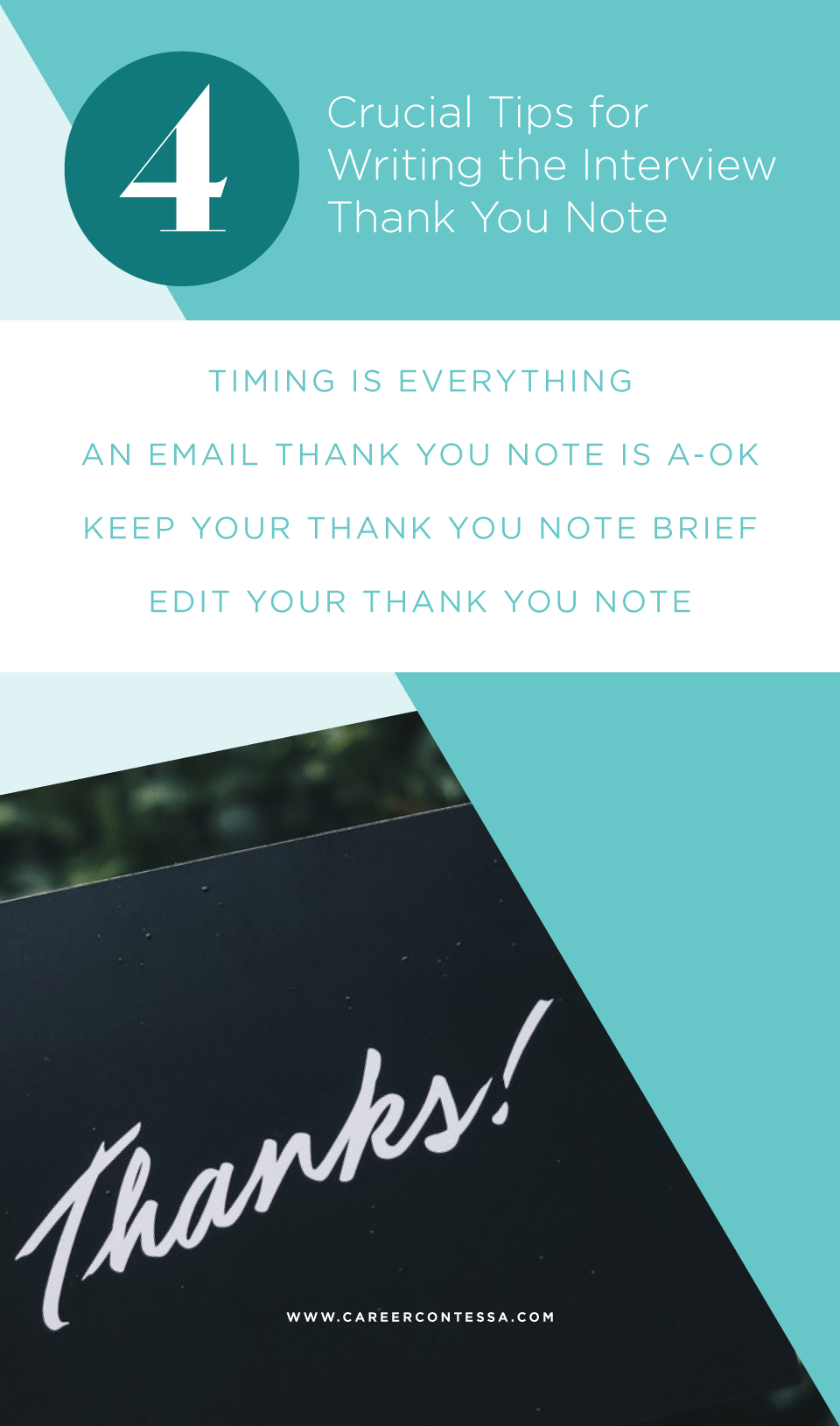
#BestofFSCBlog : #JobSearch – Four(4) Crucial Tips for Writing the Interview Thank You Note. So you Really Want this Job?  

July 30, 2018/in First Sun Blog/by First Sun Team
So you really want this job?  You have likely already written a captivating cover letter, undergone a brief phone interview and finally, were invited into the office for an interview. The interview went swimmingly (because you prepped for it like a pro)? Awesome! Now that you’re exiting the office building of your (hopeful) future job, it’s time for your next step.
Enter: the thank you note. The thank you note should be a no-brainer. It is a perfect way for a candidate to give herself the final edge over other candidates in the interview process.
Writing the thank you note does not have to be an exhaustive process. However, a candidate can (and should!) use it as an opportunity to edge out the other candidates.

TIMING IS EVERYTHING

Interviewing is an arduous process for any job candidate. In much the same way, it can be a stressful time for the hiring manager. My number one piece of advice in writing a thank you note for a job you really want?
Do it right away. Even if you killed the interview and expect a call saying “You’re hired!” by the end of the day, write the note. Express your gratitude and keep your candidacy fresh in the hiring manager’s mind. DO NOT wait until a week later when you haven’t heard anything to shoot off a “by the way, thanks” email.
A well-timed thank you note after an interview is a perfect way to reiterate your excitement to join the team. Aim to send your thank you note no within 24 hours of the end of the interview.

Like this Article ?  Share It !You now can easily enjoy/follow/share Today our Award Winning Articles/Blogs with Now Over 2.5 Million Growing  Participates Worldwidein our various Social Media formats below:

FSC LinkedIn Network:   www.linkedin.com/in/fscnetwork

Facebook:  http://www.facebook.com/pages/First-Sun-Consulting-LLC-Outplacement-Services/213542315355343?sk=wall

Google+:  https://plus.google.com/115673713231115398101/posts?hl=en

Twitter: Follow us @ firstsunllc

Question: Want the ‘the best/current articles/blogs on the web’ on Job Search, Resume, Advancing/Changing your Career, or simply Managing People?

Answer: Simply go to our FSC Career Blog below & type(#career, #leadership, #life) in Blog Search:  https://www.firstsun.com/fsc-career-blog/

What Skill Sets do You have to be ‘Sharpened’ ?

Continue of article:

AN EMAIL THANK YOU NOTE IS A-OK

We know you still have that Laura Ashley stationery your grandma gave you for your high school graduation. We know it’s embossed with your initials.
However, 87 percent of hiring managers view email as a perfectly acceptable means of delivering your thank you note. Since we have already established that timing is everything, email is going to be your best bet.

KEEP YOUR THANK YOU NOTE BRIEF

By this point in the interview process, your hiring manager has likely learned a ton about you. Do not use the thank you note to reiterate the play-by-play.
You can (and should) use it as a means to communicate one point you may have neglected to make, to expand on an idea or simply to express feelings of excitement for the job itself. Since the hiring manager is also busy interviewing, reading resumes, and communicating with other stakeholders, keep your note on point.

EDIT YOUR THANK YOU NOTE

So far, we have focused heavily on the speed and brevity of this note. But that doesn’t mean it’s informal! Make sure to use a formal greeting, write clear (and concise!) sentences, and sign off formally. This is not a one-liner to say “Thanks, Dude!”
Just as easily as a thank you note can impress a hiring manager, it can also detract from the whole process. A spelling error or flippant manner of writing can undo your progress. Write your thank you note, read it over a few times aloud, spell check it, and get a second pair of eyeballs on it if you can.
Crucial Tips Interview Thank You
CareerContessa.com | BY CAILEEN KEHAYAS  |  July 25, 2018
https://www.firstsun.com/wp-content/uploads/2017/12/Woman-on-laptop.jpg 931 1242 First Sun Team https://www.firstsun.com/wp-content/uploads/2018/05/logo-min-300x123.jpg First Sun Team2018-07-30 12:19:312021-02-24 20:43:34#BestofFSCBlog : #JobSearch – Four(4) Crucial Tips for Writing the Interview Thank You Note. So you Really Want this Job?  

#CareerAdvice : #JobSearch – How to Find Out Why You Didn’t Get the #Job …Want an Example of What Exactly you could Say to a #HiringManager ? We’ve got it.

July 12, 2018/in First Sun Blog/by First Sun Team

You send in a stellar resume. You blow the recruiter away in the phone screen. And you wow everyone you speak with during your in-person interview. And yet, you still don’t get the job. Worst of all, you don’t know why you didn’t get it — you either didn’t hear back at all, or received feedback so vague that it’s virtually useless (e.g. “We decided to go with another candidate who was a better fit.”) Is there anything worse?


It’s incredibly frustrating when a recruiter or hiring manager doesn’t share a concrete reason why you were passed over, but if it happens to you, don’t worry. Often, there’s still a way to figure out what went wrong — here’s how.

1. Reach Out to the Decision Maker

If you have the contact info of the hiring manager, it’s best to chat with them rather than a recruiter or HR representative, says Ren Burgett, career coach and owner of 3R Coach.

“An HR manager or recruiter is more likely to give you a programmed HR response such as, ‘We found a candidate that was a better fit for our needs.’ The hiring manager is more likely to give you a candid response,” she explains.

If you haven’t already been in touch with the hiring manager, though, you may want to reach out to someone who can point them in your direction.

“If you don’t have their contact details, you need to get in touch with whoever your point of contact was throughout the recruitment process. Even if they can’t provide feedback themselves, they will be able to pass your query onto someone who can,” says Steve Pritchard, HR Manager at Cuuver.com.

When you haven’t been given the hiring manager’s contact information, it can be tempting to bypass your point of contact and look them up on LinkedIn or Google their email address, but this is a mistake, Pritchard says: “They may not feel too comfortable with you contacting them using a number/email they didn’t provide you with.”

What to Do When Your Job Search Gets You Down

2. Express Gratitude

Nobody wants to engage with a candidate who sounds demanding or presumptuous, so make sure to open your message with a note of thanks.

“Thanking someone for [fusion_builder_container hundred_percent=”yes” overflow=”visible”][fusion_builder_row][fusion_builder_column type=”1_1″ background_position=”left top” background_color=”” border_size=”” border_color=”” border_style=”solid” spacing=”yes” background_image=”” background_repeat=”no-repeat” padding=”” margin_top=”0px” margin_bottom=”0px” class=”” id=”” animation_type=”” animation_speed=”0.3″ animation_direction=”left” hide_on_mobile=”no” center_content=”no” min_height=”none”][taking the] time to interview you and provide the opportunity can always start the conversation in a positive manner,” says Shanalee Sharboneau, President/Technical Recruiter at Staffing Science, LLC.

In particular, you should express gratitude for the fact that they are going out of their way to read your note. After all, they don’t have to share feedback with you.

“Show in your request for feedback that you appreciate the recruiter/hiring manager is likely to be busy. This way, you don’t sound too pushy or demanding,” Pritchard adds.


Like this Article ?  Share It !    You now can easily enjoy/follow/share Today our Award Winning Articles/Blogs with Now Over 2.5 Million Growing  Participates Worldwide in our various Social Media formats below:

FSC LinkedIn Network:   www.linkedin.com/in/fscnetwork

Facebook:  http://www.facebook.com/pages/First-Sun-Consulting-LLC-Outplacement-Services/213542315355343?sk=wall

Google+:  https://plus.google.com/115673713231115398101/posts?hl=en

Twitter: Follow us @ firstsunllc

Question: Want the ‘the best/current articles/blogs on the web’ on Job Search, Resume, Advancing/Changing your Career, or simply Managing People?

Answer: Simply go to our FSC Career Blog below & type(#career, #leadership, #life) in Blog Search:  https://www.firstsun.com/fsc-career-blog/

What Skill Sets do You have to be ‘Sharpened’ ?

Continue of article:

3. Be Positive

You may be upset that you didn’t get the job, but remember: you catch more flies with honey than with vinegar. It’s okay to acknowledge that you’re disappointed with the outcome, but don’t express resentment or aggression.

Show “that you are understanding of their decision not to hire you, otherwise, you may sound bitter about not getting the job rather than someone looking for honest feedback to help them with their job search,” Pritchard continues.

And instead of taking a self-deprecating approach like “How did I screw up” or “Where did I go wrong”, frame the conversation as a quest for personal growth.

“Don’t make your question about ‘why’ you didn’t get the job, make your question about ‘how’ you can improve. People are more likely to respond to someone that seeks out growth as opposed to someone that just wants answers,” Burgett says.

To Email or Not to Email? A Glassdoor Recruiter’s Tips for Following Up After Applying

4. Keep It Short and Specific

When reaching out for feedback, “make your email no more than one paragraph,” Burgett recommends. After all, they are probably plenty busy with their day-to-day tasks, so you want to make sure to honor their time.

You can save them even more time by avoiding general questions like “Why didn’t I get the job?” and instead drilling down into a few precise issues. Burgett recommends including “two to three specific questions [that] you would like feedback on from the interview process.”

One questions that Laura Handrick, Career Analyst at FitSmallBusiness.com, recommends asking is “what might you have done, said or provided differently that would have made the company choose YOU instead of the other candidate.”

5. Open the Door for Future Opportunities

Just because you were rejected from a job doesn’t always mean that you can never apply there again — you may have been a close second. At the end of your message, reiterate your interest in the company (if you are truly interested) and consider adding something like “if anything changes, I’d love to connect regarding future opportunities.”

“That will go far, and many times, new hires fail in the first few months. They’ll remember your graciousness,” Handrick says.

You can also see if they might be willing to refer you to another opportunity.

“Always end the email by asking if they know of anyone else you can reach out to as you continue your job search. If you didn’t get the job, perhaps you can get a lead [for] another job. Use this as an opportunity to network,” Burgett says.

4 Signs You Should Apply Again After Being Rejected

6. Be Patient & Ready to Take No for an Answer

If the person you reach out to fails to respond, don’t ping them every day until they do.

“Giving feedback, particularly constructive feedback, is hard, so allowing time for preparing will likely get you more thoughtful responses,” points out Dr. Dawn Graham, Career Management Director at the Wharton School and host of Career Talk.

Even if they never respond, you shouldn’t pester them, Graham adds.

“Companies tend to avoid giving candidates feedback to avoid opening themselves up to risk,” she explains. “In addition, many hirers have trouble putting their fingers on a clear definition of ‘fit’ or likability, which are two powerful aspects of hiring decisions that can be challenging to put into words. Therefore, they may pass on giving feedback to a rejected job seeker for the sheer reason that even they are unable to verbalize their final decision in a way that will be meaningful to the overlooked applicant.”

Sample Message

Want an example of what exactly you could say to a hiring manager? Burgett recommends the following:

Hi (Hiring Manager),

I wanted to thank you for the amazing opportunity to interview for the position of (job title) with your company. I really enjoyed learning about (company name) and getting to know you and your team during the interview process. I understand you have decided to move forward with another candidate that better fits your current needs.

As I continue my job search, I would love to get your feedback on how I can improve as a candidate. When you have a minute, could you provide insight into what I can improve upon to help me stand out and progress in my career? Specifically, I would appreciate feedback on the following:

1. What is the one skill I can improve upon to help advance my career that may be holding me back?

2. If I had the opportunity to redo my interview, what is the one thing I should have done differently?

I appreciate any candid feedback you can offer as it will help me understand the areas I need to improve. Additionally, if you know of any companies that may be hiring for similar positions or anyone else I should reach out to as I continue my job search, please let me know.

Again, thank you for the opportunity to interview for the position. I wish you and your team continued success.

Sincerely,

Your Name

There’s no doubt that getting rejected from a job you were interested in is upsetting, and it can be doubly so if you don’t hear actionable feedback from the hiring team. But odds are, it’s nothing personal, so try not to take it that way. And remember — the right job is out there. It’s only a matter of time until you find it.


GlassDoor.com | May 31, 2018  | Posted by Emily Moore

[/fusion_builder_column][/fusion_builder_row][/fusion_builder_container]

https://www.firstsun.com/wp-content/uploads/2016/04/free-man-thinking.jpg 2456 3680 First Sun Team https://www.firstsun.com/wp-content/uploads/2018/05/logo-min-300x123.jpg First Sun Team2018-07-12 21:21:532020-09-30 20:46:37#CareerAdvice : #JobSearch – How to Find Out Why You Didn’t Get the #Job …Want an Example of What Exactly you could Say to a #HiringManager ? We’ve got it.

Your #Career : #CareerAdvice #Interviews – How to Write a Memorable Post-Interview #ThankYouNote … Imagine you’ve Just Walked Out of a Great #JobInterview . Now, Take It to the Next Level by Writing a #ThankYouNote that Reinforces Why You are the Right Candidate.

May 24, 2018/in First Sun Blog/by First Sun Team

Imagine you’ve just walked out of a great job interview. You made a great impression and really like your chances. Now, take it to the next level by writing a thank you note that reinforces why you are the right candidate.

Here are some tips for creating the perfect follow-up note:

Methods matter

Email – In general, email is probably the best choice. Most hiring managers check their email at least once a day and probably expect to receive thank you notes this way.

Handwritten notes – These are still prevalent, but you are up against the timing of snail mail. Hiring managers are finalizing their choice in the time it takes to compose, send, and receive a handwritten card. In addition, you don’t know how often they are checking their mailbox – since it’s used so rarely anymore, some offices only deliver mail once a week. However, handwritten notes can be great if you can ensure quick delivery – such as applying for a role at your current company or in an office next door to yours. To avoid awkwardness, just drop the note under their door or in their mail slot.

LinkedIn direct messages – This isn’t a bad method, but again, timing may not be on your side. Remember that hiring managers may be on LinkedIn less than their business email, especially if they’ve wrapped up interviewing and are done looking for candidates.  If you do choose this method, make sure to keep the tone professional and construct the note the way you would any business communication.

To Email or Not to Email? A Glassdoor Recruiter’s Tips for Following Up After Applying

Like this Article ?  Share It !    You now can easily enjoy/follow/share Today our Award Winning Articles/Blogs with Now Over 2.5 Million Growing  Participates Worldwide in our various Social Media formats below:

FSC LinkedIn Network:   www.linkedin.com/in/fscnetwork

Facebook:  http://www.facebook.com/pages/First-Sun-Consulting-LLC-Outplacement-Services/213542315355343?sk=wall

Google+:  https://plus.google.com/115673713231115398101/posts?hl=en

Twitter: Follow us @ firstsunllc

Question: Want the ‘the best/current articles/blogs on the web’ on Job Search, Resume, Advancing/Changing your Career, or simply Managing People?

Answer: Simply go to our FSC Career Blog below & type(#career, #leadership, #life) in Blog Search:  https://www.firstsun.com/fsc-career-blog/

What Skill Sets do You have to be ‘Sharpened’ ?

Continue of article:

Quality is key

If you are going to choose a handwritten note, make sure you use quality stationary or a blank thank you card. And it should be in line with your industry – bright colors and a cool design may work well for social media roles, but neat lines and simple patterns are best for something like finance. And make sure your email signature and address are professional.

Make it memorable

A great way to stand out is to personalize the note with something specific you discussed during the interview. As candidates, we love a personal touch to the hiring experience and so will the hiring manager! Here’s an example:

Thank you for meeting with me to discuss the Financial Analyst role. I loved hearing about your team’s objectives for the year and discussing how we both share a passion for process improvement. Our conversation reinforced my interest in the role and I look forward to hearing from you regarding this position.

From there, you can wrap up with a warm closing. As you compile your note, make it conversational. To streamline the process if you’re interviewing for multiple positions, create a general template, then fill in the specific pieces for each separate role.

A Compelling Thank You Note Template

Timing matters

Send the note ASAP, but put some thought into it. One of the oddest things applicants do is hand the interviewer a thank you note during the interview. How can you write a thank you note if you haven’t been through the experience yet? This can feel disingenuous and rushed. You want to convey that this role is important to you and you are willing to take the time to sincerely communicate with the hiring team.

Are notes required?

A common question is, should you ever not send a thank you note? 99% of the time, you should absolutely send a thank you note. Even if you no longer have an interest in the role or company, felt the interview was particularly intense, or the interviewer wasn’t exactly friendly, still send the note. While you don’t need to share that feedback, you still want to convey your appreciation for their time and emphasize that you enjoyed meeting them. You never know when someone may share your name with a colleague and you want to make the best impression you can.

Quick tips

  • Quality check the note before sending.
  • Don’t look for a response. The offer or decline is usually the next communication. 
  • Send a separate note to everyone – recruiters and each individual hiring manager.

Devon Miller, Talent Branding and Recruitment Marketing at Vanguard, is a writer specializing in branding and marketing topics that create authenticity and engagement via social media channels. Vanguard is one of the world’s largest investment companies, offering a large selection of high-quality low-cost mutual funds, ETFs, advice, and related services. 


Glassdoor.com | May 23, 2018  | Posted by Devon Miller, Vanguard

https://www.firstsun.com/wp-content/uploads/2017/01/free-laptop-woman.jpg 1100 1650 First Sun Team https://www.firstsun.com/wp-content/uploads/2018/05/logo-min-300x123.jpg First Sun Team2018-05-24 20:24:282020-09-30 20:47:08Your #Career : #CareerAdvice #Interviews – How to Write a Memorable Post-Interview #ThankYouNote … Imagine you’ve Just Walked Out of a Great #JobInterview . Now, Take It to the Next Level by Writing a #ThankYouNote that Reinforces Why You are the Right Candidate.

Your #Career : 8 Expert-Approved Tips for How to Find a Job Today (Bonus: Live Stream Podcasts)… The #JobHunt : It’s Something We All Go Through in our Lives, Yet there’s Still a Surprising Amount of Mystery Around It.

April 28, 2018/in First Sun Blog/by First Sun Team

The job hunt: it’s something we all go through in our lives, yet there’s still a surprising amount of mystery around it. Do I need to write a cover letter? What’s the best way to prepare for an interview? And why do I never hear back, even after sending dozens of applications?

We know that many different aspects of the job search process can be confusing — and as a company whose mission is to help people everywhere find jobs and companies they love, we wanted to provide some clarity. That’s why we hosted How to Get a Job Live!, a livestream dedicated to helping people beat the competition and get hired. In it, we heard from job search experts, recruiters and even Glassdoor’s Chief Economist about what it takes to find the right company for you, stand out from the crowd, write an excellent resume and more.

Couldn’t make it? No problem! Register here for access to the livestream recordings, and read on to learn a few of the top tips from our panel of experts.

1. The Time to Apply Is Now

Good news for anyone thinking about moving onto a new opportunity — we’re undoubtedly in a job seeker’s market, according to Glassdoor Chief Economist Dr. Andrew Chamberlain. The U.S. has seen nine years of continuous economic expansion, allowing businesses to add jobs at a steady clip. Some particularly hot industries, like healthcare and tech, are hiring even more. With so many opportunities available, companies are working hard to attract the best and the brightest to their companies, which can result in improved benefits packages, higher salaries and other perks that entice candidates.

It’s important to remember, though, that these favorable conditions won’t last forever — after all, what goes up must eventually come down. Chamberlain’s advice: Take advantage of the job seeker’s market while it lasts. If you’ve been thinking about finding a new job, there’s no time to apply like the present.

Find Jobs Near You

Like this Article ?  Share It !    You now can easily enjoy/follow/share Today our Award Winning Articles/Blogs with Now Over 2.5 Million Growing  Participates Worldwide in our various Social Media formats below:

FSC LinkedIn Network:   www.linkedin.com/in/fscnetwork

Facebook:  http://www.facebook.com/pages/First-Sun-Consulting-LLC-Outplacement-Services/213542315355343?sk=wall

Google+:  https://plus.google.com/115673713231115398101/posts?hl=en

Twitter: Follow us @ firstsunllc

Question: Want the ‘the best/current articles/blogs on the web’ on Job Search, Resume, Advancing/Changing your Career, or simply Managing People?

Answer: Simply go to our FSC Career Blog below & type(#career, #leadership, #life) in Blog Search:  https://www.firstsun.com/fsc-career-blog/

What Skill Sets do You have to be ‘Sharpened’ ?

Continue of article:

2. Bolster Your Skills

Just because there are tons of open positions, though, it doesn’t mean that recruiters are lowering their standards — you’ll still be competing amongst other talented candidates. And as technology has advanced, employers expect potential employees to have more specialized, technical skills. One of the best ways for you to stand out from the crowd is to show employers that you’ve mastered hard skills like these. In particular, Chamberlain recommended familiarizing yourself with data analysis, as nearly all roles work with data in some form and can benefit from deriving insight from it. If data analysis isn’t your strong suit, consider taking an online course.

How to Search for a Job

3. Include the Most Important Resume Info Up Top

Your resume is the first impression recruiters and hiring managers have of you — and if you don’t grab their attention, it will likely also be the last. The average recruiter only spends about six to seven seconds on a resume, so make sure it’s easy for the reader to gather all of the most important information with just a quick scan. One way to do that, suggested job search expert Scott Dobroski, is to include a professional summary up top that doesn’t just state who you are and what job you’re looking for, but the unique value you bring to the table and your most valuable skills.

Here’s What the Perfect Resume Looks Like

4. When in Doubt, Write a Cover Letter

On most job listings, you’ll see “cover letter optional” — something that causes a lot of confusion for job seekers. Is it truly optional, or is it just a test to weed out less committed candidates? Most of the time, cover letters aren’t required, Dobroski said, but attaching a well-written one can only help your application. For one, it shows strong communication skills, which are a necessity for nearly any role, Chamberlain pointed out. For another, it gives you an extra chance to sell yourself. Cover letters should be quick, one-page documents that provide added color on why you’re interested in the opportunity, what you’ve achieved in your career, how you did it and why you’re a good fit for the job.

5. Research, Research, Research

The single biggest mistake you can make in an interview is not preparing for it beforehand. This means looking up the basics of the company (industry, products/services, recent articles), common interview questions (making sure to practice the responses aloud with a friend), information about your interviewers and more. This will help you come across as a more informed, passionate candidate.

What to Look for When Researching a Company: A Complete Checklist

6. Always Negotiate

One of the biggest misconceptions job seekers have about negotiating salary is that their job offer will be rescinded if they ask for a higher salary. But this is virtually unheard of — as Dobroski said, “I’ve never seen that to be the case.” So be comfortable asking for more, but make sure it’s based on hard data around what your market value is. Use Glassdoor’s Know Your Worth tool to help inform the range you ask for, although you should make sure not to start with your lowest acceptable salary in a negotiation! Finally, don’t forget to see if you can negotiate additional benefits — companies are often willing to accommodate requests for additional vacation days, workplace flexibility and more in order to seal the deal with a strong candidate.

7. Don’t Judge a Company By Its Industry

In the second half of the livestream, recruiters from Facebook, Salesforce and Kaiser Permanente shared insight about their company cultures, how candidates can stand out and what they look for in interviews. One of their main pieces of advice for job seekers: Don’t assume you can’t apply to a company because of the industry they’re in! Claire Arnold, recruiter at Kaiser Permanente, shared that you don’t need to be a doctor or nurse to work at her company. While about 70 percent of Kaiser’s positions are healthcare related, they still have tons of open jobs in fields like administration, marketing, IT and more. Similarly, you don’t need to be a software engineer to work at tech companies Facebook and Salesforce. While yes, they do have many open technical positions, they also need talented folks in roles like sales, recruiting, finance, HR… the list goes on.

8. Ask Questions in an Interview

Even if you feel like you’ve gotten sufficient information already, you should always take an interviewer up on their offer to answer any questions you might have. In this situation, interviewers aren’t just trying to help you out — they also want to see if you can ask questions that demonstrate that you’ve done your research and have critical thinking skills. One question that Ashley Core of Salesforce loves to hear is “How have you given back to the community?” At Salesforce, community service is huge, so this proves that candidates did their due diligence in the research stage.

13 Companies That Give Back – And Hiring Now!

9. Don’t Take It Personally

Near the end of the livestream, recruiters were asked what the best piece of career advice they had ever received was. According to Facebook Recruiting Director Liz Wamai, it was “Don’t take it personally.” This is especially applicable in the job search. When you get rejected, it’s easy to get down on yourself, and think “What’s wrong with me?” But oftentimes, recruiters will pass on a candidate not because they don’t like them, but simply because they don’t have the right role for them at the moment or they need a little more experience under their belt first. If this happens to you, don’t get discouraged — if you keep applying thoughtfully and bringing your best self to the interview, it’s only a matter of time before you get an offer.


GlassDoor.com | April 26, 2018 | Posted by Emily Moore

https://www.firstsun.com/wp-content/uploads/2017/10/Cookies.jpg 720 1080 First Sun Team https://www.firstsun.com/wp-content/uploads/2018/05/logo-min-300x123.jpg First Sun Team2018-04-28 13:07:132020-09-30 20:47:39Your #Career : 8 Expert-Approved Tips for How to Find a Job Today (Bonus: Live Stream Podcasts)… The #JobHunt : It’s Something We All Go Through in our Lives, Yet there’s Still a Surprising Amount of Mystery Around It.

Your #Career : Don’t Tell #Recruiters or the #HiringManger These Things If You Want The Job…These Phrases can Compromise your Chances of Getting a Competitive Offer.

April 27, 2018/in First Sun Blog/by First Sun Team

Put your best foot forward. How many times have you heard that popular refrain? Too many to count. However, when it comes to the job search process, many job seekers think that this advice only applies during the scheduled phone calls, interviews, and interactions with the hiring manager and your potential team. After all, isn’t the recruiter just the go-between, the person who arranges interviews and leases between candidate and boss? Wrong. The recruiter is a stakeholder and is an integral part of the hiring process. To overlook or underestimate his or her influence is a big mistake.

Every interaction with a potential employer should not only be professional and also dictate that you are purposeful and thoughtful about everything you say. Whether it’s just a quick text through Canvas or a phone call to discuss salary expectation, choose your words wisely to ensure your own success.

Here are six phrases that you should never say to a recruiter if you want a competitive job offer.

“I’LL TAKE ANYTHING (ANY ROLE AT YOUR COMPANY)”

Much like dating, the smell of desperation in the job search can be palpable. Whether the bills are piling up, your current gig is an absolute dead end, or whether this is your dream company, avoid telling a recruiter that you’ll “take anything” for a few key reasons:

  1. You’re selling yourself and your skills short. You are talented, smart, and can contribute greatly.
  2. You appear uninformed. Recruiters want well-researched, highly engaged, informed candidates to apply for jobs. This statement makes you appear as though you haven’t thought out the decision to apply to the company, or do not know how your career goals align with their objectives.
  3. You are signaling that you will settle. Continuing with the dating analogy, job seekers who appear “thirsty” or desperate won’t command the attention or best treatment.

Like this Article ?  Share It !    You now can easily enjoy/follow/share Today our Award Winning Articles/Blogs with Now Over 2.5 Million Growing  Participates Worldwide in our various Social Media formats below:

FSC LinkedIn Network:   www.linkedin.com/in/fscnetwork

Facebook:  http://www.facebook.com/pages/First-Sun-Consulting-LLC-Outplacement-Services/213542315355343?sk=wall

Google+:  https://plus.google.com/115673713231115398101/posts?hl=en

Twitter: Follow us @ firstsunllc

Question: Want the ‘the best/current articles/blogs on the web’ on Job Search, Resume, Advancing/Changing your Career, or simply Managing People?

Answer: Simply go to our FSC Career Blog below & type(#career, #leadership, #life) in Blog Search:  https://www.firstsun.com/fsc-career-blog/

What Skill Sets do You have to be ‘Sharpened’ ?

Continue of article:

“SURE, THAT SOUNDS LIKE A GOOD SALARY”

Never settle for the opening salary offer. Never. “A salary negotiation is a collaboration, and a key ingredient of a successful collaboration is good communication,” says Josh Doody, author of Fearless Salary Negotiation. “You’ll often get a job offer that seems really appealing, and it might be far more than you expected. Your instinct in that case might be to just accept the offer because it’s so good.”

However, you should be prepared to negotiate your salary and know how much you could earn given your skills, education, and location by using Glassdoor’s Know Your Worth personal salary calculator.

Instead of blindly accepting their offer, do your research. Then, Doody says, “formulate a counteroffer to see how much you can improve it. The negotiation should end with the company saying “Yes” to you. Once they say “Yes” to you, or you run out of things to ask for, then you are finished negotiating.”


Related: What Recruiters Pay Attention To When They Look At Your Social Media 


“MY PREVIOUS COMPANY WAS HORRIBLE”

Complaining about your last company is a big no-no. Barring some really unique circumstance, griping about your former boss, colleagues, or work environment can be detrimental to your interview process as well as your professional reputation.

Instead of making such a blunt statement, critically evaluate how you have navigated challenges on the job. Share with the recruiter how you have coped and actually thrived in spite of less than ideal circumstances. Just remember, trash talking is a no-no.


Related:Former Google Recruiter: This Is How To Improve Your Interviews 


“MY FORMER BOSS WON’T GIVE ME A GOOD RECOMMENDATION BECAUSE HE/SHE WAS THREATENED BY ME”

While there may be truth to this statement, save it for your friends over drinks. Do not share this with a recruiter. When asked for a list of recommendations, rarely will a recruiter counter your list with a comment like, “Why didn’t you include your last boss?” References and recommendations should come from people who can speak to your accomplishments, successes, and positive work experiences. Glowing recommendations are a big part of putting your best foot forward.

However, recruiters aren’t likely to care about the less than savory relationship you had with your former boss. Nix the gossip. Offer up the best recommendations you can, and if you are questioned about the absence of your most recent boss in that bunch, simply reply, “The group of people I provided are best suited to speak to my accomplishments, work ethic, and abilities. I think they’ll provide you with a 360-degree view of why I’d be an excellent fit for this role.”


Related:Recruiters Explain Which Types Of Messages They Actually Reply To 


“I KNOW MY INTERVIEW IS TODAY, BUT CAN WE RESCHEDULE?”

Unless there has been a death in the family or a critical emergency, canceling an interview on the day of is tantamount to saying “I don’t really want this job and I don’t respect you or your time.”

If you need to adjust the time or you’re running late, be transparent. “Being late to an interview with no explanation or without emailing or calling ahead to say they are running late will knock out 99% of interviewees,” says Jamie Hichens, senior manager of talent acquisition at Glassdoor. “At the very least, if you’re running late, call and offer an ETA, an explanation, or an offer to reschedule. And remember to apologize for the inconvenience.”

“IT’S BEEN 3 WEEKS SINCE I APPLIED, I THOUGHT MY APPLICATION HAD FALLEN INTO THE BLACK HOLE”

Depending on the size of the company, job applications can receive hundreds or thousands of resumes per position. And while recruiters try to respond to everyone, sometimes it’s harder than job seekers may think. That’s no reason to be curt with a recruiter or make a passive-aggressive comment like this. Use your time with a recruiter wisely by focusing on the role, the company and your unique fit for both. Don’t waste time or diminish your chances of a positive interview experience by making snarky comments.

There are a few ways you can avoid the black hole. “With the increased use of online applicant tracking systems even among smaller companies, it means the recruiter or hiring manager may not see your resume unless you use just the right keywords,” says Mikaela Kiner, founder/CEO of UniquelyHR. “Referrals [fusion_builder_container hundred_percent=”yes” overflow=”visible”][fusion_builder_row][fusion_builder_column type=”1_1″ background_position=”left top” background_color=”” border_size=”” border_color=”” border_style=”solid” spacing=”yes” background_image=”” background_repeat=”no-repeat” padding=”” margin_top=”0px” margin_bottom=”0px” class=”” id=”” animation_type=”” animation_speed=”0.3″ animation_direction=”left” hide_on_mobile=”no” center_content=”no” min_height=”none”][also] increase the likelihood that a recruiter will see your resume. If you don’t have a personal connection, use social media to find out who does. Don’t be embarrassed to ask someone to make an introduction on your behalf, people do this all the time. If you’re uncomfortable asking for favors, include an easy way for them to say no, like, ‘If you’re not comfortable connecting me, I completely understand.’”


This article originally appeared on Glassdoor and is reprinted with permission. 

You Might Also Like:

  • This Is What Recruiters Are Thinking When Job Seekers Are Unsuccessful
  • 7 Things That Will Drive Recruiters Away From You
  • Got A Panel Job Interview Coming Up? Here’s What You Should Avoid


FastCompany.com | April 27, 2018 | BY AMY ELISA JACKSON—GLASSDOOR 5 MINUTE READ

[/fusion_builder_column][/fusion_builder_row][/fusion_builder_container]

https://www.firstsun.com/wp-content/uploads/2017/03/interviewer.jpg 683 911 First Sun Team https://www.firstsun.com/wp-content/uploads/2018/05/logo-min-300x123.jpg First Sun Team2018-04-27 16:26:042020-09-30 20:47:41Your #Career : Don’t Tell #Recruiters or the #HiringManger These Things If You Want The Job…These Phrases can Compromise your Chances of Getting a Competitive Offer.

Your #Career : 6 Things You Must Do Before #Graduation …Time is Ticking! We’ve Turned to Top College & #CareerAdvisors for the Six Things you Must Do Before you Walk Across that Stage.

April 27, 2018/in First Sun Blog/by First Sun Team

You’re a soon-to-be college graduate, and you’re so consumed with, you know, graduating, that perhaps you haven’t realized you need to plan more than the outfit you’ll wear beneath your cap and gown. In fact, there’s a lot to do before you graduate.

We’ve turned to top college and career advisors for the six things you must do before you walk across that stage.

1. Participate in Mock Interviews

Practice makes perfect — and you don’t want to learn how to be the perfect interviewee during a real interview. Joshua Domitrovich, coordinator for career mentoring and internships at Clarion University, recommends that soon-to-be graduates begin participating in mock interviews about two weeks before a real interview.

“This allows students to reflect on their experiences while ‘messing up,’ so that they don’t mess up with the employer,” he says, while adding that many career centers, including Clarion, offer mock interview services. “Career centers will tailor your mock interview to mirror the organization you are meeting and discuss how to develop questions for the end of the interview,” he says. “You’ll walk out of your practice interview much more prepared.”

20 Most Popular Jobs for College Graduates

Like this Article ?  Share It !    You now can easily enjoy/follow/share Today our Award Winning Articles/Blogs with Now Over 2.5 Million Growing  Participates Worldwide in our various Social Media formats below:

FSC LinkedIn Network:   www.linkedin.com/in/fscnetwork

Facebook:  http://www.facebook.com/pages/First-Sun-Consulting-LLC-Outplacement-Services/213542315355343?sk=wall

Google+:  https://plus.google.com/115673713231115398101/posts?hl=en

Twitter: Follow us @ firstsunllc

Question: Want the ‘the best/current articles/blogs on the web’ on Job Search, Resume, Advancing/Changing your Career, or simply Managing People?

Answer: Simply go to our FSC Career Blog below & type(#career, #leadership, #life) in Blog Search:  https://www.firstsun.com/fsc-career-blog/

What Skill Sets do You have to be ‘Sharpened’ ?

Continue of article:

2. Create a Custom-Tailored Resume

A generic resume just won’t do, warns Jason Patel, former career ambassador at George Washington University and the founder of Transizion, a college and career-prep company. “For example,” he explains, “a business development or communications graduate might be applying for work in the finance, nonprofit and startup sectors. He or she should look at the common keywords for job postings in each of those sectors, and if they are relevant to their experience, use them on his or her resume. The worst thing a soon-to-be graduate can do in this situation is have pertinent experience for a job but apply with a generic resume.”

3. Get a Resume Review

Now that you have a resume custom-tailored for your position or industry, it’s time to make sure the resume itself is top-notch. “No matter how confident you are in your resume,” you should still have your resume reviewed by someone else — preferably a professional, says Domitrovich. This is an especially important step if you have a resume that’s more than six months old. In that case, “there is a good chance processes, procedures and preferences of employers have changed,” Domitrovich warns. “So use your career center to review your resume and ensure it is up to date and mistake free.”

4. Craft an Elevator Pitch

An elevator pitch is a quick, rehearsed speech that tells someone what you have to offer as an employee. “Your two-minute elevator pitch should answer the always-asked, ‘tell me about yourself’ question in job interviews,” Patel explains. “Since this question — or one like it — is asked in the beginning, it’s important to demonstrate confidence and preparedness by answering smoothly. Your elevator pitch consists of what you’ve done, what you’re doing and where you’re going. This means you should discuss your qualifications and degree, what you’re pursuing now and your intermediate goals.”

How To Craft An Irresistible Elevator Pitch (& Deliver It Like A Pro)

5. Network Like You Mean It

“If you’re not networking, you’re not working,” Domitrovich says plainly. “You never know who a contact is connected to and how far your network can reach.” Luckily, you don’t have to start your networking search from scratch. “Your career center can provide access to a vast network of alumni and employers,” Domitrovich says.  “Tapping into this network can provide opportunities to use pre-existing relationships to get your foot in the door. We encourage students to keep their career centers updated on their job search process. For example, before applying to XYZ organization, reach out to your career center to see if any alumni or a pre-existing employer relationship exists.”

6. Create a Portfolio if Relevant

Creating a portfolio and then putting it online can help you stand out in a major way. “For relevant professions, a portfolio is a great way to gain an advantage on the competition,” Patel says. “Sometimes, your resume won’t convey your creativity and transferable skills, but your portfolio can.” Consider uploading writing samples, photography, designs and any other assets you’ve created to a single website such as WordPress. You may have to spend some time on it, but it could pay off in spades down the road.


Glassdoor.com | April 27, 2018 | Posted by Jillian Kramer

https://www.firstsun.com/wp-content/uploads/2014/07/College-Graduate.jpg 680 1024 First Sun Team https://www.firstsun.com/wp-content/uploads/2018/05/logo-min-300x123.jpg First Sun Team2018-04-27 14:30:362020-09-30 20:47:43Your #Career : 6 Things You Must Do Before #Graduation …Time is Ticking! We’ve Turned to Top College & #CareerAdvisors for the Six Things you Must Do Before you Walk Across that Stage.

#Leadership : Three Ways To Improve Your #InterviewProcess So You Can Make Better And Faster #HiringDecisions …These Things Might Not be Rocket Science, But they are Surprisingly Not Done with as Much Consistency or Rigor as you Might Think.

April 25, 2018/in First Sun Blog/by First Sun Team

Interviewing may not be the most effective way to evaluate candidates, but it is still the most common. There are other better predictors of job success, but some of those methods require more resources to manage than your company many have.

If the interview is all you’ve got, it doesn’t mean that you are relegated to a life of bad hires or lots of first year turnover. It just means that you have to get really good at interviewing.

Some of that comes down to building your skills as an interviewer, which can only really happen with a lot of real skills practice (Effectively “probing” a candidate for more information is easy in concept but is far from easy in reality).

Beyond building your skills, some of it comes down to building the right interview process.

The Point Of The Interview

As my wife frequently complains about, I’ll start with a bold statement of the obvious:

The purpose of the interview is to facilitate a discussion with the candidate so that you leave that discussion with the right information you need to make a hiring decision.

I’m certainly not going to win any business innovation awards for that statement. Here’s the thing, though. Everything that happens in the interview should directly help you achieve that purpose. Unfortunately, in my work with clients on their interview process, there are often parts of the process that aren’t actually helping them achieve that purpose, or there are key parts of the process that could help but are missing.

Three Ways To Improve Your Interview Process

These aren’t rocket science concepts, but doing them well requires some focus and diligence:

1. Have a pre-interview preparation meeting with whoever is involved in the interview

This important step is often overlooked. It is understandable. Business life is always busy. Many of us are cramming interviews into already over-booked calendars.

The problem of not taking a few minutes for a team preparation meeting is that it doesn’t give you and other interviewers the opportunity to get aligned on what you are all looking for. This often results in different expectations of the candidate, how he or she answered the questions, and ultimately whether the candidate was what we were looking for.

When combined, these often cause frustration with the process, delays in making hiring decisions, bad hires, or letting good candidates move right past you.

A good preparation meeting gets in front of these problems. Here are three key things to do during your preparation meeting:

  • Do a quick group review of the candidate and the resume
  • Do an overview of the role the candidate is interviewing for
  • Get alignment on the key questions you want to ask – both technical and cultural – and what kinds of answers you are looking for

To do it well only takes a few minutes but is invaluable in going into the interview aligned and focused.

Like this Article ?  Share It !    You now can easily enjoy/follow/share Today our Award Winning Articles/Blogs with Now Over 2.5 Million Growing  Participates Worldwide in our various Social Media formats below:

FSC LinkedIn Network:   www.linkedin.com/in/fscnetwork

Facebook:  http://www.facebook.com/pages/First-Sun-Consulting-LLC-Outplacement-Services/213542315355343?sk=wall

Google+:  https://plus.google.com/115673713231115398101/posts?hl=en

Twitter: Follow us @ firstsunllc

Question: Want the ‘the best/current articles/blogs on the web’ on Job Search, Resume, Advancing/Changing your Career, or simply Managing People?

Answer: Simply go to our FSC Career Blog below & type(#career, #leadership, #life) in Blog Search:  https://www.firstsun.com/fsc-career-blog/

What Skill Sets do You have to be ‘Sharpened’ ?

Continue of article:

2. Have a post-interview calibration discussion with all of the interviewers

Post interview calibration sessions often don’t happen for the same reason that pre-interview preparation meetings get pushed aside. It feels like we just don’t have enough time. The interview is over, and you’re running to the next meeting (or interview).

When you don’t do them, though, you miss valuable opportunities to get multiple perspectives about the candidate from co-workers who sit in different roles. You also lose the opportunity to sort out and gain alignment on what was good or bad about a candidate so that you can apply that to others you are interviewing for the same role.

Without calibration, I’ve seen clients continue to miss opportunities to refine their candidate search process or criteria for who makes it to the face to face interview stage. And all of this equates to an unnecessarily elongated interviewing process, frustrated interviewers, and a belief that interview process just isn’t working.

3. Focus the interview on personal attributes and culture fit

There’s an important quote from Jim Collins, business consultant and author of the New York Times Bestselling book, “Good-to-Great.” In his work around what separated great companies from good companies, he noted:

“In determining the right people, the good-to-great companies placed greater weight on character attributes than on specific educational background, practical skills, specialized knowledge, or work experience.”

Even with that, many interviews today still focus primarily on technical skills, knowledge, and abilities. This isn’t to say that you shouldn’t care about those things because there are certainly required baseline capabilities to do the job. You can, and should, still assess those.

But use the bulk of the interview to focus on assessing attributes like learning agility, interpersonal effectiveness, and cultural fit, which have been shown to be much better predictors of short and long-term job success.

Join Shark Tank’s Daymond John, MailChimp’s Ben Chestnut, Drybar’s Alli Webb, Boxed’s Chieh Huang, Harry’s Jeff Raider, and hundreds of scrappy and trailblazing entrepreneurs at this year’s Grow Your Company Conference in New Orleans, May 30-June 1. To learn more and to register visit Growco Conference.
The opinions expressed here by Inc.com columnists are their own, not those of Inc.com.
PUBLISHED ON: APR 25, 2018

Inc.com |

By James Sudakow

Author, ‘Picking the Low-Hanging Fruit … and Other Stupid Stuff We Say in the Corporate World’@JamesSudakow
https://www.firstsun.com/wp-content/uploads/2016/04/Free-Interview.jpg 3333 5000 First Sun Team https://www.firstsun.com/wp-content/uploads/2018/05/logo-min-300x123.jpg First Sun Team2018-04-25 12:48:572020-09-30 20:47:49#Leadership : Three Ways To Improve Your #InterviewProcess So You Can Make Better And Faster #HiringDecisions …These Things Might Not be Rocket Science, But they are Surprisingly Not Done with as Much Consistency or Rigor as you Might Think.
Page 1 of 212

Blog Search

Login/Register

  • Log in
  • Entries feed
  • Comments feed
  • WordPress.org

FSC Career Videos

  • Job Search Techniques | Start Here
  • Resume/Cover Letter
  • Interviewing
  • Additional Career Videos
  • FSC Career Blog – #1 Career Library LinkedIn

Recent Posts

  • #CareerAdvice – #JobSearch – #JobInterview Preparation Checklist. Must Read! July 11, 2019
  • #CareerAdvice : #ResumeWriting -How Can You Make Yourself Sound Better on Your #Resume ? July 9, 2019
  • #BestofFSCBlog : #Recruiting – Nine(9) Reasons to Hire a Candidate Without Experience. Focus on Skillsets vs. Experience. July 8, 2019
© Copyright - First Sun Consultation - Website Maintained by BsnTech Networks - Enfold WordPress Theme by Kriesi
Scroll to top