• About WordPress
    • WordPress.org
    • Documentation
    • Learn WordPress
    • Support
    • Feedback
  • Log In
  • LinkedIn
  • Facebook
  • X
p: 866.311.2514
First Sun Consulting, LLC | Outplacement Services and Career Transition Firm
  • Home
  • About
  • Services
    • Outplacement Services
    • Executive Coaching
    • Career Transition
  • Locations
  • Blog
    • Best of FSC Career Blog
    • FSC Career Blog
  • Members
    • FSC Career Modules
    • FSC LinkedIn Network
    • New! FSC AI Tools – Latest Technology for Resumes & Search
  • Our Clients
  • Contact Us
  • Menu Menu

Tag Archive for: #findingajob

You are here: Home1 / FSC Career Blog – Voted ‘Most Read’ by LinkedIn.2 / #findingajob

Posts

#CareerAdvice : #JobSearch -How to Search for a Job. A Must Read!!

May 21, 2019/in First Sun Blog/by First Sun Team

Whether you’ve never searched for a job before — perhaps you’re a new college graduate — or it’s been so long since you’ve applied to a position that you don’t know where to begin, have no fear, dear job seeker. This guide will take you through every step you need to take to snag your dream job, from how to prepare to the best days to search. Read on for more.


GUIDE OVERVIEW

  1. How to Prepare
  2. What Days You Should Search
  3. What Sites You Should Use
  4. How You Can Use Apps in Your Job Search
  5. How to Organize Your Job Listings
  6. Learn More

How to Prepare

As they say, sometimes the most difficult thing to do is to simply start. When you’re looking for a new job, this statement is true: with thousands of job listings to consider, and what seems like a million items on your job-search to-do list, it can be tough to force yourself to sit down at your computer and get to work. But the good news is, with preparation, you can make your job search so much easier. How can you prepare? Here are a few simple steps.

Ramp up your resume: You’ll want to tweak your resume for each job you apply to, but it is still a good idea to make sure it’s up-to-date and in tip-top shape. Reconnect with yourreferences to make sure they’re still willing to vouch for you, and proofread for errors. Review your resume and ensure all dates, positions and descriptions are accurate.

Practice for an interview: While you can’t prepare for every single interview question you will be asked, you can still brush up on your interviewing skills by practicing your answers to the mostcommon questions asked by recruiters and managers alike. Knowing how you will respond in advance will keep you cool, calm and collected during any future interviews.

Network: Mark industry events on your calendar that you can attend, where you can meet recruiters or industry insiders who can give you the scoop on open positions. Alternatively,join a club or organization you’re passionate about. You never know who you could meet there — or the ways you could help your resume pop — by giving your time to a good cause.

Like this Article ?  Share It !You now can easily enjoy/follow/share Today our Award Winning Articles/Blogs with Now Over 2.5 Million Growing  Participates Worldwidein our various Social Media formats below:

FSC LinkedIn Network:   www.linkedin.com/in/fscnetwork

Facebook:  http://www.facebook.com/pages/First-Sun-Consulting-LLC-Outplacement-Services/213542315355343?sk=wall

Google+:  https://plus.google.com/115673713231115398101/posts?hl=en

Twitter: Follow us @ firstsunllc

Question: Want the ‘the best/current articles/blogs on the web’ on Job Search, Resume, Advancing/Changing your Career, or simply Managing People?

Answer: Simply go to our FSC Career Blog below & type(#career, #leadership, #life) in Blog Search:  https://www.firstsun.com/fsc-career-blog/

What Skill Sets do You have to be ‘Sharpened’ ?

Continue of article:

What Days You Should Search

You may think that any day is a good day to search for a job. And while that’s mostly true, data shows that there are better days to apply than others. In fact, Tuesday seems to be the best day of the week to send in your resume. (And the same research shows that you could find more success in your job search in the months of February, March, May and June.)

Another important element when it comes to the timing of your job search is tomake sure it doesn’t consume all your time. (If it does, you’ll go crazy —trust us.) So stick to a 72-hour schedule, if possible: prepare on Monday, apply on Tuesday and follow-up on Wednesday.

What Sites You Should Use

Of course, we think Glassdoor is the best place to search for a new job. (The stats don’t lie: Glassdoor helps 67 million people per month in their job search.) But that doesn’t mean Glassdoor is the only site you can use in your job search.

If you’re looking for a flexible work schedule—or even the chance to work from the comfort of your couch five days a week—consider signing up on FlexJobs, a site that only posts job listings for positions that offer flexible or remote work options. (FYI: it’s a paid service.)

Another website you could use in your job search is LinkedIn. After all, it’s not just a place to post your resume; LinkedIn also posts job listings tailored to your field and interests. So, make sure your LinkedIn profile is up-to-date and robust, with projects, videos, or blogs.

Other sites that post job listings include: Indeed, Monster, CareerBuilder and US Jobs.

How You Can Use Apps in Your Job Search

Your phone could be your new best job-search friend: with apps, you can ramp-up your job search, get prepared for an interview, get reminders for follow-ups and so much more.

Did you know Glassdoor has an app? It does! And it’s a great one to use to find jobs. The app pairs millions of open job listings with important information like company reviews, salary estimates, interview questions and more to help prep you for the job hunt.

You’ve got dozens of jobs to apply to, and that’s a lot to organize. We’ll get to the nitty-gritty of organizing your job search soon, but in the meantime, downloadWorkflow, an app that will help you organize your job content and create shortcuts that will save you major time.

Once you’ve scheduled an interview, it’s time to practice your interview skills. If you’re the kind of person who clams up, consider using Orai as a speaking coach. The app will “coach you to add fewer filler words, speak clearly, and at a good pace,” according to its website.

Lastly, don’t forget the value of social media apps in your job search. You shoulduse social media to build a personal brand, which will make you more attractive to a hiring manager. (For example, you can post pictures or summaries of projects you’ve worked on, include a short bio about your skills, or share articles that show you know a lot about the industry.)

How to Organize Your Job Listings

You’re applying to more than one job, and that’s a lot of information to keep organized.

But getting job listings organized is easy-peasy if you follow the advice in these simple tips.

Create a spreadsheet: with a few minutes spent in Excel, you’ll have a way to track all the jobs to which you’re interested in applying. Open a new document, then add cells for:

  • Company Name
  • Contact Details: include the name, email, and phone number of your contact at the company. In most cases, this will be a recruiter or hiring manager.
  • Date Applied
  • Deadlines and Interviews: deadlines for upcoming information the company asks for and scheduled interviews.
  • Date Followed Up: date you followed up after an application submission or interview.
  • Status of Application: whether you’ve been rejected, are waiting to hear back or have an interview scheduled.

Tip: Upload your spreadsheet to Google sheets, and download the coordinating Google app to your phone. This way, you can update your listings on the go, not just when you’re home.

Learn More

How to Use Glassdoor to Search for a Job

16 Things Companies Want You to Know Before You Apply

How To Beat The Competition In Your Next Job Search

5 Overlooked Ways to Get Hired Fast

9 Must-Do Tips to Find a Job ASAP

How To Write a Cover Letter & Resume That’ll Guarantee a Job Offer

5 Ways to Take Your Job Search to the Next Level

How to Follow Up on Your Job Application


GlassDoor.com | May 21, 2019 

https://www.firstsun.com/wp-content/uploads/2013/10/Job-Search-Web.jpg 600 857 First Sun Team https://www.firstsun.com/wp-content/uploads/2018/05/logo-min-300x123.jpg First Sun Team2019-05-21 20:55:302020-09-30 20:44:49#CareerAdvice : #JobSearch -How to Search for a Job. A Must Read!!

#CareerAdvice : #JobSearch – Most People Are Looking for Jobs the Wrong Way. Heather Hund Wants to Fix That… Write a #Resume . Send it to a Couple Dozen Different Companies. Receive Zero Responses. If this Sounds Familiar, you’re Not Alone.

October 15, 2018/in First Sun Blog/by First Sun Team

One of the most common frustrations job seekers have is sending out tons of applications, only to hear nothing back in return. And as a result, many of them view the job search as near-impossible. But the truth is, finding a great job isn’t as hard as most people think it is — or at least, it doesn’t have to be.

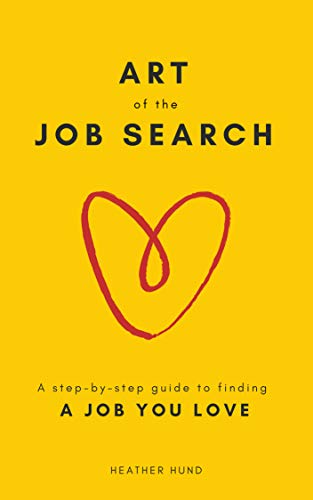
Art of the Job Search: A Step-By-Step Guide to Finding a Job You Love by [fusion_builder_container hundred_percent=

heather hund

That’s the central theme behind Heather Hund’s new book, Art of the Job Search. Hund believes that finding a job isn’t so much about what you do — it’s about how you do it. And as long as you pay attention to the details, you can find a job you love in record time.

We reached out to Hund to learn more about her best job search tips, why finding a job you love is an investment in your career and how job seekers have more power than they might think — here’s what she had to say.

Glassdoor: What inspired you to write this book?

Heather Hund: I left my job and didn’t have another one, and realized that I really wanted to find a job that I loved, but also that I had no idea how to do it. So, my first step in the job search was actually interviewing people about how they found a job that they loved. Then, I used that information at each step of the process, and ended up getting several offers and, even more importantly, finding a job that I really loved, and it changed my life. And I thought that was information that needed to be out into the world.

How to Find a Job You’ll Want to Stay at for Good

Like this Article ?  Share It !    You now can easily enjoy/follow/share Today our Award Winning Articles/Blogs with Now Over 2.5 Million Growing  Participates Worldwide in our various Social Media formats below:

FSC LinkedIn Network:   www.linkedin.com/in/fscnetwork

Facebook:  http://www.facebook.com/pages/First-Sun-Consulting-LLC-Outplacement-Services/213542315355343?sk=wall

Google+:  https://plus.google.com/115673713231115398101/posts?hl=en

Twitter: Follow us @ firstsunllc

Question: Want the ‘the best/current articles/blogs on the web’ on Job Search, Resume, Advancing/Changing your Career, or simply Managing People?

Answer: Simply go to our FSC Career Blog below & type(#career, #leadership, #life) in Blog Search:  https://www.firstsun.com/fsc-career-blog/

What Skill Sets do You have to be ‘Sharpened’ ?

Continue of article:

Glassdoor: You make it clear off the bat that there’s a big difference between the act of the job search, and the art of the job search. How would you describe the differences between the two?

Heather Hund: When I began looking for a new job after I left my old one, I dropped my resume online for all sorts of things — some looked interesting, and some didn’t. And after a few weeks of that, I realized that wasn’t actually moving me in the right direction. So I then took a giant step back and took a self-assessment, similar to the one included in the book, to figure out “What do I actually want to do? What are my strengths? How do I want to apply those?” Then I applied that same bit of strategy throughout the search, from writing my resume to applying to interviewing to negotiating. So I think being strategic is what makes the difference between ending up at a job, and finding a job that you really love.

Glassdoor: Job seekers often view employers as the ones wielding all the power in the job search. Why do you think that is, and what can job seekers do to counter this mindset?

Heather Hund: As humans, we’re wired to avoid rejection. I think it’s biological, and probably helped keep us alive at some point. But I also think that today, it doesn’t help us much, and it prevents us from going for the things we really want. So it’s about flipping the dialogue — instead of thinking, “Do they want me?” Ask yourself, “Do you actually want to work there?” Do you like the culture, do you feel good about the role, do you like the people that are interviewing you? Remember, you’re interviewing them.

While it’s important to answer the person’s questions, when you take control and start asking more questions, it can actually make you a more attractive candidate. It shows that you can problem solve, and that you’re thinking about things from a higher level — from an ownership perspective — which I think is super powerful.

Yes, they have the job that they can offer you, but you have the skills, the ability, the talent to offer them. You’re a giant asset as well. People often undervalue themselves, and don’t realize how valuable they are.

Glassdoor: That’s definitely one thing we’ve heard before — when recruiters ask if you have any questions for them, it’s not just an opportunity for you to determine fit. It’s also an opportunity to prove yourself, and show that you’ve done the research.

Heather Hund: Absolutely. I think the most powerful thing to do in that situation is to ask questions that you would ask if you were already in the role, like “What are the priorities right now, and what will they be in a year?”

Top Questions to Ask in an Interview, According to a Hiring Manager

Glassdoor: Many job seekers prioritize income and stability over finding a job they love. But you make the case that finding a job you love isn’t a luxury — it’s an investment in your career. Can you talk a little more about that?

Heather Hund: It’s so true — people often see loving your job as an indulgence, like “You shouldn’t love your work, it’s work!” But think about it: When you were doing something that you loved, either at work or as a hobby, were you better at it? I would guess yes. When I was writing this book, I definitely found that research backed this up. People who love their job get more raises, they get promoted more, they have better relationships with their managers, and they’re just happier, which is a huge, huge benefit. I think loving your job really is an investment in your career.

Glassdoor: I loved your commentary on having a growth mindset in which “failures” are rebranded as learning experiences. Why, in your opinion, is this so critical for job seekers to understand?

Heather Hund: The growth mindset is so powerful. If I could recommend one other book, it would be Carol Dweck’s Mindset. Basically, she argues that with a growth mindset, there’s no such thing as failure — everything becomes learning. It enables you to take more risks and to go after the things you really want, even when you’re afraid, and I think this includes finding a job you really love. People don’t really acknowledge how hard job searching is emotionally, and that’s why I decided to devote an entire chapter to talking about how to get into that growth mindset before you start job searching. It’s funny — I know it doesn’t have to do with the tactics of job searching, but I actually think this chapter might be the most important one in the book.

Glassdoor: At one point in the book, you state that “networking is more important than the work itself.” That’s a pretty shocking statement! Can you expand on that?

Heather Hund: Like many other people (and often women in particular), at my first job I thought “If I just put my head down and work super hard, I’ll get noticed.” But what I started noticing was that the people who got the coolest projects and the special opportunities and the fast promotions were often the ones that had relationships with the people who were making the decisions. That was a hard thing to notice, because the truth is I hate networking. Most people kind of balk when they hear ‘networking’. No one wants to network, and I think it has a bad reputation — people just think of awkward conversation.

For me, it took a reframe of what networking is. Really, it’s just talking to people. And what I realized over the course of my career was that I don’t like “networking”, but I love talking to people and getting to know them. Building those relationships is why networking is often more important than the work itself.

To be clear, it is actually important to be good at your job, but it’s also really important to build strong relationships so that you get to know when cool things are happening that you might be excited about, or that you could contribute toward. Networking can lead to not only opportunities, but also long-term mentors and friendships. And it can often last beyond just one job, which is pretty awesome.

Glassdoor: One thing you mention is that you can still be an introvert and network. What are some of the tips that you have for those people who really dread the thought of networking?

Heather Hund: I like to start with small talk for two reasons: one, I think it helps you build the relationship, and two, I think talking about your weekend or your family or your hobbies just takes the pressure off of the conversation. Don’t go into it with an outcome-based mindset — just have a conversation.

I find it quite helpful to write out questions (there are a few that I include in the book), not so much to bring with me, but just to get me thinking, “What are the things that I want to cover in this conversation?”

The biggest hurdle honestly is just doing it. In my first real networking conversation, I was waiting for the elevator after work and my colleague was just standing there, and we struck up a random conversation. After a while I said, “Hey, do you want to grab coffee?” And he said “Sure.” And I remember thinking, “Ah, that’s so easy! You just ask somebody if they want to grab coffee.”

8 Networking Strategies You Haven’t Thought of Yet

Glassdoor: I found it interesting that you chose to close a book all about the art of the job search with a chapter on what to do after you get the job. Why did you feel that was so important to include, and what are your top tips for new employees?

Heather Hund: One of the things that stuck with me from business school was when a friend told me, “Whenever I start a new job, I make sure to be incredible for the first six months.” I’d never thought about it before, but he was totally right. First impressions are very real, and very lasting.

A lot of people go into a new job thinking, “I need to figure out exactly what my boss wants me to do, and I need to do those things.” But what people don’t realize is that often, their boss doesn’t know what they want. They’re super busy, and they really just need somebody to take something and run with it. So it’s more about how you frame yourself as someone who can be a problem-solver and a real thought partner — that’s what sets apart the amazing people from the good people.

Another huge thing is feedback. Some companies are great about having feedback structures in place, and then some aren’t. If feedback is not a regular thing at your company, take initiative and lead a feedback discussion with your boss. Feedback, when done in the right way, builds much stronger relationships, helps you develop and improve faster and can take you further in your career.

Then the last thing I talk about in the book is promotions. Marissa Mayer once said, “I got every single one of [my promotions] by asking and getting feedback and planning for it.” You need to start thinking about your new career path — you don’t necessarily need to have an answer, but think of where you want to go and what you need to do to get there before you even want to make that transition.

Check Out Art of the Job Search on Amazon Today


GlassDoor.com | October 15, 2018  Posted by Emily Moore

[/fusion_builder_column][/fusion_builder_row][/fusion_builder_container]

https://www.firstsun.com/wp-content/uploads/2018/05/logo-min-300x123.jpg 0 0 First Sun Team https://www.firstsun.com/wp-content/uploads/2018/05/logo-min-300x123.jpg First Sun Team2018-10-15 21:02:412020-09-30 20:45:43#CareerAdvice : #JobSearch – Most People Are Looking for Jobs the Wrong Way. Heather Hund Wants to Fix That… Write a #Resume . Send it to a Couple Dozen Different Companies. Receive Zero Responses. If this Sounds Familiar, you’re Not Alone.

#CareerAdvice – #JobSearch -The Best and Worst Times to #JobHunt by Season…..We Break it Down by Seasons so you Know What to Expect while Searching for That Next Key Position.

August 27, 2018/in First Sun Blog/by First Sun Team

When you have long-term career goals, job-hunting is more than a matter of making a slightly higher salary or having a slightly shorter commute. It’s about finding the role that will help you grow, whether it’s taking on new responsibilities, learning and applying new skills, or entering entirely new fields.

With that in mind, job-hunting is an ongoing and potentially never-ending process. Still, some times of the year are generally better than others to get a new job. We break it down by seasons so you know what to expect while searching for that next key position:

Summer: Keep a Steady Pace

During the summer, hiring slows down, but that doesn’t mean you should. Sure, there won’t be as many opportunities, but there won’t be as much competition either. For career-focused individuals, summer may be that best time to job-hunt. So take some time in June, July, and August to work on your resume, build your network, and keep your stream of job applications from drying up.

What Recruiters Want to See at Each Stage of the Interview Process

Like this Article ?  Share It !    You now can easily enjoy/follow/share Today our Award Winning Articles/Blogs with Now Over 2.5 Million Growing  Participates Worldwide in our various Social Media formats below:

FSC LinkedIn Network:   www.linkedin.com/in/fscnetwork

Facebook:  http://www.facebook.com/pages/First-Sun-Consulting-LLC-Outplacement-Services/213542315355343?sk=wall

Google+:  https://plus.google.com/115673713231115398101/posts?hl=en

Twitter: Follow us @ firstsunllc

Question: Want the ‘the best/current articles/blogs on the web’ on Job Search, Resume, Advancing/Changing your Career, or simply Managing People?

Answer: Simply go to our FSC Career Blog below & type(#career, #leadership, #life) in Blog Search:  https://www.firstsun.com/fsc-career-blog/

What Skill Sets do You have to be ‘Sharpened’ ?

Continue of article:

Fall: Pick Up the Pace

Come fall, most people have finished with vacation and business ramps up again. It’s also the time when many organizations take a good look at their financial performance and buckle down on budget planning for the next year. They’re making all kinds of decisions that lead to job openings – not only to replace workers who resign or retire, but to fill positions that haven’t existed before, that require specialized skills. The fall — September, October, November — is a prime job-hunting season, so make the most of it.

Winter: Slow Down If You Need To

Job-hunting in the winter is a mixed bag. If you’re job-hunting, there’s no perfect time (or reason) to stop looking, but if you’re going to take a break, this is probably the best time to do it. The surge of hiring activity in the fall drops off significantly during the holiday season, roughly December through the mid-January. On the other hand, the New Year is a time when lots of people resolve to find a new job. By the time February rolls around, workers are shuffling to new jobs, creating openings that organizations need to fill. Make sure you’re ready when that happens.

The 20 Best Jobs With the Highest Satisfaction

Spring: Ramp It Up Again

Comparable to the fall, spring coincides with organizations’ needs for new employees. Through March, April and May, companies are filling positions left open by workers who made good on their New Year’s resolution to take new jobs. They’re also trying to get positions filled before summer vacations start happening and hiring naturally slows down. If you took a break from job-hunting during the winter, now is the time to devote your restored energy to finding your next great opportunity.

All-Year-Round: Work with Revature

As a strategic partner to Fortune 500 companies, Revature places emerging talent in enterprise-level organizations all-year-round. If you’re interested in a long-term career in software development, programming, or information technology, we can help accelerate your path to success. Revature pays its recruits to attend an intense and customized 12-week program, where they develop the skills necessary to excel in a real-world enterprise-level environment. Afterward, we place them in a promising job with one of our many clients.

GlassDoor.com | August 27, 2018 | August 27, 2018 Posted byRevature Team

https://www.firstsun.com/wp-content/uploads/2013/10/Job-Search-Web.jpg 600 857 First Sun Team https://www.firstsun.com/wp-content/uploads/2018/05/logo-min-300x123.jpg First Sun Team2018-08-27 16:19:302020-09-30 20:45:56#CareerAdvice – #JobSearch -The Best and Worst Times to #JobHunt by Season…..We Break it Down by Seasons so you Know What to Expect while Searching for That Next Key Position.

#CareerAdvice : #BestofFSCBlog -The Simple Trick that has Helped me #LandJobs Without Having to Apply….Must REad!

April 2, 2018/in First Sun Blog/by First Sun Team
  • Author Anna Davies hasn’t applied for a job through a portal in over a decade.
  • Instead, every few years, she sends our her a “hire me” email and sends it to her contacts — including old coworkers, bosses, neighbors, landlords, people she trained with for a marathon, and more — via BCC.
  • To keep up your own network, Davies recommends helping people out when you can, becoming a mentor, and volunteering.

Networking is simply tapping into your social circle and the people you already know, to try to find the best fit for a position that aligns to your interests and abilities,”


Every few years, I pull out my “hire me” email and bcc it to my contacts, which includes old coworkers and bosses — but also former neighbors, landlords, people I trained with for a marathon, and so on. It looks like this:

Hi all,

After a really fun two years of traveling and freelancing — currently sitting in a cafe in gloomy Edinburgh — I’m planning to settle back in New York City on 10/5 and am looking for a full-time job in editorial or copywriting. Above all, really looking for a position at the senior-editor level or above with challenging work and great coworkers.

A bit about my resume: Was last a senior editor in magazines, but left my last job in November 2012, and since then have been freelancing for magazines and websites, as well as writing YA novels — 13 published for various houses. Interests include brand copywriting — can turn around copy fast — health, psychology and relationships.

Resume attached, and thanks in advance for any leads!

Thanks to this email template, I haven’t applied for a job via a job portal in a decade — I’ve always been able to find opportunities through my network. But my confidence in the approach took a dive when I shared it with a former coworker recently. She was job-hunting and frustrated by the lack of response from sending applications through online forms.

“It’s like I’m sending them into a black hole,” she said. “I don’t even know if they get read.”

When I suggested my email trick, she wrinkled her nose.

“Doesn’t that sound desperate?”

I flushed. I hadn’t thought so, but did it? The technique had been successful, but what if it seemed like I was just begging for a job?

Like this Article ?  Share It !    You now can easily enjoy/follow/share Today our Award Winning Articles/Blogs with Now Over 2.5 Million Growing  Participates Worldwide in our various Social Media formats below:

FSC LinkedIn Network:   www.linkedin.com/in/fscnetwork

Facebook:  http://www.facebook.com/pages/First-Sun-Consulting-LLC-Outplacement-Services/213542315355343?sk=wall

Google+:  https://plus.google.com/115673713231115398101/posts?hl=en

Twitter: Follow us @ firstsunllc

Question: Want the ‘the best/current articles/blogs on the web’ on Job Search, Resume, Advancing/Changing your Career, or simply Managing People?

Answer: Simply go to our FSC Career Blog below & type(#career, #leadership, #life) in Blog Search:  https://www.firstsun.com/fsc-career-blog/

What Skill Sets do You have to be ‘Sharpened’ ?

Continue of article:

A few weeks later, I reached out to the same friend to see if she wanted to take on some freelance work. She replied back, saying she didn’t have time — she had tried the email trick, got five interviews and just started a full-time job. Even though it felt uncomfortable, it was clear: The networking approach works.

While the word “networking” may conjure up visions of people mingling around a badly lit ballroom, bedecked in name tags, it doesn’t have to feel artificial.

“Networking is simply tapping into your social circle and the people you already know, to try to find the best fit for a position that aligns to your interests and abilities,” notes J. Kelly Hoey, career expert and author of “Build Your Dream Network: Forging Powerful Relationships in a Hyper-Connected World.” Having someone vouch for your skills can go way beyond what a hiring manager gets from your resume and a 15-minute phone screen.

Today, finding jobs through who you know is easier than ever. Jane McGonigal, a video game designer and author, has gotten gigs via Twitter — simply by tweeting what she wishes she could work on. “I’m constantly tweeting about cool projects,” she says, adding that part of her success is due to her 150,000 followers. “But I think this approach can also work for other people. When you talk about the things you love, people take notice.”

RELATED: 8 Opening Lines for Fearless Networking

The other benefit of networking? It can save you hours spent on job search engines. “I’ve never applied for a job,” says Lelia Gowland, a 30-year-old entrepreneur from New Orleans. “I had a lot of internships in college, and I stayed in touch with all my hiring managers. That’s how I got my first job at the Dallas Zoo, where I stayed for a year.”

Gowland found that having a large network in her corner helped her make the leap to entrepreneurship. “My network is everything,” she says. “I think it’s all about showing interest, seeing what other people are doing, and seeing how your skills match their needs and interests. It’s a give-and-take relationship.”

Here’s what I’ve learned from tapping my network of friends and colleagues — and how you can make it work for you, too.

1. Seek out examples

Networking language varies across industries. Some, like mine, can be informal, while others are more buttoned-up. If you work in an industry like finance or law, join professional organizations and go to events, suggests Hoey. You don’t need to pitch everyone; being friendly and engaged is enough.

2. Get social

Think beyond LinkedIn — Twitter, Instagram and Facebook can be valuable platforms for networking. Having discussions, following people in your industry, and making sure your LinkedIn is up-to-date are all easy ways to stay relevant online.

3. Give in return

Remember, this is a relationship, so it’s important to give something to the other party, too. A simple “congratulations” when they’ve been promoted, for example, can keep things on good terms, Hoey suggests. Send things that don’t need a response — a short message, an article link, or a forwarded invite to a talk. The other person won’t feel like they need to do anything, but you’ll keep the conversation going.

4. Know when to take a break

It’s enticing to keep in contact with a powerful person you met, but if all you’re getting in return is radio silence, step back and focus on other connections.

5. Say ‘thank you’

“People want to help, and if their advice or introduction led to a job, tell them about it!” says Hoey. A sincere “thank you” will go a long way.

6. Keep searching job sites

If you already have a large network, it’s easy to get complacent. Don’t. Having a resume on-hand and being knowledgeable about industry news means you won’t need to play catch-up if an interview comes your way.

7. Volunteer

One of the best ways to meet people is through volunteering, especially if it’s industry-adjacent, says Hoey, who began volunteering with the group 85 Broads (now Ellevate) when she wanted to pivot from her legal background. Later, she was tapped to lead the group as president. When you show your skills in an authentic way, people want to work with you.

8. Be a mentor

Offer time to talk over coffee or help mentor people at your alma mater who want to get into your industry. They may have no power now, but you have no idea where they’ll end up a few years down the line.

RELATED: Cracking This Joke During a Salary Negotiation Can Help You Earn More


                                                                Businessinsider.com | April 1, 2018 | Anna Davies, LearnVest
https://www.firstsun.com/wp-content/uploads/2017/12/Woman-on-laptop.jpg 931 1242 First Sun Team https://www.firstsun.com/wp-content/uploads/2018/05/logo-min-300x123.jpg First Sun Team2018-04-02 13:06:042020-09-30 20:48:13#CareerAdvice : #BestofFSCBlog -The Simple Trick that has Helped me #LandJobs Without Having to Apply….Must REad!

Blog Search

Login/Register

  • Log in
  • Entries feed
  • Comments feed
  • WordPress.org

FSC Career Videos

  • Job Search Techniques | Start Here
  • Resume/Cover Letter
  • Interviewing
  • Additional Career Videos
  • FSC Career Blog – #1 Career Library LinkedIn

Recent Posts

  • #CareerAdvice – #JobSearch – #JobInterview Preparation Checklist. Must Read! July 11, 2019
  • #CareerAdvice : #ResumeWriting -How Can You Make Yourself Sound Better on Your #Resume ? July 9, 2019
  • #BestofFSCBlog : #Recruiting – Nine(9) Reasons to Hire a Candidate Without Experience. Focus on Skillsets vs. Experience. July 8, 2019
© Copyright - First Sun Consultation - Website Maintained by BsnTech Networks - Enfold WordPress Theme by Kriesi
Scroll to top