Posts

#BestofFSCBlog : Over 300K+ Reads! One Stop #JobSearch Read- How to Get a Job. Tons of Articles/Links!

We’d like to deliver you some very good news: a job search doesn’t have to be tough, and neither does landing a new job—if you know exactly how to get a job, that is.

Some job seekers, for example, don’t realize that a handwritten thank you notesent post-interview can clinch the job deal, while others have never heard of applicant tracking systems—technology that reads resumes and chucks those that are missing job description keywords in the trash. But with this insider information, you can defy the odds and land your dream job—all while making it look oh-so-easy.

Here are 13 pieces of advice that will strengthen your job search and help you get a job that fits your life.


GUIDE OVERVIEW

  1. How to Get a Job #1. Pay attention to your social media presence.
  2. How to Get a Job #2. Highlight your transferable skills.
  3. How to Get a Job #3. Use your words.
  4. How to Get a Job #4. Tell a compelling story in your cover letter.
  5. How to Get a Job #5. Catch your resume mistakes.
  6. How to Get a Job #6. Prepare for an interview before you get it.
  7. How to Get a Job #7. Dress for the job you want.
  8. How to Get a Job #8. Show off your likable side.
  9. How to Get a Job #9. Always send a thank-you note.
  10. How to Get a Job #10. Avoid getting too personal in interviews.
  11. How to Get a Job #11. Don’t talk about money during an initial interview.
  12. How to Get a Job #12. Be proactive during the interview.
  13. How to Get a Job #13. Use social media to brand yourself.
  14. How to Get a Job #14. Seal the deal by negotiating.
  15. Learn More!

How to Get a Job #1. Pay attention to your social media presence.

Recruiters and hiring managers will be looking at your resume, of course—but they also want to see complementary online content, too, such as your LinkedIn profile and online resume. In fact, one recruiter told Glassdoor she likes to see attachments, project work, videos, or blogs, too. 

Read More: The Printed Resume vs. The Online Profile: Why You Still Need Both

How to Get a Job #2. Highlight your transferable skills.

You want to show off why you’re right for a particular role. But you also want to make clear why you’re right for any role, we’ve heard recruiters say. So, when it comes to your resume and cover letter, focus on the skills and experience you have that would make you an ideal candidate anywhere. Then, in an interview, be ready to share how you’ll relay those skills in the new role.   

Read More: Ask a Resume Writer: How Do I Showcase Transferable Skills?

How to Get a Job #3. Use your words.

And more specifically, use the right words. Applicant tracking systems scan resumes in search of keywords, and throw out any that don’t contain them before they have the chance to be seen by human eyes. So how can you game the tech? It’s easy. Read the job description for the job you’re applying—then see how those words stack up against similar job postings. Words that repeat across multiple listings belong on your resume—preferably at the top, as well as in context.

Read More: 13 Must-Have Words to Include In Your Resume

How to Get a Job #4. Tell a compelling story in your cover letter.

You don’t want to simply repeat what’s on your resume when you write your cover letter. Rather, you want to dig a little deeper, answering questions a potential employer might ask such as: what makes this company your go-to choice, and why is this company special to you? Answer the questions in as much detail as possible to stand out from the crowd.

Read More: Ask a Resume Writer: How Can I Show Culture Fit?

How to Get a Job #5. Catch your resume mistakes.

It’s not enough to run a simple spell check on your resume. You’ll need to employ some special editing tactics—such as reading your resume backward and asking a friend to proofread for you—in order to catch every mistake on the page. There’s even editing software specifically for resumes. If you allow an error to sneak in, you are sending the employer an unintended and incorrect message that you are sloppy and don’t care about your work.  

Read More: 6 Resume Mistakes To Avoid At All Costs

How to Get a Job #6. Prepare for an interview before you get it.

You won’t be caught off guard by an interview question if you’ve studied the common questions asked by recruiters and managers alike. Plus, knowing your responses in advance will keep you cool, calm, and collected during the interview—confidence any employer will be pleased to see.

Read More: The 50 Most Common Interview Questions

Like this Article ?  Share It !    You now can easily enjoy/follow/share Today our Award Winning Articles/Blogs with Now Over 2.5 Million Growing  Participates Worldwide in our various Social Media formats below:

FSC LinkedIn Network:   www.linkedin.com/in/fscnetwork

Facebook:  http://www.facebook.com/pages/First-Sun-Consulting-LLC-Outplacement-Services/213542315355343?sk=wall

Google+:  https://plus.google.com/115673713231115398101/posts?hl=en

Twitter: Follow us @ firstsunllc

Question: Want the ‘the best/current articles/blogs on the web’ on Job Search, Resume, Advancing/Changing your Career, or simply Managing People?

Answer: Simply go to our FSC Career Blog below & type(#career, #leadership, #life) in Blog Search:  https://www.firstsun.com/fsc-career-blog/

What Skill Sets do You have to be ‘Sharpened’ ?

Continue of article:

How to Get a Job #7. Dress for the job you want.

It’s not enough to slip out of sweatpants and put on something fancy. You have to dress for success and be comfortable in what you’re wearing. If you’re uncomfortable, you might lose some confidence in the interview. But if you look and feel good, you job savvy should easily shine through.

Read More: 6 Perfect Interview Outfits for Every Occasion

How to Get a Job #8. Show off your likable side.

An interview doesn’t have to be all business. In fact, applicants willing to show their personalities are received better by managers than people who remain tight-lipped during the interview. That’s because this manager could become your boss—and he or she wants to make sure you can get along well. Share your personality when answering questions and resist the urge to respond robotically.

Read More: 6 Anecdotes You Need to Rehearse Before Your Next Interview

How to Get a Job #9. Always send a thank-you note.

A recent study found that 86 percent of hiring managers said not sending a thank-you note shows lack of follow-through. So follow-up—and show off your manners—with a handwritten note on nice paper or even in an email. The point is to do it, and do it promptly; the medium doesn’t matter as much. In the note, thank your potential employer for his or her time, and be sure to share about something you learned during the interview. Why? Sharing the lesson shows you were paying attention to the employer, and you’re serious about the role.

Read More: How to Write A Winning Thank You Letter

How to Get a Job #10. Avoid getting too personal in interviews.

Turns out, some of the answers you think are appropriate to share—like your favorite childhood memory when asked question, “Tell me about yourself”—are actually a turnoff to recruiters, and in some cases, can cost you the job. So just like you’ll practice what to say in the interview, you should also research what not to say to a potential employer.

Read More: 40 Interview Questions You Should Be Prepared to Ask & Answer

How to Get a Job #11. Don’t talk about money during an initial interview.

Bringing up any salary questions during an initial interview—especially a phone interview—is a big no-no, career experts say. Why? It’s simply not the appropriate time, because you haven’t made it far enough into the interview process. So save the money talk for a second or third interview, when it’s clear you’re taking steps toward landing the job.

Read More: How to Address Salary at Each Stage of the Application Process

How to Get a Job #12. Be proactive during the interview.

Rather than allow for the recruiter or hiring manager to ask you all of the questions, be confident and proactive during your time together. You’ve researched the company’s culture and mission on Glassdoor, and you’re looking for a job that fits your life. Therefore it’s important to dig deeper. If you ask questions about management style, professional development, performances measurements and team collaboration, you’ll show a potential employer you’re both an informed candidate and serious about the job.  

Read More: The 45 Questions You Should Ask In Every Job Interview

How to Get a Job #13. Use social media to brand yourself.

Hopefully, you know by now that Facebook statuses that describe wild nights with friends can a turnoff to potential employers. But did you know that you can use social media to build a personal brand, making you more attractive to a hiring manager? One easy way to do just that is to expand from what’s on your resume—you can post pictures or summaries of projects you’ve worked on, include a short bio about your skills, or share articles that show you’re an expert in your industry.

Read More: Hate Social Media? Here’s Why You Should Reconsider

How to Get a Job #14. Seal the deal by negotiating.

The final stage of getting a job is negotiating the package. While compensation often comes to mind first, remember that there are far more facets of the job that you can customize than you think. From benefits to work-from-home optionsstock options to a travel stipend, there’s a lot on the table. Make a list of the things that are most important to you and that you’ll need to execute your job well. Be sure to check Know Your Worth to make sure their base salary offer is competitive with the market. Then, speak to your hiring manager and the recruiter about whether those needs can be fulfilled. These days, negotiating is an expected part of the job search process. Ask as many questions as you need and get the answers you need to make the best job decision for you.

Read More: 11 Words and Phrases to Use in Salary Negotiations if You Want to Succeed

Learn More!

Getting a job can feel like winning the lotto. However, with a few tips and tricks, getting job will have much better odds. Here are additional resources to help you on your path to finding a job that fits your life:

How to Write a Resume

How to Write A Cover Letter

The Ultimate Job Interview Preparation Guide

How to Prepare for a Behavioral Interview

50 Most Common Interview Questions

How to Negotiate Your Salary

How to Network


GlassDoor.com | May 29, 2019

#CareerAdvice : #ResumeWriting – How to Write a #Resume That Will Impress a Bot ( #AI )…Great REad!

Getting hired used to mean writing a resume that stood out to the HR manager or recruiter assigned to thumb through them. Today, the gatekeeper is a machine as AI revolutionizes the hiring process. That means the way you write your resume has changed, too.

“AI is handling processes that used to take an enormous amount of time away from engaging with the talent pool,” says Jon Christiansen, PhD, chief intelligence officer of the marketing research firm Sparks Research. “HR managers don’t have to sift through hundreds of resumes, and they can get into their real expertise of recruiting and placing the right talent.”

While this is good news for the HR department, it adds a new challenge for candidates, says Arran Stewart chief visionary officer and co-founder of Job.com, a recruiting platform.

“AI has made the resume writing process far more competitive as it now requires emphasis on personalizing the document for the job in question rather than submitting a generic resume for a myriad of vacancies,” he says. “Where recruiters and hiring managers are able to read between the lines and find the relevance of any skill or accomplishment on your resume to the open positions they have, AI is only concerned with how closely your resume matches with the skills it’s been asked to look for in the job you applied to.”

Get past the bot and in front of the HR manager by doing these six things:

1. WRITE A NEW RESUME FOR EVERY JOB

The ability to blast out one version of a resume and get nibbles is over. Now you have to write a resume that speaks to the job description.

“The job description contains several clues about what the machine is looking for,” says Christiansen. “It’s saying, ‘Here are the knowledge skills I’m looking for, and here’s background I’m looking for.’ Look at the tags, keywords, and streams of text; that’s where you should get started.”

Apply the language to the resume you submit to the job in question, says Stewart. “AI is looking for singular relevance to the role they’re searching for, so including job-specific language is a must if you want to make it to the shortlist,” he says. “It might be slightly more work, but no different than say having different cover letters ready for each position.”


Like this Article ?  Share It !    You now can easily enjoy/follow/share Today our Award Winning Articles/Blogs with Now Over 2.5 Million Growing  Participates Worldwide in our various Social Media formats below:

FSC LinkedIn Network:   www.linkedin.com/in/fscnetwork

Facebook:  http://www.facebook.com/pages/First-Sun-Consulting-LLC-Outplacement-Services/213542315355343?sk=wall

Google+:  https://plus.google.com/115673713231115398101/posts?hl=en

Twitter: Follow us @ firstsunllc

Question: Want the ‘the best/current articles/blogs on the web’ on Job Search, Resume, Advancing/Changing your Career, or simply Managing People?

Answer: Simply go to our FSC Career Blog below & type(#career, #leadership, #life) in Blog Search:  https://www.firstsun.com/fsc-career-blog/

What Skill Sets do You have to be ‘Sharpened’ ?

Continue of article:

2. USE EASY TO UNDERSTAND JOB TITLES

Some companies like to assign creative job titles, like Branding Guru or Planning Expert, but including them on your resume might get you passed over by the machine.

“It’s cool for culture, but that’s not the tags the machine is looking for,” says Christiansen. “If the job description says they’re looking for a marketing manager or product manger, that’s the tag it’s going to look for.”

Christiansen suggests going to the Bureau of Labor Statistics or O-NETand searching standard job titles. “If you can’t find your job title, it’s probably not going to be picked up and tagged during the machine screening,” he says.

Also consider the job progression, adds Stewart. “AI isn’t at the point of a mass scale predictive, so if you’re applying for a job that is senior to your current role as a logical next step in your career, AI won’t make the connection that it is the logical next step,” he says. “If your experience and skills make you seem underqualified, you should write in aspirational terms about your skills and accomplishments. That way the system views you as ready to take on the added challenge.”

3. RESIST THE URGE TO BE CREATIVE

Machines don’t judge you by the font you choose. If you have a font that can’t be read by most word processors, you might get spit out.

“Any font that isn’t within the Microsoft Word platform might not be able to be read,” says Christiansen. “Sometimes using a PDF format might work, but it’s not worth the risk.”

And don’t add graphics. Tables or images might look good, but again, the bot might not be able to recognize it.

“It might look like wasted space to a machine,” says Christiansen.

4. BE PRECISE

Including a long history of experience is no longer necessary, so try to keep your list of experience within the last five years, says Stewart.

“A full 20 years of work history dilutes the experience concentration weighing your resume, which will result in you being removed from shortlists,” he says. “When writing your resume remember the two Rs: keep it relevant and recent.”

5. CHECK YOUR SPELLING

You never want your resume to include spelling or grammatical errors, but a human might have been more forgiving than a machine.

“AI not only sorts through irrelevant applicants, in some cases it highlights the lazy ones as well,” says Stewart. “It’s still important to be sure your information is still meeting the usual standards of excellence expected for professional documents.”

6. INCLUDE A COVER LETTER

While a resume should be written to match the job and advance you past the bot, the cover letter is your chance to shine, says Christiansen.

“It’s an opportunity to speak like a human,” he says. “You can speak directly to the hiring manager, make yourself sound like a human and talk uniquely about the experiences you mentioned that spoke to the job description.”

Christiansen recommends writing three or four paragraphs about how you could fit that team, company and job. “Get into the why,” he says. “A cover letter may be an old practice, but I don’t see them go away. A good hiring manager wants to hear you in that.”

Taking these six steps involve more work on the part of the candidate, but skipping them might be a bigger risk.

“If you send out a generalized resume, it’s a case of garbage in/garbage out,” he says. “You want to get a match because you fit the job. If you’re getting calls from a generalized resume it’s because those companies want warm bodies, whether or not they fit the job. Is that where you want to work?”


FastCompany.com |April 1, 2019 | BY STEPHANIE VOZZA  4 MINUTE READ

#CareerAdvice : #CoverLetter -How to Write a Letter of Interest in 2018… You can Have a Great #Resume but IF you Can’t get the #Recruiter to Read it, you Have Nothing. That’s What a Great Cover Letter does.

It’s one of the worst feelings in the world.

You’ve spent weeks perfecting your resume and crafting the perfect cover letter, and you’re finally ready to submit your application for your dream job.

But when you scan the company’s careers page, panic starts pouring over you. The job you wanted to apply for is no longer open. It’s gone. And as you stare at your laptop screen in shock, you can’t help but think you’ll never be able to join your dream company.

What should you do in this situation? You can’t just put your job search on pause until the company opens the position again. How do you express interest in joining a company when the position you want isn’t currently available?

One of the most effective ways to grab a hiring manager’s attention and get your foot in the door is by writing a letter of interest to the company.

Sending a letter of interest is a great way to introduce yourself to a company, and it shows them you’re willing to take the initiative to proactively reach out. This can keep you top of mind when the company starts recruiting for the job you inquired about or if they have any upcoming job opportunities that could be a good fit. If you’re really impressive, some companies might even create a position just for you.

Other times, sending a letter of interest can lead to a coffee chat or an informational interview with the hiring manager of the team you want to work for.

Writing a letter of interest sounds like an easy way to get your foot in the door at any company, but it’ll only pique a hiring manager’s interest and elicit a response if it actually resonates with them.

To do so, we recommend following a formula called problem-agitate-solve. It’s modeled after an old copywriting framework and has helped one job seeker skyrocket her cover letter response rate from zero percent to 55 percent. We’ll flesh it out below.


Like this Article ?  Share It !    You now can easily enjoy/follow/share Today our Award Winning Articles/Blogs with Now Over 2.5 Million Growing  Participates Worldwide in our various Social Media formats below:

FSC LinkedIn Network:   www.linkedin.com/in/fscnetwork

Facebook:  http://www.facebook.com/pages/First-Sun-Consulting-LLC-Outplacement-Services/213542315355343?sk=wall

Google+:  https://plus.google.com/115673713231115398101/posts?hl=en

Twitter: Follow us @ firstsunllc

Question: Want the ‘the best/current articles/blogs on the web’ on Job Search, Resume, Advancing/Changing your Career, or simply Managing People?

Answer: Simply go to our FSC Career Blog below & type(#career, #leadership, #life) in Blog Search:  https://www.firstsun.com/fsc-career-blog/

What Skill Sets do You have to be ‘Sharpened’ ?

Continue of article:

How to Write a Letter of Interest

To compel a hiring manager to read your letter, respond to it, and consider you for a job, there are four crucial elements you need to include in your letter of interest:

1. Hook the hiring manager with proof that you understand their problem.

Hiring managers don’t hire people just to be nice. They hire people to help them run their team better. To immediately grab a hiring manager’s attention, you should show how you understand the problems they’re trying to solve, like the hook below:

“As a two-year blogging veteran in the marketing technology industry at companies like Return Path and SlideBatch, I know how hard it is to write well. I also know how challenging it is to get found on Google.”

By describing a similar experience you’ve had at your current or prior job, you can relate to them on a deep level, which will engage and prompt them to read the rest of the letter.

The hardest part of this step is discovering the hiring manager’s problems. One way to figure it out is by listing off the job’s responsibilities and asking yourself why these tasks are important to their team. If you keep analyzing until you reach a dead end, you’ll usually find their needs there.

2. Agitate the problem to remind the hiring manager they need a solution.

How do you make a hiring manager realize how valuable a solution could be? You remind them just how painful them problems are. And to make them visualize their dreaded problem as vividly as possible, you need to be specific, just like the example below:

“According to HubSpot’s careers page, you’re not currently hiring, but, in the future, if you’re looking for someone who can not only engage an audience with clear, concise and compelling blog posts, but also optimize them for search engines, while hitting every deadline, you can count on me.”

When they realize how much pain they’re actually in, they’ll have more of a sense of urgency to resolve it. And this’ll push them to respond to you because you might be their fastest route to a solution.

3. Prove that you’re the solution with an example of your skills and experience.

If you’re really the solution to their problems, you must prove to the hiring manager how you’ve used your skills to solve similar paint points in previous experiences. Then, you should describe how you’ll be able to use those learnings to help solve their current problems. Check out the example below:

“Last year, at Return Path, I was the top performing blogger, writing weekly posts that averaged 7,500 views, 1,000 social shares and 35 new blog subscribers gained. The year before, at SlideBatch, I devised and implemented a new keyword strategy that increased organic page views for our Visual Marketing 101 blog series by 15 percent.

I’ve read HubSpot’s blog every day since I started my content marketing career, and I’m inbound, content and email marketing certified, so I strongly believe I’ll be able to hit the ground running if I were to work on HubSpot’s blog team one day.

Whether I’d be uncovering high opportunity keywords or crafting blog posts to support and develop your team’s new pillar cluster model, I’m confident my skills and experience can help your team crush their goals.”

By quantifying your accomplishments and researching the company’s pain points, you’re proving your worth. But if you just list your skills and work experience, you’re only proving to the hiring manager that you’ve failed to make an impact.

4. Confidently request to move on to the next step.

At the end of your letter, you should express your interest in exploring upcoming opportunities or ask them to keep you top of mind when an opportunity opens up, like the call-to-action below:

“I’d love to learn about any upcoming roles on your team or be considered for a position later down the road. My resume is attached, and my contact details are listed in my email signature below. Thank you for your time! It was a pleasure connecting.”

These call-to-actions are crucial because they tell them how to get the ball rolling. If you don’t tell the hiring manager what to do next, then nothing will happen.

Letter of Interest Example

All together, a successful letter of interest looks like this:

Letter of Interest Template

Hi [fusion_builder_container hundred_percent=”yes” overflow=”visible”][fusion_builder_row][fusion_builder_column type=”1_1″ background_position=”left top” background_color=”” border_size=”” border_color=”” border_style=”solid” spacing=”yes” background_image=”” background_repeat=”no-repeat” padding=”” margin_top=”0px” margin_bottom=”0px” class=”” id=”” animation_type=”” animation_speed=”0.3″ animation_direction=”left” hide_on_mobile=”no” center_content=”no” min_height=”none”][Hiring Manager’s First Name],

As a [X]-year [Your Profession] veteran in the [Space You Work In] industry at [Most Prominent Companies You’ve Worked For], I know how hard it is to [Pain Point #1]. I also know how challenging it is to [Pain Point #2].

According to [Company] careers page, you’re currently not hiring, but, in the future, if you’re looking for someone who can not only [Solution for Pain Point #1], but also [Solution for Pain Point #2], you can count on me.

Last [Specific Timeframe], at [Current or Old Company], I was the best performing [Your Profession], [List Your Responsibilities and Describe the Impact You Made]. The [Specific Timeframe] before, at [Current or Old Company], I [List Your Responsibilities and Describe the Impact You Made].

[Show Hiring Manager that You’re a Voracious Learner and You Regularly Keep Up with Company News], so I strongly believe I’ll be able to hit the ground running if I were to work on [Company] team one day.

Whether I’d be [What the Team is Working on Now], I’m confident my skills and experience can help your team crush their goals.

I’d love to learn about any upcoming roles on your team or be considered for a role later down the road. My resume is attached, and my contact details are listed in my email signature below. Thank you for your time. It was a pleasure connecting!

Sincerely,

[Your Name]

Steps to Take Before You Send Your Letter of Interest

After you finish writing your letter of interest, you need to make sure the company will actually open it. So before you send your letter, it’d be ideal if someone on the team personally knows who you are.

To do so, ask your connections or alumni that work at the company to introduce you to the team’s hiring manager. If you can’t do that, you could add the hiring manager on LinkedIn, tell them why you want to connect and send them your letter of interest.

Getting your foot in the door will ultimately help you stand out from the crowd of job seekers who are all sending the same “hire me” pitch to them.


Glassdoor.com |  

[/fusion_builder_column][/fusion_builder_row][/fusion_builder_container]

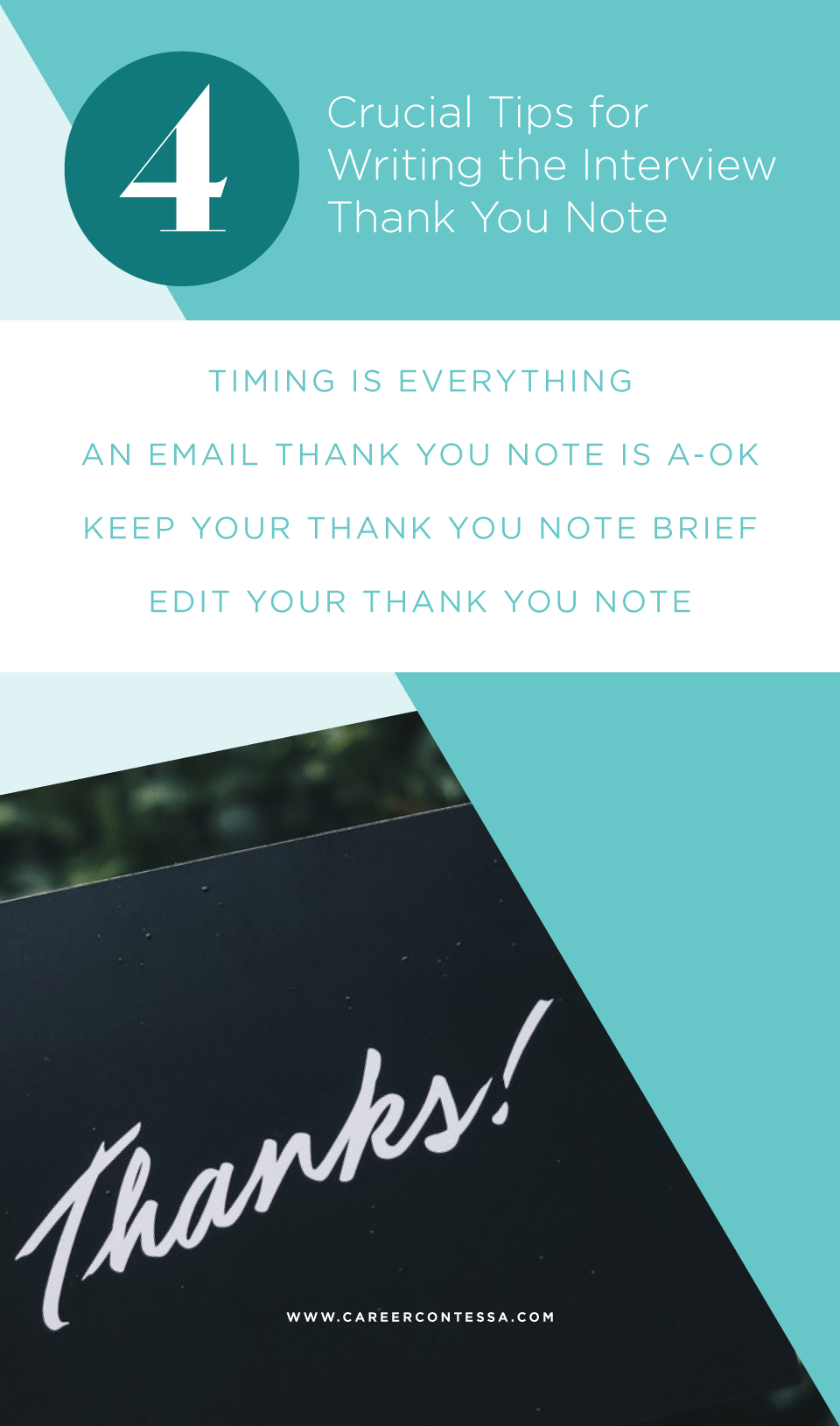
#BestofFSCBlog : #JobSearch – Four(4) Crucial Tips for Writing the Interview Thank You Note. So you Really Want this Job?  

So you really want this job?  You have likely already written a captivating cover letterundergone a brief phone interview and finally, were invited into the office for an interview. The interview went swimmingly (because you prepped for it like a pro)? Awesome! Now that you’re exiting the office building of your (hopeful) future job, it’s time for your next step.
Enter: the thank you note. The thank you note should be a no-brainer. It is a perfect way for a candidate to give herself the final edge over other candidates in the interview process.
Writing the thank you note does not have to be an exhaustive process. However, a candidate can (and should!) use it as an opportunity to edge out the other candidates.

TIMING IS EVERYTHING

Interviewing is an arduous process for any job candidate. In much the same way, it can be a stressful time for the hiring manager. My number one piece of advice in writing a thank you note for a job you really want?
Do it right away. Even if you killed the interview and expect a call saying “You’re hired!” by the end of the day, write the note. Express your gratitude and keep your candidacy fresh in the hiring manager’s mind. DO NOT wait until a week later when you haven’t heard anything to shoot off a “by the way, thanks” email.
A well-timed thank you note after an interview is a perfect way to reiterate your excitement to join the team. Aim to send your thank you note no within 24 hours of the end of the interview.

Like this Article ?  Share It !You now can easily enjoy/follow/share Today our Award Winning Articles/Blogs with Now Over 2.5 Million Growing  Participates Worldwidein our various Social Media formats below:

FSC LinkedIn Network:   www.linkedin.com/in/fscnetwork

Facebook:  http://www.facebook.com/pages/First-Sun-Consulting-LLC-Outplacement-Services/213542315355343?sk=wall

Google+:  https://plus.google.com/115673713231115398101/posts?hl=en

Twitter: Follow us @ firstsunllc

Question: Want the ‘the best/current articles/blogs on the web’ on Job Search, Resume, Advancing/Changing your Career, or simply Managing People?

Answer: Simply go to our FSC Career Blog below & type(#career, #leadership, #life) in Blog Search:  https://www.firstsun.com/fsc-career-blog/

What Skill Sets do You have to be ‘Sharpened’ ?

Continue of article:

AN EMAIL THANK YOU NOTE IS A-OK

We know you still have that Laura Ashley stationery your grandma gave you for your high school graduation. We know it’s embossed with your initials.
However, 87 percent of hiring managers view email as a perfectly acceptable means of delivering your thank you note. Since we have already established that timing is everything, email is going to be your best bet.

KEEP YOUR THANK YOU NOTE BRIEF

By this point in the interview process, your hiring manager has likely learned a ton about you. Do not use the thank you note to reiterate the play-by-play.
You can (and should) use it as a means to communicate one point you may have neglected to make, to expand on an idea or simply to express feelings of excitement for the job itself. Since the hiring manager is also busy interviewing, reading resumes, and communicating with other stakeholders, keep your note on point.

EDIT YOUR THANK YOU NOTE

So far, we have focused heavily on the speed and brevity of this note. But that doesn’t mean it’s informal! Make sure to use a formal greeting, write clear (and concise!) sentences, and sign off formally. This is not a one-liner to say “Thanks, Dude!”
Just as easily as a thank you note can impress a hiring manager, it can also detract from the whole process. A spelling error or flippant manner of writing can undo your progress. Write your thank you note, read it over a few times aloud, spell check it, and get a second pair of eyeballs on it if you can.
Crucial Tips Interview Thank You
CareerContessa.com | BY CAILEEN KEHAYAS  |  July 25, 2018

Your #Career : Use this One-Paragraph #CoverLetter to land your next #JobInterview …Most #Recruiters just Skim Cover Letters, so Here’s How to Craft a Short and Effective One that Can be Read in 60 Seconds or Less.

Cover letters are dead, or so we’ve been told. Many recruiters and hiring managers don’t even bother to read them, opting to skim resumes instead. But however their influence might be waning, plenty of people who are faced with making hiring decisions still rely on cover letters in order to size up candidates and determine who might be worth calling in for an interview.

So how can you make your cover letter as effective as possible? Make it short. Emily Liou, career happiness coach at CultiVitae, says you can probably boil your full-page cover letter down to a single paragraph (or two), without rehashing your resume. Here’s how.


Related: I Had Career Experts Make Over My Crappy Cover Letter


WHAT TO CUT

That formulaic opening line. “A big mistake I see candidates make,” Liou says, “is they start off very cookie cutter with the, “It’s with the utmost enthusiasm that I apply for this position. I am a great fit because . . . I bring years of . . .’” Not only do these openers waste precious space (and the hiring manager’s time), they instantly make candidates blend into the pack, when the whole point is to stand out.

All those basic “job skills” that aren’t really skills.“It seems as if everyone is detail-oriented, has strong communication skills, and is a fast learner,” Liou points out. Those descriptors have no place in a short, compelling cover letter. Chances are if it’s a meaningless buzzword on your resume or LinkedIn, it’s just as useless in your cover letter, too.

A chronological recap of your entire work experience. Don’t feel obligated to squeeze in a mention of every job you’ve ever held in the order you held them–it won’t do you or recruiters any favors. “Your resume is going to be reviewed first,” Liou says. “If the recruiter sees potential in your background, then they will read your cover letter.” So write your cover letter based on the premise that the reader is already familiar with the general outlines of your career trajectory.


Related:How To Write A Cover Letter That Doesn’t Just Recap Your Resume


Like this Article?  Share It !    You now can easily enjoy/follow/share Today our Award Winning Articles/Blogs with Now Over 2.5 Million Growing  Participates Worldwide in our various Social Media formats below:

FSC LinkedIn Network:   www.linkedin.com/in/fscnetwork

Facebook:  http://www.facebook.com/pages/First-Sun-Consulting-LLC-Outplacement-Services/213542315355343?sk=wall

Google+:  https://plus.google.com/115673713231115398101/posts?hl=en

Twitter: Follow us @ firstsunllc

Question: Want the ‘the best/current articles/blogs on the web’ on Job Search, Resume, Advancing/Changing your Career, or simply Managing People?

Answer: Simply go to our FSC Career Blog below & type(#career, #leadership, #life) in Blog Search:https://www.firstsun.com/fsc-career-blog/

What Skill Sets do You have to be ‘Sharpened’ ?

Continue of article:

WHAT TO INCLUDE

One great thing you’d be able to do the week you start. “When writing a cover letter, it’s really important to get into the mind of your reader,” Liou explains. “The job description’s summary and main responsibilities often highlight what this successful candidate will be doing on a daily basis. Try to picture the role and ask yourself, ‘Why would I be able to immediately contribute to their team?’ In other words, be sure to highlight what specifically about your entire background and experiences sets you apart from other candidates.” Focus on productive, positive actions you’ll be able to take right away based on your current skills.

Tell a story. It can even be about them, not you. “Aim to capture their attention by telling them what about their product, service, or mission really drew you to apply for this role out of all the other similar positions out there,” Liou advises. Otherwise get autobiographical and offer an anecdote, she says. “If you have an interesting story or way you learned about the company, share this! People connect with stories and it will make your application memorable and unique.”

PUTTING IT TOGETHER

Can you fit all this into a single paragraph? Liou says it’s possible. She sketches it out like this, using a hypothetical job opening at Netflix by way of example (in her words):

  • Sentence 1: Strong opener that captures their attention: “Confession: I recently binged two full seasons of Narcos last weekend.”

  • Sentence 2: Explain why the company’s mission, product, service, etc. resonate with you so much: “As a film and TV enthusiast with a Netflix membership since 2013, I’m impressed with the user interface and features that are continuously released.”

  • Sentence 3: Share why you’re so passionate to see the company grow in the role: “I believe Netflix has disrupted the entire entertainment business, and I would appreciate an opportunity to provide bold recommendations backed with data in the data analyst opening.”

The next three to five sentences, Liou continues, “would then immediately dive into background and why you’re a match.” In her example, this is where you’d explain how you’d be able to start contributing to the organization right away–since you’ve already offered an anecdote in your first sentence.

You could hit “return” twice and start a new paragraph before sharing that, but you’ll still be left with a lean, clean cover letter that’s compelling to read. Which, of course, is exactly the point.


FastCompany.com | May 23, 2018 | Rich Bellis

Your #Career : 5 Methods To Make Your #CoverLetter Irresistible To #HiringManagers …Writing #CoverLetters is a Boring but Necessary Part of #JobHunting . Here’s are Some Tips on How to Craft One that Catches the Hiring Manager’s Attention (in a Good Way).

You’ve probably heard that many recruiters don’t always read cover letters when they review applications. Unfortunately, despite some grumblings about it being an antiquated practice, many companies still include it as part of their application process. Sure, sometimes they make it optional, but do you really want to risk getting put in the “no” pile because most of the applicants included a cover letter?

They’re not the most fun to write, but you can make your cover letter more interesting to read for hiring managers. Here are a few tips to turn your boring cover letter into something that the person on the other side actually wants to read.

1. START YOUR COVER-LETTER WITH AN INTERESTING ANECDOTE

Whatever you do, don’t start your letter with “I’m writing to express my interest in x position.” Hopefully, you’ve applied to the right listing or made that obvious in your subject line if you are sending the application by email.

A much more interesting way to grab the hiring manager’s attention is to start with a specific anecdote highlighting why you are a great candidate. In The New Rules Of Work: The Modern Playbook For Navigating Your Career, the cofounders of career site The Muse shared examples of engaging cover letter introductions. Here is one:

While you won’t find the title “Community Manager” listed on my resume, I’ve actually been bringing people together online and off for three years while running my own blog and series of meet-ups.


Like this Article ?  Share It !    You now can easily enjoy/follow/share Today our Award Winning Articles/Blogs with Now Over 2.5 Million Growing  Participates Worldwide in our various Social Media formats below:

FSC LinkedIn Network:   www.linkedin.com/in/fscnetwork

Facebook:  http://www.facebook.com/pages/First-Sun-Consulting-LLC-Outplacement-Services/213542315355343?sk=wall

Google+:  https://plus.google.com/115673713231115398101/posts?hl=en

Twitter: Follow us @ firstsunllc

Question: Want the ‘the best/current articles/blogs on the web’ on Job Search, Resume, Advancing/Changing your Career, or simply Managing People?

Answer: Simply go to our FSC Career Blog below & type(#career, #leadership, #life) in Blog Search:  https://www.firstsun.com/fsc-career-blog/

What Skill Sets do You have to be ‘Sharpened’ ?

Continue of article:

2. WRITE IT LIKE A STORY, WITH A BEGINNING, MIDDLE, AND END

You want to brag about your impressive achievements and experience in your cover letter, but you don’t just want to restate what is on your resume. Otherwise, what’s the point of sending two separate documents? Fast Company associate editor Rich Bellis made this mistake in one application he sent for his second job out of college, and unsurprisingly never heard back from the hiring manager. Dana-Leavy Detrick, the founder/creative scribe at Brooklyn Resume Studio told Bellis that creating a compelling and unique narrative around yourself is something anyone can do at every level.

She went on to say, “Companies don’t just hire on requirements and qualifications–they also make hiring decisions based on culture fit and potential.” You can easily show this in a story that incorporates specific details on how your experiences can benefit the company.

3. TELL A COMPANY HOW YOU WOULD SOLVE A PROBLEM THEY’RE HAVING

Many candidates (especially those starting their careers) make the mistake of focusing too much on how the job will benefit them, rather than how they can benefit the company. As Drake Baer wrote in a 2013 Fast Company article, one of the best ways to show your value to the company is to understand their pain points and troubles, and then identify how you, as a candidate can help them. Beyond reading the news, you can try to organize an informational interviewwith people in the company (who aren’t your hiring manager) to find out more about their issues.

4. BUT DON’T GUESS WHAT THEIR CHALLENGES ARE IF IT’S NOT CLEAR

That being said, when you’re not inside a company, it’s easy to misidentify their problems. If it’s sensitive, current employees might not be entirely frank with you about what’s really going on. You can try to mitigate this by talking to more than one person, as well as former employees.

If it’s still not clear, articulate what you would do as a candidate if you were hired. Recruiter and professional resume writer Donna Svei called this an “opportunity letter.” Svei suggested writing about a time that you over-delivered on a project, and based on those experiences, how you’d bring that level of excellence to the role you’re applying for.

5. TAILOR YOUR COVER LETTER TO THE JOB DESCRIPTION, NOT THE COMPANY

It might seem obvious to you to link your experiences to the specific role, but you’d be surprised how many people fall into the trap of pitching to the company in general. As Buzzfeed’s recruiting operating manager Dan Geiger previously told Fast Company, a lot of entry-level hires spend their time talking about how great Buzzfeed is (something he already knows, because he works there.) According to Geiger, it’s better to show your enthusiasm “for the specifics of the role,” rather than the organization. After all, if you just wrote your cover letter with the company in mind, you’re making the recruiter and hiring manager do all the work. By tailoring your pitch to the role, you’re also demonstrating one key skill that many positions require–your ability to pay attention to details.


FastCompany.com | April 25, 2018 | BY ANISA PURBASARI HORTON 3 MINUTE READ