Posts

#CareerAdvice : Risk Smart: Taking #YourCareer to the Next Level. “You Miss 100% of the Shots you Don’t Take.” – Wayne Gretzky

The choices we make throughout our careers take us all on quite a journey. When you first enter the workforce, it is a time of excitement and anticipation for what lies ahead. Over time, life takes us on a winding road of twists and turns in which our personal lives can intertwine with our professional lives.

While some life experiences can catapult us into unknown realms, it is important that we be open to embracing new career opportunities, and, when the moment is right, consider taking risks and pursue some new challenges.

Over the course of my career, I came to appreciate the importance of taking risks. In one of my first jobs in consulting, I worked diligently and waited to be presented with new opportunities to continue building a promising future career. As time went on, I learned the importance of being proactive in one’s career advancement. Don’t wait for your career to come to you—you need to take ownership of your own growth.

Here are three ways to feel more empowered and prepared to take smart risks:

“You miss 100% of the shots you don’t take.” – Wayne Gretzky

Risk and reward go together. Some of my greatest career achievements came about by taking educated risks, such as taking on new—and, at times, daunting—responsibilities. Once when asked to create a digital business within an organization, I approached the assignment with apprehension because I was concerned about the risk of failing in front of leaders who trusted me. To build my confidence, I reminded myself that growth comes from seeking out and taking on new challenges. By changing my mindset about the task, I was able to visualize that taking a risk into the unknown realm of “digital business” would enable me to learn a new field, expand my professional skill set, and earn the respect of my peers.

Like this Article ?  Share It !    You now can easily enjoy/follow/share Today our Award Winning Articles/Blogs with Now Over 2.5 Million Growing  Participates Worldwide in our various Social Media formats below:

FSC LinkedIn Network:   www.linkedin.com/in/fscnetwork

Facebook:  http://www.facebook.com/pages/First-Sun-Consulting-LLC-Outplacement-Services/213542315355343?sk=wall

Google+:  https://plus.google.com/115673713231115398101/posts?hl=en

Twitter: Follow us @ firstsunllc

Question: Want the ‘the best/current articles/blogs on the web’ on Job Search, Resume, Advancing/Changing your Career, or simply Managing People?

Answer: Simply go to our FSC Career Blog below & type(#career, #leadership, #life) in Blog Search:  https://www.firstsun.com/fsc-career-blog/

What Skill Sets do You have to be ‘Sharpened’ ?

Continue of article:

Before taking a risk at work, ask yourself, “What are the pros and cons?” If you miss out on the promotion or if you don’t get the open position, what does that ultimately mean to your career? Growth comes in trying and persisting. If things don’t go your way, it’s okay to feel disappointed. As Dr. Seuss says in “Oh, the Places You’ll Go!” my son’s favorite book: “I’m sorry to say so, but sadly, it’s true that bang-ups and hang-ups can happen to you. Use it as a learning opportunity. Make a mental note to reference how you will approach this the next time you’re ready to take a risk.

Above all, don’t miss the opportunity to take that chance and see where it takes you.

Think short – and long – term

There are times and places for risks, and the only person who can decide when the time is right to take a risk is you. I once received an offer for a position that I believed lacked long-term security from a company that was a major player in a volatile industry. Despite this uncertainty, I knew it was the right chapter of my life to take a chance—this was an opportunity in the short-term to propel myself toward my career goals, and I was committed to making it work.

When considering a career risk, it’s important to evaluate how it would fit into the current chapter of your life as well as your overall career journeyIs there a clear course leading you from where you are now to where you want to be? Are you willing to sacrifice some stability or salary in pursuit of this objective? Do you have the time to dedicate yourself to a new challenge now or are there other demands that would compete and make success unlikely? Answering these questions will help you become a better decision-maker when faced with opportunities to take chances.

Are you willing to sacrifice some stability or salary in pursuit of this objective? —Walia

Map out alternatives

When taking risks of any nature, it is important to have a sense of the full picture. It’s never fun to consider the downsides of risk, but it’s a necessary step to ensure you land on your feet if things go awry.

One good way to hedge your risks is to leverage your network and build your own personal “board of advisors” to your career. These people in your life can help you to assess risk and can also serve as a safety net in case things don’t work out. I believe in the power of positive thinking but having a Plan B isn’t a bad idea. Undeniably, having an alternate plan in place is critical to bouncing back and continuing your career journey.

Taking that first step into something new and unknown can often be unsettling. Our minds try and come up with all the reasons why not to take that risk. Start by taking the opportunity to talk it through with your trusted advisors and work out alternatives that will help ensure you are set up for success. Invest the time to map out what this could mean for your career now and in the future. And finally, take that shot! It could lead you down the path of a most rewarding career.

Author: Vicki Walia is Chief Talent and Capability Officer at Prudential where she oversees the talent team and a team of experts that connect strategy, identify organizational opportunities, build critical capabilities, and navigate change. Connect with her on LinkedIn.


Glassdoor.com | June 24. 2019

#CareerAdvice : #CareerChange -10 Obstacles That Keep You From #ChangingCareers — and How to Overcome Them.

Raise your hand if you are thinking of changing careers! Or maybe you are in the midst of it, but something is holding you back. Whatever the case, you are not alone. Many people who want to change careers get stuck along the way.

Let’s look at some of the most common obstacles career changers face, whether before or during their career transition, and how you can overcome each one of them.

1. Focusing on What You Lack

This has to be mentioned right at the top — almost everyone I talk to who is thinking of changing careers but feels stuck is focusing on all the things they do not know how to do, or on all the resources they don’t have. This is completely backward — no one hires you based on what you do not know or have. The only things that matter are what you do know, what you have already accomplished and what you are interested in learning. Focus on what you can alreadycontribute to any profession and you’ll find yourself much more empowered in your career journey.

2. Not Knowing What You Want

Do you feel confident you can get whatever you want… except you don’t know what that is? If this sounds familiar when it comes to your career transition, dig deep: is it really true that you don’t know what you want? In my experience most people know what they want, but might not know what it looks like in a job. For example, you might know you would be happy working from home and writing, but you are not sure what kind of job would pay you to do just that. If this is you, stop saying you don’t know what you want and instead address the real question, which is that you are not sure what career could give you what you want. Or it might be that you know what you want, but are so afraid you wouldn’t succeed that you don’t let yourself admit that’s what you want. In that case your issue is fear, not lack of clarity.

If you really don’t know what you want, take this moment in time as an opportunity to try anything that feels interesting. Have fun exploring, and you’ll discover in the process what feels best. (Hint: you will not find the answer in your head — you need to get out and in action!)

Like this Article ?  Share It !    You now can easily enjoy/follow/share Today our Award Winning Articles/Blogs with Now Over 2.5 Million Growing  Participates Worldwide in our various Social Media formats below:

FSC LinkedIn Network:   www.linkedin.com/in/fscnetwork

Facebook:  http://www.facebook.com/pages/First-Sun-Consulting-LLC-Outplacement-Services/213542315355343?sk=wall

Google+:  https://plus.google.com/115673713231115398101/posts?hl=en

Twitter: Follow us @ firstsunllc

Question: Want the ‘the best/current articles/blogs on the web’ on Job Search, Resume, Advancing/Changing your Career, or simply Managing People?

Answer: Simply go to our FSC Career Blog below & type(#career, #leadership, #life) in Blog Search:  https://www.firstsun.com/fsc-career-blog/

What Skill Sets do You have to be ‘Sharpened’ ?

Continue of article:

3. Lack of Information

In my work helping people change careers I often hear about different jobs… and sometimes encounter professions I didn’t even know existed! The truth is that you were probably exposed to only a few possible career options while growing up, and don’t know much about a wide variety of professions. Add the fact that technological innovation is creating many more opportunities that didn’t even exist just a few years ago, and chances are there are at least a few options that could be a good match for you, but you’ve never heard of. Most career changers don’t have enough information to make an informed decision — this is why you need to research and test possible professions and business ideas to gain real knowledge of what they are really like before committing to a new career.

4. Money Worries

We all know the drill: you should have at least 6 months of savings, no debt, a full-time job or at least a steady part-time income… in other words, you should be in a strong financial position before embarking on a career change. If you are, and you still feel stressed over money, keep reading for more tips on how to overcome fear. Focus on doing the work, and as long as you keep your financial acumen you’ll be fine.

If you are one of the 65 percent of Americans without significant savings, or one of the 48 percent of Americans who carry credit card debt or belong to the estimated 33 percent of college graduates who are underemployed, this is for you: I get it. I know it’s scary, and I know changing careers for you comes with added obstacles. Here’s the deal, though — you can’t afford more of the same exactly because it’s not working financially. Feeling worried or anxious about your finances will not help you — in fact, it will probably make it harder for you to make good decisions. Only your actions matter: learn to negotiate, say No to extra work that is underpaid or, if you are unemployed, volunteer and take on any type of work you are interested in rather than staying at home (it will also help you with your resume). Meet people, network, apply to jobs, start a side business. If you are already working like crazy and still struggling, commit to just a few hours each week to dedicate to your career transition. Do not let the lack of money stop you — instead, use it as powerful fire to light up your search for a new career. You can’t afford not to.

5. Unhealed Trauma

I personally think this is the big elephant in the room — the one thing we don’t talk about when discussing career-related issues. And we should. Our past, if not properly dealt with, can have an immense impact on how we relate to others. So how does unhealed trauma affect your career change? When you embark on any transition, including a career change, you are very likely to face rejection and failure — and these can be tough for everyone, but if you carry a lot of weight from the past, a negative experience can feel much worse once unhealed trauma is triggered. This is why it is so important to deal with your past. Treat your career change as part of a wider process of healing and start working with a therapist or healing professional of your choice right away. Your deep healing will help you better weather the ups and downs of your career change, and will expand your life beyond what you think is possible. Your desire to change careers could be part of a deeper calling to finally let go of what has been holding you back — so you can finally soar.

6. Lack of Role Models

Some of us are lucky enough to have knowledgeable and supportive family members, or maybe we had a cool teacher in the past or a boss who believed in us. Sometimes, though, that doesn’t happen, or the people who cheer us have no knowledge of the field we want to enter. If that’s the case, you need to go out and expand your network. This can mean finding someone who “officially” becomes your mentor (check out SCORE) or meeting people who are further ahead in your chosen career and learning from them through your interactions, deep conversations and rapport. I also recommend joining a group that is all about empowering its members. For example, there are many groups that support women in technology: by joining one, attending events and networking, you can find a lot of helpful information and resources to help you enter a new field. And through those interactions, you might also end up meeting a wonderful mentor or role model in a more traditional sense of the word.

7. Analysis Paralysis

This has got to be my favorite one, as I used to be a chronic sufferer from the condition! Some of us tend to get stuck trying to figure out every single step from now until we retire in our head. And of course, as each step comes with imaginary catastrophes, a lack of real information and often fear, we never feel we can make a decision, let alone know enough to take action. Argh!  Here’s the good news: this approach doesn’t work. Once you realize that it’s impossible to plan your entire career change in your head, you will finally give yourself permission to take one step at a time. What is the next thing you know you need to do in order to move forward? Focus on that. And trust that as you take that one step, you will be able to see the next, and then the next and so forth until you can reach your destination.

8. You Think the Past Is a Preview of What’s to Come

Just because every boss you had so far was unsupportive, it doesn’t mean that your next boss will be; just because you have always made little money, it doesn’t mean you will always be underpaid. We don’t know what the future has in store for us, but the good news is you can always work towards a different outcome. Bad bosses? I bet you can now spot the early signs! Underpaid? Use that as motivation to say ‘No’ to positions that pay too little and to move into a career or industry that pays what you need, learn to negotiate, update your skills, etc. Acknowledge what happened in the past, learn from it and then focus on what you want moving forward. Give the future a chance!

9. Trying to fit in

“I should be more open, I should go to more networking events, I am too much of an introvert, people like me don’t usually…” Stop right there! I am all for self-improvement, but there is a difference between wanting to grow as a person and imagining everyone else is better than you. Chances are, you already have all if not most of what you need to succeed: embrace who you are. Love yourself, focus on what you enjoy doing and are naturally good at, have fun learning new skills and getting out of your comfort zone, but do not think you need to be like someone else in order to be fulfilled in your career. You will be able to live a fulfilled life, including in your career, when you accept yourself as you are. From that place, you will become more open to new opportunities, flexible on the things you can be flexible about and someone people will want to be around. Trust me: Once you stop trying to fit in, you will find a career that is a good fit for you.

10. Don’t Make It All About Yourself

Last, but not least, it’s not just about you. In fact, the more you make it about you, the more insecure and stressed you will feel. Who do you want to serve? What lights you up? What difference do you want to make? These questions don’t have to have world-changing answers to motivate you: You can choose a career to provide your family with a stable environment, or you can commit to creating a business that offers employees great health insurance from day one because you believe in providing such benefits. There is no “small” purpose: Focus on the why, and you will find you have in you more courage and resilience than you ever thought possible.

Author: Aurora Meneghello is a Los Angeles-based career coach and the founder ofRepurpose Your Purpose. She works with groups and individuals who want to change careers.


GlassDoor.com | March 7, 2019

#CareerAdvice : #YourCareer -What you Should Do When you Feel Unappreciated at Work…Great Read!

Everyone has a need to be appreciated. Yet most of us have, at some point in our working lives, felt unappreciated. In that you aren’t alone. A Gallup Poll found that 65% of American workers felt unappreciated. Feeling undervalued leads to a loss for yourself as well as the organization.

We also know that feeling unappreciated leads to increased stress and anxiety. Not feeling valued in the workplace has negative impact on our health overall. If you fall into the category of feeling unappreciated, you need to take initiative and look for ways to turn things around. Either things will turn around, or you may have to make a decision and consider whether the benefits of your job outweigh the harm you will do to yourself to continue working there.

Here are some things you can do when you feel unappreciated at work:

CHECK OUT YOUR PERCEPTIONS

Find someone who knows your work as well as what constitutes good work in the organization. A supervisor or manager who knows your work, but who you don’t directly report to but respect and trust, would be a good person to ask. Check with a trusted colleague to see how they feel. Don’t get caught up in a cycle of negativity and only talk to coworkers who are known chronic complainers. “Attitudes are contagious, so we must make sure we spend time and energy with people who are positive,” says Judy Bell.

Talk to people who appear upbeat and positive. Don’t make assumptions about your boss and what you perceive as their lack of appreciation. They may be unaware of the excellent work you are doing, or may be under great pressure themselves from areas you don’t know anything about. Start with that assumption and go with it until you have evidence to prove it wrong.


Like this Article ?  Share It !    You now can easily enjoy/follow/share Today our Award Winning Articles/Blogs with Now Over 2.5 Million Growing  Participates Worldwide in our various Social Media formats below:

FSC LinkedIn Network:   www.linkedin.com/in/fscnetwork

Facebook:  http://www.facebook.com/pages/First-Sun-Consulting-LLC-Outplacement-Services/213542315355343?sk=wall

Google+:  https://plus.google.com/115673713231115398101/posts?hl=en

Twitter: Follow us @ firstsunllc

Question: Want the ‘the best/current articles/blogs on the web’ on Job Search, Resume, Advancing/Changing your Career, or simply Managing People?

Answer: Simply go to our FSC Career Blog below & type(#career, #leadership, #life) in Blog Search:  https://www.firstsun.com/fsc-career-blog/

What Skill Sets do You have to be ‘Sharpened’ ?

Continue of article:

HAVE A CONVERSATION WITH YOUR BOSS

In this case, you need to be subtle. Prepare for the meeting beforehand by knowing what you are going to discuss and having a list of accomplishments fresh in your mind. Never say that you want more appreciation; rather, indicate that there are times that you don’t feel your work is noticed. If you are part of a team, mention the work of the team instead of focusing on your own achievements. Avoid confronting your boss or going in to speak when you are angry. It will only put your boss on the defensive, and this will not help your cause. Rather, ask for feedback on your performance. Indicate to your boss that you are looking for ways to improve and would like his or her help.

MAKE A POINT OF RECOGNIZING OTHERS’ CONTRIBUTIONS

If you are part of a team, always ensure that everyone knows who created your team presentations and reports. Take a cue from classy professional athletes and give credit to the team when you get a win. Look for opportunities to praise others who you feel have done a good job in front of their boss and peers. This will create awareness of the need for appreciation, and there is a good chance that the recognition of a job well done will be reciprocated by those who have received it. Make sure that your appreciation is genuine, and don’t overdo it. If unwarranted appreciation is loosely tossed around, real appreciation quickly loses its effectiveness and value. In the best-case scenario, you will raise awareness of the need for appreciation in the organization, some of which will come back to you.

LOOK FOR WHAT WENT WELL

Many of us tend to focus on what went wrong. Even if five of six reports that were worked on received praise, we will focus on the one that we received critical feedback on. Instead, make an effort to look for what went well at the end of each day, week, and month. Make a list and post it where you can easily see it. Not only will it give you a positive boost, but will increase your ability to notice the positive, keeping your mind from going to the negative. It will also increase your ability to intrinsically motivate yourself, rather than waiting for outside validation. Look at this as a way of increasing your personal and professional value, which is independent of any job or person. Remember that all highly successful people have developed the ability to motivate themselves. Real fulfillment and satisfaction come from within, not from outside validation.

CONSIDER THE ALTERNATIVES

It may be possible, even after everything you’ve tried, that the problem is a bad boss and toxic work culture that you will not have any chance of influencing. At that point, consider what you need to do. Are the benefits of staying where you won’t be appreciated worth it? Can you self-motivate and continue, or is the situation at the point that you need to move on for the sake of your mental health, well-being and self-respect?

ABOUT THE AUTHOR

Harvey Deutschendorf is an emotional intelligence expert, author and speaker. To take the EI Quiz go to theotherkindofsmart.com

 More


FastCompany.com | March 5, 2019

#CareerAdvice : #CareerDirection – How to use #EmotionalIntelligence to Find a Job that’s Right for You.

“Good job fit” is one of those overused phrases that has lost some of its meaning. What is it? What happens when the job you thought was your dream job, or the job that would catapult you to great success makes you feel anxious, out of step, scrambling to keep your balance?

When we talk about good job fit, we overlook the thing that is most important, And to get to that stage, we can’t take shortcuts–we have to deploy a kind of emotional intelligence that I call EQ Fitness.

THE THREE STEPS TO EQ FITNESS

There are three steps to EQ Fitness: (1) the willingness to become self-aware (2) the openness to build trust, and the steadiness to lead, and live, guided by inner principles. Step one is the most crucial, because it’s the foundation on which you build the next two steps.

I see examples of those who get it right, and those who don’t in a lot of the keynotes and consulting I do. In many cities today, start-up accelerators and incubators offer stipends and grants to enterprising young adults, who, in turn, grow their business there. One evening, after I gave remarks at an event in Detroit, a young woman, no more than twenty-two years old, raised her hand and asked me, “I’m really good at new ideas and working to get them off the ground,” she said. “But I’m not great at process. How do I get to be a complete CEO?”

My knee-jerk reaction was to say, who’d want to be in charge of process? Get someone else to do that! After all, I was just like her–I’ve hated process my whole career. But I took a mindful moment and instead offered encouragement and praise for her self-awareness. I then explained that we generally fall into categories of builder-entrepreneur or process-systems person. Our job in developing ourselves is first to identify which one we are, then to work on improving the other skill-sets–especially if we want a leadership position, because great leaders need both.

Like this Article ?  Share It !    You now can easily enjoy/follow/share Today our Award Winning Articles/Blogs with Now Over 2.5 Million Growing  Participates Worldwide in our various Social Media formats below:

FSC LinkedIn Network:   www.linkedin.com/in/fscnetwork

Facebook:  http://www.facebook.com/pages/First-Sun-Consulting-LLC-Outplacement-Services/213542315355343?sk=wall

Google+:  https://plus.google.com/115673713231115398101/posts?hl=en

Twitter: Follow us @ firstsunllc

Question: Want the ‘the best/current articles/blogs on the web’ on Job Search, Resume, Advancing/Changing your Career, or simply Managing People?

Answer: Simply go to our FSC Career Blog below & type(#career, #leadership, #life) in Blog Search:  https://www.firstsun.com/fsc-career-blog/

What Skill Sets do You have to be ‘Sharpened’ ?

Continue of article:

WHAT MAKES YOU HAPPY?

Before you identify which label best fits you, start with a simple question: What makes you smile after you’ve done it? Use that as a gauge of possibilities. It could be taking your eye for detail and becoming an architect or city planner. It could be using your curiosity about people’s lives and becoming a journalist or joining a human resources department.

Consider, too, the kind of role that you want to play in an organization. I have a talented friend Angela, who has chosen not to manage people. That decision was born from self-awareness. Another friend, Babs, works at an enormous aerospace company, and she describes how her boss will walk toward her cube with a certain look every year or so. She knows what’s coming. The boss is looking for someone to fill a newly vacant management position. Babs said she and her colleagues all put their heads down, pretending to be engrossed in some project. None of them want to manage anyone.

HOW TO TELL IF YOU’RE ON THE RIGHT PATH

My HGTV boss, Ken Lowe, and I were working side by side as CEO and COO. He got a corporate nod to take over the parent company, E.W. Scripps, and wanted to know if I wanted his job as CEO. I slept on it and surprised him by telling him no. But the answer didn’t surprise me. I knew myself well enough to know that his job wouldn’t be a good fit. Being CEO is all-consuming, with a responsibility to shareholders and employees alike. I needed some work-life balance for myself and my family, and I knew I had to stop at number two–even if it meant diminished opportunities at HGTV or another company in the future.

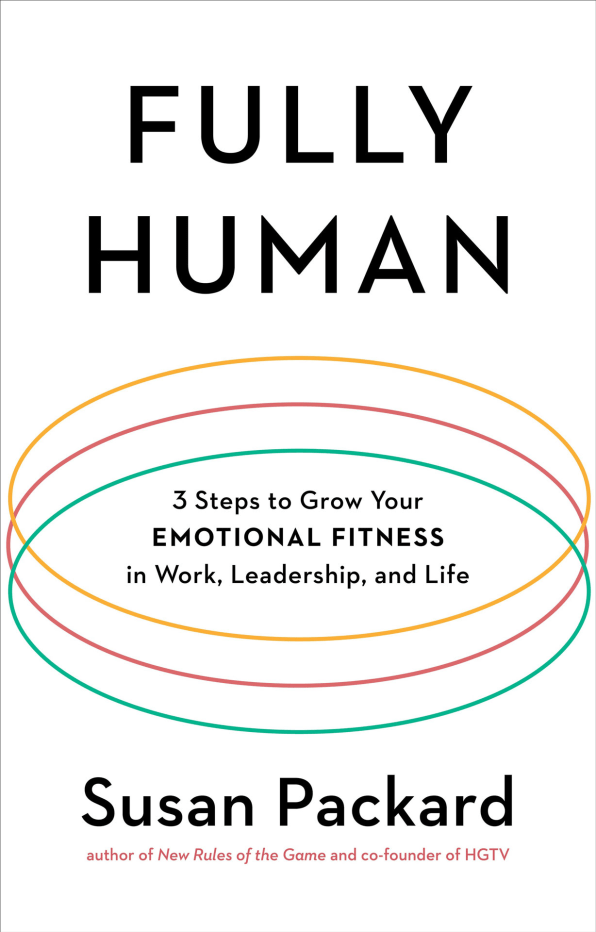
Fully Human: 3 Steps to Grow Your Emotional Fitness in Work, Leadership, and Life by Susan Packard

Some people might see this choice as limiting, but for me, it opened up other opportunities and interests that were more important to explore. By staying on as the COO, I was able to grow a variety of business areas at Scripps Networks Interactive (the home of HGTV) and had the time and bandwidth to train and prep for the New York City Marathon.

To determine whether or not you’re on the right path, you need to figure out the following: where your natural strengths lie, what interests and stimulates you, and what kind of company culture allows you to thrive. It’s also essential for you to realize that you need to make decisions that will enable you to live your ideal life, not someone else’s version of it.

Throughout our working lives, we’ll come to many crossroads, as our professional identities unfold and unpredictable opportunities arise. It takes courage and integrity to absorb the big picture when it comes to job fit. Emotionally fit people see job fit in its broadest sense because it means taking ownership and accountability over choosing wisely, and taking into account where your heart is guiding you. This means going beyond considering what you can do, to what you love to do, so that “can do” doesn’t become a life sentence.


This article is adapted from Fully Human: 3 Steps To Grow Your Emotional Fitness In Work, Leadership, and Life. It is reprinted with permission from TarcherPerigee, an imprint of Penguin Publishing Group, a division of Penguin Random House LLC. Copyright © 2019 by Susan Packard.


FastCompany.com | February 6, 2019 | BY SUSAN PACKARD 

4 MINUTE READ

#CareerAdvice : #YourCareer – Take these Steps to Grow your Career in the New Year! Great Three(3) Min Read!

Knowing the right company that fits your culture, passion, and industry is the first step. But once you find the right company, how do you work your way up?

Here are 5 tips on how to cultivate your career.

BUILD A SOLID NETWORK

Relationships are an essential part of your personal and professional life. Whether it’s with your current or former employer, building a solid foundation of professional connections is critical. Clients, peers, and subordinates, in addition to your management team, can all validate the quality of your work. Thoughtfully build your network and continue to learn from every level.

Make LinkedIn work for you. If you haven’t already, create your LinkedIn profile, and add your skills and contributions to beef up your profile. Endorse your colleagues and request their endorsement. A nod from your peers, or a positive review from a previous client, speaks volumes on LinkedIn.

SET GOALS

Be proactive. Setting goals for your professional career are critical. Start small and add new goals each year.

Find your passion and connect with others that share your ambitions. By sharing with others, you’ll have an even greater network to leverage expertise and resources.

Like this Article ?  Share It !    You now can easily enjoy/follow/share Today our Award Winning Articles/Blogs with Now Over 2.5 Million Growing  Participates Worldwide in our various Social Media formats below:

FSC LinkedIn Network:   www.linkedin.com/in/fscnetwork

Facebook:  http://www.facebook.com/pages/First-Sun-Consulting-LLC-Outplacement-Services/213542315355343?sk=wall

Google+:  https://plus.google.com/115673713231115398101/posts?hl=en

Twitter: Follow us @ firstsunllc

Question: Want the ‘the best/current articles/blogs on the web’ on Job Search, Resume, Advancing/Changing your Career, or simply Managing People?

Answer: Simply go to our FSC Career Blog below & type(#career, #leadership, #life) in Blog Search:  https://www.firstsun.com/fsc-career-blog/

What Skill Sets do You have to be ‘Sharpened’ ?

Continue of article:

STEP OUTSIDE YOUR COMFORT ZONE

Look for opportunities to try something new and step outside your comfort zone. Are there any classes or trainings available at your company? Does the company offer tuition reimbursements for a class you’re interested in taking? If you don’t know, ask!

When you have a passion for growing your career, take a shot on a “stretch assignment.” Whether it’s contributing to an additional project, or taking on a whole new role, this stretch assignment will add to your skillset, give you exposure to other people in your company, and allow you to gain insight into the expectations and daily work associated with a different position.

SEEK OUT A COACH OR MENTOR

coach or mentor can be a person that’s in, or outside, of your organization. They should be a trusted advisor that can help guide you to the next stage of your career. Identify who that person is in your life and see if they’re interested in committing to your growth. You can have more than one. Keep in mind: It should be someone that can help you develop your personal and professional skills. Consider a person that is in a current role that you’d aspire to, or a person that can support your professional development, in preparation for the next step.

Be receptive to feedback. Look at any constructive criticism as positive. Remember–your coach or mentor has your best interests at heart. Be open-minded when listening to their suggestions; this can have a lasting, positive effect on your relationship with them and help you identify talents in yourself that you may not have previously realized.

TAKE THE LEAP

Are you ready to grow? Sometimes you need to take the leap and find out. Before you do, make sure you can land on your feet. Have you excelled in your current role? Have you grown to your full potential? If you answered yes, it’s time to move on to the next stage of your career. Before presenting your interest to your manager, prepare to reference any positive comments from others about your performance to solidify your next move. Include any past performance evaluations to add credibility.

If you’ve truly mastered your current role, then moving into a larger or a new position will seem like an obvious next step. In speaking with your manager about your next move, ask what tools you’ll need to succeed.

When looking at the big picture, plan effectively, build relationships, and execute a growth strategy with guidance from your manager and mentor to progress to the next stage in your career. By executing strategic goals, a new path to success will unfold. By implementing these steps, you can significantly impact your growth opportunity and challenge yourself to reach the next stage in a successful career.


FastCompany.com | December 31, 2018 | BY YOLANDA WALKER—GLASSDOOR3 MINUTE READ

#CareerAdvice : #YourCareer – Ask these Four Questions to Conduct a Your Career Audit for the Past Year. Great Three(3) Min Read!

As 2018 comes to a close, career reflection is the most important thing you can do to prepare for the year ahead. It offers you the opportunity to look back, see what goals you already met, and figure out where you’re at with regards to your long-term goals (or whether they need to evolve).

Here are the questions you should be asking before you set your career resolutions for 2019.

DOES YOUR WORK MATTER?

Be honest in answering this fundamental question. Because if the answer is no, then nothing else really matters. Your happiness, both personal and professional, will come from doing work that you care about, and one way to answer this question is to take stock of your accomplishments. Write up a list of all that you have achieved and then ask yourself what they mean to you, personally and professionally. Do they matter to those around you? Do they matter to your employer? Do they matter to society? If you start here and can honestly say that your work matters, you’re well on your way to a rewarding career.

HAVE YOU KEPT UP WITH HOW TECHNOLOGY IS IMPACTING YOUR FIELD?

We live in a world of constant change. Those skills you acquired last year might be obsolete by this year or next. Rapid changes in technology are keeping everybody in a continuous state of learning and in a perpetual need to acquire new skills. Whether you are in a field driven by technology, or whether technology is just a part of your industry, you need to update and advance your tech skills at all times.

When you look back on the past year, ask yourself if you managed to keep up with the technological changes in your field. If you did, that’s probably not good enough. You need to get ahead of the changes, anticipate what new changes might be coming, and prepare for them. Your career will fast-track itself when your professional peers see you as the technology driver. Do everything you can in the upcoming year to stay ahead of the tech game, including investing time and resources in your skills.

Like this Article ?  Share It !You now can easily enjoy/follow/share Today our Award Winning Articles/Blogs with Now Over 2.5 Million Growing  Participates Worldwidein our various Social Media formats below:

FSC LinkedIn Network:   www.linkedin.com/in/fscnetwork

Facebook:  http://www.facebook.com/pages/First-Sun-Consulting-LLC-Outplacement-Services/213542315355343?sk=wall

Google+:  https://plus.google.com/115673713231115398101/posts?hl=en

Twitter: Follow us @ firstsunllc

Question: Want the ‘the best/current articles/blogs on the web’ on Job Search, Resume, Advancing/Changing your Career, or simply Managing People?

Answer: Simply go to our FSC Career Blog below & type(#career, #leadership, #life) in Blog Search:  https://www.firstsun.com/fsc-career-blog/

What Skill Sets do You have to be ‘Sharpened’ ?

Continue of article:

WHAT IS YOUR CAREER TRAJECTORY?
Did you work all of this year without giving much thought to where you will be down the road? Where will you be in five years? Ten years? To get to where you want to be, you need to identify where you need to be at various stages of your career.

Start this process by looking around and seeing where your more experienced coworkers are at, and think about whether that’s where you want to be. If so, ask what they did to get to where they are today. What roles and responsibilities did they take on? What skills did they acquire along the way? How did they network and get those responsible for their career development to notice and advance their careers? From that learning, map out your game plan so that you don’t leave your career advancement to chance.

IS YOUR FINANCIAL WELL-BEING WHERE IT NEEDS TO BE?
Money won’t dictate whether or not you’ll find satisfaction at work, but it’s still imperative to your overall well-being. At the end of the year, you should be conducting regular reviews of your salary, bonus, retirement contributions, and healthcare benefits so you can ensure that you’re earning what you deserve. The best way to evaluate this is to do your homework. Go online and research jobs like yours and learn what employees in other companies are earning. Check out jobs posted and what employers are paying for those jobs. You want to be earning to your maximum potential because many organizations base future promotions and salary increases on your current financial package. If you are not making what you should be, you should set some time to have an honest conversation with your boss in the new year.

Just like everything else in life, career success and satisfaction won’t come without strong intentions on your part. But you also need to make sure that you’re setting (and implementing) the right ones. That starts with asking questions.

ABOUT THE AUTHOR
Don Raskin is a senior partner at MME, an advertising and marketing agency in New York City. He is also the author of The Dirty Little Secrets of Getting Your Dream Job More.


FastCompany.com | December 21, 2018

#CareerAdvice : #YourCareer – Follow these 5 Steps to Future-Proof your Career.

The marketplace for talent is changing rapidly, and experts say it’s about time the way we approached our own careers caught up.

After a couple of decades defined by disruption, automation, and job displacement, many still aren’t convinced that their job could be at risk. Studies conducted by GallupQuartz, and the Pew Research Centre have all found that a majority of Americans believe automation and AI will displace a significant number of jobs; just not their own.

The lack of response to this new dynamic has become a key concern for career transition coach and best-selling author Ines Temple. In her book, You, Incorporated: Your Career Is Your Business, Temple explains how every employee should approach their career like a small business, with themselves as a provider of a service to a single client. She adds that any business that depended entirely on one client would be aggressively looking to diversify, and in today’s career landscape, employees should be equally as proactive when it comes to exploring their own career opportunities.

“A lot of people have allowed companies to manage their careers; they don’t take a proactive approach to them,” she says. “When companies change their plans and need to let them go, they are not ready to find a new job, they’re not employable, because their skill sets aren’t up to date. They don’t have metrics ready to demonstrate those skills, and they don’t have a strong network of contacts that will help them in a job search.”

Temple and other career experts recommend taking the following five steps to ensure your career is prepared to overcome the challenges of a rapidly evolving talent marketplace.

1. ASSESS YOUR CURRENT LEVEL OF BEING FUTURE-PROOFED

The first step in improving your career’s resiliency, according to Temple, is determining where you currently stand. She believes that those who are most prepared to evolve are those that love what they do, as they are often most willing to go the extra mile in order to continue doing it.

“Ask yourself, ‘Am I really happy here?’ ‘Is this what I want?’ ‘Is this really my passion?’” she says. “I know that’s a hard thing to worry about when you have bills to pay, but without that, it’s very hard to plan for your future career.”

Being too satisfied with your current employment, however, may also be a sign that you should be doing more to prepare for your future. “A very simple litmus test is: If you’re comfortable, you should start learning something new,” says Darren Raycroft, a partner with the Bedford Consulting Group, an executive search and talent management company.

Raycroft explains that with the rapid pace of technological advancement, the value placed on many skills today lacks the longevity that comparable skills had in previous generations. “Those periods of comfort and normalcy are getting shorter and shorter,” he says.

Raycroft recommends keeping an eye on relevant job postings—even during periods of comfortable employment—to better understand where your industry is heading, and what skills are in highest demand.


Like this Article ?  Share It !You now can easily enjoy/follow/share Today our Award Winning Articles/Blogs with Now Over 2.5 Million Growing  Participates Worldwidein our various Social Media formats below:

FSC LinkedIn Network:   www.linkedin.com/in/fscnetwork

Facebook:  http://www.facebook.com/pages/First-Sun-Consulting-LLC-Outplacement-Services/213542315355343?sk=wall

Google+:  https://plus.google.com/115673713231115398101/posts?hl=en

Twitter: Follow us @ firstsunllc

Question: Want the ‘the best/current articles/blogs on the web’ on Job Search, Resume, Advancing/Changing your Career, or simply Managing People?

Answer: Simply go to our FSC Career Blog below & type(#career, #leadership, #life) in Blog Search:  https://www.firstsun.com/fsc-career-blog/

What Skill Sets do You have to be ‘Sharpened’ ?

Continue of article:

2. COMMIT TO LIFELONG LEARNING

In today’s rapidly changing employment landscape, it’s easier than ever to fall behind, especially if you haven’t recently updated your skills.

“There’s this delineated ‘learning time’ in our lives, and then we move into a position, and if you choose to take some courses to get ahead, you may do so,” explains Raycroft. “I think that’s changing: Learning is and will continue to be an ongoing process with a degree of propensity that we haven’t yet experienced in our lifetimes.”

Raycroft believes that in order to stay ahead of the changing needs of the talent marketplace, employees need to be proactive in updating their skills. “That ability to learn and use judgment has been and will continue to be necessary for success,” he says.

3. NEVER STOP NETWORKING

The worst time to start building a network is when you desperately need one. Professional relationships are typically stronger when they’re built on mutual interest, rather than urgent need. “A lot of people only do a lot of networking when they need a new job, but on a daily basis, we don’t invest enough time in people, building a relationship based on trust,” says Temple. “It’s all about relationships with people, because people will recommend us, promote us, or let us go.”

Not only do those who take a break from networking risk weakening some of their existing relationships, but they can also begin to lose their networking skills. Temple emphasizes the importance of keeping those skills sharp and those relationships strong by building them in the low-pressure periods of career stability.

4. WORK ON YOUR SOFT SKILLS

Building that network often requires strong interpersonal skills, something that Temple believes is sorely lacking in most of today’s workers. “We really need to work on our warmth, our charisma, how much energy we give to people, because those things will make a difference between those who have a chance for a better career and those who don’t,” she says.

Furthermore, if our most robotic and repetitive tasks are bound to be automated, those quintessentially human traits may soon become our greatest assets.

“Young professionals understand that soft skills will be critical to thrive in the Fourth Industrial Revolution,” says Michele Parmelee, Deloitte’s global chief talent officer. “According to Deloitte’s seventh annual Millennial Survey, young professionals identified softer skills like confidence, interpersonal skills and—particularly for gen-Z—ethics and integrity aptitude as skills they feel are important to develop in order to succeed in the future.”

5. FIND A MENTOR

Not only can mentors use their experience to help their mentees navigate a quickly changing employment landscape, but they can also help them develop some of those vital soft skills in a low-pressure environment.

“It’s a safe place, so you won’t feel embarrassed asking your mentor questions that you might be embarrassed to ask in a group setting,” says millennial and gen-Z engagement expert Ashira Prossack. “You’ll also get that practice, and they’ll give you immediate feedback and one-on-one attention, because you can’t just read about how to communicate, you need to actually do it.”

Jared Lindzon is a freelance journalist born, raised and residing in Toronto, covering technology, entrepreneurship, entertainment and more for a wide variety of publications in Canada, the United States and around the world. When he’s not playing with gadgets, interviewing entrepreneurs or traveling to music festivals and tech conferences you can usually find him diligently practicing his third-person bio writing skills.

 More

FastCompany.com | December 21, 2018

Your #Career : Experiencing These 5 Things? You Might Be in the Wrong Profession…Sometimes a #Job or Career is just not meant to be. If Any of These Scenarios Sound Familiar, you Might Want to Think about Making a Change.

While “picking the wrong career is not an uncommon thing,” according to Karen Elizaga, career coach and author of Find Your Sweet Spot, it’s not always easy to tell the difference between a bad position and a bad career. If you’re unhappy and you know it–but you’re not sure whether you need a new job or a new career path–then read on to find out what the wrong career looks like, and what you can do if you realize you need to make a change.

First, according to two career experts, here are five signs that you’re in the wrong career.

1. YOU WORK HARD, BUT YOUR RESULTS ARE UNSATISFACTORY

“You absolutely love the area that you’re in, and you are unceasingly diligent about completing your work,” Elizaga describes, “but you don’t get the results you want or that you see your peers getting.” If this sounds all too familiar, “it’s entirely possible that you don’t have the skill or talent that it takes to succeed.”

2. YOU COMPLAIN ABOUT YOUR WORK A LOT

On the flip side, if you spend a significant amount of time whining about work, you may have chosen the wrong career, warns career coach Hallie Crawford. Another sign you need to make a change? “You spend most of your time at home and at work feeding negative thoughts and expressing them,” Crawford describes.


Related: How to figure out if you’re in the wrong job 


Like this Article ?  Share It !    You now can easily enjoy/follow/share Today our Award Winning Articles/Blogs with Now Over 2.5 Million Growing  Participates Worldwide in our various Social Media formats below:

FSC LinkedIn Network:   www.linkedin.com/in/fscnetwork

Facebook:  http://www.facebook.com/pages/First-Sun-Consulting-LLC-Outplacement-Services/213542315355343?sk=wall

Google+:  https://plus.google.com/115673713231115398101/posts?hl=en

Twitter: Follow us @ firstsunllc

Question: Want the ‘the best/current articles/blogs on the web’ on Job Search, Resume, Advancing/Changing your Career, or simply Managing People?

Answer: Simply go to our FSC Career Blog below & type(#career, #leadership, #life) in Blog Search:  https://www.firstsun.com/fsc-career-blog/

What Skill Sets do You have to be ‘Sharpened’ ?

Continue of article:


3. THE INDUSTRY IS ANTITHETICAL TO YOUR BELIEFS

According to Elizaga, “There might be a job function that you enjoy, or something–like the salary, location, or company prestige–may draw you to make a move in your career.” But, despite those obvious plusses, “ultimately you strongly disagree with the moral or political values of this career,” Elizaga describes.

4. THE CAREER DOESN’T MAKE USE OF YOUR STRENGTHS

You want a career that plays to your strengths and avoids your weaknesses. So, “when you don’t utilize any of your strengths, your career isn’t rewarding or fulfilling,” Crawford says, and it may not be the one for you.


Related: Should you quit your job? When to leave and when to stick it out


5. YOU FANTASIZE ABOUT QUITTING

What’s more, you’d even be happy if you were let go or fired. “This is a sure sign that your career choice is not a fit for you,” according to Crawford.

If one or more of these signs points to the fact that you’re in the wrong career, take heart: You don’t have to stay in it, and you don’t have to go back to school to get out of it, Elizaga says.

“First of all, take a deep breath and take an inventory,” she suggests. Ask yourself, “Who are you at your core? What are your skills? What drives you? What actually makes you happy? This is a step that so many people skip because they are focused on what the available jobs or seemingly worthy careers may be, rather than looking at their own intrinsic motivation.”

Next, assess your strengths and the skills you have that are transferable to any career, says Elizaga. “You might be surprised at how adaptable you can be to a new career,” she says.


Related: Your career happiness might hinge on how you define this word 


Once you narrow down a few fields you might like to explore, it’s time to reach out to some people in those industries. “Consider conducting informational interviews,” says Crawford. “Gather information about those possible new directions and find out from people in the field what it takes to transition into the field. Are there certain skills or a specific type of experience required? Do you need to take some classes, or volunteer outside of work to gain additional experience in a certain area? This will help you make a more informed decision about if and how much schooling or money that might be required. You may find that you only need to take a course or two instead of having to fully go back to school.”

Lastly, to gain experience in a new field, volunteer before you apply for a position, suggests Elizaga. “If there is an industry you want to move into, but you recognize that you need to learn new skills, carve out some hours during the week or weekend to volunteer, or intern for another company,” Elizaga says. That way, “You will slowly build up your arsenal of tools and ultimately be able to point to your experience in transitioning to a new career.”


FastCompany.com | May 23, 2018 | BY JILLIAN KRAMER—GLASSDOOR 3 MINUTE READ

Your #Career : #CareerAdvice – 5 Signs You’re in the Wrong Career—And How to Make a Change… Picking the Wrong Career is Not an Uncommon Thing, but it’s Not Always Easy to Tell the Difference Between a Bad Position and a Bad Career.

While “picking the wrong career is not an uncommon thing,” according to Karen Elizaga, career coach and author of Find Your Sweet Spot, it’s not always easy to tell the difference between a bad position and a bad career.

If you’re unhappy and you know it—but you’re not sure whether you need a new job or a new career path—then read on to find out what the wrong career looks like, and what you can do if you realize you need to make a change.

First, according to two career experts, here are five signs that you’re in the wrong career.

1. You work hard, but your results are unsatisfactory. “You absolutely love the area that you’re in, and you are unceasingly diligent about completing your work,” Elizaga describes, “but you don’t get the results you want or that you see your peers getting.” If this sounds all too familiar, “it’s entirely possible that don’t have the skill or talent that it takes to succeed.”

2. You complain about your work a lot. On the flip side, if you spend a significant amount of time whining about work, you may have chosen the wrong career, warns career coach Hallie Crawford. Another sign you need to make a change? “You spend most of your time at home and at work feeding negative thoughts and expressing them,” Crawford describes.

3. The industry is antithetical to your beliefs. According to Elizaga, “there might be a job function that you enjoy, or something—like the salary, location, or company prestige—may draw you to make a move in your career.” But, despite those obvious plusses, “ultimately you strongly disagree with the moral or political values of this career,” Elizaga describes.

Like this Article ?  Share It !    You now can easily enjoy/follow/share Today our Award Winning Articles/Blogs with Now Over 2.5 Million Growing  Participates Worldwide in our various Social Media formats below:

FSC LinkedIn Network:   www.linkedin.com/in/fscnetwork

Facebook:  http://www.facebook.com/pages/First-Sun-Consulting-LLC-Outplacement-Services/213542315355343?sk=wall

Google+:  https://plus.google.com/115673713231115398101/posts?hl=en

Twitter: Follow us @ firstsunllc

Question: Want the ‘the best/current articles/blogs on the web’ on Job Search, Resume, Advancing/Changing your Career, or simply Managing People?

Answer: Simply go to our FSC Career Blog below & type(#career, #leadership, #life) in Blog Search:  https://www.firstsun.com/fsc-career-blog/

What Skill Sets do You have to be ‘Sharpened’ ?

Continue of article:

4. The career doesn’t make use of your strengths. You want a career that plays to your strengths and avoids your weaknesses. So, “when you don’t utilize any of your strengths, your career isn’t rewarding or fulfilling,” Crawford says, and it may not be the one for you.  

5. You fantasize about quitting. What’s more, you’d even be happy if you were let go or fired. “This is a sure sign that your career choice is not a fit for you,” according to Crawford.

If one or more of these signs points to fact that you’re in the wrong career, take heart: you don’t have to stay in it, and you don’t have to go back to school to get out of it, Elizaga says.

“First of all, take a deep breath and take an inventory,” she suggests. Ask yourself, “Who are you at your core? What are your skills? What drives you? What actually makes you happy? This is a step that so many people skip because they are focused on what the available jobs or seemingly worthy careers may be, rather than looking at their own intrinsic motivation.”

Next, assess your strengths and the skills you have that are transferable to any career, says Elizaga. “You might be surprised at how adaptable you can be to a new career,” she says.

Once you narrow down a few fields you might like to explore, it’s time to reach out to some people in those industries. “Consider conducting informational interviews,” says Crawford. “Gather information about those possible new directions and find out from people in the field what it takes to transition into the field. Are there certain skills or a specific type of experience required? Do you need to take some classes, or volunteer outside of work to gain additional experience in a certain area? This will help you make a more informed decision about if and how much schooling or money that might be required. You may find that you only need to take a course or two instead of having to fully go back to school.”

Lastly, to gain experience in a new field, volunteer before you apply for a position, suggests Elizaga. “If there is an industry you want to move into, but you recognize that you need to learn new skills, carve out some hours during the week or weekend to volunteer or intern for another company,” Elizaga says. That way, “you will slowly build up your arsenal of tools and ultimately be able to point to your experience in transitioning to a new career.”


GlassDoor.com |  | 

Your #Career : Three Ways You’re Self-Sabotaging Your Next Career Move And How to Stop…Be Honest with Yourself, you Know you’re Ready for a #CareerChange, so Why Haven’t you Taken the Next Step? What’s Stopping you From Moving Forward?

You can have clarity. You can have a 5-year plan plastered to your mirror. You can know exactly what you want to do and when. You can have a Rolodex of contacts and know the best people in your industry.

But, if you’re holding onto your fear of fill-in-the-blank, you’re probably self-sabotaging your career more than you realize.

Be honest with yourself, you know you’re ready for a career change, so why haven’t you taken the next step? What’s stopping you from moving forward?

It’s not that your resume isn’t as perfect as you’d like it to be, nor is it that you don’t know how to market yourself for your next position. Though those are plausible burdens, it’s much deeper than that.

Here are three subtle fears that are causing you to sabotage your next career move.

You Fear Getting Rejected

You might be struggling with this, if the question, “Why would they hire me?” has stopped you from applying for job openings that excites you, or if the thought of not getting a response back has stopped you from setting up informational interviews with people you’d love to meet.

Granted you might not want to shoot your shot at a position that requires 10 years of experience if you’re barely on the cusp of year two. But, the fear that you might not be good enough is normal. And, plaguing yourself with what I call the “Out of My League Syndrome,” simply because something is different or new, isn’t the most effective way to land the job of your dreams.

In a perfect world, we would ask whoever we want for whatever we want, and we would receive a, “Yes, absolutely,” every time. But, in our imperfect world, no one is free from rejection. It happens to all of us. It’s inevitable, so embrace it. Understand that it’s a necessary evil to achieve success and learn to see rejection as redirection, rather than a setback.

Rejection always leaves you with two options: you either let rejection defeat you or you regroup and keep going. But, don’t count yourself out before you try.

Like this Article ?  Share It !    You now can easily enjoy/follow/share Today our Award Winning Articles/Blogs with Now Over 2.5 Million Growing  Participates Worldwide in our various Social Media formats below:

FSC LinkedIn Network:   www.linkedin.com/in/fscnetwork

Facebook:  http://www.facebook.com/pages/First-Sun-Consulting-LLC-Outplacement-Services/213542315355343?sk=wall

Google+:  https://plus.google.com/115673713231115398101/posts?hl=en

Twitter: Follow us @ firstsunllc

Question: Want the ‘the best/current articles/blogs on the web’ on Job Search, Resume, Advancing/Changing your Career, or simply Managing People?

Answer: Simply go to our FSC Career Blog below & type(#career, #leadership, #life) in Blog Search:  https://www.firstsun.com/fsc-career-blog/

What Skill Sets do You have to be ‘Sharpened’ ?

Continue of article:

You Fear Treading in Uncharted Waters

If you have a job that looks good on paper or if you’ve outgrown your current position but feel pretty comfortable in your career, the fear of uncertainty probably has kicked in more than you’ve noticed in your job hunt. Deep down, you don’t completely like the idea that you’re moving from familiar ground into unknown territory.

If you’ve had thoughts like, “What if I get a job and I don’t like it as much, or what if I don’t get paid as much?” Then, you’re a member of this club. When it comes to landing a new job, you’ve probably put in less effort than you’re willing to admit to yourself. Rather than dedicate intentional time to discovering the next best career move, you might coast through your job search, soothing yourself with excuses like, “I just don’t have enough time.”

Unfortunately for you, your lack of consistency and momentum is holding you back from making the career change you so desire. Your first step is to acknowledge that you feel this way. Then, accept that all you can do is put your best foot forward, and repeat, one step at a time. Do your research and talk to as many people as you can before jumping into your next position to ensure it’s the right fit for you.

If that’s not enough and if you want to get as much guidance as possible to safeguard you from making a wrong turn, get a career coach. Career coaching helps you fill the gap between where you are and where you want to be in your career, with a concrete step by step system to help get you there. Find a career coach that understands your needs and who can steer you in the best direction.

You Fear Failing

This is one I used to struggle with, and you can blame growing up in a Nigerian household for this one. Growing up, I was told failure is not an option and success is not a choice. Success is a requirement. So, as you can imagine, that created an insurmountable amount of pressure.

If you’ve ever felt like, “What if I do all this work to get a new job and I fail? What if it doesn’t work out?” Welcome to the party. That fear of failure, probably has you applying to 30 jobs a week, sending off your resume to all who cares to listen just so you can end up somewhere and deem yourself successful. But that isn’t the best approach. It’s impossible to show that you’re the best candidate for every position you desire when you aimlessly apply to that many jobs at once.

Be selective in your approach, and take your time. Don’t let the fear of failure rush you into something that won’t ultimately make you happy.

More importantly, don’t let the fear of failure keep you stagnant either. Failure, like rejection, is inevitable. At some point, you will fail. But, the faster you fail, the closer you get to success.

So, whenever you start to feel these subtle fears creep up your shoulder, ask yourself two questions: First, “Do I honestly like where I’m at now?” And, secondly, “What is the worst that can happen if I move forward in this direction?” If the worst that can happen is better than where you are right now, get out of your comfort zone and take the risk.

Adunola Adeshola coaches young professionals to get unstuck in their careers and land jobs they’ll love. She’s also the founder of employeeREDEFINED.com, a career site for millennials who secretly feel stuck in their careers.


Forbes.com | February 15, 2018 |