Posts

#CareerAdvice : #YourCareer – Independence Day Is A Good Time To Free Yourself From An Oppressive Job And Pursue Your Dreams.

My grandparents emigrated to America fleeing persecution. At the time they immigrated, they did not speak any English whatsoever. However, after adapting to American culture, my grandparents learned the language and, ultimately, became a plumber, shoe salesman, seamstress and homemaker.

My parents were both teachers and my dad went on to become a principal at a vocational high school in East New York, Brooklyn. The school taught underprivileged, inner-city kids to work as mechanics for the MTA New York City Transit system, which enabled them to procure stable union jobs with a pension.

As a second-generation American, I started an executive search business, found jobs for thousands of people and earned a handsome living for my family. I’ve had the good fortune of writing this piece for the premiere, iconic business publication, Forbes, and recently founded a startup, WeCruitr.com, which will help job seekers connect with recruiters to assist them with their search. My family is a mix of whites, blacks, Asians, Jews, Christians, heterosexuals and LGBTQ people. What other country offers such endless opportunities and diversity?

America was founded by—and continues to be the home for—people seeking freedom of religion, speech and the chance to build a better future for themselves and their families. There are no immutable caste systems, monarchies or rigid hierarchies to stop you from pursuing your dreams.

Like this Article ?  Share It !    You now can easily enjoy/follow/share Today our Award Winning Articles/Blogs with Now Over 2.5 Million Growing  Participates Worldwide in our various Social Media formats below:

FSC LinkedIn Network:   www.linkedin.com/in/fscnetwork

Facebook:  http://www.facebook.com/pages/First-Sun-Consulting-LLC-Outplacement-Services/213542315355343?sk=wall

Google+:  https://plus.google.com/115673713231115398101/posts?hl=en

Twitter: Follow us @ firstsunllc

Question: Want the ‘the best/current articles/blogs on the web’ on Job Search, Resume, Advancing/Changing your Career, or simply Managing People?

Answer: Simply go to our FSC Career Blog below & type(#career, #leadership, #life) in Blog Search:  https://www.firstsun.com/fsc-career-blog/

What Skill Sets do You have to be ‘Sharpened’ ?

Continue of article:

It is fashionable today to point out all of the failings of our nation and complain that everything is rigged against you. Sadly, many people feel that because of their color, gender or sexual orientation that they can’t succeed and attain the promised American Dream.

As messy as things can get in the U.S., I’m pressed to see another country that offers our vast opportunities for people to receive an education, start a business or succeed in the corporate world. It’s not easy—in fact, it’s incredibly hard—to succeed. There are always roadblocks, bad luck and people out to take advantage of you, but there is the opportunity for you to at least try your best.

We’re a country founded by pissed off people who didn’t want to bow down to kings and queens or contend with persecution. We argue, fight and disagree with each other. Often times, we’re angry at the status quo and demand changes. That’s what makes us great. The ability to openly disagree with each other and the government and pursue whatever the heck we want to do.

I’d suggest that you spend some time this Independence Day weekend to think about what you’d like to do with your career and life. We hold jobs that we hate, work for bosses that make us miserable, realize that a job or career was selected for the wrong reasons and are desperately unhappy. It’s easy to feel sorry for ourselves.

Look at all the hardships that people had to endure—and still continue to endure—to come to America for its opportunities. There are people literally dying to come into this country. You have no reason to settle for less than what you deserve. If you are dissatisfied with your current circumstances, start planning your independence from your job or career. Fight for the right to be happy and successful.

Despite the naysayers, America offers untold opportunities and that’s why people from all over the world want to come here. Block out all the negativity on social media and in the press and seek out a better and brighter future for yourself and your family. We’re a nation of fighters who don’t give up easily. There’s no reason why you shouldn’t stand up for yourself and pursue a life of wealth, success and happiness. Instead of celebrating, you should take the time to thoughtfully reflect just how lucky you are that you are given the freedom to advance and climb the corporate ladder.


Jack Kelly 

I am a CEO, founder, and executive recruiter at one of the oldest and largest global search firms in my area of expertise, and have personally placed thousands of profes…

Forbes.com | July 1, 2019


#CareerAdvice : #YourCareer -Why You Should Always Be Looking for Work….Best Advice You will Read!

The new world of work is unstable in ways that previous generations could not have imagined. In fact, the structures have changed so significantly that the landscape is barely recognizable. So the adages that used to make sense — keep your head down, focus on excelling at what you do, work your way up the ranks — often don’t apply.

Today, to build a successful career, you need to always be looking for work.

To understand why, let’s start with the big picture. More and more businesses have entered the “gig economy.” While that term, for many people, conjures up images of Uber and Instacart, these types of platform-based businesses are only a small fraction of the overall gig economy.

Increasingly, all sorts of businesses are hiring temporary or contingent workers rather than traditional full-time employees with benefits. NPR reports that one out of every five jobs is held by a freelancer, and that within a decade, contractors and freelancers could make up half the workforce.

They often lack benefits. They’re also often the first to be laid off when an economic downturn comes along, and in most cases they cannot collect unemployment.

Like this Article ?  Share It !    You now can easily enjoy/follow/share Today our Award Winning Articles/Blogs with Now Over 2.5 Million Growing  Participates Worldwide in our various Social Media formats below:

FSC LinkedIn Network:   www.linkedin.com/in/fscnetwork

Facebook:  http://www.facebook.com/pages/First-Sun-Consulting-LLC-Outplacement-Services/213542315355343?sk=wall

Google+:  https://plus.google.com/115673713231115398101/posts?hl=en

Twitter: Follow us @ firstsunllc

Question: Want the ‘the best/current articles/blogs on the web’ on Job Search, Resume, Advancing/Changing your Career, or simply Managing People?

Answer: Simply go to our FSC Career Blog below & type(#career, #leadership, #life) in Blog Search:  https://www.firstsun.com/fsc-career-blog/

What Skill Sets do You have to be ‘Sharpened’ ?

Continue of article:

Meanwhile, even people who have full-time jobs with benefits are often scraping by. A recent Bankrate survey found that 45% of workers have a “side hustle,” including 43% of full time workers. The most common reason is that they need the money to get by.

Meanwhile, in another survey, 78% of workers reported that they are living paycheck to paycheck.

As co-founder of Steady, a startup assisting people in creating a stable monthly income, I hear from users all the time who share stories of their struggles. Some are young workers who aren’t making enough to live and pay down their massive college loans. Others have been in the workforce for decades, and always thought they’d have a job until retirement — only to find that their jobs are being replaced by contractors or, in some cases, automation.

They come from a wide range of industries and report that their hours are cut back, their side hustle isn’t paying as much as it did, or they’re suddenly in danger of being laid off. Some are from high levels of a corporate hierarchy. In fact, a LinkedIn analysis found that traditional employees have lost their lock on managerial roles in an organization. Contractors now “work in higher seniority roles a year sooner than peers in non-contract roles on average.”

Stability is becoming a relic of the past. The deck is stacked against workers. And while we do need new laws and policies to help give people some guarantees and improve their pay, the most important step individuals can take to protect themselves from the tumultuousness of this reality is to always be looking for new, better opportunities.

I recommend making it a daily habit. Every day, take action toward discovering new opportunities.

For starters, get your profile up on any and all jobs boards that include the kinds of positions you may be interested in. Keep updating your profile with your latest achievements, accolades, and recommendations. Do the same with your resume. (Check out “the anatomy of a perfect resume” for ideas.)

Set up notifications for all the relevant jobs boards as well. Take five minutes each day to look at what positions have just been loaded up. It helps to move quickly if one interests you, and it’s also a matter of educating yourself. The more you look at the kinds of positions opening up at different companies, the clearer a picture you’ll get of the job market.

Perhaps most importantly, take the time to consider and analyze your skill set. Many people don’t realize the full scope of their skills, or how well those skills can transfer from one field to another. (See how an opera singer discovered that his skills could help make him a great sales leader.) Berkeley offers tools to help you determine yours.

Once you’ve done this, look into how other people with skills similar to yours have progressed in their careers. LinkedIn can be very helpful for this. Look at the skills of people in your network, and ask them about their career progressions.

And if there are any “dream jobs” that interest you, reach out to people who currently have those jobs and ask them how they got there. Often, you’ll find that people are happy to give advice.

You owe it to yourself to always chase a better professional situation — more hours, more security, better benefits, and higher pay. By taking a step in that direction every day, you’ll be on your way.

Author: Adam Roseman is co-founder and CEO of Steady, an Atlanta-based startup that assists workers and job seekers in creating a stable monthly income and a more solid financial future.
GlassDoor.com | June 28, 2019

#CareerAdvice : Risk Smart: Taking #YourCareer to the Next Level. “You Miss 100% of the Shots you Don’t Take.” – Wayne Gretzky

The choices we make throughout our careers take us all on quite a journey. When you first enter the workforce, it is a time of excitement and anticipation for what lies ahead. Over time, life takes us on a winding road of twists and turns in which our personal lives can intertwine with our professional lives.

While some life experiences can catapult us into unknown realms, it is important that we be open to embracing new career opportunities, and, when the moment is right, consider taking risks and pursue some new challenges.

Over the course of my career, I came to appreciate the importance of taking risks. In one of my first jobs in consulting, I worked diligently and waited to be presented with new opportunities to continue building a promising future career. As time went on, I learned the importance of being proactive in one’s career advancement. Don’t wait for your career to come to you—you need to take ownership of your own growth.

Here are three ways to feel more empowered and prepared to take smart risks:

“You miss 100% of the shots you don’t take.” – Wayne Gretzky

Risk and reward go together. Some of my greatest career achievements came about by taking educated risks, such as taking on new—and, at times, daunting—responsibilities. Once when asked to create a digital business within an organization, I approached the assignment with apprehension because I was concerned about the risk of failing in front of leaders who trusted me. To build my confidence, I reminded myself that growth comes from seeking out and taking on new challenges. By changing my mindset about the task, I was able to visualize that taking a risk into the unknown realm of “digital business” would enable me to learn a new field, expand my professional skill set, and earn the respect of my peers.

Like this Article ?  Share It !    You now can easily enjoy/follow/share Today our Award Winning Articles/Blogs with Now Over 2.5 Million Growing  Participates Worldwide in our various Social Media formats below:

FSC LinkedIn Network:   www.linkedin.com/in/fscnetwork

Facebook:  http://www.facebook.com/pages/First-Sun-Consulting-LLC-Outplacement-Services/213542315355343?sk=wall

Google+:  https://plus.google.com/115673713231115398101/posts?hl=en

Twitter: Follow us @ firstsunllc

Question: Want the ‘the best/current articles/blogs on the web’ on Job Search, Resume, Advancing/Changing your Career, or simply Managing People?

Answer: Simply go to our FSC Career Blog below & type(#career, #leadership, #life) in Blog Search:  https://www.firstsun.com/fsc-career-blog/

What Skill Sets do You have to be ‘Sharpened’ ?

Continue of article:

Before taking a risk at work, ask yourself, “What are the pros and cons?” If you miss out on the promotion or if you don’t get the open position, what does that ultimately mean to your career? Growth comes in trying and persisting. If things don’t go your way, it’s okay to feel disappointed. As Dr. Seuss says in “Oh, the Places You’ll Go!” my son’s favorite book: “I’m sorry to say so, but sadly, it’s true that bang-ups and hang-ups can happen to you. Use it as a learning opportunity. Make a mental note to reference how you will approach this the next time you’re ready to take a risk.

Above all, don’t miss the opportunity to take that chance and see where it takes you.

Think short – and long – term

There are times and places for risks, and the only person who can decide when the time is right to take a risk is you. I once received an offer for a position that I believed lacked long-term security from a company that was a major player in a volatile industry. Despite this uncertainty, I knew it was the right chapter of my life to take a chance—this was an opportunity in the short-term to propel myself toward my career goals, and I was committed to making it work.

When considering a career risk, it’s important to evaluate how it would fit into the current chapter of your life as well as your overall career journeyIs there a clear course leading you from where you are now to where you want to be? Are you willing to sacrifice some stability or salary in pursuit of this objective? Do you have the time to dedicate yourself to a new challenge now or are there other demands that would compete and make success unlikely? Answering these questions will help you become a better decision-maker when faced with opportunities to take chances.

Are you willing to sacrifice some stability or salary in pursuit of this objective? —Walia

Map out alternatives

When taking risks of any nature, it is important to have a sense of the full picture. It’s never fun to consider the downsides of risk, but it’s a necessary step to ensure you land on your feet if things go awry.

One good way to hedge your risks is to leverage your network and build your own personal “board of advisors” to your career. These people in your life can help you to assess risk and can also serve as a safety net in case things don’t work out. I believe in the power of positive thinking but having a Plan B isn’t a bad idea. Undeniably, having an alternate plan in place is critical to bouncing back and continuing your career journey.

Taking that first step into something new and unknown can often be unsettling. Our minds try and come up with all the reasons why not to take that risk. Start by taking the opportunity to talk it through with your trusted advisors and work out alternatives that will help ensure you are set up for success. Invest the time to map out what this could mean for your career now and in the future. And finally, take that shot! It could lead you down the path of a most rewarding career.

Author: Vicki Walia is Chief Talent and Capability Officer at Prudential where she oversees the talent team and a team of experts that connect strategy, identify organizational opportunities, build critical capabilities, and navigate change. Connect with her on LinkedIn.


Glassdoor.com | June 24. 2019

#CareerAdvice :#CareerAdvancement -Four Things To Do This Summer To Advance #YourCareer .

Summer is the perfect time to focus some attention on your career success. Why? Because work inevitably slows down a little then; people take vacation and leave early on Fridays. In most industries, it’s a time for relieving some of the pressure.

You too need to use your vacation time to recharge and get some perspective, so don’t miss the beach and backyard barbecues. But while you’re at it, make time for some career-focused action that will give your personal brand a boost when the workplace is back to its bustling buzz in the fall.

Here are four things that will help you and your brand blast into September.

1. Prepare For Your Annual Review

For most companies, the (often dreaded) annual review process happens some time in the last four months of the calendar year. Don’t wait for the email from your boss scheduling your review meeting. Prepare now so you can ace it. Here’s how:

  • Do an inventory of your wins to date. Think back over the first half of the year and document your biggest contributions. Focus on the ones that are really important to your manager and help you showcase the value you deliver to the team and company. Document them using this formula: C-A-R.
  • C is for challenge. Describe the challenge you sought the resolve.
  • A is for action. Describe what you did to solve the problem or meet/exceed the need.
  • R is for result. Record the specific, measurable results of your action. How can you measure the value of your contribution? If you can quantify it, all the better.
  • Get input and feedback from others to help you make your case. Collect your fan mail and accolades, especially from senior leaders or people respected in your field.

    Think about what you would like for the coming year. More responsibility? A leadership role? An international assignment? Put together the pitch that will convince your boss to help you make it happen.

    Like this Article ?  Share It !You now can easily enjoy/follow/share Today our Award Winning Articles/Blogs with Now Over 2.5 Million Growing  Participates Worldwide In in our various Social Media formats below:

    FSC LinkedIn Network:   www.linkedin.com/in/fscnetwork

    Facebook:  http://www.facebook.com/pages/First-Sun-Consulting-LLC-Outplacement-Services/213542315355343?sk=wall

    Google+:  https://plus.google.com/115673713231115398101/posts?hl=en

    Twitter: Follow us @ firstsunllc

    Question: Want the ‘the best/current articles/blogs on the web’ on Job Search, Resume, Advancing/Changing your Career, or simply Managing People?

    Answer: Simply go to our FSC Career Blog below & type(#career, #leadership, #life) in Blog Search:  https://www.firstsun.com/fsc-career-blog/

    What Skill Sets do You have to be ‘Sharpened’ ?

    Continue of article:

    2. Mentor, Lead And Support The Intern

    If you want to demonstrate that you’re leadership material, take on the role (official or not) of managing the summer intern(s). You’ll feel great about helping a junior-level colleague build skills that will be helpful to their career success. In many companies, the intern is not given a lot of direction, support, feedback or mentoring. That creates an opportunity for you to become known as someone who leads the way.

    3. Put Your Q4 Social Media Calendar Together

    You know how you always say, “I wish I could be more regular with my social media. If only I had more time.” Well, with the summer here, you have a little more time. But instead of just upping your social media contributions in the summer, prepare a plan for the fall that will ensure that you’ll be visible, valuable and available to the people you seek to influence. Then:

    • Identify the most important social media platform for increasing your visibility with stakeholders.
    • Determine what you’d like to say. What’s your message and point of view and how can you best express it?
    • Create evergreen content for the platform you selected. If you chose LinkedIn, for example, write articles for your LinkedIn Blog. Commit to writing four so you can publish one each month—September through December. They need not be long, just make sure they deliver value to the community you seek to influence.

    4. Update Your Digital Brand

    Egosurf. That’s what it’s called when you google yourself. Then check out what shows up on page 1. Ask yourself what people would think about you if they hadn’t met you and were just forming a first impression of you from your Google results. Then determine what changes you’d like to make to align that first impression with your real-world personal brand.

    Pay close attention to your LinkedIn profile. It will likely show up toward the top of your page-one results. If your headshot is out-of-date, update it. If your About section is missing some of your latest wins, edit it. Make sure that your LinkedIn profile conveys your authentic credibility and likability, and make sure the answer to this questions is yes: Would someone want to get to know me after reading my LinkedIn profile?

    How’s that for a list of Summer Camp activities? When you complete it, you’ll feel accomplished, and you and your personal brand will be prepared to make the final quarter  fruitful.

    Author: William Arruda is the cofounder of CareerBlast and creator of the complete LinkedIn quiz that helps you evaluate your LinkedIn profile and networking strategy.

    I’m a personal branding pioneer, motivational speaker, founder of Reach Personal Branding and cofounder of CareerBlast.TV. I’m also the bestselling author of the definit…


Forbes.com | July 18, 2019

#CareerAdvice : #CareerAdvancement -These 7 Traits Can Help you Get Ahead, then Harm You as you Move Up…A Must REAd for ALL!

When it comes to your career, moving ahead can be a case of “what got you here won’t get you there.” Unfortunately, if you keep doing what you were doing, the consequences can be harmful. Traits that initially get you noticed can later cause you to be overlooked for a promotion or raise.

“People have behaviors that work early in careers and they can hang onto them because they’re invested in them,” says leadership consultant Sally Helgesen, coauthor of How Women Rise: Break the 12 Habits Holding You Back From Your Next Raise, Promotion or Job. “Even when it looks as if the habit may not be serving you well now, it can be difficult to let it go.”

It’s important to gain awareness of the behaviors that are potentially problematic, so you can ask yourself if it’s time to move on and take a different approach. Here are seven habits you need to break to move ahead.

1. BEING PRECISE AND CORRECT

This is especially problematic for women, who tend to get promoted and rewarded based on being precise and correct, says Helgesen.

“What they take away is that being precise and correct is very important to success,” she says. “The problem is that at the highest level, precision and correctness is not what an organization looks for. That can be considered a micromanagement approach.”


Like this Article ?  Share It !    You now can easily enjoy/follow/share Today our Award Winning Articles/Blogs with Now Over 2.5 Million Growing  Participates Worldwide in our various Social Media formats below:

FSC LinkedIn Network:   www.linkedin.com/in/fscnetwork

Facebook:  http://www.facebook.com/pages/First-Sun-Consulting-LLC-Outplacement-Services/213542315355343?sk=wall

Google+:  https://plus.google.com/115673713231115398101/posts?hl=en

Twitter: Follow us @ firstsunllc

Question: Want the ‘the best/current articles/blogs on the web’ on Job Search, Resume, Advancing/Changing your Career, or simply Managing People?

Answer: Simply go to our FSC Career Blog below & type(#career, #leadership, #life) in Blog Search:  https://www.firstsun.com/fsc-career-blog/

What Skill Sets do You have to be ‘Sharpened’ ?

Continue of article:

2. FOCUSING ON STRONG TECHNICAL SKILLS

Being technically proficient can get you noticed, and it’s always good to be up to date on the latest tool, says Allison McWilliams, assistant vice president of mentoring and alumni personal and  career development at Wake Forest University. Later, it can hold you back if you stay in the trenches.

“There is a clear difference between an ability to use and implement the latest technologies to do the work, and being able to create a vision and a direction for and manage the people who will do this work,” says McWilliams. “To move up, it is far more important to be able to see the bigger picture and to get the right people into the room.”

It can be easy to overvalue expertise, adds Helgesen. “Especially for men engineers or accountants who strongly identify with that trait as part of their identity,” she says.

3. SEEKING OWNERSHIP AND RECOGNITION

The first few rungs of the professional ladder are about taking ownership for your work and gaining individual recognition for your contributions and accomplishments, but as you move up, you need to learn to put your ego in check, says McWilliams.

“It’s no longer about you; it’s about the team and the organization,” she says. “It’s not about getting credit or individual wins. It’s about giving credit and team wins.”

4. SELF RELIANCE

Taking initiative, being self-motivated and figuring out how to get the job done and then doing it will make you an invaluable resource early in your career, says Michelle Tillis Lederman, CEO of Executive Essentials and author of The Connector’s Advantage: 7 Mindsets to Grow Your Influence and Impact.

“As you become a people manager, it is your job to not go it alone,” she says. “You need to develop skills in others, delegate, and you are evaluated on the results you get with and through other people. Remember, it is the relationships that you build that will elevate your career. Self-reliance can be self-destructive.”

After you move into a leadership position, the hustle you used to get you there will start to work against you, ads Byron Matthews, CEO and president of Miller Heiman Group, a sales performance company.

“Your responsibilities have grown in complexity, which requires you to be more thoughtful,” he says. “It’s no longer just the activity; it’s asking, ‘What is the best activity?’ The top senior executives come to the table with perspective that doesn’t just answer a perceived need, but instead helps shape those needs.”

5. NETWORKING

Early on your career, meeting with as many people as you can is a great way to solidify your network and explore the resources, connections, and contacts that a wide network can provide, says Beck Bamberger, founder and CEO of BAM Communications, a PR and media relations firm.

“However, as you move up the chain, you have to become ruthless with your time,” she says. “In short, saying ‘yes’ to every person who wants to do a lunch, coffee, or a session to ‘pick your brain’ will leave you with zero time to actually get work done. In short, be more discerning as your career advances. The art of saying ‘no,’ is a hard one but a must to master.”

But be sure to make time to give back, says Jane Tutoki, director of the board at Sedgwick, a global claims administrator. “As you grow in your career, you have to be cognizant that you are now a role model for others, and that you have to behave like a role model, and help people accordingly,” she says. “You have to be more generous with your time and knowledge because you should become a resource for others, in order to build and lead a high-functioning and successful team.”

6. A LARGE APPETITE FOR RISK

When people don’t have much to lose, they’re usually willing to take on risks, says Kate Zabriskie, founder and CEO of Business Training Works, an onsite training provider. “When those risks pay off, they often pay big,” she says. “When they don’t, the consequences often aren’t usually too dire because there wasn’t much to lose in the first place.”

Later, however, heavy risk taking may seem disproportionate when considering gains versus potential losses. “Nobody wants to work for a loose cannon or someone who makes them feel unsafe,” says Zabriskie.

7. PATIENCE

Patience may be a virtue, but careerwise, it’s more likely to help early in your career than later, says Rebecca Horan, founder of Rebecca Horan Consulting, a brand strategy firm. “Let’s face it: when we’re just starting out, we need to prove ourselves,” she says. “We should be willing to do the grunt work, and roll up our sleeves to prove we’re a team player.”

Later in your career, patience can begin to lose its shine if you’re not receiving the project assignments, promotions, and pay raises you’d like. “The further you progress in your career, the more you’ll want to advocate for yourself,” says Horan. “Speak up about your goals and desires. Positioning your personal brand for the next leap becomes more about strategy and less about patience.


FastCompany.com | March 20, 2019 | BY STEPHANIE VOZZA 5 MINUTE READ


#CareerAdvice : #CareerDirection – How to use #EmotionalIntelligence to Find a Job that’s Right for You.

“Good job fit” is one of those overused phrases that has lost some of its meaning. What is it? What happens when the job you thought was your dream job, or the job that would catapult you to great success makes you feel anxious, out of step, scrambling to keep your balance?

When we talk about good job fit, we overlook the thing that is most important, And to get to that stage, we can’t take shortcuts–we have to deploy a kind of emotional intelligence that I call EQ Fitness.

THE THREE STEPS TO EQ FITNESS

There are three steps to EQ Fitness: (1) the willingness to become self-aware (2) the openness to build trust, and the steadiness to lead, and live, guided by inner principles. Step one is the most crucial, because it’s the foundation on which you build the next two steps.

I see examples of those who get it right, and those who don’t in a lot of the keynotes and consulting I do. In many cities today, start-up accelerators and incubators offer stipends and grants to enterprising young adults, who, in turn, grow their business there. One evening, after I gave remarks at an event in Detroit, a young woman, no more than twenty-two years old, raised her hand and asked me, “I’m really good at new ideas and working to get them off the ground,” she said. “But I’m not great at process. How do I get to be a complete CEO?”

My knee-jerk reaction was to say, who’d want to be in charge of process? Get someone else to do that! After all, I was just like her–I’ve hated process my whole career. But I took a mindful moment and instead offered encouragement and praise for her self-awareness. I then explained that we generally fall into categories of builder-entrepreneur or process-systems person. Our job in developing ourselves is first to identify which one we are, then to work on improving the other skill-sets–especially if we want a leadership position, because great leaders need both.

Like this Article ?  Share It !    You now can easily enjoy/follow/share Today our Award Winning Articles/Blogs with Now Over 2.5 Million Growing  Participates Worldwide in our various Social Media formats below:

FSC LinkedIn Network:   www.linkedin.com/in/fscnetwork

Facebook:  http://www.facebook.com/pages/First-Sun-Consulting-LLC-Outplacement-Services/213542315355343?sk=wall

Google+:  https://plus.google.com/115673713231115398101/posts?hl=en

Twitter: Follow us @ firstsunllc

Question: Want the ‘the best/current articles/blogs on the web’ on Job Search, Resume, Advancing/Changing your Career, or simply Managing People?

Answer: Simply go to our FSC Career Blog below & type(#career, #leadership, #life) in Blog Search:  https://www.firstsun.com/fsc-career-blog/

What Skill Sets do You have to be ‘Sharpened’ ?

Continue of article:

WHAT MAKES YOU HAPPY?

Before you identify which label best fits you, start with a simple question: What makes you smile after you’ve done it? Use that as a gauge of possibilities. It could be taking your eye for detail and becoming an architect or city planner. It could be using your curiosity about people’s lives and becoming a journalist or joining a human resources department.

Consider, too, the kind of role that you want to play in an organization. I have a talented friend Angela, who has chosen not to manage people. That decision was born from self-awareness. Another friend, Babs, works at an enormous aerospace company, and she describes how her boss will walk toward her cube with a certain look every year or so. She knows what’s coming. The boss is looking for someone to fill a newly vacant management position. Babs said she and her colleagues all put their heads down, pretending to be engrossed in some project. None of them want to manage anyone.

HOW TO TELL IF YOU’RE ON THE RIGHT PATH

My HGTV boss, Ken Lowe, and I were working side by side as CEO and COO. He got a corporate nod to take over the parent company, E.W. Scripps, and wanted to know if I wanted his job as CEO. I slept on it and surprised him by telling him no. But the answer didn’t surprise me. I knew myself well enough to know that his job wouldn’t be a good fit. Being CEO is all-consuming, with a responsibility to shareholders and employees alike. I needed some work-life balance for myself and my family, and I knew I had to stop at number two–even if it meant diminished opportunities at HGTV or another company in the future.

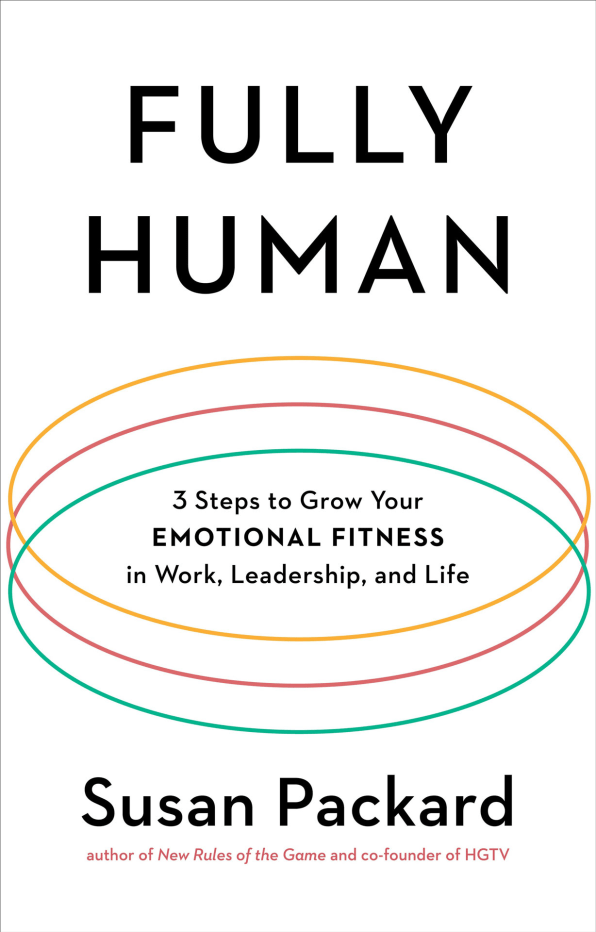
Fully Human: 3 Steps to Grow Your Emotional Fitness in Work, Leadership, and Life by Susan Packard

Some people might see this choice as limiting, but for me, it opened up other opportunities and interests that were more important to explore. By staying on as the COO, I was able to grow a variety of business areas at Scripps Networks Interactive (the home of HGTV) and had the time and bandwidth to train and prep for the New York City Marathon.

To determine whether or not you’re on the right path, you need to figure out the following: where your natural strengths lie, what interests and stimulates you, and what kind of company culture allows you to thrive. It’s also essential for you to realize that you need to make decisions that will enable you to live your ideal life, not someone else’s version of it.

Throughout our working lives, we’ll come to many crossroads, as our professional identities unfold and unpredictable opportunities arise. It takes courage and integrity to absorb the big picture when it comes to job fit. Emotionally fit people see job fit in its broadest sense because it means taking ownership and accountability over choosing wisely, and taking into account where your heart is guiding you. This means going beyond considering what you can do, to what you love to do, so that “can do” doesn’t become a life sentence.


This article is adapted from Fully Human: 3 Steps To Grow Your Emotional Fitness In Work, Leadership, and Life. It is reprinted with permission from TarcherPerigee, an imprint of Penguin Publishing Group, a division of Penguin Random House LLC. Copyright © 2019 by Susan Packard.


FastCompany.com | February 6, 2019 | BY SUSAN PACKARD 

4 MINUTE READ

#CareerAdvice : #YourCareer – Take these Steps to Grow your Career in the New Year! Great Three(3) Min Read!

Knowing the right company that fits your culture, passion, and industry is the first step. But once you find the right company, how do you work your way up?

Here are 5 tips on how to cultivate your career.

BUILD A SOLID NETWORK

Relationships are an essential part of your personal and professional life. Whether it’s with your current or former employer, building a solid foundation of professional connections is critical. Clients, peers, and subordinates, in addition to your management team, can all validate the quality of your work. Thoughtfully build your network and continue to learn from every level.

Make LinkedIn work for you. If you haven’t already, create your LinkedIn profile, and add your skills and contributions to beef up your profile. Endorse your colleagues and request their endorsement. A nod from your peers, or a positive review from a previous client, speaks volumes on LinkedIn.

SET GOALS

Be proactive. Setting goals for your professional career are critical. Start small and add new goals each year.

Find your passion and connect with others that share your ambitions. By sharing with others, you’ll have an even greater network to leverage expertise and resources.

Like this Article ?  Share It !    You now can easily enjoy/follow/share Today our Award Winning Articles/Blogs with Now Over 2.5 Million Growing  Participates Worldwide in our various Social Media formats below:

FSC LinkedIn Network:   www.linkedin.com/in/fscnetwork

Facebook:  http://www.facebook.com/pages/First-Sun-Consulting-LLC-Outplacement-Services/213542315355343?sk=wall

Google+:  https://plus.google.com/115673713231115398101/posts?hl=en

Twitter: Follow us @ firstsunllc

Question: Want the ‘the best/current articles/blogs on the web’ on Job Search, Resume, Advancing/Changing your Career, or simply Managing People?

Answer: Simply go to our FSC Career Blog below & type(#career, #leadership, #life) in Blog Search:  https://www.firstsun.com/fsc-career-blog/

What Skill Sets do You have to be ‘Sharpened’ ?

Continue of article:

STEP OUTSIDE YOUR COMFORT ZONE

Look for opportunities to try something new and step outside your comfort zone. Are there any classes or trainings available at your company? Does the company offer tuition reimbursements for a class you’re interested in taking? If you don’t know, ask!

When you have a passion for growing your career, take a shot on a “stretch assignment.” Whether it’s contributing to an additional project, or taking on a whole new role, this stretch assignment will add to your skillset, give you exposure to other people in your company, and allow you to gain insight into the expectations and daily work associated with a different position.

SEEK OUT A COACH OR MENTOR

coach or mentor can be a person that’s in, or outside, of your organization. They should be a trusted advisor that can help guide you to the next stage of your career. Identify who that person is in your life and see if they’re interested in committing to your growth. You can have more than one. Keep in mind: It should be someone that can help you develop your personal and professional skills. Consider a person that is in a current role that you’d aspire to, or a person that can support your professional development, in preparation for the next step.

Be receptive to feedback. Look at any constructive criticism as positive. Remember–your coach or mentor has your best interests at heart. Be open-minded when listening to their suggestions; this can have a lasting, positive effect on your relationship with them and help you identify talents in yourself that you may not have previously realized.

TAKE THE LEAP

Are you ready to grow? Sometimes you need to take the leap and find out. Before you do, make sure you can land on your feet. Have you excelled in your current role? Have you grown to your full potential? If you answered yes, it’s time to move on to the next stage of your career. Before presenting your interest to your manager, prepare to reference any positive comments from others about your performance to solidify your next move. Include any past performance evaluations to add credibility.

If you’ve truly mastered your current role, then moving into a larger or a new position will seem like an obvious next step. In speaking with your manager about your next move, ask what tools you’ll need to succeed.

When looking at the big picture, plan effectively, build relationships, and execute a growth strategy with guidance from your manager and mentor to progress to the next stage in your career. By executing strategic goals, a new path to success will unfold. By implementing these steps, you can significantly impact your growth opportunity and challenge yourself to reach the next stage in a successful career.


FastCompany.com | December 31, 2018 | BY YOLANDA WALKER—GLASSDOOR3 MINUTE READ

#CareerAdvice : 3 Things you Need to Do to Be Taken Seriously at #Work … Whether in a #NewJob or just Starting Out with a New Client, If you Feel Like No One is Taking You Seriously, You Should Check that you’re Getting These Three Things Right.

I have three kids who are all in their twenties. I remember fondly when they were in their teens, though, and each of them at different points would say, “Why don’t you treat me like an adult?” My response to them was that no adult ever needs to be asked to be treated like an adult. They command that respect by virtue of who they are

The same thing holds true for being taken seriously at work.

Early in your career, early in your tenure with a new organization, or early in your interactions with a new customer or client, you may feel like you have difficulty being taken seriously. Start by looking a bit at your own behavior to figure out whether you are doing anything that prevents people from engaging with your contributions the way you want.

ARE YOU LISTENING?

No matter how good your ideas are, nobody will pay attention to them if you cannot present them in a way that is on-point to the people you talk to. That means you need to provide a bridge between the knowledge and concerns of others and the idea you are presenting.

The only way to determine what other people know and what they care about is to listen to them. Ask a lot of questions. Listen to the language they use to discuss key issues. Listen for the pauses in what they say to get a sense of whether there are things people are uncomfortable discussing.

Then, mirror the language other people are using as you introduce your ideas. Go out of your way to help people see how the proposals you want to make connect with what they care about. And if you can’t find any bridge between what other people care about and your ideas, then you may need to wait for another time to lay out your plans.

Like this Article ?  ShareIt !You now can easily enjoy/follow/share Today our Award Winning Articles/Blogs with Now Over 2.5Million Growing  Participates Worldwide in our various Social Media formats below:

FSC LinkedIn Network:   www.linkedin.com/in/fscnetwork

Facebook:  http://www.facebook.com/pages/First-Sun-Consulting-LLC-Outplacement-Services/213542315355343?sk=wall

Google+:  https://plus.google.com/115673713231115398101/posts?hl=en

Twitter: Follow us@ firstsunllc

Question: Wantthe ‘the best/current articles/blogs on the web’ on JobSearch, Resume, Advancing/Changing your Career, or simply Managing People?

Answer: Simply goto our FSC Career Blog below & type(#career, #leadership, #life) in BlogSearch:  https://www.firstsun.com/fsc-career-blog/ 

What Skill Sets doYou have to be ‘Sharpened’ ?

Continue of article:

ARE YOU TAKING COMPLEXITY SERIOUSLY?

Another problem that can arise early on is that you may treat the problems people are grappling with too abstractly. When you first enter an organization or an engagement with a client, it is often easy to see things that are going wrong. It may seem obvious initially what the problems are and how to fix them.

Often, though, the systems that an organization has put in place reflect the need to make trade-offs among competing goals. These compromises may not allow the organization to do something optimally, but they may reflect a very good balance that resolves a number of conflicts.

Before throwing out suggestions for how to improve something, it is important to understand why things are done the way they are. If you make suggestions that don’t take the complexity of an issue into consideration, other people will assume you don’t really understand the problem (which is true). As a result, they will start to discount other things you say as well.

When you feel you have a good grasp on a situation, you can present your suggestions in a way that acknowledges the trade-offs that have to be made. Present your ideas in a way that helps people to see how they resolve conflicts in a different way that you believe to be better.

DO YOU FOLLOW THROUGH?

The best way to be taken seriously in any organization is to develop a reputation as someone who gets things done. That means that when you talk with people about plans for the future, you should take the lead on ensuring that the ideas move forward. Follow up with people to make sure that everyone knows their responsibilities. If you promised to do something by a particular time, then do it.

You don’t really need to broadcast your accomplishments. If you do what you say you are going to do, it will get noticed. Then, when you say something, people listen. They know that your words are followed by actions.

That also gains you allies around your organization. Much of what gets you taken seriously involves conversations that other people have outside of your presence in which you get mentioned. That reputation creates an orientation in other people where they already intend to take you seriously from the moment you engage with them.

It takes time to develop that reputation. You have to keep doing your work and doing it well. When you do that, though, you will find that it has been a while since you were concerned that people weren’t taking you seriously.

ABOUT THE AUTHOR

Art Markman, PhD is a professor of Psychology and Marketing at the University of Texas at Austin and Founding Director of the Program in the Human Dimensions of Organizations. Art is the author of Smart Thinking and Habits of LeadershipSmart Change, and most recently, Brain Briefs, co-authored with his “Two Guys on Your Head” co-host Bob Duke, which focuses on how you can use the science of motivation to change your behavior at work and at home.

 More

You Might Also Like:

FastCompany.com | November 27, 2018 | BY ART MARKMAN 3 MINUTE READ

Your #Career : How to Request a Lateral Transfer without Offending your #Boss …When you’ve Been at a Company for a While, you Might want to Switch Teams to Grow your Career. Here’s How to Have that Delicate Conversation with your Boss.

At some point during your tenure at a given company, you’re apt to reach a point where you’re tired of doing the same thing day in, day out. And if a promotion isn’t possible, your next best bet may be to switch over to a different team.

A lateral move can help your career in a number of ways. There’s just one challenge: How do you ask for that transfer without offending your current boss in the process? If you’re looking to jump from one team to another, here’s how to approach that delicate but necessary conversation.

1. SCHEDULE A SIT-DOWN AT THE RIGHT TIME

Telling your manager that you no longer wish to work for him or her can come as a blow, so don’t have that discussion on the fly. Rather, schedule a face-to-face meeting where you can share your thoughts and hear your boss’s thoughts at length. That said, choose a time when your boss can really focus and listen, which means don’t have that meeting first thing on a Monday or at 5 p.m. on a Friday. Also, don’t schedule that conversation the same week a major project your boss is overseeing is due. The last thing you want is for your manager to approach that sit-down in an already frazzled frame of mind.


Related: Don’t make a big career move without checking these 3 boxes first 


Like this Article ?  Share It !    You now can easily enjoy/follow/share Today our Award Winning Articles/Blogs with Now Over 2.5 Million Growing  Participates Worldwide in our various Social Media formats below:

FSC LinkedIn Network:   www.linkedin.com/in/fscnetwork

Facebook:  http://www.facebook.com/pages/First-Sun-Consulting-LLC-Outplacement-Services/213542315355343?sk=wall

Google+:  https://plus.google.com/115673713231115398101/posts?hl=en

Twitter: Follow us @ firstsunllc

Question: Want the ‘the best/current articles/blogs on the web’ on Job Search, Resume, Advancing/Changing your Career, or simply Managing People?

Answer: Simply go to our FSC Career Blog below & type(#career, #leadership, #life) in Blog Search:  https://www.firstsun.com/fsc-career-blog/

What Skill Sets do You have to be ‘Sharpened’ ?

Continue of article:

2. MAKE IT CLEAR THAT IT’S NOT PERSONAL

Moving from one team to another isn’t necessarily a reflection on your boss’s management style–so make that clear. Tell your boss that your career has taken a shift, but explain how you got there so that your manager doesn’t think you’re making excuses. For example, if your boss runs a marketing team, but you’ve been growing increasingly interested in the analytical end of things, it makes sense that you’d want to move over to the data team. In that case, explain how reviewing that team’s weekly reports piqued your interest and drove you toward that decision.

3. THANK YOUR BOSS FOR A GREAT EXPERIENCE

Your manager might feel a little hurt that you’re looking to work for somebody else, even if you make it clear that it’s the nature of your daily tasks that’s fueling that move. Therefore, it never hurts to express your gratitude to your boss for all the things you’ve learned under his or her watch. You can also affirm your desire to continue working together in some capacity–perhaps as a cross-collaboration with your new team.


Related: Ask yourself these questions at every stage of your career 


4. OFFER TO HELP TRAIN A REPLACEMENT

Moving to another team doesn’t just mean potentially offending your current boss; it also means leaving him or her in the stressful position of having to find someone to replace you. So, make your manager’s life as easy as possible in that regard by offering to train the person who takes over your role, even if it means working evenings or weekends to keep up with your new duties all the while.

Your manager will no doubt appreciate that courtesy, and if your new boss is a good one, he or she will most likely agree to share you during that transition period. There’s nothing wrong with switching teams within your company. Just do your best to be mindful of your boss’s feelings in the process. The last thing you want is to spoil an otherwise solid relationship when you have the ability to make a clean break.


FastCompany.com | May 30, 2018 | BY MAURIE BACKMAN—THE MOTLEY FOOL 3 MINUTE READ

Your #Career : These Are The Smartest Decisions I’ve Made For My Career…From #SwitchingCareers to Finding Ways to Add Value to their #Employers , Three Writers from The Motley Fool Shared some of the Biggest Lessons they’ve Learned During their Working Lives.

A surprisingly high number of Americans are unhappy with their work; some estimates are that more than half of us don’t like our jobs. And while there are always things we have no control over, none of us should feel completely powerless. There are almost certainly things you can do to put yourself in a better situation.

Not sure where to start? Three Motley Fool writers who have lived it offer their experiences below, describing what they say was the best thing they each did for their career, ranging from the bold (completely changing jobs and industries) to the nuanced (taking action to be a more valuable employee). Keep reading below for valuable insight that could help you figure out how to improve your career.


Related:I Changed Careers Repeatedly In My 20s–Here’s What It Taught Me 


Like this Article ?  Share It !    You now can easily enjoy/follow/share Today our Award Winning Articles/Blogs with Now Over 2.5 Million Growing  Participates Worldwide in our various Social Media formats below:

FSC LinkedIn Network:   www.linkedin.com/in/fscnetwork

Facebook:  http://www.facebook.com/pages/First-Sun-Consulting-LLC-Outplacement-Services/213542315355343?sk=wall

Google+:  https://plus.google.com/115673713231115398101/posts?hl=en

Twitter: Follow us @ firstsunllc

Question: Want the ‘the best/current articles/blogs on the web’ on Job Search, Resume, Advancing/Changing your Career, or simply Managing People?

Answer: Simply go to our FSC Career Blog below & type(#career, #leadership, #life) in Blog Search:  https://www.firstsun.com/fsc-career-blog/

What Skill Sets do You have to be ‘Sharpened’ ?

Continue of article:

I TOOK A BIG CHANCE

In the early years of my working life, my goal was to be a professor or teacher. I started a PhD program, and after a year decided that a PhD and college teaching weren’t for me. I switched gears and became a high school teacher instead. I might have stuck with that, but budget cuts forced me to look for other work, and I ended up getting an MBA, with the goal of switching into a lucrative and satisfying career.

The MBA led to better-paying work, but it wasn’t terribly satisfying. I was soon presented with an intriguing opportunity, though–working as a writer and editor for a very new and small company called The Motley Fool. The prospect of it was exciting, as I’d always liked writing, and the fare I would produce for the Fool would even be educational, scratching my teaching itch. One big downside, however, was the pay–along with the fact that it was a small startup and wouldn’t necessarily be around in five or 10 years.

I took the chance and have not regretted it. Yes, I started out earning much less than I had been, but the company grew and grew, and within a number of years, I was earning more than many writers make. Not every job seeker can afford to take a big pay cut, but if you’re presented with an exciting opportunitythat has one or two drawbacks, give it some serious consideration. If I’d just stuck with typical MBA-type jobs, I don’t think I’d be enjoying my career as much.Selena Maranjian


Related:My Family Doesn’t Approve Of My Career: Now What? 


I CHANGED MY CAREER COMPLETELY

I landed a job at a hedge fund straight out of college, and while the pay was great, the environment was not. I hated being surrounded by greedy traders who were only interested in making money, and toxic coworkers who were constantly rude to me. But I stayed on for quite some time, not just for the money, but because it was something impressive to put on my resume.

Eventually, however, my unhappiness at work began to impact other aspects of my life, and so with my then-boyfriend/now-husband’s encouragement, I gave my two weeks’ notice to pursue a writing career. It was a risky move, to say the least. Writing isn’t exactly known to be a lucrative profession, and giving up a steady paycheck and health benefits for the unknowns of the gig economy was easier said than done. But once I started writing professionally, I became more content, even though it did mean a pay cut and some lifestyle changes as a result.

So there you have it: The best thing I ever did for my career was to change it completely. I now write full-time, and I’ve never been happier.Maurie Backman

I MADE MYSELF MORE VALUABLE

In a prior career, I struggled for some time with the fact that I wasn’t particularly happy with my job. And I wasn’t unique: As Maurie wrote last year, more than half of us are dissatisfied with our work. And this dissatisfaction can be due to a litany of things, including pay, benefits, paid time off, opportunity–or lack thereof–for advancement, and satisfaction with the work itself.

For me, it was primarily a lack of satisfaction with the work, and I was letting it affect my job performance. That was further limiting my ability to improve my situation. I wasn’t exactly putting myself at risk of getting fired, but I wasn’t doing myself any favors, either–especially if I wanted to get out of that job and into something that was more rewarding.

So I put on my big-boy pants and started acting like a professional. This included sitting down and making a list of the pros and cons of my job, as well as what steps I could take to improve my situation. I realized that if I didn’t commit myself to being a better employee and partner, I was giving my employer little reason to consider me for career advancement. I also realized that I needed to gain certain skills if I wanted to move up.

By committing myself to the job and investing in my skills, I improved my work performance and earned a promotion into a role that was more fulfilling (and also financially rewarding). While I would eventually leave that industry to pursue a writing career (following Maurie’s suggestion above), my decision and actions to improve my skills and performance paid off in spades for years.Jason Hall

FastCompany.com | April 25, 2018 | BY THE MOTLEY FOOL 4 MINUTE READ