• About WordPress
    • WordPress.org
    • Documentation
    • Learn WordPress
    • Support
    • Feedback
  • Log In
  • LinkedIn
  • Facebook
  • X
p: 866.311.2514
First Sun Consulting, LLC | Outplacement Services and Career Transition Firm
  • Home
  • About
  • Services
    • Outplacement Services
    • Executive Coaching
    • Career Transition
  • Locations
  • Blog
    • Best of FSC Career Blog
    • FSC Career Blog
  • Members
    • FSC Career Modules
    • FSC LinkedIn Network
    • New! FSC AI Tools – Latest Technology for Resumes & Search
  • Our Clients
  • Contact Us
  • Menu Menu

Archive for category: First Sun Blog

You are here: Home1 / FSC Career Blog – Voted ‘Most Read’ by LinkedIn.2 / First Sun Blog

#Leadership : 20 Habits of Unsuccessful and Ineffective Leaders (Infographic)…What Not to Do If you Want to Succeed in Leadership

October 5, 2016/in First Sun Blog/by First Sun Team

A few weeks ago I wrote an article which focused on the bad habits of leaders which should be avoided, as I thought this was just as important as modeling ourselves on the best. Due to the popularity of this article I produced an Infographic, using Visme, that you can download and share.

Free- Stones stacked on each other

The article was based on my 25 years of experience in leaderships, highlighting some of the habits of unsuccessful and ineffectual leaders that I have seen, and in some cases, their justification for having them.

These are habits best avoided, if possible!

1. Believe They have All The Answers

They know that the reason that they have been put in charge is that they are smarter and better than everyone else. So when it comes to deciding strategy, solving problems, or resolving issues, there is no need, or point in involving anyone else.

2. React, Don’t Respond

Driven by their emotions, they react quickly to situations without worrying about factsor the repercussions of their actions.

They can always show good emotional intelligence by apologizing later.

3. Take Big Risks, The Bigger The Better

They like to gamble and take big risks. Believing in the adage “Nothing Ventured Nothing Gained” and that Smart Risk taking is for wimps.

When I questioned a decision that one boss was taking his response was, “that’s not your concern I get paid big bucks to take the big risks and make the tough calls.”

Personally, I though he got paid the big bucks to take the right risks and to be successful, but what did I know.


Like this Article ?  Share It !    You now can easily enjoy/follow/share Today our Award Winning Articles/Blogs with Now Over 2.5 Million Growing  Participates Worldwide in our various Social Media formats below:

FSC LinkedIn Network: (Over 15K+ Members & Growing !)   www.linkedin.com/in/frankfsc/en

Facebook: (over 12K)   http://www.facebook.com/pages/First-Sun-Consulting-LLC-Outplacement-Services/213542315355343?sk=wall

  • Google+: (over 800K)https://plus.google.com/115673713231115398101/posts?hl=en
  • Twitter: Follow us @ firstsunllc

educate/collaborate/network….Look forward to your Participation !

Continue of article:

4. Believe That Talking About It and Doing It Are The Same Thing

I always remember the first boss I worked for, when the CEO asked him how it was going, he said: “It’s going great, we have been discussing the problem for two days now.” The only problem was that was two days that the business couldn’t operate, and we were no closer to finding a solution.

5. Focus On Blame Not Solutions

It’s better to know who’s fault it is so that we can fire them and make sure this doesn’t happen again.

6. Believe Their Own PR

There is a big difference between confidence and arrogance; the former helps build trust in the leader, the latter destroys it. As soon as you start to believe your own PR, then you are leaning more towards arrogance and starting down a path that is going to end in tears.

7. Don’t Waste Valuable Time on Planning And Preparation

Sometimes you just have to dive and get it done. Don’t worry about what’s involved, or whether you’re focused on the symptom or root cause, just do it. My favorite comment was “we can’t  afford to spend time and money on planning; we just need to get started”.

Which was interesting because we found the time and money to do it again correctly, after that first attempt failed badly.

8. Hire People Beneath Them

As a leader, it is critical that you are the most skillful and knowledgeable member of the team, that way everyone can focus on their job rather than working out how they could replace you.

I worked at one company where the boss told me that he liked to recruit from the bottom quartile because it kept the costs down. He then added, “the only problem with that was the results sucked.”

9. Focus Instant success

It’s all about results, and if we find that they are not coming, then we need to move quickly on to another topic.

They believe that a lot of short-term success will lead to long-terms success.

10. Focus On The Big Picture, Not The Details

Don’t worry about the details, focus on the big picture, as that will keep you motivated. We all know the devil is in the details, but that could lead to concerns, a lack of belief and even worse de-motivation.

11. Focus on Weaknesses Not Strengths

As leaders we cannot have or show any weaknesses, so we need to work on eliminating them, or failing that, hiding them.

12. Confuse Stubbornness With Determination

“Winners never quit, and quitters never win” is a great approach to achieving results.

However you’re bordering on stubbornness if your approach is failing but you refuse to change it.

13. Don’t Play Well With Others

It’s hard to play well with others when you adapt a command and control approach to leadership. People like to be led not managed.

14. Think Praise is For Wimps

It’s ok to praise people once we have achieved success, but praising people just to keep them happy is not a good approach to building a strong, resilient team. We’ve got to be mean to keep them keen, and praising people too often makes a team soft.

15. Take Don’t Give

The more we take, the more we have, that’s how winners are made.

It’s a dog eat dog world, and we have to fight for our share.

16. Quick to Criticize

If you want people to improve, you need to point out their mistakes quickly and clearly. It’s also best to do this publicly so that others can learn too.

17. Easily Distracted

Never content with their current goals they are constantly looking for the next big thing that the get involved in. I think the reason for this is it’s much easier to start something new than to finish something important.

18. Make Excuses

There are a million and one reasons why things don’t work out as planned, so it’s not always our fault, and we need to remember that so as we don’t become too de-motivated. One boss told me never ever accept responsibility it could be career limiting, always have someone ready to blame or a good excuse handy.

19. Love To Micro Manage

It’s hard to trust everyone, so by micro-managing your staff, you can keep a close eye on things, and look to offer advice or step in if things start to go wrong.

20. Practice Inconsistently

It’s great to be inconsistent because it keeps your team guessing, which in turn keeps them on their toes. Predictability, on the other hand, can lead to complacency.


Inc.com  | October 5, 2016 |
BY GORDON TREDGOLD

Founder and CEO, Leadership Principles@gordontredgold


https://www.firstsun.com/wp-content/uploads/2015/11/Free-Stones-stacked-on-each-other.jpg 1100 1650 First Sun Team https://www.firstsun.com/wp-content/uploads/2018/05/logo-min-300x123.jpg First Sun Team2016-10-05 16:32:032020-09-30 20:50:33#Leadership : 20 Habits of Unsuccessful and Ineffective Leaders (Infographic)…What Not to Do If you Want to Succeed in Leadership

#Leadership : Promoted From Coworker To Manager? 7 Tips For A Smooth Transition…Remember, your Job as the New Manager Shouldn’t Be about Trying to be Popular – it’s About Leading Others to Achieve Results.

October 4, 2016/in First Sun Blog/by First Sun Team

One of the more difficult career situations I’ve coached people through – and been through myself – is being promoted from within a department to become the manager of that group.

Leader3

As one client found out, going from a peer who previously talked “trash” about the manager with other colleagues to the person others talked about can make it a stressful transition.

“Madison” realized that her previous personal relationships with coworkers had to be moved to a different level, because she was no longer a peer – she was the person who now assigned the work, analyzed productivity and held performance discussions.


Like this Article ?  Share It !    You now can easily enjoy/follow/share Today our Award Winning Articles/Blogs with Now Over 2.5 Million Growing  Participates Worldwide in our various Social Media formats below:

FSC LinkedIn Network: (Over 15K+ Members & Growing !)   www.linkedin.com/in/frankfsc/en

Facebook: (over 12K)   http://www.facebook.com/pages/First-Sun-Consulting-LLC-Outplacement-Services/213542315355343?sk=wall

  • Google+: (over 800K)https://plus.google.com/115673713231115398101/posts?hl=en
  • Twitter: Follow us @ firstsunllc

educate/collaborate/network….Look forward to your Participation !

Continue of article:

Making the move from coworker to department manager was a tricky transition because, as the new manager, Madison was responsible for the productivity and results of her department. Oftentimes, former coworkers, either because of jealousy or out of habit, didn’t want to treat her as the boss – they wanted to continue treating her as one of the peer group.

Here are seven tips for making the transition easier:

• See your HR business partner to find out what training and support is available as you take on your new role.

• Sit down one-on-one with each person in the department to discuss their feelings about your transition to the manager of the team. Talk about the expectations you have of each other and get potential issues out on the table, so you can address them.

• Remain professional at all times. And treat each and every employee fairly and with respect, by listening to what each person has to say (listen more, speak less).

• Eliminate your water-cooler or break-room gossip and venting sessions with employees.

• Don’t allow previous work and/or friendships with your former peers to influence your new managerial responsibilities. You must now learn to remain unbiased, no matter what situation arises.

• Ensure that everyone on the team understands your new role as their manager and the responsibilities that are expected of you by senior management.

• Work out a game plan for how you and your team can work together to achieve the goals and objectives of the group. (Be sure to clearly and concisely communicate those goals and objectives).

Over time, as the team observed my client’s leadership skills and professionalism, they stopped seeing Madison as their peer and came to accept her as their manager.

Remember, your job as the new manager shouldn’t be about trying to be popular – it’s about leading others to achieve results. You may not win over everyone in the group, especially if one or two others also applied for the position you ultimately received.

No matter what happens, keep the focus on the work to be done, give it your best effort every day, treat everyone fairly and with compassion, and you will earn their respect over time.

Lisa Quast is the author of Secrets of a Hiring Manager Turned Career Coach: A Foolproof Guide to Getting the Job You Want. Every Time.

Forbes.com | October 3, 2016 | Lisa Quast

https://www.firstsun.com/wp-content/uploads/2015/08/Leader3.jpg 270 575 First Sun Team https://www.firstsun.com/wp-content/uploads/2018/05/logo-min-300x123.jpg First Sun Team2016-10-04 11:45:572020-09-30 20:50:34#Leadership : Promoted From Coworker To Manager? 7 Tips For A Smooth Transition…Remember, your Job as the New Manager Shouldn’t Be about Trying to be Popular – it’s About Leading Others to Achieve Results.

Your #Career : I’ve Worked in HR for 15 Years — Here Are the 4 Things Hiring Managers Don’t Want You to Know…Think Hiring Managers aren’t Trolling your Social Media Accounts? Or that Having Children Won’t Impact your Odds of Landing a Great Gig? Think Again.

October 1, 2016/in First Sun Blog/by First Sun Team

An HR veteran with over 15 years of experience shares her insider’s take on what really goes down during the hiring process.  Before launching my own consulting business, I earned my HR stripes working for everyone from big-name financial service companies to an equally big electronics and entertainment company.

hr-people

Think you know what HR reps are looking for? Think again.

So I know firsthand the techniques that are used to vet potential employees — and it’s not all as compliant as you’d expect.

If there’s one thing my time in the trenches has taught me it’s that HR reps are willing to do a lot to pinpoint the right employee.

Think hiring managers aren’t trolling your social media accounts? Or that having children won’t impact your odds of landing a great gig?

Think again.

Take it from me: These are some lesser-known, semi-sly tricks that hiring managers resort to—regularly.

1. We dig (and I mean really dig) into your background

It goes without saying that hiring managers are going to contact your references to check whether those accolades on your résumé are legit.

But prehiring reconnaissance goes a lot further than that.

The HR community is small, and while it isn’t exactly kosher, many of us will call someone we know at a company where a candidate has worked previously.

The goal is to get “off-the-record” insights about the person’s work habits, personality, aptitude and more. We’re getting the inside scoop — from someone who isn’t on the candidate’s referral list.

Don’t believe me?

In the last month alone, I’ve received two calls from HR reps asking whether I’d vouch for former colleagues.

Another way managers dig around is through social media — especially LinkedIn.

After scanning a person’s LinkedIn network, I’ve become skeptical about candidates who don’t have enough industry connections. It makes me question if they’re overmarketing themselves.

Of course, being mindful of what you post on all of your social media channels is a no-brainer. I’ve even heard of managers who snoop on their own employees’ accounts to see if they’ve been talking poorly about the company.

Related: LinkedIn Super Secrets: 9 Tips for Job Seekers, Brand Builders and Hiring Managers

parentingChildren are a factor. Getty Images/Fiona Goodall


Like this Article ?  Share It !    You now can easily enjoy/follow/share Today our Award Winning Articles/Blogs with Now Over 2.5 Million Growing  Participates Worldwide in our various Social Media formats below:

FSC LinkedIn Network: (Over 15K+ Members & Growing !)   www.linkedin.com/in/frankfsc/en

Facebook: (over 12K)   http://www.facebook.com/pages/First-Sun-Consulting-LLC-Outplacement-Services/213542315355343?sk=wall

  • Google+: (over 800K)https://plus.google.com/115673713231115398101/posts?hl=en
  • Twitter: Follow us @ firstsunllc

educate/collaborate/network….Look forward to your Participation !

Continue of article:

2. Have kids? Why you might not have the job …

Although it’s illegal for an employer to take someone’s family into account when considering them for a position, that doesn’t mean it doesn’t happen.

Personally, I don’t believe this is usually malicious or deliberate. But a candidate can’t control what might be lurking in a hiring manager’s subconscious. (“Will this person really get the job done if they’ve got little kids waiting at home?”)

And it’s not just HR managers who fall prey to this kind of second-guessing.

I once worked at a financial organization where the internal sales team was mostly comprised of guys fresh out of college. When they interviewed new employees, I found out many of them used the opportunity to suss out if a candidate had kids by posing questions like, “What do you like to do on the weekends?” It was a tactic to see if the person would bring up little league or other kid-centric activities.

Knowing that new employees would be required to work long hours, these guys assumed that children would make these candidates less committed—and less likely to party after work and wholeheartedly embrace the company culture.

Certain hiring managers (especially those who don’t have a legal background) really want to make sure that the person they hire is a good culture fit — someone who’ll make a good employee and buddy.

But this impulse can end up alienating qualified candidates simply because they don’t gel on a personal level. In the case of that financial company, it created a bias against women — and we, in HR, brought the practice to a screeching halt.

And while we’re on the topic of bias, I hate to say it, but if a woman is interviewing while pregnant, she’s probably better off keeping that to herself until she knows she’s got the job.

It’s especially relevant at the executive level, when the stakes are typically higher. While a manager would never come out and say it, my experience leads me to believe that mothers, in general, do get passed over more than childless applicants.

Related: How I Made It In a ‘Man’s’ Field: 5 High-Powered Women Tell All

3. The offer you get often has plenty of wiggle room

During the hiring process, salary negotiations are par for the course. But most managers can offer you way more than they let on.

That said, they probably can’t budge too much when it comes to base salary—there’s typically a range in mind before the interview ever takes place. But they can throw in different types of financial extras.

Sign-on bonuses, for starters, are attractive to HR managers because they don’t reoccur or show up in the employee’s salary line. And many hiring managers are willing and able to throw in a onetime cash-out if that’s what it takes to seal the deal.

The same goes for relocation packages. While some companies have rigid policies in place when it comes to relocating new hires, it’s still very much a gray area that many HR managers have no problem negotiating.

The catch, not surprisingly, is that interviewers aren’t exactly eager to offer up such perks. It’s up to you to ask.

Bringing up a sign-on bonus or relocation package will likely get you more traction than if you focus on the salary alone. Even so, that doesn’t mean negotiating the base salary isn’t still worth it—but you’ll need to convince the HR manager why you should be at the higher end of their preestablished range.

I’ve even seen people successfully negotiate to have a new company match the last job’s total compensation package.

Related: Beyond Your Paycheck: 5 Things to Negotiate at Work

handshakeWPA Pool/Getty Images

4. Mutual exits are more common than you think

If an employee quits — as opposed to getting laid off — severance and unemployment benefits likely go out the window. So from a financial standpoint, it appears to be in a company’s best interest to have a less-than-stellar employee quit on their own.

Would a manager ever deliberately try to get a disliked employee to voluntarily hit the road? I’ve heard it happens — but it’s more likely to come from a direct manager, and the HR person may find out about it after the fact, when the manager shares that they “rode a guy hard” until he quit.

I think sometimes these managers struggle with giving feedback and coaching employees, or run into situations where they feel backed up against a wall. The end result is that they run out of patience—and make crummy management decisions.

A few of my current clients have experienced this kind of passive-aggressive approach, and I encouraged them to negotiate a happier ending by way of a desirable exit package.

Essentially, the company allows the employee to leave on certain mutually-agreed-upon terms. In some cases, it may require the employee to stay until a certain end date, finish a particular project, or agree not to take talent from the company for a set amount of time. In return, the employee receives a specific amount of money, known as a retention payment.

The deal, known as a mutual separation, isn’t considered severance. It’s also something that happens all of the time behind closed doors.

It’s yet another example of how established employees and new hires alike can even the playing field — so long as they’re informed.

Read the original article on LearnVest. Copyright 2016. Follow LearnVest on Twitter.

Businessinsider.com | September 27, 2016 | Christine DiDonato, as told to Marianne Hayes, LearnVest

https://www.firstsun.com/wp-content/uploads/2018/05/logo-min-300x123.jpg 0 0 First Sun Team https://www.firstsun.com/wp-content/uploads/2018/05/logo-min-300x123.jpg First Sun Team2016-10-01 15:52:472020-09-30 20:50:34Your #Career : I’ve Worked in HR for 15 Years — Here Are the 4 Things Hiring Managers Don’t Want You to Know…Think Hiring Managers aren’t Trolling your Social Media Accounts? Or that Having Children Won’t Impact your Odds of Landing a Great Gig? Think Again.

Your #Career : Take These Three Steps At The First Sign That Layoffs Are Coming…A Layoff isn’t Necessarily a Catastrophe, Especially if you Can Snap into Action at the First Signs that Your Job May Be in Trouble.

September 30, 2016/in First Sun Blog/by First Sun Team
When someone from HR tapped me on the shoulder and invited me to join her for a private conversation, I knew what was coming. By the time I had my, “We think you’re great, but you need to exit the premises right now,” conversation, several former colleagues had already had the talk. In fact, two rounds of layoffs had preceded mine within the past 18 months or so.
Laid off Worker with Box

The first one didn’t affect my team directly. That meant it was relatively easy to ignore it and still spend the majority of my allotted stress-about-my-career-time reading studies stating that sitting at a desk all day was shaving years off my life.

Spending a leisurely Saturday afternoon bringing [fusion_builder_container hundred_percent=”yes” overflow=”visible”][fusion_builder_row][fusion_builder_column type=”1_1″ background_position=”left top” background_color=”” border_size=”” border_color=”” border_style=”solid” spacing=”yes” background_image=”” background_repeat=”no-repeat” padding=”” margin_top=”0px” margin_bottom=”0px” class=”” id=”” animation_type=”” animation_speed=”0.3″ animation_direction=”left” hide_on_mobile=”no” center_content=”no” min_height=”none”][your resume] up to speed is far less stressful than doing it in a hurry.

The second round hit closer to home. Suddenly my solid job didn’t seem so solid. I responded by firing off a few applications for positions that looked okay, did a few interviews that went okay, and before long, settled back into the same old routine of doing my job.

This was a mistake. And I don’t mean I should’ve launched a massive job search at this point, because I truly believe getting laid off led me to make career choices that I never would’ve made otherwise. (And I’m certainly not the only person who feels that way.) But I do know that taking a few steps during this in-between time would’ve made that first unemployed week far less frightening.

So if you’re currently employed at an organization that feels a little shakier than you’d like it to feel (for the record, I like my companies to feel 0% shaky), I’d suggest taking these three simple steps.

1. START WARMING UP THE OLD NETWORK

You know what’s really un-fun after losing your job (besides having to think about what sad half-eaten stale snacks the person packing up your desk is finding in your drawer)? Sending awkward, “I just got laid off, know any openings?” emails to people you haven’t spoken to in a while.

You know what’s less awkward? Sending notes to those same people sans the scent of desperation.

For example, I wish I’d sent a message like this to a few old colleagues after the first round of layoffs at my company:

Hi,

How are you doing? That campaign you shared on LinkedIn last week looked really awesome. But you always were the graphics wizard at the office. I’m starting to think about making a job move and I’d love to grab a drink and talk about your experience working at Company X.

I’m free most nights after 7 p.m., let me know if any work for you in the next few weeks or two.

Looking forward to catching up,
Jenni

Meeting for coffees while you’re still employed doesn’t just make it less awkward to send out follow-up emails if you do actually lose your job. But it also means your conversation won’t just be a pity party full of inspirational quotes that leave you both repeating tired mantras about silver linings and turning lemons into lemonade. Instead, you’ll remind people why you’re so awesome. That way, if the worst happens, they’ll be far more eager to help you out in the way of leads and references.


Like this Article ?  Share It !    You now can easily enjoy/follow/share Today our Award Winning Articles/Blogs with Now Over 2.5 Million Growing  Participates Worldwide in our various Social Media formats below:

FSC LinkedIn Network: (Over 15K+ Members & Growing !)   www.linkedin.com/in/frankfsc/en

Facebook: (over 12K)   http://www.facebook.com/pages/First-Sun-Consulting-LLC-Outplacement-Services/213542315355343?sk=wall

  • Google+: (over 800K)https://plus.google.com/115673713231115398101/posts?hl=en
  • Twitter: Follow us @ firstsunllc

educate/collaborate/network….Look forward to your Participation !

Continue of article:

2. UPDATE YOUR RESUME AND LINKEDIN PROFILE

Ugh, I know. You were totally hoping that I wouldn’t say “resume.” But trust me when I say that spending a leisurely Saturday afternoon bringing yours up to speed is far less stressful than doing it in a hurry after losing your job because your cousin just sent you an opening that’s filling up so fast.

Plus, it’s much easier to remember your impressive accomplishments andquantify your bullet points when you have access to your files and inbox. Because it’s actually really hard to figure out exactly how many users you helped the website acquire when you can’t see the internal company spreadsheet that lays out the month-to-month growth oh-so-nicely.

Not to mention, you’ll be less likely to come up with bullet points like “Grew Facebook by 4 billion users, not that those selfish idiots appreciated it” if you’re in a good place mentally.

3. CREATE A BUDGET

First, I recommended you update your resume, then I asked you to create a budget. I know—I’m the worst. But hear me out. When you go from making any amount of money to none overnight, it’s really (really!) scary. And even if you have emergency savings for times just like this, it’s still a little nerve-wracking to actually start transferring those funds out. (Trust me, the moment when you have to do this, you’ll realize that you always assumed “emergency fund” was just a shorter way to say, “My life is together because I have an emergency fund, so I’ll never have to touch this.”)

Here’s what I suggest: Figure out how you spend your money each month. That’s it. Right now, you don’t need to change a thing when it comes to your spending habits. And tell you what, you can figure this out in any which way you like. Personally, I love Mint, but there are lots of budgeting apps out there. And if you don’t trust apps with your confidential information, people also swear by Excel.

Why do you need to do this? Because if you do find yourself unemployed, you’re going to very quickly need to make changes to your lifestyle. And it’ll be far easier (and therefore, way less anxiety-provoking) if you can determine right away what can be cut out. While the dinners and the drinks are obvious, it’s often the small things that will surprise you when you see how you spend your budget.

I waited until the very end to tell you the best part of taking these three steps. And it’s the fact that even if you never get laid off, they’ll only benefit you. Unless, of course, you’ve met the one person in the world who trudges around town, ruing that Saturday she spent updating her resume.


This article originally appeared on The Daily Muse and is reprinted with permission.


 FastCompany.com | JENNI MAIER, THE MUSE 09.30.16 5:00 AM

 [/fusion_builder_column][/fusion_builder_row][/fusion_builder_container]

https://www.firstsun.com/wp-content/uploads/2016/08/Laid-off-Worker-with-Box.jpg 600 1200 First Sun Team https://www.firstsun.com/wp-content/uploads/2018/05/logo-min-300x123.jpg First Sun Team2016-09-30 20:00:102020-09-30 20:50:35Your #Career : Take These Three Steps At The First Sign That Layoffs Are Coming…A Layoff isn’t Necessarily a Catastrophe, Especially if you Can Snap into Action at the First Signs that Your Job May Be in Trouble.

#BestofFSCBlog : #YourCareer -Management is a Minefield-10 Things the Boss Wishes You Knew. Over 42K Reads!

September 30, 2016/in First Sun Blog/by First Sun Team

If you’re a part of the rank-and-file, it can be hard to get inside the head of management or your company’s leadership team. They seemingly make decisions merely to anger or stir up the lower-level employees, and the boss can be amazingly inept or unable to respond to employees’ concerns. They can devise and deploy stupid rules with little logic or reasoning, and some even seem like they’re out to get you if you rub them the right way.

Elegant business partners holding blank papers on green background


It can be hard to figure out what’s going on in the C-suite. But you have to realize that the boss is only human, and has a job to do. As difficult as it is to try and rationalize or figure out the logic behind some decisions, empathizing with the decision makers can be just as hard. Giving it a shot, though, may go a long way to explaining some of their flabbergasting decisions.

What kinds of things do managers wish employees better understood? Here are 10 things bosses wish employees could empathize with, to realize that being in charge doesn’t necessarily mean that every day is a picnic.

1. “I have a boss, too.”

You have a boss, and your boss has a boss. That means that the same issues or negative feelings you’re harboring toward your boss? Your boss is harboring many similar feelings toward their boss. Everyone’s a part of the chain, when it comes down to it. Even the CEO — they answer to shareholders.


Like this Article ?  Share It !    You now can easily enjoy/follow/share Today our Award Winning Articles/Blogs with Now Over 2.5 Million Growing  Participates Worldwide in our various Social Media formats below:

FSC LinkedIn Network: (Over 15K+ Members & Growing !)   www.linkedin.com/in/frankfsc/en

Facebook: (over 12K)   http://www.facebook.com/pages/First-Sun-Consulting-LLC-Outplacement-Services/213542315355343?sk=wall

  • Google+: (over 800K)https://plus.google.com/115673713231115398101/posts?hl=en
  • Twitter: Follow us @ firstsunllc

educate/collaborate/network….Look forward to your Participation !

Continue of article:

2. Honesty goes a long way

If you can get something done, great. If not, don’t pretend that you can — just tell your boss so they can figure out an alternative. If your manager or team leader is counting on you to take care of something, especially after you’ve assured them that you can do it, they’re banking on the fact that you will. Don’t blindside them at the last minute by coming up short. Just be up front about your ability to handle a given task.

Angle view of a business team discussing the future of their company on the foreground

3. Scheduling is very difficult

In certain businesses and workplaces, scheduling employees is a nightmare. If you’ve worked in a restaurant, for example, you have an idea of the juggling act that building a schedule can be. Many employees have school, families, or other jobs they need to attend to, and asking for a day off at the last minute isn’t as easy as slotting in another name.

4. 9:00 does not mean 9:10

Some jobs allow for some leeway in when you come and go to work. Others do not. If your boss needs you at work on time, that means you need to be there on time — not 10 or 15 minutes late. You may send the message that you’re not coming in at all, and send the rest of the staff scrambling to cover your station. Everybody’s late from time to time, but if you make it a chronic habit? You’re only giving your boss ulcers.

5. If you’re quitting, let them know

People quit jobs all the time. But there’s a reason the “two week” rule exists — it allows both parties, the quitter and and the employer, to have some time to cover their bases. Yes, companies lay people off with little or no warning all the time, but if you have a good relationship with your employer, or don’t want to burn any bridges on the way out, give a heads up so they can replace you.

6. They don’t want to be there on Saturday or Thanksgiving either

Yes, working nights, weekends, and holidays sucks. Nobody wants to be there, not even management. But the world doesn’t stop just because it’s your favorite holiday, or because it’s Sunday. Somebody has to work, and somebody has to take the reins. If you’re complaining about having to work Black Friday, your complaints are probably falling upon deaf ears; your boss is probably just as stoked to be there as you are.

7. The boss isn’t out to get you

Management doesn’t want you to fail. They’re not typically setting traps or land mines for you to walk into, to give them a reason to dock your pay or write you up. They want you to do your job and be good at it. If you’re doing well, it makes your manager look better. Sure, some employee-employer relationships can fray, but it’s rare that someone in charge is gunning for you. Paranoia isn’t going to help.

Fear

8. They’re your boss, not your friend

Ever hear about awful parents who try too hard to be “cool,” and let their kids run amok? It’s similar in the workplace. Your boss is there to manage you, not be your bud. While you may have a good relationship with your manager — which is great — you don’t need to tell them how trashed you got last night or invite them to smoke a joint with you during a break. Respect the relationship, and professional boundaries.

9. Management knows you’re screwing around all day

Do you really think nobody realizes that you spend half of your day surfing Facebook, Snapchat, and Reddit? They know — so you don’t have to scramble to cover your tracks every time you’re on your phone and somebody walks up behind you. Of course, if you’re on the sales floor or in a customer service position, then this can be a real problem. But managers know that you’re not always being productive.

10. Saying “I don’t know” is OK

Sometimes, you’re not going to know the answers. Not sure how to work a machine or piece of equipment? Ask for a run-through. Does a customer have a complicated issue or question? Don’t B.S. them, and give them bad information. Even if it’s a little uncomfortable, ask for help from a higher-up, and treat it as a learning experience.

Follow Sam on Facebook and Twitter @SliceOfGinger


CheatSheet.com | September 30, 2016 | Sam Becker 

https://www.firstsun.com/wp-content/uploads/2016/04/free-People-with-Paper-in-Front.jpg 3840 5760 First Sun Team https://www.firstsun.com/wp-content/uploads/2018/05/logo-min-300x123.jpg First Sun Team2016-09-30 15:55:202021-05-31 15:37:55#BestofFSCBlog : #YourCareer -Management is a Minefield-10 Things the Boss Wishes You Knew. Over 42K Reads!

#Leadership : 8 Powerful Ways To Conquer Stress… As Simple as These Strategies May Seem, They are Difficult to Implement When your Mind is Clouded with Stress. Force Yourself to Attempt Them the Next Time your Head is Spinning, and You’ll Reap the Benefits that Come with Disciplined Stress Management.

September 29, 2016/in First Sun Blog/by First Sun Team

The ability to manage your emotions and remain calm under pressure has a direct link to your performance. TalentSmart has conducted research with more than a million people, and we’ve found that 90% of top performers are skilled at managing their emotions in times of stress in order to remain calm and in control.

happy young business man portrait in bright modern office indoor

Stress has a funny way of sneaking up on you when you least expect it, but how you respond is only half the battle. The secret to winning the war against stress lies in what you do when you aren’t working (and presumably aren’t as stressed). Otherwise, you fall into bad habits that can magnify your stress, rather than alleviate it.

You need to shift gears to these relaxing and rejuvenating activities during your time off:

#1: Exercise

No time to exercise during the week? You have 48 hours every weekend to make it happen. Getting your body moving for as little as 10 minutes releases GABA, a soothing neurotransmitter that reduces stress. Exercise is also a great way to come up with new ideas. Innovators and other successful people know that being outdoors often sparks creativity.


Like this Article ?  Share It !    You now can easily enjoy/follow/share Today our Award Winning Articles/Blogs with Now Over 2.5 Million Growing  Participates Worldwide in our various Social Media formats below:

FSC LinkedIn Network: (Over 15K+ Members & Growing !)   www.linkedin.com/in/frankfsc/en

Facebook: (over 12K)   http://www.facebook.com/pages/First-Sun-Consulting-LLC-Outplacement-Services/213542315355343?sk=wall

  • Google+: (over 800K)https://plus.google.com/115673713231115398101/posts?hl=en
  • Twitter: Follow us @ firstsunllc

educate/collaborate/network….Look forward to your Participation !

Continue of article:

#2: Minimize Chores

Chores have the tendency to monopolize your free time. When this happens, you lose the opportunity to relax and reflect. What’s worse is that a lot of chores feel like work, and if you spend all weekend doing them, you just put in a seven-day workweek. To keep this from happening, you need to schedule your chores like you would anything else during the week, and if you don’t complete them during the allotted time, you move on and finish them the following weekend.

#3: Disconnect

Disconnecting is the most important strategy on this list, because if you can’t find a way to remove yourself electronically from your work, then you’ve never really left work. Making yourself available to your work 24/7 exposes you to a constant barrage of stressors that prevent you from refocusing and recharging. If taking the entire weekend off handling work e-mails and calls isn’t realistic, try designating specific times on Saturday and Sunday for checking e-mails and responding to voicemails. For example, check your messages on Saturday afternoon while your kids are getting a haircut and on Sunday evenings after dinner. Scheduling short blocks of time will alleviate stress without sacrificing availability.

Bringing It All Together

As simple as these strategies may seem, they are difficult to implement when your mind is clouded with stress. Force yourself to attempt them the next time your head is spinning, and you’ll reap the benefits that come with disciplined stress management.

Travis Bradberry,  CONTRIBUTOR

I cover emotional intelligence and leadership performance.

Opinions expressed by Forbes Contributors are their own.

How do you manage stress? Please share your thoughts in the comments section as I learn just as much from you as you do from me.

Travis co-wrote the bestselling book Emotional Intelligence 2.0 and co-founded TalentSmart.

Forbes.com | September 29, 2016 

https://www.firstsun.com/wp-content/uploads/2016/04/free-man-worried-4.jpg 4912 7360 First Sun Team https://www.firstsun.com/wp-content/uploads/2018/05/logo-min-300x123.jpg First Sun Team2016-09-29 12:25:342020-09-30 20:50:36#Leadership : 8 Powerful Ways To Conquer Stress… As Simple as These Strategies May Seem, They are Difficult to Implement When your Mind is Clouded with Stress. Force Yourself to Attempt Them the Next Time your Head is Spinning, and You’ll Reap the Benefits that Come with Disciplined Stress Management.

Your #Career : How To Know Which Skills To Develop At Each Stage Of Your Career..By Mid-Career, the Hard Skills that Got You the Job Won’t Be the Ones That Get you Promoted.

September 28, 2016/in First Sun Blog/by First Sun Team
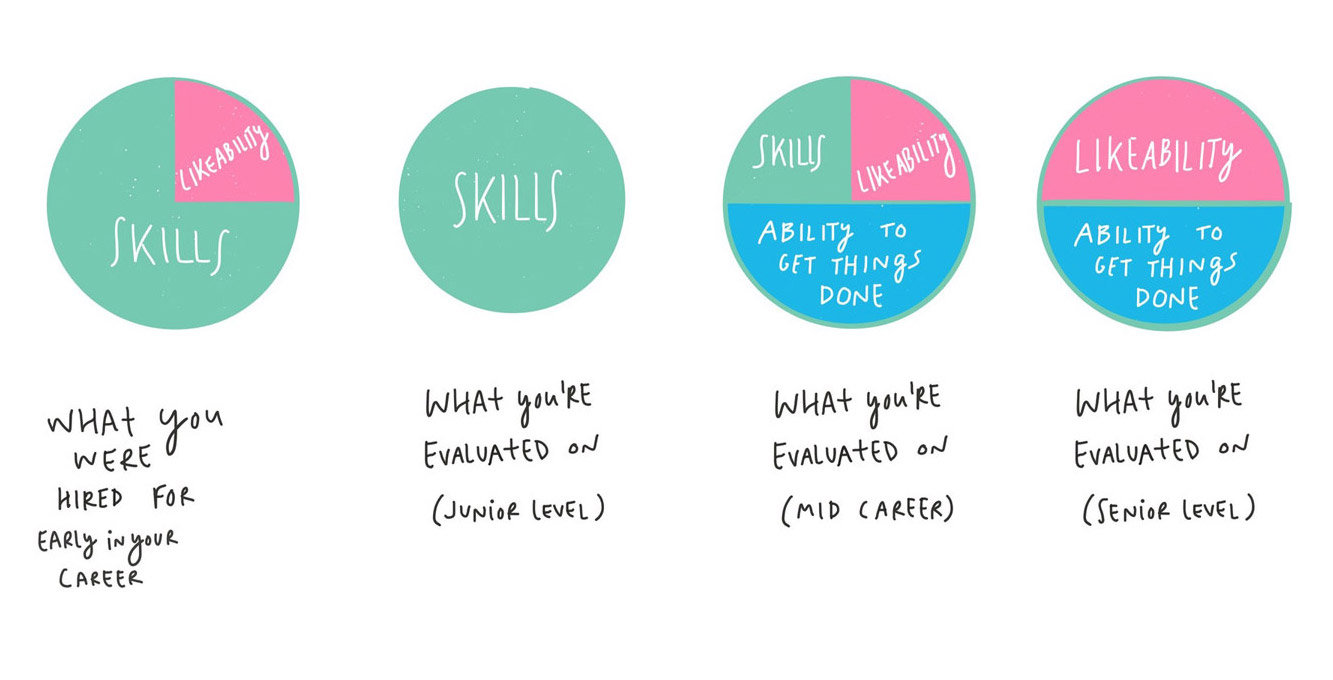
At the start of your career, chances are good that you’ll be hired primarily for your “hard skills”—the stuff you know that’s relevant for the job. When you’re fresh out of college or even a few years into your career, things like what software you’ve mastered, the knowledge you’ve picked up during internships and in school, and your other technical credentials really matter.
man top of bridge

But what no one quite tells you is that while you might’ve been initially hiredfor those hard skills, they gradually matter less. The further you get in your career, the less you’ll be evaluated on those same skills—and this is especially important once you reach your mid-career point. Why? Because the hard skills that got you the job won’t be the ones that get you promoted.

Now that’s not to say that improving your technical skills isn’t important. You should get better and faster at whatever your craft is over the course of your career, whether that’s coding, designing, researching, or something else. But if that’s the only area you improve in, you may find advancement more elusive than you’d expected. Improving your technical skills may be enough to get you promoted from level one to two, or coordinator to associate, but to advance higher, you’ll have to show improvement in other areas as well.


Like this Article ?  Share It !    You now can easily enjoy/follow/share Today our Award Winning Articles/Blogs with Now Over 2.5 Million Growing  Participates Worldwide in our various Social Media formats below:

FSC LinkedIn Network: (Over 15K+ Members & Growing !)   www.linkedin.com/in/frankfsc/en

Facebook: (over 12K)   http://www.facebook.com/pages/First-Sun-Consulting-LLC-Outplacement-Services/213542315355343?sk=wall

  • Google+: (over 800K)https://plus.google.com/115673713231115398101/posts?hl=en
  • Twitter: Follow us @ firstsunllc

educate/collaborate/network….Look forward to your Participation !

Continue of article:

SHIFT TOWARD SOFT SKILLS . . .

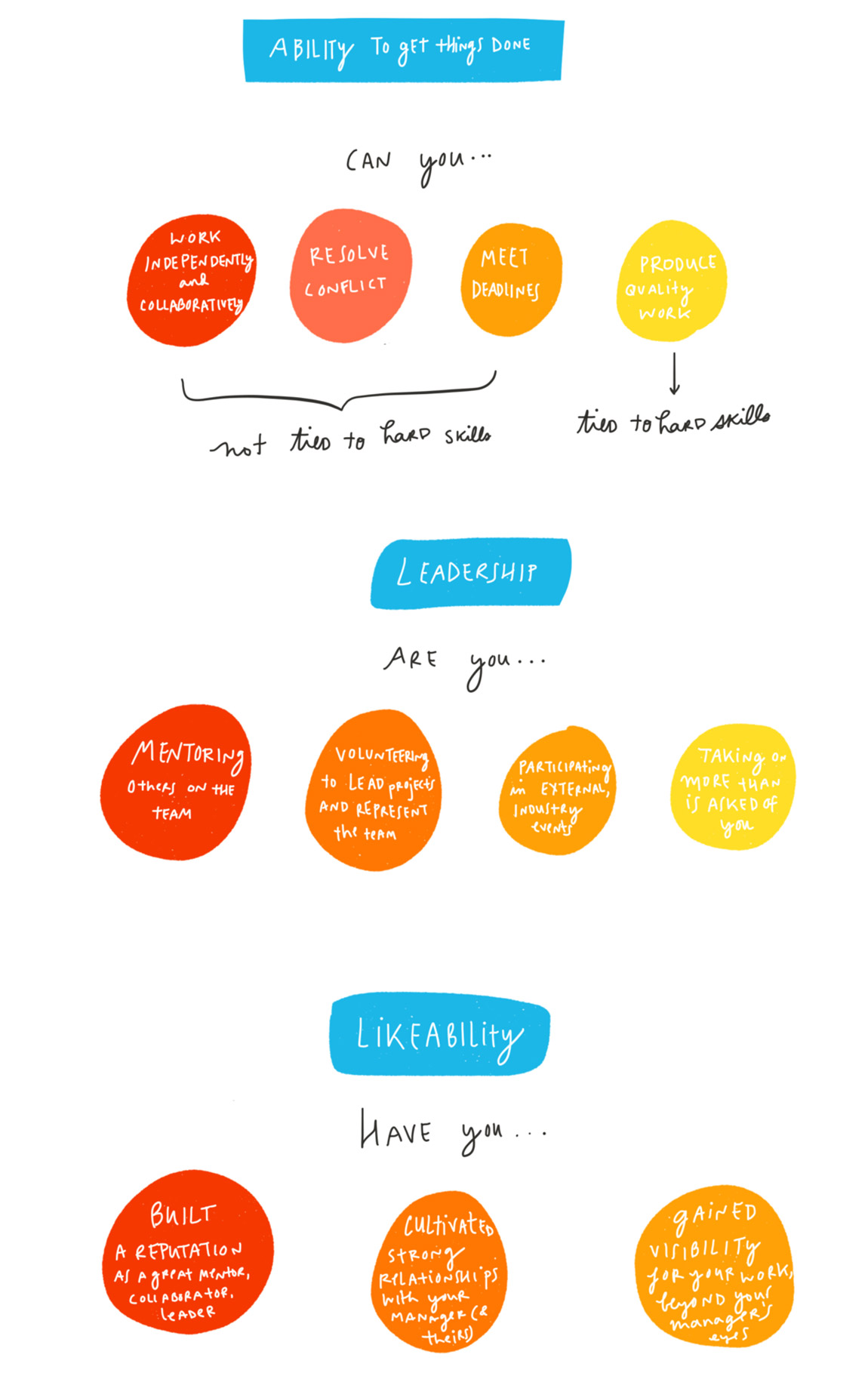
So how do you do that? It starts with knowing what really counts when it comes to advancement at each stage of your career. While every role is different, the secret is to progressively invest more in your “soft skills”—your ability to get things done, your leadership abilities, and your likability at work (like it or not).

To get started—and no matter where you are in your present career—take a minute to assess where you stand in each of these categories:

The further you climb, the more decisive these traits will become. Maybe you have a few of them under your belt but could brush up on others. Now that you know what you’re up against, it’s time to take action. Here’s a game plan for growing your soft skills:

1. Self assess. Taking stock of your recent work and workplace habits, which areas do you feel strongest in? Weakest in? Which do you believe is most crucial to prioritize now, and why? Knowing the answers to these questions will be important for framing your conversation with your manager in the next step.

2. Discuss with your manager. Now it’s time to get on the same page. Work with your boss to determine what’s most important for you to learn now versus in the future: How much weight does your manager give to growing in these areas? And do you agree? What can you expect to happen when you show growth in these areas? Try to get specific about what you’re being evaluated on at each level. Your responsibilities may look different at various career stages, so make sure you understand any internal “career ladders” available to you, and how these map to your strengths and areas of development.

3. Explore ways of growing these softer skills in your current job. And that growth may be closer at hand than you think. What opportunities for collaboration and leadership might already exist? What are some avenues for taking on more responsibility in these areas? Brainstorm opportunities and check in with your manager on them. You’ll want her support to take on new things, and to keep an eye on the progress you’re making.

. . . WITHOUT LOSING SIGHT OF THE HARD ONES

What if your manager says you still need to improve your technical skills?

If you find that your manager is focusing on the technical skills even while you’re trying to bulk up on soft ones, this could mean two things: Either you’re still at junior level and need to grow in the basics (which is normal at the beginning of your career), or, if you’re mid-career and still getting this feedback, you may be at a company that values technical skills over people skills when it comes to promotions.

If that’s the case, you might find that the higher you go in a company like that, the less you enjoy the people who surround you. Consider whether that view (and company!) is a good match for you. Perhaps you’d be better off finding a different company that values your soft skills as much as you do.


FastCompany.com | XIMENA VENGOECHEA 04.29.16 5:00 AM


https://www.firstsun.com/wp-content/uploads/2016/09/man-top-of-bridge.jpg 360 640 First Sun Team https://www.firstsun.com/wp-content/uploads/2018/05/logo-min-300x123.jpg First Sun Team2016-09-28 21:12:182020-09-30 20:50:36Your #Career : How To Know Which Skills To Develop At Each Stage Of Your Career..By Mid-Career, the Hard Skills that Got You the Job Won’t Be the Ones That Get you Promoted.

#Leadership : 3 Ways Walking Away From Your Desk Makes You Smarter…When the Body Moves the Brain Functions Better.

September 28, 2016/in First Sun Blog/by First Sun Team

Exercise can improve concentration, learning, creativity and memory. Basically, moving more makes you smarter, mentally faster and more creative. And all of that helps you to grow your business.

Man at Computer with Boss

When you’re running a business, you need to think clearly, learn fast and find creative solutions to pressing problems. While you’re probably pretty good at these things, it’s likely you could be better. You can improve just about every mental power in your entrepreneurial arsenal by doing one thing – moving more.

Most people believe that sitting at a desk for hours on end gets loads of work done. We certainly live in a culture that valorizes putting in long days at the office. Which often means, putting in long days in our chairs. Unfortunately, we’re learning that our productivity declines as our sitting increases. Those long hours at the desk have diminishing returns. The brain functions better when the body moves.

Here are three huge mental benefits to moving more.

1. Think clearer.

A recent study showed that by working at standing desks, students could improve test scores by 20 percent. Think about how that could translate to your daily performance.

The more you can move around during the day, the more focused, alert and mentally capable you become. Why? Because you’re increasing blood flow – nutrients and oxygen — to the brain. No wonder those test scores went up.

Another study revealed that children who did aerobic exercise for 20 minutes before writing math tests improved their scores. It also showed that children, who regularly exercised, had larger regions of their brains related to attention, controlling their thoughts and restraining impulses. These mental strengths help us maintain focus, and follow through on our intentions. These results were confirmed in young adults too, so it’s not just children, who benefit from exercise before mental tasks.

Take a walk or climb some stairs before you meet with a new client or make an important presentation. You will be more focused, attentive and mentally clear.

Related: 7 Reasons the CEO Should Get Outside to Exercise


Like this Article ?  Share It !    You now can easily enjoy/follow/share Today our Award Winning Articles/Blogs with Now Over 2.5 Million Growing  Participates Worldwide in our various Social Media formats below:

FSC LinkedIn Network: (Over 15K+ Members & Growing !)   www.linkedin.com/in/frankfsc/en

Facebook: (over 12K)   http://www.facebook.com/pages/First-Sun-Consulting-LLC-Outplacement-Services/213542315355343?sk=wall

  • Google+: (over 800K)https://plus.google.com/115673713231115398101/posts?hl=en
  • Twitter: Follow us @ firstsunllc

educate/collaborate/network….Look forward to your Participation !

Continue of article:

2. Learn faster.

Another study of children in the UK found that 15 minutes of exercise improved learning in math by about a quarter of a grade and that the increments in performance continued right up to 60 minutes – meaning that 60 minutes of activity made it possible to boost learning and academic performance by a full grade.

And a recent study, focused on adults, showed that as little as 20 minutes of yoga can improve brain function.

According to Neha Gothe, it appears that following yoga practice, the participants were better able to focus their mental resources, process information quickly, more accurately and also learn, hold and update pieces of information more effectively.

Our brains are more receptive to learning; learn more quickly; and maintain our learning over time when we move our bodies more.

Related: Exercise Is One Thing Most Successful People Do Everyday

3. Be more creative.

Bob Marley did some very interesting things to supercharge his creativity and performance. Before concerts, Marley and his band would play soccer in the stadium, where they were going to perform. And before recording sessions, they would go down to the beach for soccer and a swim before heading into the studio. They found that if they played outside before playing music, they were better.

Exercise boosts creativity because it reduces stress, fear and anxiety, all of which interfere with our ability to imagine new possibilities. It’s hard to tackle an emerging problem, rethink a presentation or invent a new solution when distracted by stress or anxiety. Moving more opens your mind to creative possibilities and allows you to see things in a new way. Walking appears to be particularly effective at boosting creativity.

Exercise can improve concentration, learning, creativity and memory. Basically, moving more makes you smarter, mentally faster and more creative. And all of that helps you to grow your business.

Entrepreneur.com |  September 28, 2016 | Greg Wells

https://www.firstsun.com/wp-content/uploads/2016/09/Man-at-Computer-with-Boss.jpg 1080 1920 First Sun Team https://www.firstsun.com/wp-content/uploads/2018/05/logo-min-300x123.jpg First Sun Team2016-09-28 16:16:162020-09-30 20:50:37#Leadership : 3 Ways Walking Away From Your Desk Makes You Smarter…When the Body Moves the Brain Functions Better.

#Leadership : 10 Signs That You Suck As a Leader…Your Staff Won’t Tell you That you’re Terrible. You’ll Just Have to Figure it Out Yourself.

September 28, 2016/in First Sun Blog/by First Sun Team

If you ask one of your key employees how you’re doing as a leader, chances are that you aren’t going to get a 100 percent honest answer. The employee probably isn’t going to tell you your faults, when you have the power to destroy his or her employment.

[fusion_builder_container hundred_percent=”yes” overflow=”visible”][fusion_builder_row][fusion_builder_column type=”1_1″ background_position=”left top” background_color=”” border_size=”” border_color=”” border_style=”solid” spacing=”yes” background_image=”” background_repeat=”no-repeat” padding=”” margin_top=”0px” margin_bottom=”0px” class=”” id=”” animation_type=”” animation_speed=”0.3″ animation_direction=”left” hide_on_mobile=”no” center_content=”no” min_height=”none”]

question mark signs painted on a asphalt road surface

So, what’s it going to be?

Related: Employees Lose When Leaders Stop Leading

You may be asking why you should even ask such a question of your employees. After all, you’re the boss. But it’s simple, really. Research shows that more than 70 percent of the workforce is disengaged. Much of the cause of that disengagement oftem stems from the active dislike the employee has for his or her leader, often described as “the manager from hell.”

But none of these employees are going to risk their jobs to tell you that. And because of their reluctance, you may need to take a long, hard look at your behavior and be brave enough to recognize the signs that you aren’t doing as good of a job as a leader as you would like.

Here are 10 signs that you may, well, suck as a leader:

1. Your attitude is “This is how we do things around here, and you can like it or leave.”

Great leaders are in a constant state of growth and adaptability. They would never approach employees with this attitude.


Like this Article ?  Share It !    You now can easily enjoy/follow/share Today our Award Winning Articles/Blogs with Now Over 2.5 Million Growing  Participates Worldwide in our various Social Media formats below:

FSC LinkedIn Network: (Over 15K+ Members & Growing !)   www.linkedin.com/in/frankfsc/en

Facebook: (over 12K)   http://www.facebook.com/pages/First-Sun-Consulting-LLC-Outplacement-Services/213542315355343?sk=wall

  • Google+: (over 800K)https://plus.google.com/115673713231115398101/posts?hl=en
  • Twitter: Follow us @ firstsunllc

educate/collaborate/network….Look forward to your Participation !

Continue of article:

2. You are busy being nice.

Great leaders know what truly matters. Leaders know their purpose — their why. Running a business is not a popularity contest that leaders need to try to win. If you spend all your time trying to be nice to people, you aren’t leading.

3. You micro-manage.

Great leaders are collaborative, not micro-managers. Leaders don’t feel that they have to do everything themselves. They trust their team members to do it and know they will do it right.

Related: Leaders Succeed When They Go Where Their Fear Tells Them to Avoid

4. You are all about the numbers.

Great leaders are, first and foremost, CROs. You know — chief relationship officers. Leaders cannot always focus on the bottom line. Remember that the number one character trait of great leaders is that they highly value the people they lead.

5. You secretly, or not so secretly, dislike people.

Great leaders are genuinely into their work relationships. They like people and love seeing them grow. You have no business being a leader if you don’t like people.

6. You steal the light.

Great leaders give the spotlight to others. Bad leaders take credit for what’s not theirs, and justify their behavior based on some “rational-lies” that they tell themselves. But it is not, despite anything you have ever been told, all about you.

7. You lack empathy and compassion.

Great leaders have a highly developed level of emotional intelligence. Don’t try to lead if you can’t grasp this concept.

8. You lack self-knowledge.

Great leaders are continually developing deeper self-knowledge, because they understand that self-knowledge lies at the root of genuine empathy and compassion. In order to lead effectively, you have to know who you are below the surface.

9. Your people don’t trust you.

Great leaders are highly integral. They don’t say one thing and do another. If this is you, you’ll lose ground every quickly with your staff.

10. You keep your personal life a secret.

Great leaders are bonded to their people, and their people are bonded to them. Great leaders know and care about who their people are. Great leaders let their people see who they authentically are beyond their role as leader. Let people in, proving that you have learned the power of vulnerability.

If you read this, and you find yourself saying, “Yeah, but you don’t understand,” what you are actually saying is that you are committed to sucking at your role as you are at leading. If that’s the case, no one can help you until you decide it’s too painful to stay the same.

Related: 7 Habits of Masterful Managers Who Coach Their Teams to Success

Entrepreneur.com | September 27, 2016 | Dov Baron

[/fusion_builder_column][/fusion_builder_row][/fusion_builder_container]

https://www.firstsun.com/wp-content/uploads/2016/04/free-Question-Mark-Signs.jpg 2592 3872 First Sun Team https://www.firstsun.com/wp-content/uploads/2018/05/logo-min-300x123.jpg First Sun Team2016-09-28 12:42:532020-09-30 20:50:37#Leadership : 10 Signs That You Suck As a Leader…Your Staff Won’t Tell you That you’re Terrible. You’ll Just Have to Figure it Out Yourself.

#Leadership : 5 Steps To Harness Your Brain’s Unconscious Decision-Making Powers…Yes, “Sleeping On It” Actually Works. Here’s How to Make it Work even better.

September 27, 2016/in First Sun Blog/by First Sun Team
 “Have you not noticed that, often, what was dark and perplexing to you the night before,” the inventor Alexander Graham Bell once asked, “is found to be perfectly solved the next morning?”
brain scan

Probably, you have. If “sleeping on it” works, it’s partly because when you sleep, your prefrontal cortex—the center of what makes you, you—powers down. That means your personality, your decisions, your social controls go to sleep with you. The night is when your unconscious really does have free rein. It can do its work without interference. Here’s how that process works and what you can do to leverage it when you’ve got tough decisions waiting on you in the morning.

HOW YOUR BRAIN SOLVES PROBLEMS WITHOUT YOU

While our conscious mind rests, our unconscious is busy making sense of the day’s events and filing them away in long-term memory. And if there are any problems on your mind, your unconscious will work on those, too. And it’s true, as Graham Bell pointed out, that a problem can seem insurmountable when you go to bed, but then when you wake up, it doesn’t seem so daunting. Here’s the part of his quote that precedes the one above:

I am a believer in unconscious cerebration. The brain is working all the time, though we do not know it. At night, it follows up what we think in the daytime. When I have worked a long time on one thing, I make it a point to bring all the facts regarding it together before I retire; and I have often been surprised at the results.

If your unconscious is aware that your conscious mind has been working hard on a problem, come nighttime, it will put its full processing power behind it. But the outcome of that process depends on a couple of things: first, your conscious mind needs to have been working hard on the problem, and second, you need to passionately require an answer in order to get your unconscious to work on it. It’s like the classic children’s fairytale “The Elves and the Shoemaker,” where the penniless shoemaker lays out his last piece of cloth, and the elves come in the night and turn it into a beautiful pair of shoes.

If your unconscious is aware that your conscious mind has been working hard on a problem, come nighttime, it will put its full processing power behind it.

Sometimes the solution to a problem, or at least the direction you need to take, will be revealed to you in the morning; sometimes even in your dreams. (Either way, make a note of any thoughts you have as soon as you wake up, otherwise they may fade away.) If you can remember your dreams, then you can see the unconscious at work already. And our dreams, even though we have no control over them, are very good at solving our problems.


Like this Article ?  Share It !    You now can easily enjoy/follow/share Today our Award Winning Articles/Blogs with Now Over 2.5 Million Growing  Participates Worldwide in our various Social Media formats below:

FSC LinkedIn Network: (Over 15K+ Members & Growing !)   www.linkedin.com/in/frankfsc/en

Facebook: (over 12K)   http://www.facebook.com/pages/First-Sun-Consulting-LLC-Outplacement-Services/213542315355343?sk=wall

  • Google+: (over 800K)https://plus.google.com/115673713231115398101/posts?hl=en
  • Twitter: Follow us @ firstsunllc

educate/collaborate/network….Look forward to your Participation !

Continue of article:

This is because when we’re dreaming, our minds are in the REM state, which has been found to be highly conducive to fluid reasoning and flexible thought. In a 2002 study, researchers tested participants’ ability to solve anagram puzzles when they were awoken from a deep REM (dream) sleep, compared with when they were roused from a normal, lighter doze. Those woken up from REM sleep proved 32% better at solving anagrams.

SETTING GOALS FOR YOUR UNCONSCIOUS MIND

There is a way to help your unconscious work for you: Set it a challenge. Say, for instance, you’re unhappy in your job and don’t know whether to leave or not. When you think about it in the daytime, your conscious mind is beset with different opinions and emotions on the subject. It’s like sitting around a table with 20 friends debating the subject. They all genuinely want to help, but their different opinions just make it all a bit overwhelming.

If you set the problem for your unconscious to work on, though, it has access to all the facts and relevant information and can work through it more calmly. Try these five steps:

1. Before you go to bed, spend 30 minutes thinking in a relaxed way about the problem or issue.

2. Then, when you get into bed, actually write down the problem and ask the question out loud to yourself. Also give it a deadline. Too much pressure creates stress; you don’t want to be lying awake thinking about the problem—that will just send it round and round in your conscious mind and won’t be helpful at all. But a little bit of gentle pressure can help, so set a time that you want to nail down the answer. You might say out loud and write down, “I am unhappy in my job and want to know what I should do. I would like an answer by 7:00 in the morning when I wake up.”

3. When you wake up, write down any immediate thoughts or insightful dreams you can remember. But don’t worry if the answer doesn’t seem obvious. It isn’t like ordering room service and expecting exactly what you requested to arrive, exactly when you asked it to—be patient. Take a shower, which can be a very productive place for unconscious ideas to bubble up.

4. Next, make yourself a tea or coffee and sit down in a comfortable chair with a pen and a pad of paper. For half an hour, just write. Don’t think too much about what you’re writing or if it makes any sense. Just get your thoughts down on paper.

5. After you’ve read back what you’ve written, let the council of your conscious mind debate it.

You may not have a tidy solution staring you in the face, but you may be surprised how much clearer things are after a good night’s sleep. At the very least, chances are you’ll be a lot closer to a decision you’re comfortable with than you were when you went to bed.


This is an edited excerpt published with permission of the publisher, Capstone, a Wiley brand, from Brainhack: Tips and Tricks to Unleash Your Brain’s Full Potential by Neil Pavitt. Copyright (c) 2016 by Neil Pavitt. All rights reserved. This book is available at all booksellers.


FastCompany.com | NEIL PAVITT 09.26.16 5:00 AM

https://www.firstsun.com/wp-content/uploads/2016/09/brain-scan.jpg 360 640 First Sun Team https://www.firstsun.com/wp-content/uploads/2018/05/logo-min-300x123.jpg First Sun Team2016-09-27 16:02:312020-09-30 20:50:37#Leadership : 5 Steps To Harness Your Brain’s Unconscious Decision-Making Powers…Yes, “Sleeping On It” Actually Works. Here’s How to Make it Work even better.
Page 152 of 235«‹150151152153154›»

Blog Search

Login/Register

  • Log in
  • Entries feed
  • Comments feed
  • WordPress.org

FSC Career Videos

  • Job Search Techniques | Start Here
  • Resume/Cover Letter
  • Interviewing
  • Additional Career Videos
  • FSC Career Blog – #1 Career Library LinkedIn

Recent Posts

  • #JobSearch : 3 Simple Ways To Make LinkedIn Work For You In 2026. A MUst REad for All! April 29, 2026
  • #JobSearch : A Successful Job Search & Career Needs A Strong Network—Here’s How To Build One. Great Quick Read! March 25, 2026
  • #ResumeWriting : 8 In 10 Hiring Managers Spot AI Resumes-These 3 Mistakes Give It Away. Guide to How To Write Your Resume Using AI. March 20, 2026
© Copyright - First Sun Consultation - Website Maintained by BsnTech Networks - Enfold WordPress Theme by Kriesi
Scroll to top