Posts

#CareerAdvice : #ResumeWriting – 10 #ResumeTips You Haven’t Heard Before..After All, #HiringManagers & #Recruiters Generally only Spend About 7 Seconds Reading your Resume Before Deciding Whether to Move Forward or Not.

Having a well-crafted resume can be the key to getting your foot in the door at the company of your dreams. But figuring out how to make your resume fully representative of your experience and also stand out is easier said than done.

Don’t let this happen to you!

After all, hiring managers and recruiters generally only spend about 7 seconds reading your resume before deciding whether to move forward or not. Most people know the basics of how to put together a decent work history, but here are some tips you probably haven’t heard before that can help your resume stand up to the 7-second test.

1. Only include your address if it works in your favor.

If you’re applying to positions in the city or town you already live in, then go ahead and include your address. In this case, it lets the hiring manager know you’re already in the area and could theoretically start working right away.

But if you’re targeting jobs in another area and you’d need to move in order to start working, it’s probably a good idea to leave your current address off of your resume. Why? Recruiters are sometimes less excited to interview candidates from another city or state, since they often require relocation fees.

Like this Article ?  Share It !    You now can easily enjoy/follow/share Today our Award Winning Articles/Blogs with Now Over 2.5 Million Growing  Participates Worldwide in our various Social Media formats below:

FSC LinkedIn Network:   www.linkedin.com/in/fscnetwork

Facebook:  http://www.facebook.com/pages/First-Sun-Consulting-LLC-Outplacement-Services/213542315355343?sk=wall

Google+:  https://plus.google.com/115673713231115398101/posts?hl=en

Twitter: Follow us @ firstsunllc

Question: Want the ‘the best/current articles/blogs on the web’ on Job Search, Resume, Advancing/Changing your Career, or simply Managing People?

Answer: Simply go to our FSC Career Blog below & type(#career, #leadership, #life) in Blog Search:  https://www.firstsun.com/fsc-career-blog/

What Skill Sets do You have to be ‘Sharpened’ ?

Continue of article:

2. Be a name dropper.

It may be poor form to drop names in everyday life, but you absolutely should do it on your resume. If you’ve worked with well-known clients or companies, go ahead and include them by name. Something like: “Closed deals with Google, Toyota and Bank of America” will get recruiters’ attention in no time flat.

3. Utilize your performance reviews.

You might not think to look to your annual review for resume material, but checking out the positive feedback you’ve received in years past can help you identify your most noteworthy accomplishments and best work attributes—two things that should definitely be highlighted on your resume. Including specific feedback you’ve received and goals you’ve met can help you avoid needing to use “fluff” to fill out your work experience.

4. Don’t go overboard with keywords.

Many companies and recruiters use keyword-scanning software as a tool to narrow the job applicant pool. For this reason, it’s important to include keywords from the job description in your resume—but don’t go overboard. Recruiters can spot “keyword stuffing” a mile away.

5. Use common sense email etiquette.

There are two types of email addresses you shouldn’t use on your resume or when applying to a job via email: your current work email address, or an overly personal or inappropriate email address, like loverguy22@gmail.com. Stick with something professional based on your name in order to make the best possible impression.

6. When it comes to skills, quality over quantity.

There’s no need to list skills that most people in the job market have (Think: Microsoft Office, email, Mac and PC proficient), which can make it look like you’re just trying to fill up space on the page. Keep your skills section short, and only include impactful skills that are relevant to the job you’re applying to.

7. Choose to share social accounts strategically.

Including links to social media accounts on a resume is becoming more and more common. But it’s important to distinguish between professional accounts—like a LinkedIn profile or Instagram account you manage for work—and non-professional ones, like your personal Twitter or Facebook account. While it might be tempting to include a personal account in order to show recruiters who you are, you’re better off only listing accounts that are professionally-focused. Save your winning personality for an in-person interview.

8. Use hobbies to your advantage.

Not all hobbies deserve a place on your resume, but some do. Hobbies that highlight positive personality qualities or skills that could benefit you on the job are worth including. For example, running marathons (shows discipline and determination) and blogging about something related to your field (shows creativity and genuine interest in your work) are hobbies that will cast you in the best possible light and might pique a recruiter’s interest.

9. Skip generic descriptors.

Hardworking, self-motivated, self-sufficient, proactive, and detail-oriented are all words you’ll find on most people’s resumes. But most job seekers are motivated and hardworking, so these traits don’t really set you apart from the rest of the applicant pool. Instead, focus on the specific skills and accomplishments that make you different from everyone else applying to the position.

10. Keep an accomplishment journal.

Keeping a log of your work accomplishments and positive feedback as they come up can make putting together or updating your resume significantly easier. Include as many details as possible so you don’t have to spend time tracking them down later.


GlassDoor.com |   | 

#CareerAdvice : #ChangingCareer – Considering a #CareerSwitch ? Here’s How to Write your #Résumé …Making the Decision to #ChangeCareers is a Huge Undertaking, so Here’s How to Make Sure you Get the Job you Want.

Making the decision to change careers is a huge undertaking. Not only do you have to be willing to acquire new skills and step outside your comfort zone, but you also have to be able to sell your past experience to recruiters and hiring managers.

DO YOUR RESEARCH

“It’s critical to talk to those who are in the careers you want to go into to find out what they would want to see in a resume,” says Denise Riebman, a career development specialist. What are the hot terms in the field right now? The most in-demand skills and relevant knowledge? These are things you need to find out, then incorporate into your resume where you can.


Related: What career changers wished they knew about making the switch 


HIGHLIGHT TRANSFERABLE SKILLS

“When you’re changing careers, it’s assumed that your recent work experience will not perfectly align with the role you’re now targeting,” says Amanda Augustine, career advice expert for TopResume. “To ensure your resume isn’t immediately trashed by the ‘bots’ or a recruiter, you need demonstrate that you possess the skills necessary to do the job well, even if this new job isn’t a natural next step after your previous role.”

That’s where transferable skills come in. “Some transferable skills are universal, regardless of the field: leadership, communication, analytical skills, and many others,” Augustine says. But to find industry-specific ones, you’ll want to conduct informational interviews and review the job descriptions you’re targeting. Look for commonalities between the postings, and you should get a good idea of what skills hiring managers are looking for.

“If you need help, create a word cloud out of the job descriptions using a site like Wordle to identify which skills are emphasized the most across multiple job postings,” Augustine suggests.


Related: This is how to change careers without spiraling into the unknown


Like this Article ?  Share It !You now can easily enjoy/follow/share Today our Award Winning Articles/Blogs with Now Over 2.5 Million Growing  Participates Worldwidein our various Social Media formats below:

FSC LinkedIn Network:   www.linkedin.com/in/fscnetwork

Facebook:  http://www.facebook.com/pages/First-Sun-Consulting-LLC-Outplacement-Services/213542315355343?sk=wall

Google+:  https://plus.google.com/115673713231115398101/posts?hl=en

Twitter: Follow us @ firstsunllc

Question: Want the ‘the best/current articles/blogs on the web’ on Job Search, Resume, Advancing/Changing your Career, or simply Managing People?

Answer: Simply go to our FSC Career Blog below & type(#career, #leadership, #life) in Blog Search:  https://www.firstsun.com/fsc-career-blog/

What Skill Sets do You have to be ‘Sharpened’ ?

Continue of article:

SHOW, DON’T TELL

This is good advice for any resume, but it’s especially important for career changers. Why? Well, you’ll be able to not only highlight transferable skills, but also prove that you’re excellent at them.

“Use statistics and numbers to show concrete information about the value you bring,” recommends Dustin Polk, president and executive resume writer at Oracle Resumes. “Instead of just saying ‘developed and implemented innovative process improvements,’ say ‘increased operational efficiency and annual revenues by 13% by developing and implementing innovative process improvements.’ Show the value you bring, don’t just claim to bring it with nothing to back it up.”

LEARN THE LINGO

“Each industry has its own jargon–terminology, acronyms, and initialisms that only make sense to people who are familiar with the field,” Augustine says. “It’s your job to figure out how to translate your experience and past successes into terms that will resonate with your new target audience. Subscribe to industry-specific publications and follow their social media accounts, set up Google alerts for some of the major players in the space, and attend trade shows and other events that are relevant to your target field to gain this insight. Then update your resume accordingly.”


Related: 5 books to read when you’re considering making a big change 


USE YOUR SPACE WISELY

“You don’t have unlimited space,” Polk points out. “You get one to two pages to fill with your most impressive accomplishments and qualifications.” Especially if you have a long job history in a previous career, this can be difficult to enforce.

“Many people will turn into a sort of hoarder when writing their resume,” Polk says. “You can’t fit 18 bullet points of details for a job you had in 2002. It’s barely relevant, and a busy hiring manager won’t read it. If they want extreme details on the things you’ve done, your resume has already done its job, and you’ll be getting a call for an interview. Keep it clear, concise, and as relevant to your new industry as possible.”

PUT EDUCATION IN THE RIGHT PLACE

Most resume advice tells you that once you’re a few years out of school, you should move your education down to the bottom of your resume. This is true for the most part, but there’s an important exception career changers may want to consider. “If you recently earned a degree relevant to your new field, place your education section before your experience section,” Polk recommends. “Make sure they see that new degree. If it came with a designation, put that with your name at the top of the page, i.e. ‘John Smith, MBA.’ ”

CHOOSE YOUR FORMAT WISELY

Sometimes, a functional resume–one that highlights skills above job history and is generally not chronological–is recommended for career changers, as it allows candidates to showcase what they choose. “While I strongly discourage professionals from using a functional resume format, some career changers find it easy to present their marketable skills in this structure,” Augustine says. “A word of caution: Recruiters despise this resume format and most applicant tracking systems (ATS) have difficulty reading and parsing your resume’s information when it’s presented this way.” That means you could automatically get rejected just for using the wrong resume format.

The consensus among experts? Stick with a chronological format, providing more or less detail for each job, depending on how transferable your responsibilities and accomplishments were.

REMEMBER THAT YOU’RE MORE THAN YOUR RESUME

Having a great resume is no doubt important, but when you’re a career changer, there are things that matter more. “Especially when you are making a career shift, connecting with people in the field through authentic relationship building can give you a leg up, so that someone is willing to take a chance on you–no matter what is on your resume,” Riebman points out.


FastCompany.com | August 14, 2018 | BY JULIA MALACOFF—GLASSDOOR 4 MINUTE READ

#CareerAdvice : #JobSearch – What #Recruiters Look at When Stalking Your #SocialMedia … You probably Already Know Recruiters are Looking at your #LinkedIn Page, but What About your Other Social Media Platforms?

You know, the ones where you post pictures of your latest vacation, share what you had for dinner and occasionally tag your friends in memes. Why, you might wonder, would a recruiter possibly be interested in viewing things like that?

As it turns out, those personal details are precisely why recruiters and hiring managers keep tabs on applicants’ social media accounts, says career coach Hallie Crawford. “It can help them get a more accurate idea about who you are outside of your resume — a more personal view into your life,” she explains. “A resume can tell them your qualifications, but your social media profile can help them determine your personality type and if you would be a good fit for company culture.”

Plus, recruiters are looking for red flags — risqué photos, bad language, signs of drugs use — that would show them you’d be a less than ideal man or woman to have in their offices.

So now that you know why they’re looking, how about knowing what they’re looking at?

Facebook

According to Crawford, recruiters and hiring managers are concentrating their efforts on two sections of your Facebook page — your “about me” section, and your photo albums.

About Me: “They will want to see how you describe yourself and if it matches up [fusion_builder_container hundred_percent=”yes” overflow=”visible”][fusion_builder_row][fusion_builder_column type=”1_1″ background_position=”left top” background_color=”” border_size=”” border_color=”” border_style=”solid” spacing=”yes” background_image=”” background_repeat=”no-repeat” padding=”” margin_top=”0px” margin_bottom=”0px” class=”” id=”” animation_type=”” animation_speed=”0.3″ animation_direction=”left” hide_on_mobile=”no” center_content=”no” min_height=”none”][with] how you have described yourself in your cover letter and resume,” Crawford says. Any discrepancies could cost you points pre-interview. What’s more, Crawford says, “they will also be looking for proper spelling and grammar” in this section, to see how seriously you take those skills.

Photos: When it comes to your photos albums, “a hiring manager will be checking not only your photos but also your descriptions,” Crawford warns. “A hiring manager wants to see if you represent yourself in a professional way.” To come off in the most positive pre-meeting light, “you will want to avoid using profanity, sexual or drug references,” Crawford says.

Like this Article ?  Share It !    You now can easily enjoy/follow/share Today our Award Winning Articles/Blogs with Now Over 2.5 Million Growing  Participates Worldwide in our various Social Media formats below:

FSC LinkedIn Network:   www.linkedin.com/in/fscnetwork

Facebook:  http://www.facebook.com/pages/First-Sun-Consulting-LLC-Outplacement-Services/213542315355343?sk=wall

Google+:  https://plus.google.com/115673713231115398101/posts?hl=en

Twitter: Follow us @ firstsunllc

Question: Want the ‘the best/current articles/blogs on the web’ on Job Search, Resume, Advancing/Changing your Career, or simply Managing People?

Answer: Simply go to our FSC Career Blog below & type(#career, #leadership, #life) in Blog Search:  https://www.firstsun.com/fsc-career-blog/

What Skill Sets do You have to be ‘Sharpened’ ?

Continue of article:

Twitter

Who You’re Following: “Recruiters like to see if you have any mutual connections and if you are connected with others in your industry,” Crawford explains. Following others in your industry is a smart thing to do no matter what — watching their feeds can give you a scoop on a new job opening, company announcements, the latest tech and much more.

Tweets: “Recruiters will be checking to see if you share useful information, if you share information relevant to your trade or if you just use tweets to fight with others,” Crawford says. If you’re applying for a job, take a look at your tweeting history and consider deleting anything that won’t show your best — and most thoughtful — self to a potential employer.

Instagram

Followers: Recruiters will check out the kind of followers you attract, Crawford says. Plus, they’ll want to see “how friendly and social you seem to be with your followers,” she says. What you say to them and what you say back, she explains, “can also give them insight [into] your personal relationships and if you would be a good cultural fit for the company.”

Pictures: You probably figured this, right? But recruiters are looking to see more than your photography skills (or lack thereof). “They will want to see how you represent yourself,” Crawford says. For example, “if you are at a party, do you represent yourself in a dignified way?” Crawford asks, or, “do you post things that others would consider inappropriate?”

GlassDoor.com | 

[/fusion_builder_column][/fusion_builder_row][/fusion_builder_container]

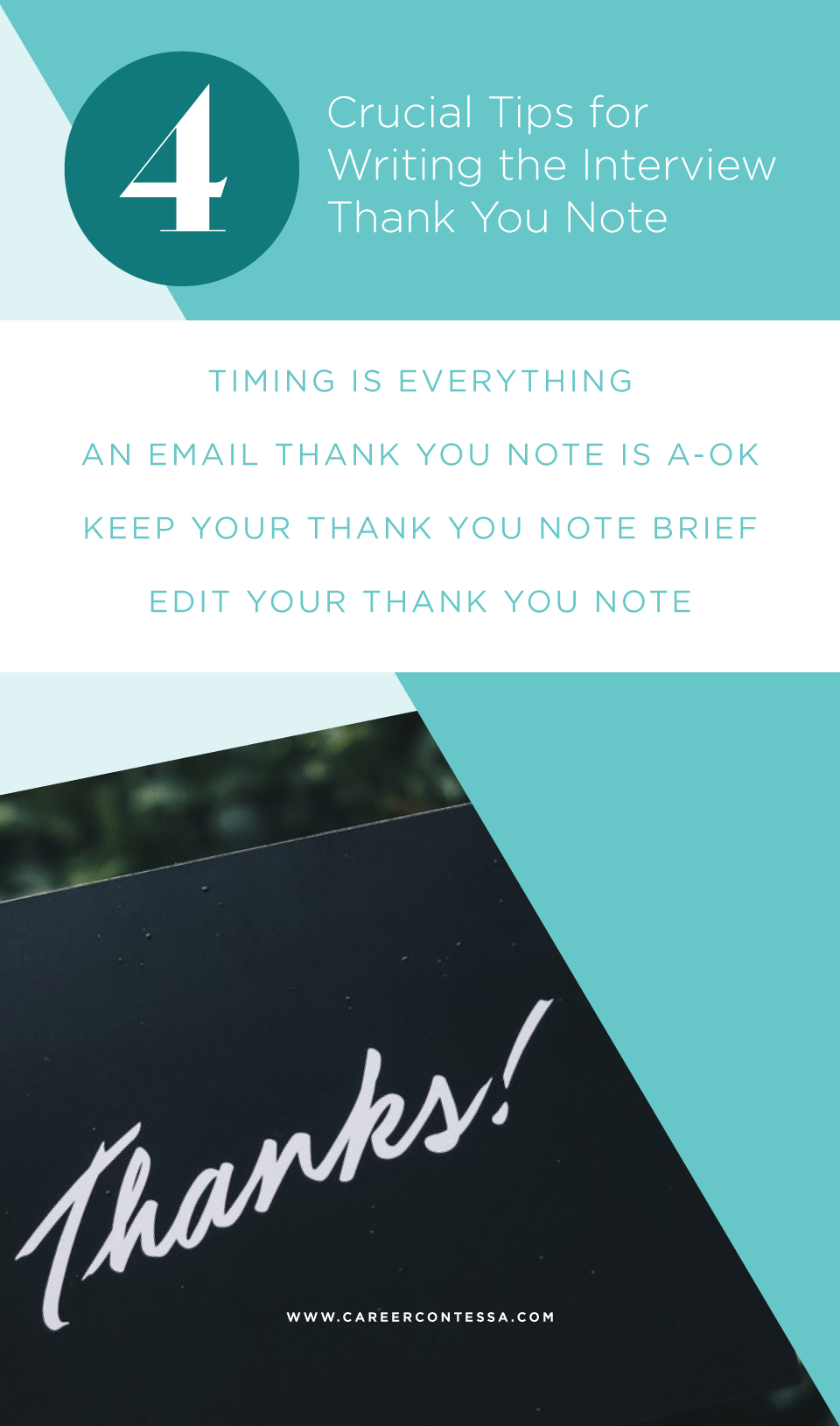
#BestofFSCBlog : #JobSearch – Four(4) Crucial Tips for Writing the Interview Thank You Note. So you Really Want this Job?  

So you really want this job?  You have likely already written a captivating cover letterundergone a brief phone interview and finally, were invited into the office for an interview. The interview went swimmingly (because you prepped for it like a pro)? Awesome! Now that you’re exiting the office building of your (hopeful) future job, it’s time for your next step.
Enter: the thank you note. The thank you note should be a no-brainer. It is a perfect way for a candidate to give herself the final edge over other candidates in the interview process.
Writing the thank you note does not have to be an exhaustive process. However, a candidate can (and should!) use it as an opportunity to edge out the other candidates.

TIMING IS EVERYTHING

Interviewing is an arduous process for any job candidate. In much the same way, it can be a stressful time for the hiring manager. My number one piece of advice in writing a thank you note for a job you really want?
Do it right away. Even if you killed the interview and expect a call saying “You’re hired!” by the end of the day, write the note. Express your gratitude and keep your candidacy fresh in the hiring manager’s mind. DO NOT wait until a week later when you haven’t heard anything to shoot off a “by the way, thanks” email.
A well-timed thank you note after an interview is a perfect way to reiterate your excitement to join the team. Aim to send your thank you note no within 24 hours of the end of the interview.

Like this Article ?  Share It !You now can easily enjoy/follow/share Today our Award Winning Articles/Blogs with Now Over 2.5 Million Growing  Participates Worldwidein our various Social Media formats below:

FSC LinkedIn Network:   www.linkedin.com/in/fscnetwork

Facebook:  http://www.facebook.com/pages/First-Sun-Consulting-LLC-Outplacement-Services/213542315355343?sk=wall

Google+:  https://plus.google.com/115673713231115398101/posts?hl=en

Twitter: Follow us @ firstsunllc

Question: Want the ‘the best/current articles/blogs on the web’ on Job Search, Resume, Advancing/Changing your Career, or simply Managing People?

Answer: Simply go to our FSC Career Blog below & type(#career, #leadership, #life) in Blog Search:  https://www.firstsun.com/fsc-career-blog/

What Skill Sets do You have to be ‘Sharpened’ ?

Continue of article:

AN EMAIL THANK YOU NOTE IS A-OK

We know you still have that Laura Ashley stationery your grandma gave you for your high school graduation. We know it’s embossed with your initials.
However, 87 percent of hiring managers view email as a perfectly acceptable means of delivering your thank you note. Since we have already established that timing is everything, email is going to be your best bet.

KEEP YOUR THANK YOU NOTE BRIEF

By this point in the interview process, your hiring manager has likely learned a ton about you. Do not use the thank you note to reiterate the play-by-play.
You can (and should) use it as a means to communicate one point you may have neglected to make, to expand on an idea or simply to express feelings of excitement for the job itself. Since the hiring manager is also busy interviewing, reading resumes, and communicating with other stakeholders, keep your note on point.

EDIT YOUR THANK YOU NOTE

So far, we have focused heavily on the speed and brevity of this note. But that doesn’t mean it’s informal! Make sure to use a formal greeting, write clear (and concise!) sentences, and sign off formally. This is not a one-liner to say “Thanks, Dude!”
Just as easily as a thank you note can impress a hiring manager, it can also detract from the whole process. A spelling error or flippant manner of writing can undo your progress. Write your thank you note, read it over a few times aloud, spell check it, and get a second pair of eyeballs on it if you can.
Crucial Tips Interview Thank You
CareerContessa.com | BY CAILEEN KEHAYAS  |  July 25, 2018

#CareerAdvice : Include These Things in your #Resume to Get the #Recruiter’s Attention…Don’t Give Them a Reason to Say No. Instead, Wow Them with Reasons to Advance your Application.

Did you know that–on average–recruiters and hiring managers spend only seven seconds reading your resume before signing you up for an interview–or tossing that precious piece of paper in the trash?

That’s not a lot of time to impress a potential employer. But the slush pile doesn’t have to be your job-search fate. Dawn Rasmussen, certified resume writer and founder of Pathfinder Writing and Career Services, along with Glassdoor’s own tips from its Ultimate Guide to Resumes, will help you craft a resume that’ll grab a recruiter’s attention.

1. CLEAR AND CONCISE FORMATTING

You may think that adding graphics or other infographic elements will make your resume stand out. But before your resume makes it to a recruiter, it will most likely have to pass through a computer scanning program, and those fancy shapes and symbols can confuse a computer. “If you’re sending your resume as an online submission,” Rasmussen explains, “those sexy graphics won’t make it through the software system that is set to scan through your document. In that case, it is important to have a graphic-less document so you can get through the software.” Another tip to get your resume into the right hands, literally? Scan the job description for keywords you can add to your resume, our guide instructs. If the job calls for a “self-starter,” a “leader,” or someone “eager to learn,” be sure to add those in.


Related: Here’s exactly what to put on your resume to land an interview 


Like this Article ?  Share It !    You now can easily enjoy/follow/share Today our Award Winning Articles/Blogs with Now Over 2.5 Million Growing  Participates Worldwide in our various Social Media formats below:

FSC LinkedIn Network:   www.linkedin.com/in/fscnetwork

Facebook:  http://www.facebook.com/pages/First-Sun-Consulting-LLC-Outplacement-Services/213542315355343?sk=wall

Google+:  https://plus.google.com/115673713231115398101/posts?hl=en

Twitter: Follow us @ firstsunllc

Question: Want the ‘the best/current articles/blogs on the web’ on Job Search, Resume, Advancing/Changing your Career, or simply Managing People?

Answer: Simply go to our FSC Career Blog below & type(#career, #leadership, #life) in Blog Search:  https://www.firstsun.com/fsc-career-blog/

What Skill Sets do You have to be ‘Sharpened’ ?

Continue of article:

2. ORGANIZED INFORMATION

According to Rasmussen, “ask any recruiter or someone tasked with looking at resumes day after day, and they’d say that most people do a horrible job organizing information.” By organizing your resume in a clear way, you’ll already be steps ahead of the competition.

There are many ways to organize a resume, but two good formats suggested by our guide are the chronological resume and the functional resume. In a chronological resume, you focus on “your recent work history above all,” our guide instructs. “List your positions in reverse chronological order, with the most recent positions at the top and the oldest ones at the bottom.” In a functional resume, your aim is to “emphasize the relevance of your experience,” according to our guide. “To create a functional resume, you’ll prominently feature your professional summary, your skills, and a work experience section organized by how closely the positions relate to the one you’re applying to. This format is best for those who want to minimize resume gaps, or are transitioning into a new industry.” You can also do a mixture of these styles, which is called–surprise!–a combination resume.

3. DEFINED SECTIONS

No matter what kind of resume you decide to create, whether a chronological or functional resume, you will want to make sure each section is defined. “Guiding the reader through what you are going to discuss next is key,” Rasmussen explains. “They don’t want to be left guessing what you are discussing.” Mark each section of your resume in bold, she suggests.


Related: How to jazz-up your average job application


4. QUANTIFIED RESULTS

Don’t just say you increased your company’s sales–show how much you increased those sales with numbers, our guide instructs. “Use your resume to explain concrete accomplishments,” it says. “Make sure your statistics are consistent, percentages are properly placed and business jargon is used appropriately based on the industry.”

What’s more, you may want to bold those numbers and accomplishments. “Bold and front-load your notable accomplishment stories underneath each employment record,” Rasmussen suggests. “Want to get to the point even more? When you are talking about your on-the-job wins underneath each employer, bold the numbers and outcomes from each story. That makes them pop–especially when recruiters are doing the quick once-through on their initial review of your document. Numbers and results bolded at the front of each sentence make it easy for them to see to what degree you are getting stuff done.”

5. EFFICIENCY

If you go on and on and on in your resume, you may lose your reader–and the opportunity for an interview. “Being efficient in how you move the reader through the document makes it cleaner and easier to understand,” Rasmussen says. “We are now in a skimming economy, so getting right to the point cleanly is critical. So, try this tip: If you have held multiple positions at the same company, stack your job titles and dates worked, starting with your most recent and going down to the oldest, instead of having a separate job entry for each position. This stacking maneuver attracts hiring manager attention because by putting the positions underneath each other, it demonstrates that you were progressively promoted.”

One way to keep your resume short and to-the-point is to “only include the skills that truly make an impact–not ones that are basic requirements [fusion_builder_container hundred_percent=”yes” overflow=”visible”][fusion_builder_row][fusion_builder_column type=”1_1″ background_position=”left top” background_color=”” border_size=”” border_color=”” border_style=”solid” spacing=”yes” background_image=”” background_repeat=”no-repeat” padding=”” margin_top=”0px” margin_bottom=”0px” class=”” id=”” animation_type=”” animation_speed=”0.3″ animation_direction=”left” hide_on_mobile=”no” center_content=”no” min_height=”none”][such as Microsoft Word or an ability to use email] or irrelevant to the job you’re applying to,” according to our guide.

6. WELL-CRAFTED DESCRIPTORS

Guess what? Everyone is a hard worker on their resume. So our guide advises you to ditch the generic and vague descriptors you might be apt to use, such as “hard-working” and “self-motivated,” which are a dime a dozen, and use more specific phrases. “Focus on the skills and accomplishments that set you apart from the competition,” the guide advises.


Related: I built a bot to apply to thousands of jobs at once–here’s what I learned 


7. DEMONSTRATED RELIABILITY

One thing every recruiter will want to see on your resume is reliability. “If you frequently change companies without changing levels or positions, it can be a red flag to recruiters that you are unsure or unreliable,” our guide warns. So that you’re not flagged as a flaky employee, “consider only listing the companies that best align with your desired industry.” If you do that, our guide adds, “you can always add a footnote [that reads like] ‘prior work experience in a different field, more information available upon request.’ ”


FastCompany.com | July 23, 2018 | BY JILLIAN KRAMER—GLASSDOOR 4 MINUTE READ

[/fusion_builder_column][/fusion_builder_row][/fusion_builder_container]

#CareerAdvice : #JobSearch – How to Get a Job that you’re #Overqualified For…It Can be Hard for a #HiringManager to see an overQualified Candidate as Ambitious. So If you Want to Change Direction, Here’s What you Need to Do.

Remember back when you were a new grad and applying for every job mentioning your degree, only to be told you didn’t have enough experience? Now, you’ve got years of experience under your belt and the skill set and experience to get any of those jobs you applied for years ago, but you’re faced with one critical problem. You’re now overqualified.

Hiring managers tend to overlook candidates with too much experience. Often they’re worried that the applicant will jump ship as soon as something comes along that they’re better suited for, or that they’ll expect a salary that’s greater than their budget.

“We tend to think of lower-level jobs as a way to pay our dues in order to advance,” says Kim Stiens, hiring consultant and founder and CEO of career advice site Ranavain. When reviewing resumes of individuals who seem to have already put in those dues, employers may be skeptical of why they want to take a step back. They worry the candidate won’t be engaged enough in the position. “Employers want to hire the best candidate, and often, that actually means hiring someone for whom the position is a stretch; they’re perhaps a bit underqualified, but hungry and eager to do the work.” says Stiens. It might be hard to see an overqualified candidate as ambitious.

While there are many good arguments around not hiring someone too qualified for the position, that doesn’t mean you can’t still land that job.

CLARIFY WHY YOU WANT THE JOB

Are you looking for greater work-life balance or a less stressful and less time-consuming job than your existing role? Are you entering a new industry and feel the need to start in an entry-level position? Or are you simply looking to move away from your current company, regardless of whether it’s an upward, lateral, or downward move? Understanding your own motives is the first step to landing the gig.

Like this Article ?  Share It !    You now can easily enjoy/follow/share Today our Award Winning Articles/Blogs with Now Over 2.5 Million Growing  Participates Worldwide in our various Social Media formats below:

FSC LinkedIn Network:   www.linkedin.com/in/fscnetwork

Facebook:  http://www.facebook.com/pages/First-Sun-Consulting-LLC-Outplacement-Services/213542315355343?sk=wall

Google+:  https://plus.google.com/115673713231115398101/posts?hl=en

Twitter: Follow us @ firstsunllc

Question: Want the ‘the best/current articles/blogs on the web’ on Job Search, Resume, Advancing/Changing your Career, or simply Managing People?

Answer: Simply go to our FSC Career Blog below & type(#career, #leadership, #life) in Blog Search:  https://www.firstsun.com/fsc-career-blog/

What Skill Sets do You have to be ‘Sharpened’ ?

Continue of article:

FOCUS ON WHAT THE JOB BRINGS TO YOU

Hiring managers want to know that the job is a good fit for you. The last thing you want them thinking is that it doesn’t make sense why you are applying. Tell the hiring manager what aspects of the job are appealing to you and show how the position fits into your career goals. Perhaps you’ve been performing a similar role in nonprofits for a few years, and you want to apply to a big company doing something similar or at a lower level.

DISCUSS YOUR INTEREST IN THE COMPANY

Sometimes individuals are willing to accept a lower-level job because it’s at their dream company. Employers are more likely to want to take a chance on you if they believe that you are truly passionate about the company and are willing to do any position, even if it’s a lower level, because you truly want to work there in whatever capacity, even if it’s a lower position than you’re used to.

FOCUS ON THE EMPLOYER’S NEEDS

Show the employer that you understand their pain points and outline what you can bring to the organization to help solve their problem. Do your research on the company before applying. Employers know getting someone with more experience means the learning curve will be shorter, and that someone with more experience at a lower price can be good for them, but that doesn’t mean you still don’t have to convince them based on what you can do for them. “You have to be able to build a constructive case for your hire,” says Stiens. “The hiring manager has to believe that you’re applying for their job because you think you’ll thrive in it, or else they won’t hire you, no matter how great a bargain you might be.”

ARE YOU REALLY OVERQUALIFIED OR JUST DIFFERENTLY QUALIFIED?

If you’re trying to change careers, you may feel that you’re overqualified for an entry-level position because you have 10 years of unrelated experience. “A company might prefer to hire someone with 1.5 years of exactly applicable experience over someone with 10 years of vaguely applicable experience,” says Stiens. In this case, be explicit in how your skills are transferrable to the new field. “The hiring manager isn’t going to hunt down those details and make the case for you,” says Stiens.

Whether applying for a position you’re overqualified or underqualified for, demonstrating to the prospective employer that you are the best choice will help you land the gig.


FastCompany.com | July 13, 2018 | BY LISA EVANS 3 MINUTE READ

#CareerAdvice : #JobSearch – How to Find Out Why You Didn’t Get the #Job …Want an Example of What Exactly you could Say to a #HiringManager ? We’ve got it.

You send in a stellar resume. You blow the recruiter away in the phone screen. And you wow everyone you speak with during your in-person interview. And yet, you still don’t get the job. Worst of all, you don’t know why you didn’t get it — you either didn’t hear back at all, or received feedback so vague that it’s virtually useless (e.g. “We decided to go with another candidate who was a better fit.”) Is there anything worse?


It’s incredibly frustrating when a recruiter or hiring manager doesn’t share a concrete reason why you were passed over, but if it happens to you, don’t worry. Often, there’s still a way to figure out what went wrong — here’s how.

1. Reach Out to the Decision Maker

If you have the contact info of the hiring manager, it’s best to chat with them rather than a recruiter or HR representative, says Ren Burgett, career coach and owner of 3R Coach.

“An HR manager or recruiter is more likely to give you a programmed HR response such as, ‘We found a candidate that was a better fit for our needs.’ The hiring manager is more likely to give you a candid response,” she explains.

If you haven’t already been in touch with the hiring manager, though, you may want to reach out to someone who can point them in your direction.

“If you don’t have their contact details, you need to get in touch with whoever your point of contact was throughout the recruitment process. Even if they can’t provide feedback themselves, they will be able to pass your query onto someone who can,” says Steve Pritchard, HR Manager at Cuuver.com.

When you haven’t been given the hiring manager’s contact information, it can be tempting to bypass your point of contact and look them up on LinkedIn or Google their email address, but this is a mistake, Pritchard says: “They may not feel too comfortable with you contacting them using a number/email they didn’t provide you with.”

2. Express Gratitude

Nobody wants to engage with a candidate who sounds demanding or presumptuous, so make sure to open your message with a note of thanks.

Thanking someone for [fusion_builder_container hundred_percent=”yes” overflow=”visible”][fusion_builder_row][fusion_builder_column type=”1_1″ background_position=”left top” background_color=”” border_size=”” border_color=”” border_style=”solid” spacing=”yes” background_image=”” background_repeat=”no-repeat” padding=”” margin_top=”0px” margin_bottom=”0px” class=”” id=”” animation_type=”” animation_speed=”0.3″ animation_direction=”left” hide_on_mobile=”no” center_content=”no” min_height=”none”][taking the] time to interview you and provide the opportunity can always start the conversation in a positive manner,” says Shanalee Sharboneau, President/Technical Recruiter at Staffing Science, LLC.

In particular, you should express gratitude for the fact that they are going out of their way to read your note. After all, they don’t have to share feedback with you.

“Show in your request for feedback that you appreciate the recruiter/hiring manager is likely to be busy. This way, you don’t sound too pushy or demanding,” Pritchard adds.


Like this Article ?  Share It !    You now can easily enjoy/follow/share Today our Award Winning Articles/Blogs with Now Over 2.5 Million Growing  Participates Worldwide in our various Social Media formats below:

FSC LinkedIn Network:   www.linkedin.com/in/fscnetwork

Facebook:  http://www.facebook.com/pages/First-Sun-Consulting-LLC-Outplacement-Services/213542315355343?sk=wall

Google+:  https://plus.google.com/115673713231115398101/posts?hl=en

Twitter: Follow us @ firstsunllc

Question: Want the ‘the best/current articles/blogs on the web’ on Job Search, Resume, Advancing/Changing your Career, or simply Managing People?

Answer: Simply go to our FSC Career Blog below & type(#career, #leadership, #life) in Blog Search:  https://www.firstsun.com/fsc-career-blog/

What Skill Sets do You have to be ‘Sharpened’ ?

Continue of article:

3. Be Positive

You may be upset that you didn’t get the job, but remember: you catch more flies with honey than with vinegar. It’s okay to acknowledge that you’re disappointed with the outcome, but don’t express resentment or aggression.

Show “that you are understanding of their decision not to hire you, otherwise, you may sound bitter about not getting the job rather than someone looking for honest feedback to help them with their job search,” Pritchard continues.

And instead of taking a self-deprecating approach like “How did I screw up” or “Where did I go wrong”, frame the conversation as a quest for personal growth.

“Don’t make your question about ‘why’ you didn’t get the job, make your question about ‘how’ you can improve. People are more likely to respond to someone that seeks out growth as opposed to someone that just wants answers,” Burgett says.

4. Keep It Short and Specific

When reaching out for feedback, “make your email no more than one paragraph,” Burgett recommends. After all, they are probably plenty busy with their day-to-day tasks, so you want to make sure to honor their time.

You can save them even more time by avoiding general questions like “Why didn’t I get the job?” and instead drilling down into a few precise issues. Burgett recommends including “two to three specific questions [that] you would like feedback on from the interview process.”

One questions that Laura Handrick, Career Analyst at FitSmallBusiness.com, recommends asking is “what might you have done, said or provided differently that would have made the company choose YOU instead of the other candidate.”

5. Open the Door for Future Opportunities

Just because you were rejected from a job doesn’t always mean that you can never apply there again — you may have been a close second. At the end of your message, reiterate your interest in the company (if you are truly interested) and consider adding something like “if anything changes, I’d love to connect regarding future opportunities.”

“That will go far, and many times, new hires fail in the first few months. They’ll remember your graciousness,” Handrick says.

You can also see if they might be willing to refer you to another opportunity.

“Always end the email by asking if they know of anyone else you can reach out to as you continue your job search. If you didn’t get the job, perhaps you can get a lead [for] another job. Use this as an opportunity to network,” Burgett says.

6. Be Patient & Ready to Take No for an Answer

If the person you reach out to fails to respond, don’t ping them every day until they do.

“Giving feedback, particularly constructive feedback, is hard, so allowing time for preparing will likely get you more thoughtful responses,” points out Dr. Dawn Graham, Career Management Director at the Wharton School and host of Career Talk.

Even if they never respond, you shouldn’t pester them, Graham adds.

“Companies tend to avoid giving candidates feedback to avoid opening themselves up to risk,” she explains. “In addition, many hirers have trouble putting their fingers on a clear definition of ‘fit’ or likability, which are two powerful aspects of hiring decisions that can be challenging to put into words. Therefore, they may pass on giving feedback to a rejected job seeker for the sheer reason that even they are unable to verbalize their final decision in a way that will be meaningful to the overlooked applicant.”

Sample Message

Want an example of what exactly you could say to a hiring manager? Burgett recommends the following:

Hi (Hiring Manager),

I wanted to thank you for the amazing opportunity to interview for the position of (job title) with your company. I really enjoyed learning about (company name) and getting to know you and your team during the interview process. I understand you have decided to move forward with another candidate that better fits your current needs.

As I continue my job search, I would love to get your feedback on how I can improve as a candidate. When you have a minute, could you provide insight into what I can improve upon to help me stand out and progress in my career? Specifically, I would appreciate feedback on the following:

1. What is the one skill I can improve upon to help advance my career that may be holding me back?

2. If I had the opportunity to redo my interview, what is the one thing I should have done differently?

I appreciate any candid feedback you can offer as it will help me understand the areas I need to improve. Additionally, if you know of any companies that may be hiring for similar positions or anyone else I should reach out to as I continue my job search, please let me know.

Again, thank you for the opportunity to interview for the position. I wish you and your team continued success.

Sincerely,

Your Name

There’s no doubt that getting rejected from a job you were interested in is upsetting, and it can be doubly so if you don’t hear actionable feedback from the hiring team. But odds are, it’s nothing personal, so try not to take it that way. And remember — the right job is out there. It’s only a matter of time until you find it.


GlassDoor.com |  

[/fusion_builder_column][/fusion_builder_row][/fusion_builder_container]

Your #Career : Use this One-Paragraph #CoverLetter to land your next #JobInterview …Most #Recruiters just Skim Cover Letters, so Here’s How to Craft a Short and Effective One that Can be Read in 60 Seconds or Less.

Cover letters are dead, or so we’ve been told. Many recruiters and hiring managers don’t even bother to read them, opting to skim resumes instead. But however their influence might be waning, plenty of people who are faced with making hiring decisions still rely on cover letters in order to size up candidates and determine who might be worth calling in for an interview.

So how can you make your cover letter as effective as possible? Make it short. Emily Liou, career happiness coach at CultiVitae, says you can probably boil your full-page cover letter down to a single paragraph (or two), without rehashing your resume. Here’s how.


Related: I Had Career Experts Make Over My Crappy Cover Letter


WHAT TO CUT

That formulaic opening line. “A big mistake I see candidates make,” Liou says, “is they start off very cookie cutter with the, “It’s with the utmost enthusiasm that I apply for this position. I am a great fit because . . . I bring years of . . .’” Not only do these openers waste precious space (and the hiring manager’s time), they instantly make candidates blend into the pack, when the whole point is to stand out.

All those basic “job skills” that aren’t really skills.“It seems as if everyone is detail-oriented, has strong communication skills, and is a fast learner,” Liou points out. Those descriptors have no place in a short, compelling cover letter. Chances are if it’s a meaningless buzzword on your resume or LinkedIn, it’s just as useless in your cover letter, too.

A chronological recap of your entire work experience. Don’t feel obligated to squeeze in a mention of every job you’ve ever held in the order you held them–it won’t do you or recruiters any favors. “Your resume is going to be reviewed first,” Liou says. “If the recruiter sees potential in your background, then they will read your cover letter.” So write your cover letter based on the premise that the reader is already familiar with the general outlines of your career trajectory.


Related:How To Write A Cover Letter That Doesn’t Just Recap Your Resume


Like this Article?  Share It !    You now can easily enjoy/follow/share Today our Award Winning Articles/Blogs with Now Over 2.5 Million Growing  Participates Worldwide in our various Social Media formats below:

FSC LinkedIn Network:   www.linkedin.com/in/fscnetwork

Facebook:  http://www.facebook.com/pages/First-Sun-Consulting-LLC-Outplacement-Services/213542315355343?sk=wall

Google+:  https://plus.google.com/115673713231115398101/posts?hl=en

Twitter: Follow us @ firstsunllc

Question: Want the ‘the best/current articles/blogs on the web’ on Job Search, Resume, Advancing/Changing your Career, or simply Managing People?

Answer: Simply go to our FSC Career Blog below & type(#career, #leadership, #life) in Blog Search:https://www.firstsun.com/fsc-career-blog/

What Skill Sets do You have to be ‘Sharpened’ ?

Continue of article:

WHAT TO INCLUDE

One great thing you’d be able to do the week you start. “When writing a cover letter, it’s really important to get into the mind of your reader,” Liou explains. “The job description’s summary and main responsibilities often highlight what this successful candidate will be doing on a daily basis. Try to picture the role and ask yourself, ‘Why would I be able to immediately contribute to their team?’ In other words, be sure to highlight what specifically about your entire background and experiences sets you apart from other candidates.” Focus on productive, positive actions you’ll be able to take right away based on your current skills.

Tell a story. It can even be about them, not you. “Aim to capture their attention by telling them what about their product, service, or mission really drew you to apply for this role out of all the other similar positions out there,” Liou advises. Otherwise get autobiographical and offer an anecdote, she says. “If you have an interesting story or way you learned about the company, share this! People connect with stories and it will make your application memorable and unique.”

PUTTING IT TOGETHER

Can you fit all this into a single paragraph? Liou says it’s possible. She sketches it out like this, using a hypothetical job opening at Netflix by way of example (in her words):

  • Sentence 1: Strong opener that captures their attention: “Confession: I recently binged two full seasons of Narcos last weekend.”

  • Sentence 2: Explain why the company’s mission, product, service, etc. resonate with you so much: “As a film and TV enthusiast with a Netflix membership since 2013, I’m impressed with the user interface and features that are continuously released.”

  • Sentence 3: Share why you’re so passionate to see the company grow in the role: “I believe Netflix has disrupted the entire entertainment business, and I would appreciate an opportunity to provide bold recommendations backed with data in the data analyst opening.”

The next three to five sentences, Liou continues, “would then immediately dive into background and why you’re a match.” In her example, this is where you’d explain how you’d be able to start contributing to the organization right away–since you’ve already offered an anecdote in your first sentence.

You could hit “return” twice and start a new paragraph before sharing that, but you’ll still be left with a lean, clean cover letter that’s compelling to read. Which, of course, is exactly the point.


FastCompany.com | May 23, 2018 | Rich Bellis

Your #Career : 5 Ways to Take Your #JobSearch to the Next Level… There’s No Shortage of Great #CareerAdvice , But One of the Most Powerful Resources you can Tap is Somebody Who Recently Landed a Job Themselves.

For one, they’ll have a more accurate view of the labor market. (For example: Ever had a grandparent tell you that the best way to get a job is to walk right into the office and ask for one? Not exactly the case anymore.) But for another, the fact that they’ve managed to break through and score a job means that they usually have insight into how you can do the same.


To get some of these invaluable tips, we reached out to Katherine L. from Denver, who found a job on Glassdoor last summer and has been thriving at her new company. Here are five of her tips on how you can take your job search to new heights in order to land your dream role.

Tip #1: Use Job Alerts

It’s no secret that the job hunt can be a slog, so any time you can automate part of the process, you should. If you’re tired of scrolling through job listings to find the right match, you might want to create a job alert. Job alerts do the heavy lifting for you when it comes to finding the job that’s right for you. Just enter the job title you’re looking for, the location you’re targeting and your email address, and you’ll get personalized job search results delivered to your inbox daily.

“I had a saved, filtered search on Glassdoor and I got emails with jobs in travel and tourism that I might be interested in. I saw listings for my current company and thought, ‘I have to check it out — I keep getting recommended jobs from there.’ Once I did, I thought the company looked super cool,” Katherine said.

Katherine9

Like this Article ?  Share It !    You now can easily enjoy/follow/share Today our Award Winning Articles/Blogs with Now Over 2.5 Million Growing  Participates Worldwide in our various Social Media formats below:

FSC LinkedIn Network:   www.linkedin.com/in/fscnetwork

Facebook:  http://www.facebook.com/pages/First-Sun-Consulting-LLC-Outplacement-Services/213542315355343?sk=wall

Google+:  https://plus.google.com/115673713231115398101/posts?hl=en

Twitter: Follow us @ firstsunllc

Question: Want the ‘the best/current articles/blogs on the web’ on Job Search, Resume, Advancing/Changing your Career, or simply Managing People?

Answer: Simply go to our FSC Career Blog below & type(#career, #leadership, #life) in Blog Search:  https://www.firstsun.com/fsc-career-blog/

What Skill Sets do You have to be ‘Sharpened’ ?

Continue of article:

Tip #2: Look for Jobs That Align With Your Interests

A lot of folks feel pressured to find a new job ASAP, whether out of financial need after a long period of unemployment or a desire to leave a toxic environment. But if you can take a little bit of extra time to find a job and company that you’re really passionate about — not just one that will pay the bills — it’ll likely pay off in the long run.

Katherine had always been passionate about travel and tourism, and was, in fact, on a career break traveling southeast Asia when she first started searching for jobs on Glassdoor. For her next opportunity, she became increasingly convinced that she wanted to marry her interests with her 9-to-5.

“What really drew me to my current company was the fact that I’m very passionate about travel and hospitality… We do vacation rental management, so we essentially help people earn their maximum possible vacation rental income, so it fit into my whole career curve,” Katherine said.

Tip #3: Research Everything You Can About a Company

Learning as much as you possibly can about a company before you apply will help you decide whether or not it’s right for you. Plus, research shows that nearly nine in ten hiring decision makers(88 percent) agree that an informed candidate is a quality candidate (Source: Aptitude Research Partners, 2017).

Katherine relied heavily on Glassdoor to scope out the companies she was applying to.

“Other sites may provide a job description, but I just love how Glassdoor has reviews, too. They’re very candid, and people don’t hold back. I really appreciate that — it lets you hear the good and the bad,” she said. “I felt the information I came across was very reflective of how it actually is now — I knew what I was getting myself into, rather than being thrown off guard.”

A few other things Katherine recommended looking into were benefits, company photos and, of course, salaries.

“Sometimes, I would see jobs and think, ‘Oh, that’s a really great opportunity!’ But then once I saw the salary, I realized that it actually wasn’t practical for where I am now. Rather than getting yourself all the way to the end of the process and realizing it’s not going to work for you, Glassdoor lets you set opportunities aside in the beginning,” Katherine said. “With Glassdoor, you get the actual jobs, reviews, salaries and benefits all in one spot.”

Tip #4: Discover Which Questions Interviewers Ask

One of the best features on Glassdoor is the interview reviews section. Using this tool, you can explore individual companies to see how difficult their interviews are, whether candidates have had a positive or negative experience, how often candidates tend to accept offers and even which questions recruiters and hiring managers at that company ask. For example, a recently-hired Senior Recruiter at Glassdoor reported that they were asked questions like “Tell me about a time you had to work with a difficult manager?” and “What makes you a great recruiter?”

You can also enter the name of the position you’ll be interviewing for to see which questions candidates for those roles are typically asked. Someone interviewing for an Executive Assistant position could be asked “What’s the toughest job you’ve held so far and why?” or “Describe a time when you had to manage up.”

This was a feature that Katherine made sure to leverage before heading into her job interview.

“I was definitely all over the interview reviews just so I could see what to expect and give myself an idea of what I needed to focus on,” she shared.

Tip #5: Remember — Once You’re Hired, the Work’s Not Over

Even if you nail the interview and land the job, as Katherine did, you can’t rest on your laurels just yet. All of the information you’ve gathered in the research phase and interview process should all be leveraged to help you thrive once you actually start the job. To really wow your new colleagues, take everything you’ve learned about what the expectations for the role are, what success looks like at the company and how you can most effectively collaborate with your coworkers and use it to become a star employee.

Katherine, for one, was able to put all the knowledge she gathered to good use and in just under a year, she was promoted to a new title and a new team.

“It’s neat to see how coming across my initial job on Glassdoor has led to further career opportunities at my current company,” Katherine said. “Thanks to Glassdoor, my current role is by far the best fit I’ve had in my professional career.”

GlassDoor.com |  

Your #Career : #ChangingCareers ? Here’s Exactly What To Put On Your #Resume . And What to Leave Off…

It’s not that hard to update your resume when you’re applying for the next role up the ladder in your field. You’re an associate operations manager trying to become a senior operations manager? Just show how what you’ve already done qualifies you to do similar things at a higher level.

Things get trickier when you’re trying to change industries. You’ve got to rebrand experiences here as transferable qualifications there. You need to explain why you’re a better hire than the candidate who’s spent their whole career in the field you’re trying to get into. And you’ve got to decide which parts of your experience just aren’t relevant anymore.

Figuring this out is a highly situational challenge–what works for one career changer’s resume might not work for another’s. But Erica Breuer, founder of Cake Resumes, says there are some straightforward dos and don’ts that can point you in the right direction.

DO: INCLUDE GROUP WORK

“I often work with career changers who don’t feel they have the right to include projects on their resume that were a team effort, especially when these projects fell outside of their normal job duties,” Breuer tells Fast Company. But it’s precisely those experiences you’ll want to rely on the most. “Including them, while nodding to the team-based or ‘special projects’ nature of the work is the way to go,” she says. “If it happened, it’s a fact, and it can go on your resume.”

Think of it this way: The tasks that are small, routine, or specialized enough for you to complete on your own may not be that relevant outside your industry. But bigger, collaborative projects tend to involve processes and challenges of a higher order, which draw on skills that just about every employer needs–no matter their field.

Like this Article ?  Share It !    You now can easily enjoy/follow/share Today our Award Winning Articles/Blogs with Now Over 2.5 Million Growing  Participates Worldwide in our various Social Media formats below:

FSC LinkedIn Network:   www.linkedin.com/in/fscnetwork

Facebook:  http://www.facebook.com/pages/First-Sun-Consulting-LLC-Outplacement-Services/213542315355343?sk=wall

Google+:  https://plus.google.com/115673713231115398101/posts?hl=en

Twitter: Follow us @ firstsunllc

Question: Want the ‘the best/current articles/blogs on the web’ on Job Search, Resume, Advancing/Changing your Career, or simply Managing People?

Answer: Simply go to our FSC Career Blog below & type(#career, #leadership, #life) in Blog Search:  https://www.firstsun.com/fsc-career-blog/

What Skill Sets do You have to be ‘Sharpened’ ?

Continue of article:

DON’T: FUDGE JOB TITLES

“Many career changers get the advice to tweak job titles on their resume to look like the perfect fit. This almost always backfires,” Breuer explains. “It risks looking dishonest or, worse, the self-assigned titles they create add confusion more than they align them with a new path.”

While you can’t control your past job titles, you can control how you describe what you accomplish while you held them. Breuer’s suggestion? “Add a tagline of sorts to the true job title, one that states experience related to the new career direction, for example; ‘Director of Operations—Global Recruitment & Talent Acquisition.’” This way a hiring manager in the HR field, which you’re trying to get into, can spot right away that your operations role had to do with recruiting and talent.

(SOMETIMES) DO: DITCH STRICT CHRONOLOGY IF YOU NEED TO

For job seekers with a lot of experience, it’s common to truncate anything that came before the past 15–20-year period. But Breuer says this rule doesn’t always suit, especially “when you have an early-career experience that applies to an upcoming career change. Drawing this line is important, but so is sharing the details relevant at this very moment. If you’re not doing that, the resume is pointless,” she points out.

So feel free to shake up the chronological approach if you need to. “There are a number of ways to loop early experiences back into a resume without the kitchen sink-style timeline,” says Breuer. For example, you might try breaking your work history into subcategories like “Technical Experience” and “Managerial Experience.”

DON’T: GO TOO BROAD

A final common mistake Breuer sees pretty often among job seekers hoping to change careers is “expecting their resume to do too many things at once,” she says. “They want to capture their career wins, life story, hobbies, and persona as a whole, when a resume actually functions best when it’s a compelling and concise record of your experiences as they pertain to the role at hand.”

When you’re worried about being under-qualified, you might be tempted to overstuff your resume to compensate. Don’t do that. The key is to give recruiters and hiring managers a clear narrative about why you’re the best fit from the role because you’d be coming at it from a nontraditional angle. No, that won’t be the full story of your career, but it will probably be the most effective one for this opportunity.

To take some of the pressure off, Breuer suggests remembering that your resume–while important–is only one piece of the self-portrait you’re presenting to employers. She adds, “It should stack with other branding platforms, such as a personal website, LinkedIn profile, or even a cover letter, in order to tell the whole story of who you are and the value you bring.”

ABOUT THE AUTHOR

Rich Bellis is Associate Editor of Fast Company’s Leadership section.

More

FastCompany.com | May 14, 2018 | Rich Bellis