#CareerAdvice : #ResumeWriting – 5 Things that your #Resume Can’t Tell an Employer. Great Read!

When you’re hunting for that next big career move, your resume will play a big part in your success. But you can’t rely on it to do all of the heavy lifting in your job search. Sure, it’s your No. 1 personal marketing tool, but there are still many valuable traits that your resume can’t convey to an employer. A resume can’t demonstrate how good of a networker you are, or whether or not you’re good at cultivating relationships.

Here are five things that your resume can’t convey, and what you need to do to showcase those skills.

HOW MOTIVATED YOU ARE

Anybody can write, “I am super motivated” on their resume and cover letter. Lots of candidates do precisely that. But this statement alone doesn’t convince the recruiters and employers you are approaching. They’ve probably seen it on 20 resumes before they’ve even had their lunch.

When it comes to motivation, actions speak louder than words. If you fire off a resume with a generic cover letter and then fail to follow up with the recruiter, that doesn’t scream “motivated candidate.” However, if you take the time to craft a tailored cover letter that shows your passion for your work and the company you are applying to, you’ll appear a lot more genuine and enthusiastic.

And if you want to show how motivated you are, add the recruiter on LinkedIn or follow up after a few days. If you do it right, those gestures can make you stand out from the pack.

WHAT YOU’RE LIKE TO WORK WITH

Your resume can lay out the facts, detail your experience, and demonstrate your expertise, but it’s a difficult medium for reflecting your personality. Plenty of hiring managers would rather work with an easygoing team player who is happy to roll their sleeves up when the going gets tough than a stubborn, so-called expert who refuses to support their team and shies away from stepping outside their comfort zone.

If you can get face or phone time with recruiters or hiring managers, it’s much easier to get some of your personality across and allow them to build a positive picture of how you’ll behave in the workplace. And if you’re attempting to make a big jump upwards in your career, your attitude toward your work can distinguish you from candidates who may have a lot more experience than you.

Like this Article ?  Share It !    You now can easily enjoy/follow/share Today our Award Winning Articles/Blogs with Now Over 2.5 Million Growing  Participates Worldwide in our various Social Media formats below:

FSC LinkedIn Network:   www.linkedin.com/in/fscnetwork

Facebook:  http://www.facebook.com/pages/First-Sun-Consulting-LLC-Outplacement-Services/213542315355343?sk=wall

Google+:  https://plus.google.com/115673713231115398101/posts?hl=en

Twitter: Follow us @ firstsunllc

Question: Want the ‘the best/current articles/blogs on the web’ on Job Search, Resume, Advancing/Changing your Career, or simply Managing People?

Answer: Simply go to our FSC Career Blog below & type(#career, #leadership, #life) in Blog Search:  https://www.firstsun.com/fsc-career-blog/

What Skill Sets do You have to be ‘Sharpened’ ?

Continue of article:

WHY YOU ARE LEAVING YOUR CURRENT/LAST ROLE

You have a limited amount of space on your resume, and you need to use it to sell yourself. But this means that you don’t get a chance to answer one of the biggest questions for recruiters, “Why are you leaving your current job?”

The answer to this question can change an employer’s opinion of you. For example, if they suspect you are leaving on bad terms or were forced out due to bad performance, you’re unlikely to get a response from your application.

You need to make it clear that you’re leaving for positive reasons, and because you’ve outgrown your previous position. You can do this in your cover letter by stating reasons why your current role is not giving you the progression you need (while being careful to speak about your current employer in a positive light).

Secondly, it will pay dividends to pick up the phone and talk with the recruiter to stress this point. Having a direct conversation will allow you to convey your passion for progression and convince them that you’re moving for the right reasons.

WHAT YOU’RE HOPING TO GET OUT OF A NEW ROLE

Your resume does a great job of representing your past and present, but it doesn’t reveal your ambitions for the future. Another burning question that recruiters will want to know is, “Why do you want to work here?”

And again, the answer could have a significant impact on the success of your applications. A candidate who shows genuine interest in a company and role will have a considerable advantage over somebody who seems to be applying just because they need a job. If you think about it from the employer’s point of view, would you rather employ people who genuinely admire your company, or people who wouldn’t care if you went bust tomorrow? It’s a no-brainer.

When you are applying for roles, you need to show recruiters that you’re genuinely interested in the companies you are applying to. So, firing off the same cover letter template to hundreds of vacancies isn’t going to get the best results. You need to research each company and role you’re applying to as much as you can and show recruiters that you’re interested in the company and passionate about the job you’re trying to land.

As a job seeker, you need to have a good resume. But you can’t rely on it alone to sell your talents. Don’t forget to complement it with written, spoken, and in-person communication, to get across some of your less-tangible attributes.


Author: Andrew Fennell is an experienced recruiter and founder of London-based CV advice website StandOut CV and author of How to Write a CV.


FastCompany.com | March 1, 2019

#CareerAdvice : #JobInterview -#Recruiter -Approved Answers to “Where Do You See Yourself in 5 Years?” … Great Read!

When I was job hunting and in the process of interviewing, one of the scariest questions I came across was this one — “So, Caroline, where do you see yourself in five years?”

At the time, I was a month out of graduation. I barely had an inkling of an idea what I wanted to do in six months, never mind five years.

I struggled to find the line between honesty, genuine confusion and fantasy.

I wondered if I should say, “I hope to be at your company, perhaps leading the marketing team!” to suggest my steadfast loyalty to the company for which I was interviewing.

Alternatively, perhaps I should let them know my biggest fantasy: “In five years, I hope to be traveling and writing a book.”

Sometimes, I simply settled for the truth: “In five years … huh. I have no idea.”

However, none of these responses are answers you’ll want to copy for yourself. Here, we’re going to explore what interviewers actually want to know when they ask you that question, and how you can answer it to demonstrate your value as a candidate.

Why Interviewers Want to Know “Where You See Yourself in Five Years”

When an interviewer asks you, “Where do you see yourself in five years?”, they want to know one thing: whether your goals align well with the potential career path of the role for which you’re applying.

Ultimately, they want to hire a candidate who they can hire and train for the long-haul. They’re asking this question to gauge whether you’ll likely want to stay with the company for a long time, and whether the company can fulfill some of your long-term needs.

You might be thinking — “Okay, but so what if I quit after a year or two? I still put in my hard work during that time.”

Unfortunately, it’s more expensive to replace an employee, and bring a new hire up-to-speed, than you might think. In fact, the average company loses anywhere between 1% and 2.5% of their total revenue on the time and effort it takes to train a new hire.

Additionally, companies don’t want high turnover rates, which can decrease team morale and productivity.

For instance, let’s say you’re applying for a customer service position but tell the interviewer, “In a few years, I’d like to get more involved in SEO and marketing analytics.”

This can be a great answer, if the company has a department for that.

But if the company outsources their SEO tasks, then the recruiter just learned you’ll likely become frustrated by the lack of opportunities internally, and leave the company within the next few years.

Of course, if this is the case, they’ll choose to hire a candidate whose long-term growth plan aligns well with the opportunities their company can offer.

Now that we’ve clarified that, let’s take a look at how you should answer, “Where do you see yourself in five years?”

Like this Article ?  Share It !    You now can easily enjoy/follow/share Today our Award Winning Articles/Blogs with Now Over 2.5 Million Growing  Participates Worldwide in our various Social Media formats below:

FSC LinkedIn Network:   www.linkedin.com/in/fscnetwork

Facebook:  http://www.facebook.com/pages/First-Sun-Consulting-LLC-Outplacement-Services/213542315355343?sk=wall

Google+:  https://plus.google.com/115673713231115398101/posts?hl=en

Twitter: Follow us @ firstsunllc

Question: Want the ‘the best/current articles/blogs on the web’ on Job Search, Resume, Advancing/Changing your Career, or simply Managing People?

Answer: Simply go to our FSC Career Blog below & type(#career, #leadership, #life) in Blog Search:  https://www.firstsun.com/fsc-career-blog/

What Skill Sets do You have to be ‘Sharpened’ ?

Continue of article:

How to Answer, “Where do you see yourself in five years?”

To ensure accuracy, I spoke with internal HubSpot recruiters to find out what type of answer they deem most appropriate for this question.

Holly Peterson, a Senior Recruiter at HubSpot, told me, “A good answer to this question is an honest one. If you don’t know where you see yourself in five years, that’s okay, but you should have something prepared, to at least share your thoughts surrounding the question.”

Peterson further noted, “Responding ‘I have no idea’, isn’t ideal, but saying something like ‘I’m not sure the exact role I want to be in, but I want to continue on a growth trajectory in X field — whether that develops into a people management role, or functional expert, it’s hard to say at this point in time. Overall, I want to make sure no matter what position I’m in, I’m constantly seeking growth opportunities in and outside my role.’ That way, whether you have a concrete goal or not, you set yourself up as someone who has a growth mindset, i.e. you’re a continual learner. All employers want to hire this type of person.”

HubSpot Recruiter Rich Lapham also advises candidates to avoid making a statement if they can’t back it up. He told me, “Whatever your answer, think through the follow-up question, ‘Why?’. When candidates can’t articulate their why, it often feels as though they aren’t presenting their authentic self, and to me, that’s a red flag. For instance, if I ask a candidate and they respond with ‘I want to be a manager’ and I ask ‘Why?’, you can usually tell the difference between people who are really interested in management versus people who say it because they think it is the right thing to say.”

Additionally, Olivia Chin, a Technology Recruiter at HubSpot, said, “I like to hear tangible, measurable answers that show candidates have done their research and also have personal drive, i.e. ‘I noticed a lot of Tech Leads at HubSpot started as Software Engineers. I am interested in people management and it’d be great to develop those skills on the job.’”

Chin, who recruits for both entry-level and senior positions, also mentioned, “I always appreciate honesty. If a candidate doesn’t have a set plan or timeline, a good answer might be, ‘As a junior-level candidate, I want to learn as much as I can, and in a year or two I’ll have a better idea of what I want next’.”

Finally, Glory Montes, a HubSpot Associate Campus Recruiter, told me, “Before answering this question, think about the size and culture of the company you’re interviewing for. Are they a fast-paced startup? If so, make sure your answer aims high! If they are slower-paced, make sure you are staying realistic about what kind of progress you can make in that organization. Also, the focus doesn’t always have to be on job titles. You can also focus on hard or soft skills you want to develop, relationships you want to make or even personal goals to give the recruiter a better idea of your priorities.”

Sample Answers to “Where do you see yourself in five years?”

1. “As a social media manager, I’d like to focus short-term on developing my skill set to become incredibly proficient on the job. Then, in five years’ time, I’d like to have become adept at design and know how to use programs like Photoshop — ideally, I’d take online or evening courses to help with this. I have an interest in video marketing, and I think there’s a compelling alignment between social media and video, and it could be interesting to figure out how to intersect those passions long-term to help grow your social media audience.”

2. “In five years, I’d like to have completed your leadership training course. I read about it on your website and think it’s a phenomenal program. Once I’ve completed that course, I’d like to develop my skill set to eventually become a project manager for my team.”

3. “My goal is to find a company where I can grow my career and develop new professional skills. In five years, I imagine I’d like to be in a leadership position — additionally, I’m interested in learning more about the content strategy side of the business. However, I find it most important to find a company that encourages continuous learning, as yours does.”

4. “Right now I’d like to continue to develop my writing skills, which is why I’m excited about the opportunity to be a blogger at your company. In five years, I would be delighted to see this role turn into a bit more of an editorial position, where I also help edit other writers’ work, and offer ideas for the editorial strategy of the team.”

5. “In five years I’d like to have developed a deep expertise of video strategy and how to use video to promote brands, which is why I’m excited about this position. I know my role will require me to become a master at video, which aligns well with my long-term goals. Additionally, in a few years, I could see myself enjoying the project management aspect of video strategy, as well.”


GlassDoor.com |  |

#CareerAdvice : #FiredEmployee – 7 Things to Do Immediately if You Get #Fired . MUst Read!

In the moment, getting fired can feel earthshattering. But for such a seemingly catastrophic event, getting fired is actually quite common. Business icons like Steve Jobs, Anna Wintour and Oprah Winfrey were all famously fired at some point in their career. In fact, in 2010 Wintour told a conference audience, “I recommend you all get fired. It’s a great learning experience.”

There are also a whole slew of reasons why the firing might not have even been your fault. Setting reasonable boundaries in a chaotic work environment, raising “elephant in the room” issues that management is afraid to address or even delivering such stellar results that you embarrass your boss can all be hidden reasons for being handed the pink slip. And if getting fired was really your fault? This is an excellent learning opportunity.

Once you get the news, you need a gameplan. You’ll want to carefully plan your next moves while at the same time ensuring that you have an exit that is seamless for all parties involved. Here are seven steps to take to smoothly propel yourself from your current situation into a cushy new gig.

1. Ask The Right Questions

Once you receive notice of your termination, a good first question to start with is: Why was I fired? While it can be painful to have your shortcomings laid out in front of you, ultimately, learning about your flaws will help you grow. That way, you’ll be less likely to repeat the same mistakes and risk getting fired again in a successive job. Plus, it’s great fodder for the ever-common interview question about what your greatest weakness is! And if you find out that the company is letting you go because of structural changes that have nothing to do with your individual performance, then it’s a weight off your shoulders.

You’ll also want to ask questions about whether there are any other positions available internally at the company, whether your employer would be willing to write a recommendation for you, what the final date of your departure is and anything else the company expects from you before you leave.

Like this Article ?  Share It !    You now can easily enjoy/follow/share Today our Award Winning Articles/Blogs with Now Over 2.5 Million Growing  Participates Worldwide in our various Social Media formats below:

FSC LinkedIn Network:   www.linkedin.com/in/fscnetwork

Facebook:  http://www.facebook.com/pages/First-Sun-Consulting-LLC-Outplacement-Services/213542315355343?sk=wall

Google+:  https://plus.google.com/115673713231115398101/posts?hl=en

Twitter: Follow us @ firstsunllc

Question: Want the ‘the best/current articles/blogs on the web’ on Job Search, Resume, Advancing/Changing your Career, or simply Managing People?

Answer: Simply go to our FSC Career Blog below & type(#career, #leadership, #life) in Blog Search:  https://www.firstsun.com/fsc-career-blog/

What Skill Sets do You have to be ‘Sharpened’ ?

Continue of article:

2. Negotiate The Terms Of Your Departure

Ideally, you’ll want to negotiate the maximum severance pay you can muster. As a general note, severance is common in layoffs, but far less common when you’re fired for a cause. Except in certain cases, it’s not required by law for employers to give it. If you rely on the company for health insurance, it’s also important to put a focus on extending your health benefits for as long as possible. Be sure to negotiate all of these aspects before signing any documents like a non-disclosure agreement. If the company hits you with a pile of documents written in legalese, or all of this seems like an insurmountable task, you might consider retaining an employment attorney to help you with the process. Shelling out a bit for help in the short-term might save you headaches (and money) in the long-term. If you think you were wrongly terminated — for reasons like discrimination, whistleblowing or if the company breaches their contract with you — then an employment attorney is particularly helpful, as they can help you build your case towards getting the compensation you deserve.

3. Check if You Qualify for Unemployment Benefits

If you were terminated for misconduct — such as failing a drug test, stealing or lying — you will likely be frozen out of unemployment benefits for a time, although laws vary from state to state. However, being fired because of reasons like company cutbacks, being a poor fit for the job or a lack of skills likely means that you’re eligible for unemployment benefits.

4. Reach Out to Your Network

Besides finding jobs through job search websites like Glassdoor, your network is also a great place to start scouting for future opportunities. You can start by sending check-in messages to former colleagues, scheduling informational interviews in companies or industries you’re interested in working for and building your online professional presence. While you should make it clear to people in your network that you’re in the market for a new gig, there’s also no need to openly broadcast that you were fired, unless you’re asked directly. Especially in the week after you receive the news, take time to consider how you’re going to present the story of why you were fired to others. When you are presenting a rocky employment situation to others, Kerry Hannon, career expert and author of Love Your Job: The New Rules for Career Happinessadvises: “It’s always reframing it into what you learned from that experience, not why it was a bad thing.” Turning the story into a blame game is often less than professional. “Don’t blame them, and don’t blame yourself — just say it wasn’t a good fit,” says Hannon.

5. Start Brushing Up Your Resume

After you receive notice about your termination, it’s never too early to start prepping for job applications. Start by sprucing up your resume with the details from your most recent job, as well as any skills you obtained during it. And, if it’s been a while since you last updated your resume, you might want to consider a complete resume overhaul — these templates are a great place to get inspiration.

6. Set Job Alerts

Although you still might have a few weeks to finish up at your current gig, the job search doesn’t need to wait until after you leave. While you might not have time to do an in-depth search while still heading to work every day, using job alerts can save you time in the job search and get a headstart on finding your next gig. Glassdoor’s job alert tool allows you to receive emails every time a job you’re interested in is posted. You can even filter the results based on categories like company rating, location, company size and more.

7. Have Faith In Yourself

In 2018, a 10-year study of over 2,600 executives published in the book The CEO Next Door revealed that of the executives who got fired during their career, a remarkable 91 percent found a new position that was as good — or better — than their previous one. Getting fired is by no means the end of your career. In fact, it’s an opportunity to do a sober assessment of what your career goals are, and the elements you need to shift to achieve those goals.


GlassDoor.com |  |

#CareerAdvice : #JobSearch -I Was #LaidOff Twice in One Year–Here’s How I Bounced Back. Great Read!

When I graduated from college, I was 21 and had several prestigious internships under my belt. Shortly after, I accepted a management position at a growing health institute.
My career started strong. But five years later, I was laid off–twice. Not only from the first job, but also from the next management-level position I accepted.

It’s an experience many people can relate to. One fifth of U.S. workers had been laid off in the last five years, according to a Rutgers University survey. And layoffs are particularly common in early stage companies, where cash flow is often a problem.

For these reasons, knowing how to move forward after an unexpected job loss is a skill worth developing. Here are three lessons I learned the hard way that empowered me to bounce back.

I SAVED THE VENTING FOR MY WIFE, FRIENDS, AND DOGS

I’ve never been great with rejection. But after listening to multiple supervisors dismiss me as non-essential, I knew that I had to remain polite and professional. It took all the willpower I had to mutter, “Well, thank you for the opportunity to work here. I hope you’ll consider writing me a letter of recommendation.”

What I really want to say was, “There are so many other people you should be cutting before me. You may not recognize the value I bring now, but you will once I’m not around.” But I knew that wouldn’t help me get what I wanted even more–a fresh start. So instead of fighting a war I couldn’t win, I swallowed my pride and focused on honoring the relationships I would need to find another job.

In one case, I attended an awkward “sorry you’re getting laid off” party simply to protect valuable work friendships. Another time, I asked for permission to finish the day without pay to debrief co-workers on ongoing projects and set the team up for success. Going this extra mile paid off.

The first executive who laid me off later hired me back as a consultant. The second time, three work contacts from partnering organizations expressed an interest in hiring me the very day I was let go. That never would have happened if I’d allowed my anger to poison those relationships.

Like this Article ?  Share It !    You now can easily enjoy/follow/share Today our Award Winning Articles/Blogs with Now Over 2.5 Million Growing  Participates Worldwide in our various Social Media formats below:

FSC LinkedIn Network:   www.linkedin.com/in/fscnetwork

Facebook:  http://www.facebook.com/pages/First-Sun-Consulting-LLC-Outplacement-Services/213542315355343?sk=wall

Google+:  https://plus.google.com/115673713231115398101/posts?hl=en

Twitter: Follow us @ firstsunllc

Question: Want the ‘the best/current articles/blogs on the web’ on Job Search, Resume, Advancing/Changing your Career, or simply Managing People?

Answer: Simply go to our FSC Career Blog below & type(#career, #leadership, #life) in Blog Search:  https://www.firstsun.com/fsc-career-blog/

What Skill Sets do You have to be ‘Sharpened’ ?

Continue of article:

I HAD TO FACE MY GRIEF

Telling my wife that my job and income were gone was one of the hardest things I’ve ever done. It was even more painful to repeat that a year later. In both cases, she was supportive, but I still felt like I was letting her down.

The second time I was laid off, my wife and I were in the process of adopting our first child–an extremely expensive process. After losing my income, we weren’t sure how we would be able to afford to move forward. It was so tempting to shut down emotionally. After all, I was already forcing a smile in my work life while I looked for new opportunities.

But at the urging of a friend, I engaged my feelings and tried to grieve proactively. I stopped blaming myself for what happened and started brainstorming how I might have prevented it. Over time, I made peace with the fact that layoffs reflect the state of the company, not your performance as an individual.

In both cases, the companies I left went on to downsize further. That’s not uncommon. Last month, Munchery, an on-demand, single serving meal delivery service, announced they were closing their doors, roughly eight months after a significant round of layoffs. Observing these trends helped further me let go of the past and focus on my own future.

I LEARNED NOT TO JUMP INTO SOMETHING ELSE RIGHT AWAY

The first time I got laid off, I thought, “I need to find a new job fast.” Even though I had enough severance to wait for the right fit, I jumped at the first opportunity I was offered, despite several red flags. I remember telling a friend, “I feel lost at sea, so I’m swimming to the closest island I can find.”

After layoff number two, my thinking had changed. Even though I had significantly less severance to work with, I never applied for another job. Instead, I started gathering consulting clients, slowly building a diversified income that couldn’t be taken away by any one person’s decision. After a few challenging months, I finally achieved the rhythm I’d been working for–a sturdy income, ample free time, and the power to say “Yes” only to work that truly excited me.

During my first full calendar year of consulting, I grew my income by roughly 71% and my wife and I went through with the adoption.

A job loss is never easy, no matter how much warning you have, or how early you anticipated the situation. But for me, it ultimately led to more clarity on what I wanted to do, a significantly bigger income, and the motivation to pursue the life I wanted instead of settling for the life I had.

Remember, disappointments can turn into opportunities–you just need to keep moving forward. As difficult as it may be, your best days are likely ahead of you.


Author: Kyle Young consults with bloggers and authors on marketing strategy, product development, and operations management.

FastCompany.com | February 26, 2019

#Leadership : #GoogleBusinessTools -40 Incredibly Useful Things You Didn’t Know #GoogleSearch could Do. Great Read!

When you think about Google services, apps such as GmailDocs, and Photos may be the first things that come to mind. I’d be willing to wager, though, that the Google service you use more than any other is one you rarely think about—because it’s woven so tightly into your life that it doesn’t even feel like a service anymore. It just feels like a utility, something that’s always there—like a faucet for metaphorical water.

Browse through these 40 advanced functions—and get ready to see Search in a whole new light.

USEFUL TOOLS

1. Need an impartial judge to help make a decision? Try typing “random number generator” into Google. That’ll bring up a tool that lets you specify a minimum and maximum number—for however many choices you have, or even representing a specific set of values within a spreadsheet—and then have the Google genie randomly pick a number within that range.

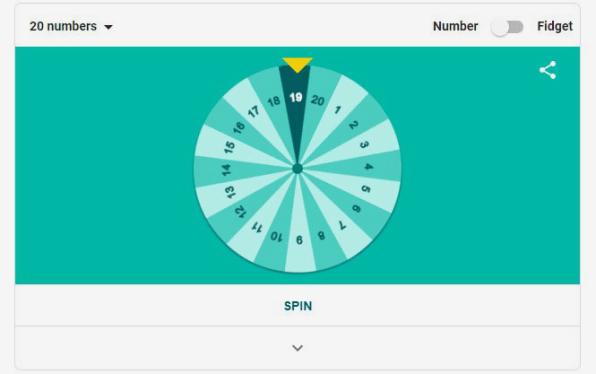
For a more visual (although also more limited) version of the same concept, type “spinner” into Google and then switch the toggle at the top to “Number.” You can then create a wheel with anywhere from two to 20 numbers and click it to spin and land on a random digit.

The Google Search number spinner will land on a random digit, with anywhere from two to 20 options in place.

2. For even simpler decisions, let Google flip a coin or roll a die for you by typing either command into the search box. (Bonus tip: You can also ask Google to spin a dreidel.)

3. Make Google serve as your personal time-keeper by typing “timer” or “stopwatch” into a search box. You can also launch right into a specific timer by typing “20 minute timer” (or whatever amount of time you desire).

Like this Article ?  Share It !    You now can easily enjoy/follow/share Today our Award Winning Articles/Blogs with Now Over 2.5 Million Growing  Participates Worldwide in our various Social Media formats below:

FSC LinkedIn Network:   www.linkedin.com/in/fscnetwork

Facebook:  http://www.facebook.com/pages/First-Sun-Consulting-LLC-Outplacement-Services/213542315355343?sk=wall

Google+:  https://plus.google.com/115673713231115398101/posts?hl=en

Twitter: Follow us @ firstsunllc

Question: Want the ‘the best/current articles/blogs on the web’ on Job Search, Resume, Advancing/Changing your Career, or simply Managing People?

Answer: Simply go to our FSC Career Blog below & type(#career, #leadership, #life) in Blog Search:  https://www.firstsun.com/fsc-career-blog/

What Skill Sets do You have to be ‘Sharpened’ ?

Continue of article:

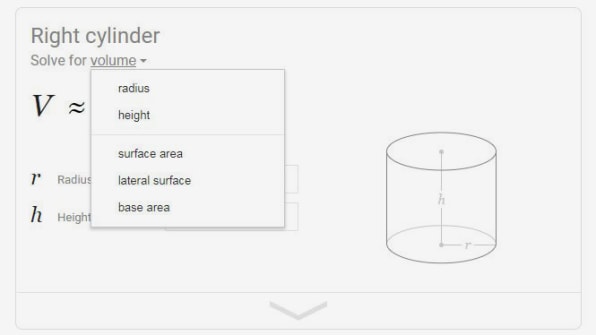
4. You probably know that Google can act as a basic calculator, performing addition, subtraction, and so on—but did you know it can also do all sorts of advanced mathematics? For instance, you can have Google graph complicated equations like “cos(3x)+sin(x), cos(7x)+sin(x)” by entering them directly into the search box. And you can fire up a geometry calculator by searching for a specific query—”area of a circle,” “formula for a triangle perimeter,” or “volume of a cylinder”—and then entering in the values you know.

Google’s geometry calculator can work with a variety of advanced formulas.

5. Google has separate standalone calculators that can figure out tips and monthly mortgage payments, too. Search for “tip calculator” or “mortgage calculator” to give either a whirl.

6. The next time you need to convert between units, try asking Google to do the heavy lifting for you. In addition to  handling currency and practically any measurement system, Google can convert megabytes to gigabytes, Fahrenheit to Celsius, and days into minutes or even seconds. You can explore all the possibilities by typing “unit converter” into the search box and then looking through the dropdown menus that appear—or you can perform most conversions directly by searching for the exact changeover you want (e.g. “14.7 lbs to oz”).

7. Who among us hasn’t come across a sprawling number and stared at it blankly while trying to figure out how to say it aloud? Search for any number followed by “=english”—”53493439531=english,” for example—and Google will spell out your number for you in plain-English words.

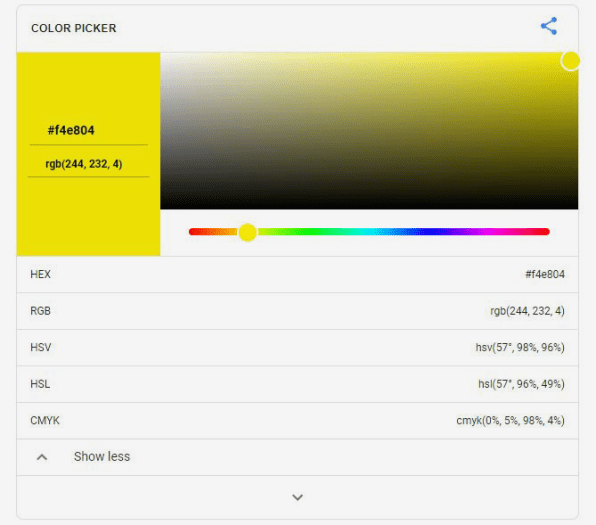
8. Designers, take note: Searching for “color picker” will pull up a simple tool that lets you select a color and find its hex code, RGB value, CMYK value, and more—and easily convert from one color code type to another.

The color picker tool is an easy way to find color codes and convert among different code types.

9. You can also see an identifying swatch for a specific color code by typing it into Google in almost any form: “#fcef00,” “rgb(252, 239, 0),” “pantone 444 u,” and so on.

10. Get up-to-date info on any flight, anytime, by typing the airline name or code and flight number directly into Google.

11. Find your current IP address in a snap by typing “IP address” into any Google prompt.

12. Google can measure your internet speed and give you speedy results, regardless of whether you’re on Wi-Fi or mobile data. Just type “speed test” into a search box and then click the “Run Speed Test” button to get started.

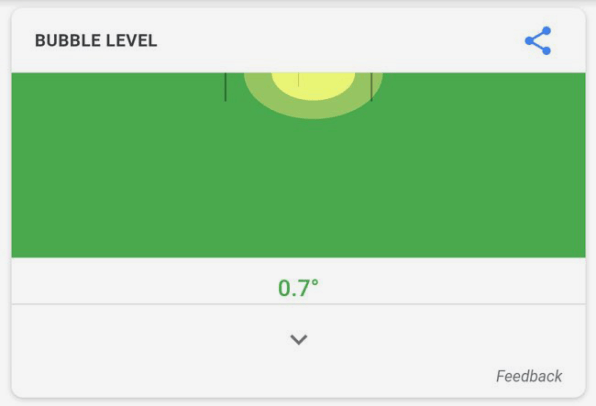
13. From your phone, type “bubble level” into Google to load an on-demand level tool and make sure the picture you’re hanging is perfectly straight.

Keep the toolbox in the closet and pull up a bubble level right from Google Search on your phone.

14. Trying to stay on beat? Google “metronome,” and the search site will give you a fully functional metronome with a slider to start any beat-per-minute setting you need.

15. Search or browse through hundreds of old print newspapers at Google’s hidden newspaper archive site. The selection is pretty hit-and-miss, but you just might find what you’re after.

16. Hardly anyone knows it, but Google has a system that allows you to save results from your searches and then organize them into collections. From a browser, it works with images, jobs, and places; after searching for any of those types of items, you’ll see small bookmark icons alongside your results that can be clicked to save the associated entities. If you have an Android phone, you can also save web pages by pulling them up within the Google app and then looking for the bookmark icon in the upper-right corner of the screen. Either way, you can find and sort your saved stuff by going to google.com/collections or looking for the “Collections” option in the Google app on Android (tucked away within the “More” menu).

ADVANCED INFORMATION

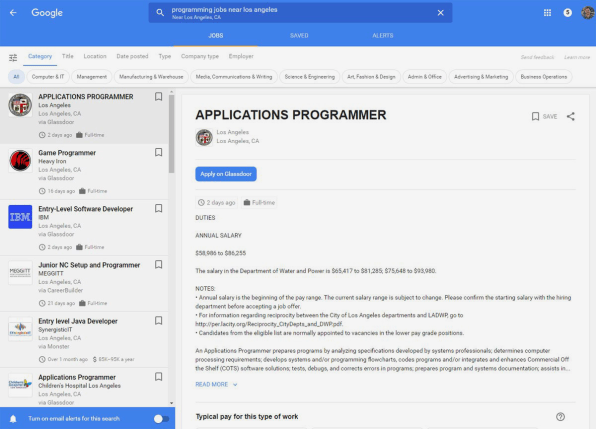
17. Find your next job on Google by searching for “jobs near me” or something specific like “programming jobs.” You can then narrow down the search as needed, find direct links to apply to positions, and even turn on email alerts for worthwhile queries.

Google’s job search function pulls in postings from all over the web and presents them in a centralized, easy-to-follow manner.

18. Thinking about going back to school—or maybe enrolling in college for the first time? Google can give you oodles of useful info about any four-year college in the United States. All you have to do is search for the school’s name, and you’ll get an interactive box with facts about its average cost (before and after financial aid for any income level) along with its acceptance rate, typical test scores, rankings, and notable alumni.

19. Get the perfect recipe for any meal by searching for the name of a dish from your mobile device. Google will give you a scrolling list of choices and will even provide one-tap commands for sending any set of instructions to a Google Assistant Smart Display connected to your account. (Bonus tip: You can search for drink recipes in the same way—again, though, only on a mobile device for some reason.)

20. Speaking of eating, you can Google any individual ingredient to find detailed nutritional information about the food. You can also search for specific nutritional queries—things like: “How many calories are in avocados,” “How much fat is in an egg yolk,” or “How much protein is in chickpeas.”

21. Figure out which streaming service has the show or movie you want by searching for “watch” followed by the program’s title. Google will give you a list of places where you can find it—both as part of an active subscription and on an a-la-carte purchasing basis.

22. Craving some variety with your tried-and-true songs? Try searching for an artist name and song title together—like “Michael Jackson Billie Jean,” for instance—and then, in the info box that appears, click the “Other recordings of this song” header. That’ll bring up an interactive list of artists who have covered your favorite tune, complete with videos to watch each alternate version.

23. Fan of the sportsball? Search for the name of a team or league to get real-time game scores and detailed recaps of recent matchups.

LOCATION FIXATION

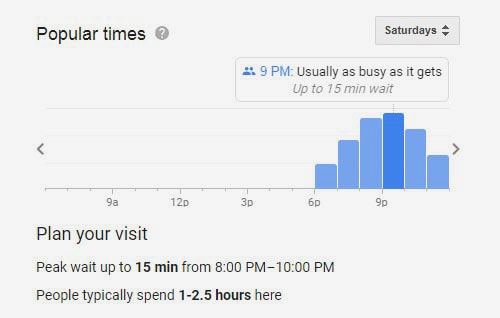
24. Avoid frustration and check on a restaurant’s average wait time for any day and time before you head out. Just search for the restaurant’s name, then look for the “Popular times” section in the info box that appears. There, you can click a dropdown menu to select any day and then scroll through a timeline to see the typical crowd level and wait length for any given hour.

See how long you’re likely to wait at a restaurant by using Google’s “Popular times” tool.

25. Generate a list of upcoming local events by searching for “events near me” from your mobile device. Once the info box is in front of you, you can jump ahead to other days or tap any event to get additional info. If you’re looking for something specific, you can also search for terms like “concerts near me,” “food festivals near me,” or “conferences near me.”

26. Google has a whole host of ways it can help you figure out the time in any location. Aside from being able to search for “time” followed by the name of a place to see the current time in that area, you can quickly perform time zone conversions by typing in something like “time 2:00 p.m. India”—which would show you what time it’ll be in yourlocation when it’s 2:00 p.m. in India.

27. Get a fast glance at the weather for any city on any day by typing “weather” followed by the city name—and then the day you’re interested in, if it’s anything other than today.

SEARCH SMARTS

28. Trying to reach a site that’s temporarily down or permanently offline? Type “cache:” followed by the site’s address directly into Google. That’ll take you to a recently saved version of the site hosted on Google’s own servers.

29. You can search any site through Google to find whatever you need: Simply type in the term you want followed by “site:” and the URL—”site:fastcompany.com,” for example—and you’ll get a list of results that’s practically guaranteed to be better than whatever the site’s own internal search function would give you.

30. If you’re looking for information from a specific time period, type in the term you want and then click or tap the “Tools” menu at the top of the Google results page. Then you can limit your search results to a particular time—if, say, you wanted to see stories about Apple earnings from January 2018.

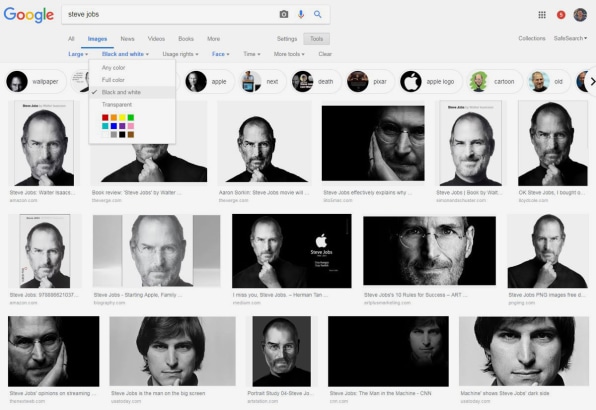
31. Google’s image search function has a similarly useful option: After searching for an image, tap “Tools” at the top of the results. You’ll be able to filter your image search to show only results of a particular size or color—or only images that contain a face or were created during a specific period of time.

Filter your image search to find exactly the type of result you need.

32. Save yourself a bunch of clicks or taps and tell Google to show more search results per page—without forcing you to press that pesky “Next” or “More” button. Just hop over to this preferences page and move the slider under “Results per page” as high as you’d like, then be sure to hit the blue “Save” button at the bottom of the screen. Google warns that the higher the number, the slower your searches may be—but realistically, as long as you’re on a reasonably speedy internet connection, you aren’t likely to notice much difference.

33. On that same preferences page, you can instruct Google to open every search result as a new tab by default. If you find yourself opening links in new tabs more often than not, that can be a very welcome change.

GETTING PERSONAL

34. Got a tracking number from the U.S. Postal Service, UPS, or FedEx? Paste the number directly into Google Search. It’ll give you a direct link to the latest update on your package’s delivery.

35. Google Search can dig up info from your own personal data, so long as you use services such as Gmail, Google Calendar, and Google Photos. Try searching for “my trips,” “my flights,” “my appointments,” “my reservations,” “my purchases,” “my bills,” or “my photos.” With some of those, you can get even more specific: “my AT&T bills from 2018,” “my photos from france,” “my photos from February 2016,” and so on. As long as you have matching data in a compatible Google service, you’ll get results right then and there.

Quickly find photos featuring a particular time, place, subject, or event by searching directly in Google Search.

36. You can browse or search through your own past Google searchesand even rediscover results you clicked while signed into your account by visiting myactivity.google.com. Click the “Search” tab at the top to narrow the results down only to Search (as opposed to also seeing your activity from other Google products).

37. Want to erase the past—or maybe just part of it? Hang onto this link. It makes it easy to wipe away your entire Google Search history, should the urge ever arise, or to erase your last hour’s worth of searches for a more limited reset.

JUST FOR FUN

38. The next time you need to calm down and focus, type “breathing exercise” into any Google box. You’ll get a one-minute guided breathing exercise to help recenter your brain.

39. If you need a serious break from productivity, let Google entertain you with a hidden Search game:

  • Search for “Atari Breakout,” then click on the “Images” tab at the top of the screen to test your old-school skills.
  • Search for “Zerg Rush” and fight off the falling O’s before they erase the page.
  • Search for “Google Pacman” and chomp away at those pretty yellow pellets.
  • Search for “Solitaire,” “Minesweeper,” “Tic Tac Toe,” or “Snake” for some good old-fashioned fun.

40. Last but not least, take a trip back in time by searching for “Google in 1998.” That’ll let you look through one of Google’s earliest site designs, from the time of the company’s launch—and make you appreciate just how far things have come.

ABOUT THE AUTHOR


FastCompany.com | February 25, 2019

#CareerAdvice : #SalaryNegotiation -These are the #SalaryTrends you Need to Know Before your Next Negotiation. A Must REad for All!

Even as the job market breaks records, wage growth has remained sluggish in the U.S.–and employers don’t seem too anxious to change their penny-pinching ways. Two-thirds of employers reported retention as a top concern in PayScale’s “2019 Compensation Best Practices Report,” up 7% from 2018. But of the 81% that are planning base pay increases, slightly more than two-thirds are estimating an increase of 3% or less.

So if you’re seeking a higher number on your paycheck, it’s likely up to you to make it happen. Before you go into a salary negotiation for a new job or a bump in pay for the position you already have, here is the information you should seek out to make your case.

START WITH SALARY GUIDES

Annual salary guides and compensation reports like those from PayScale, Randstad, Robert Half, and others may give you some insight into general salary trends. You can get a sense of how respondents say they’re budgeting for salary increases, what their main concerns are about compensation, and how they’re thinking about salaries in general.

In addition, sites like Glassdoor and Salary.com can also give insight into specific companies and their compensation practices. And while the general information you find on the internet can be a helpful starting point, take it with a grain of salt, says Lydia Frank, PayScale‘s vice president of content strategy. “It’s a good idea to get your information from a variety of sources,” she says. Self-reported salary information you find online is often inflated, she says.


Like this Article ?  Share It !    You now can easily enjoy/follow/share Today our Award Winning Articles/Blogs with Now Over 2.5 Million Growing  Participates Worldwide in our various Social Media formats below:

FSC LinkedIn Network:   www.linkedin.com/in/fscnetwork

Facebook:  http://www.facebook.com/pages/First-Sun-Consulting-LLC-Outplacement-Services/213542315355343?sk=wall

Google+:  https://plus.google.com/115673713231115398101/posts?hl=en

Twitter: Follow us @ firstsunllc

Question: Want the ‘the best/current articles/blogs on the web’ on Job Search, Resume, Advancing/Changing your Career, or simply Managing People?

Answer: Simply go to our FSC Career Blog below & type(#career, #leadership, #life) in Blog Search:  https://www.firstsun.com/fsc-career-blog/

What Skill Sets do You have to be ‘Sharpened’ ?

Continue of article:

CONSIDER GEOGRAPHIC DIFFERENCES

PayScale’s research found that, over time, some U.S. metro areas led in compensation growth while others lagged. For example, the PayScale Index for the fourth quarter of 2018 found San Francisco having the largest year-over-year wage growth at 4.9%. Los Angeles, Boston, and New York were tied for 7th place with 2% year-over-year growth. The Nashville metro area came in at No. 32 with -0.7% growth.

If you’re in a growing sector in a high wage-growth city, this could be a promising indicator for compensation negotiations. But when you factor in inflation, wage growth generally isn’t much to write home about. “Mostly we have less spending power in our paychecks, even if it’s a higher number than we did in 2006, because inflation has eaten away some of those increases. I think that’s a nuance that gets missed,” Frank says.

UNDERSTAND YOUR EDGE

Jim Link, chief human resources officer (CHRO) at Randstad, says one thing that stood out to him when reviewing the Randstad “U.S. 2019 Salary Guide,” was the rise in importance of some positions that hadn’t seen much of a base pay increase in the past, especially in manufacturing and logistics sectors. Even assemblers and programmable controllers, where a relatively small degree of technical skill is needed, are seeing average raises in the 5% range.

“To me, that’s a good sign for our economy, but it’s also fascinating to me that it’s taken this long for those positions to really flex their muscle in our economy. It’s about time and a little overdue, in my mind,” he says.

This year, Randstad’s research found more marked salary jumps in some specializations and skill intersections, which may offer a salary negotiation advantage, too. For example, engineering coupled with project management experience and information technology (IT) pros with healthcare experience got bigger pay increases than their counterparts who didn’t specialize, he says.

PRICE YOUR JOB PROPERLY

Frank encourages people who feel like they’ve taken on more responsibility to check in with human resources. Ask to look at the job description that is being used for your current job. If you’re performing additional tasks, especially those that are typically done by someone in a higher-level job, that can be a great negotiating tool.

“Sometimes, HR doesn’t understand how the job has evolved, and the manager doesn’t necessarily know they’re supposed to alert HR to that,” she says. Frank believes most HR departments will be open to this conversation so they can write more accurate job descriptions in the future.

CONSULT THOSE IN THE KNOW

Whether you’re seeking information for your current job or a new one, seek out colleagues who formerly worked for the company or champions within the company who have supervisory responsibilities. They may be able to provide insight into compensation levels or expectations, Link says. More important, they may be able to give you insight into how the company thinks about pay. For example, they may help you see whether the company is more open to investing in benefits or performance-based compensation than base salary increases.

YOUR OWN PERFORMANCE AND VALUE

Of course, be prepared to show the results you’ve generated and the value you’ve contributed, Link says. Whether you’re negotiating for more pay in your current company or proving your worth to a prospective employer, walk in with a list of how you’ve gone above and beyond in your job, the skills you have added, and how you’ve helped make a difference in the company’s performance. “Never forget that the best information you have is about your own performance,” he says. Show that you’re a team member worth adding or retaining, and you may be rewarded with additional compensation.

ABOUT THE AUTHOR

Gwen Moran writes about business, money and assorted other topics for leading publications and websites. She was named a Small Business Influencer Awards Top 100 Champion in 2015, 2014, and 2012 and is the co-author of The Complete Idiot’s Guide to Business Plans (Alpha, 2010), and several other books

 More


FastCompany.com | February 25, 2019

#Leadership : #RecruitingTalent -Why #OlderWorkers are the Economy’s Hidden Asset. #AgeDiscrimination is real, and a #JobLoss around age 60 can Force #EarlyRetirement.

The association of old age with inevitable decline runs deep. To carry on with work–or indeed with anything more demanding than afternoon lectures, a movie, and an early dinner–during the traditional retirement years seems cute at best and depressing at worst.

Economist John Kenneth Galbraith called these common reactions–surprise laced with condescending admiration or misplaced concern–the “Still Syndrome.” It’s the “young” asking questions like, ‘Are you still well?’ ‘Are you still working?’ ‘I see that you are still taking exercise.’ ‘Still having a drink?’ As a compulsive writer, I am subject to my own special assault, ‘I see you are still writing.’ ‘Your writing still seems pretty good to me.’ The most dramatic general expression came from a friend I hadn’t seen for some years: ‘I can hardly believe you’re still alive!’”

No one would think “decline” on meeting Luanne Mullin, age 71. Mullin has assembled a portfolio of activities in recent years, some paying gigs and others volunteer jobs. “Life is full,” she says, laughing. That’s an understatement. Among her jobs with incomes are project manager for a nonprofit organization in Marin County, California, that focuses on older adults and the disabled; her own coaching business and workshops; and acting gigs in the backgrounds of television and movies. Mullin has a portfolio of volunteer ventures, too. She’s a volunteer leader for the mature student organization at the College of Marin, focusing on lifelong learning. She helps produce a local documentary film series. She organizes salons bringing people together to discuss critical topics.

Mullin has plenty of company in her entrepreneurial quest. The demographics of aging ranks as one of the most significant long-term forces shaping the U.S. economy and society, alongside globalization, automation, and climate change. The numbers are striking. The U.S. Census Bureau forecasts that those individuals 65 years and older will account for more than 21 percent of the U.S. population–about 73 million–in 2030. Older Americans are also living longer, on average. Life expectancy for people reaching age 65 now averages 19.4 years. That’s up from 13.9 years in 1950.

OLDER WORKERS ARE STARTING MORE BUSINESSES

Older Americans are showing plenty of zest for life at work and at home. They aren’t doddering life away as antiquated stereotypes, and tasteless jokes suggest. The swelling numbers of Americans age 50 and older and their experiments in rethinking and reimagining the second half of life will have a profound impact on everyday life in America.

“In coming decades, many forces will shape our economy and our society, but in all likelihood, no single factor will have as pervasive an effect as the aging of our population,” said Ben Bernanke in a speech when he was still chair of the Federal Reserve Board. For instance, the future trajectory of housing markets, public transportation networks, and urban design will be shaped by growing numbers of mature adults. The global age-friendly city initiative is encouraging many urban communities to accommodate an aging population. Well-connected transportation networks of public transit, ride-sharing apps, and on-demand vans can ease trips among modern elders to work, the grocery store, restaurants, yoga studios, and medical appointments.

Like this Article ?  Share It !You now can easily enjoy/follow/share Today our Award Winning Articles/Blogs with Now Over 2.5 Million Growing  Participates Worldwidein our various Social Media formats below:

FSC LinkedIn Network:   www.linkedin.com/in/fscnetwork

Facebook:  http://www.facebook.com/pages/First-Sun-Consulting-LLC-Outplacement-Services/213542315355343?sk=wall

Google+:  https://plus.google.com/115673713231115398101/posts?hl=en

Twitter: Follow us @ firstsunllc

Question: Want the ‘the best/current articles/blogs on the web’ on Job Search, Resume, Advancing/Changing your Career, or simply Managing People?

Answer: Simply go to our FSC Career Blog below & type(#career, #leadership, #life) in Blog Search:  https://www.firstsun.com/fsc-career-blog/

What Skill Sets do You have to be ‘Sharpened’ ?

Continue of article:

An impressive body of scholarly research suggests that, given the opportunity, people in the second half of life can be as creative, innovative, and entrepreneurial as their younger peers, if not more so. Experienced adults are experimenting with different ways to stay attached to the economy, including self-employment, entrepreneurship, full-time jobs, part-time work, flexible employment, and encore careers. Here’s one indication of the embrace of work: According to the Bureau of Labor Statistics, between 1995 and 2016, the share of men ages 65 to 69 in the labor force rose from 28 percent to 38 percent. The comparable figures for women were 18 percent and 30 percent.

Here’s another critical number with a similar message: The 55-to-64-year-old age cohort accounted for 25.5 percent of new entrepreneurs in 2016, up from 14.8 percent in 1996, according to the Ewing Marion Kauffman Foundation. The Bureau of Labor Statistics reports that the unincorporated and incorporated self-employment rate among workers age 65 and older was the highest of any age group. The 65-plus rate of self-employment was more than triple the unincorporated rate and five times the incorporated rate of the 25-to-34-year-old age group. Put it this way: The 50-plus population will start more businesses in the years ahead than any other demographic.

WHAT OLDER WORKERS CAN BRING TO THE WORKFORCE

Here is a big, grassroots idea that is already making its presence felt: Experienced workers and 50-plus entrepreneurs rethinking and reimagining the second half of life. A new era of broad-based prosperity is within our grasp. Older adults are in the vanguard of inclusiveness by breaking down barriers to staying employed. The fight for purpose and a paycheck is a battle for respect and recognition.

“Perhaps the greatest opportunity of the twenty-first century is to envision and create a society that nurtures longer lives not only for the sake of the older generation, but also for the benefit of all age groups–what I call the Third Demographic Dividend,” writes Linda Fried, dean of the Mailman School of Public Health at Columbia University. “To get there requires a collective grand act of imagination to create a vision for the potential of longer lives.” Fried is spot on.

Older adults are already exercising their imagination as productive workers and motivated volunteers and engaged entrepreneurs. They’re battling against age discrimination, taking actions to remove pernicious stereotypes holding down experienced workers. Older Americans represent an enormous market for goods, services, and experiences. Many of those products and services will be built and designed by older adults with a flair for understanding the 50-plus market. The widely touted innovative benefits of employing a diverse workforce include tapping into the insights of older workers.

Several factors are coming together and reinforcing one another, bringing new ideas and different expectations about the second half of life from society’s fringes to the mainstream. Boomers are better educated than previous generations. They’re also healthier, with a sixty-five-year-old today having the same risk of mortality or serious illness as those in their mid-50s a generation ago.

The most under-appreciated aspect of work may well be that it’s a social activity. Colleagues care if you show up. Work offers the possibility of creativity and purpose, a reason to get up in the morning, an opportunity to tap into skills and knowledge developed over the years. Work helps people stay physically fit and mentally active. Social connections are one of the best contributors to meaningful longevity and, for many older adults, the community in which they spend the most time is the workplace. Employers are finally looking at experienced workers with greater appreciation.

A big reason behind the change in employer attitudes is the relatively tight labor market of recent years. Employers continuously complain they can’t find the qualified labor they need. I’ve never found the lament particularly convincing. It seems many experienced workers could do the job, given the chance and perhaps with some training. But executives seemed blind to the opportunity experienced workers offered–until now. Management teams are finally learning they can’t afford to ignore experience.

Age discrimination is real, and a job loss around age 60 can force early retirement. The business cycle hasn’t been tamed, and more recessions lie in our future. The timing of the next downturn is uncertain. But it’s a safe bet that the unemployment rate will climb higher at some point, including for experienced workers in the second half of life.

That said, there is no going back. America has passed a significant inflection point when it comes to experienced workers and mature entrepreneurs creating a more welcoming economy and labor market. Experienced workers are no longer obsolete. They’re a valuable asset–productive and creative–with older entrepreneurs in the vanguard.


This article is adapted from Purpose and a Paycheck: Finding Meaning, Money, and Happiness in the Second Half of Life by Chris Farrell. It is reprinted with permission from HarperCollins Leadership. 


FastCompany.com | February 23, 2019 | BY CHRIS FARRELL 6 MINUTE READ

[/fusion_builder_column][/fusion_builder_row][/fusion_builder_container]

#CareerAdvice : What You Need to Know About the Future of the #Job Search . A #MustRead for All!

Searching for a new job and finding the right person for a role is undeniably a task within itself for job seekers and talent acquisition professionals alike.

From writing a compelling resume to nailing an interview and tracking candidates to securing an offer, there’s quite a deal of heavy lifting involved for all parties.

Even more, the advent of new technologies continues to redefine the job search landscape and talent industry. Every day, the ecosystem gradually evolves as candidate and employer demands continue to shift.

The future of the job search is still on the horizon, but a few things are for sure. People can expect trends like artificial intelligence, online personas and mobile applications to continue to transform our world.

AI: Enabling Productivity & Improving Recruiting Relationships

It would be amiss to not acknowledge the emergence of artificial intelligence in the hiring and job search space. Automation is already making waves today with chatbots, screenings, applicant tracking systems and intelligent interviews.

As employers continue to use machine learning to refine their recruitment process to find the perfect candidate, job seekers will have to rise to the challenge of adapting to emerging technologies. Candidates will have to become more comfortable with interacting with machines, from writing bot-friendly resumesto speaking to them throughout the hiring process.

While technology will enable efficiency within the hiring process by freeing up the time to complete mundane tasks, candidates and recruiters can also await more opportunities for face time and meaningful relationships.

“AI will never replace human recruiters in our industry, but it will enable recruiters to spend more ‘human’ time with candidates,” said Denis Edwards, Kforce Chief Information Officer.

Like this Article ?  Share It !    You now can easily enjoy/follow/share Today our Award Winning Articles/Blogs with Now Over 2.5 Million Growing  Participates Worldwide in our various Social Media formats below:

FSC LinkedIn Network:   www.linkedin.com/in/fscnetwork

Facebook:  http://www.facebook.com/pages/First-Sun-Consulting-LLC-Outplacement-Services/213542315355343?sk=wall

Google+:  https://plus.google.com/115673713231115398101/posts?hl=en

Twitter: Follow us @ firstsunllc

Question: Want the ‘the best/current articles/blogs on the web’ on Job Search, Resume, Advancing/Changing your Career, or simply Managing People?

Answer: Simply go to our FSC Career Blog below & type(#career, #leadership, #life) in Blog Search:  https://www.firstsun.com/fsc-career-blog/

What Skill Sets do You have to be ‘Sharpened’ ?

Continue of article:

Candidates Are Treating the Job Search Like an Online Shopping Experience

Now more than ever, job seekers are treating the job search like a shopping experience, using an average of 16 to 18 sources when looking for a job. They’re doing their due diligence to make informed decisions with prospective employers. Even more so, candidates are increasingly becoming aware of an employer’s brand and reputation.

The job search of the future will continue to see this trend, with job hunters seeking out more content to learn about companies and their open positions. Peer review sites like Glassdoor and social media platforms will be used to gather an insider’s perspective within a company and how employees perceive an organization.

“Companies with a competitive advantage are sharing compelling content (not just posting jobs) that adds value — including why working at their organization is different than working at similar companies, which helps guide a candidate’s decision to apply or accept an offer,” said Allison Kruse, Kforce Director of Content & Social Media.

Online brand awareness and management will be critical for employers and recruiters who wish to attract active and passive candidates. For any organization looking to attract talent, the job seeker’s trust will be the ultimate goal.

On a similar note, branding and online reputation will be equally as important for candidates searching for a job.

Online Professional Branding Will Be King

Gone are the days of requested references validating your professionalism and skill sets being enough for prospective employers. We now live in a digital world where a job seeker’s online presence is just as important as the coveted resume.

There’s a growing desire among employers to experience candidates in 3D — on paper, in person and online. They’re Googling your name and will be for the foreseeable future. Candidates who want to land a job in the future will have to create the digital footprint employers want to see.

Job seekers should optimize their professional brand by showcasing commitment to their work, highlighting professional achievements, curating industry content and more.

“Your professional brand plays a pivotal role in your career. Regardless of if you are currently looking for a new job or not, it is important to strategically design and actively manage your digital persona,” Kruse said.

“Future Proof Jobs” & the Return of Job Security

In recent years, millennials entered the workforce and demanded job flexibility, career paths and stewardship. Currently entering the market is Gen Z — individuals born during the mid-‘90s to the early millennia. This generation now desires job stability in contrast to millennial job hopping.

Emerging workers will likely seek roles that are practical, staple and in high demand across various industries like health care, technology and finance. In turn, employers should prepare to offer training and development opportunities to foster career growth to attract future job seekers.

In fact, 7 out of 10 people say that training and development opportunities influence their decision to stay with a company.

“Managers must ensure that there is an investment strategy aligned to training and development priorities. This can come through resources such as enhanced learning management and enablement tools, data analytics, surveys and more,” said Ashley Ehlinger, Kforce Director of Training and Development.

The Only Apply Is Mobile Apply

With the onset of the digital age, mobile devices continue to rise in popularity. The trend has created a new phenomenon that’s only expected to grow — applying to jobs on the go.

Nearly 79 percent of millennials use their phones to apply to jobs, with Gen Xers trailing behind at 73 percent and Baby Boomers at 57.2 percent.

Mobile apply jobs allow job seekers to save time by conveniently and quickly applying to jobs within minutes on their highly-accessible smartphones. Free mobile apps like Dropbox and Google Drive are excellent choices for candidates to store their resume to apply on the go easily. Downloading job apps and creating profiles also assists candidates in making the job application process as easy as one click.

Ultimately, the convenience of mobile platforms should encourage employers, recruiters and candidates to think mobile-first and consider how they can use mobile platforms to improve efficiencies in the application and hiring process.

In the future to come, job seekers and hiring professionals can anticipate technology to continue to revolutionize the job hunt and improve productivity. From chatbots to online branding and more, it’ll be up to professionals to take advantage of emerging tools to continue to grow throughout the employment journey and stay ahead of the competition.


GlassDoor.com |  |

#CareerAdvice : #JobSearch – 4 Smart Tactics(and Email Templates) for Sending Emails to #Recruiters . Great Read!

Connecting with recruiters is one of the best strategies for scoring the interview you need to get the job you want. Yet many job seekers find reaching out intimidating because they don’t know how to email a recruiter.

We’ll show you a few sample emails to help you get past fumbling around for the right words to presenting yourself in a way no recruiter could ignore.

Reasons to Write an Email to a Recruiter

Applying for jobs is easy. (Well, aside from that whole “attach your resume, and now type everything from your resume into this online form” dynamic we all love to hate.) But scoring that plum position — the one lots of strong candidates are competing for — is a challenge. A well-written letter can do a few things to highlight you as an applicant to watch.

  • It shows that you’re proactive. Recruiters want to see that you’re truly interested in a position with their company and not just firing off resumes in hopes of getting a nibble.
  • It demonstrates your written communication skills. The ability to put your thoughts into writing cleanly and clearly is an asset no matter what position you apply for.
  • It sets you apart from the pack. Only the top two percent of candidates are considered for positions, and a well-crafted letter to a recruiter can help you stand out.

There’s another compelling reason to forge connections with recruiters: an estimated 70-80 percent of positions are not posted. If you’re sitting around waiting for a position to appear on the job boards you frequent, you could be missing important opportunities. Being proactive can pay big dividends.

Like this Article ?  Share It !    You now can easily enjoy/follow/share Today our Award Winning Articles/Blogs with Now Over 2.5 Million Growing  Participates Worldwide in our various Social Media formats below:

FSC LinkedIn Network:   www.linkedin.com/in/fscnetwork

Facebook:  http://www.facebook.com/pages/First-Sun-Consulting-LLC-Outplacement-Services/213542315355343?sk=wall

Google+:  https://plus.google.com/115673713231115398101/posts?hl=en

Twitter: Follow us @ firstsunllc

Question: Want the ‘the best/current articles/blogs on the web’ on Job Search, Resume, Advancing/Changing your Career, or simply Managing People?

Answer: Simply go to our FSC Career Blog below & type(#career, #leadership, #life) in Blog Search:  https://www.firstsun.com/fsc-career-blog/

What Skill Sets do You have to be ‘Sharpened’ ?

Continue of article:

How to Email a Recruiter

Recruiters want to hear from you. It’s their job to find the perfect candidates for the positions they need to fill, and they’re on the lookout for talent. But recruiters also get a lot of emails, and their time is precious. Make sure your message meets these criteria.

  • It’s respectful. Remember that you’re communicating in a professional capacity. Be friendly (Hi Amy,) but not too casual (Well, hello there, Amy!).
  • It clearly states your intent. What’s the purpose of your email? You need to know what you want the recruiter to do for you (consider your resume, schedule a chat, interview you) and communicate it clearly.
  • It’s brief. Get to the point. You don’t have to include a lot of background information; just say what you need to say.
  • It’s well-written. Edit. (Grammarly can help.) Get rid of filler words and phrases. Avoid email clichés.
  • It’s accurate. Be sure you spell and format the company’s name correctly. Get the recruiter’s name right.

Here’s a tip: Is it okay to contact a recruiter on LinkedIn? Yep. 87 percent of recruiters use LinkedIn regularly, including to connect with potential candidates. Just make sure you avoid these common faux pas when you reach out.

3 Sample Emails to a Recruiter

Make your email message as customized as possible. (Whatever you do, avoid spamming recruiters with a stock copy/paste message. They’re easy to spot and even easier to ignore.) Use these sample emails for inspiration.

Connecting With a Recruiter

Subject: Any content marketing roles at XYZ?

Hi Francois,

I read the Inc. article last week about XYZ Inc.’s rapid growth since landing five million in venture capital last spring. Way to rock that funding! Do you have plans to expand your marketing department?

I’ve had great success as the brand manager for Acme Widgets for the past five years. I’m planning to move into a broader content marketing role that challenges me to grow as a brand storyteller, and XYZ has been on my radar. I’d love to chat with you for 5-10 minutes to introduce myself and learn more about the company’s culture and any upcoming roles you need to fill. Would you have time for a quick phone call on Wednesday?

All the best,

Marla Dixon

The Follow-up Email

Subject: Lead copywriting role at Acme – Résumé attached

Hi Emily,

I applied for the lead copywriting role at Acme Widgets last week. I’m impressed by Acme’s crazy fast growth in the widget industry, and I’m excited by the opportunity to be part of a lively team.

I think I’m a great fit for this position because my ten years in the copywriting trenches have made me a whiz at turning out clean, compelling copy. In 2016, I won a Netty Award for Best Copywriting for my work on the ABC123.com website.

I’ve attached my resume so you don’t have to dig through your files to files to find my application. Would you like to schedule a time to chat about the role?

All the best,

Eric Ferguson

Referrals to Recruiters from Friends

Hi Louis,

I had lunch with Eric Ferguson yesterday and he mentioned that ABC123 was planning to hire more writers soon. I graduated from NYU with a bachelor’s degree in English in September, and I’d love to learn more about your writing team and what makes them tick. And, of course, I’d love to talk to you about open roles. Do you have a few minutes for a video chat on Wednesday at around 1 p.m.?

All the best,

Julia Engels

Related Links:


GlassDoor.com | February 19, 2019 |  Posted by 

#Leadership : #WorkSmart -How to Stop Being a People Pleaser. Great Three(3) Min Read!

Do you regularly ignore your own work in response to others’ need for your assistance? Do you say “yes” to meetings that do more to fulfill someone else’s agenda instead of your own? While being a people pleaser may endear you to others in the short term, this behavior can be harmful to your career in the long run.

Clinical psychologist Erika Martinez says this people-pleasing behavior begins in childhood. “Children have an innate drive to please their caregivers because it ensures their needs will be met, and thus, their survival,” says Martinez. As children, we figured out what we needed to do or say to make the grown-ups in our lives happy. While some adults learn to disengage from this behavior, seeming not to care at all about what others think, others continue these people-pleasing behaviors by acquiescing to the needs of others in their lives.

By looking to the outside for validation, people pleasers tend to put aside their own ambitions. Saying “yes” to a request when you’re already over-extended with things on your own plate means you’re valuing someone else’s needs and wants, and leaving your own unattended to. “By pleasing others all the time, you fail to prioritize yourself and the things that are important to you,” says Martinez.

As a result, you may find yourself missing deadlines on your work, feeling overwhelmed constantly, taking on too many responsibilities, and feeling taken for granted or resentful.

Try these four strategies to stop curb your people-pleasing tendencies:

BE SELF-AWARE

Recognize times when you are giving in to other people’s demands of you rather than taking control of your own time, and see if there’s a pattern. Are there certain scenarios or certain individuals where you are more likely to bend over backwards? Recognizing that you have a tendency to engage in people-pleasing behavior is the first step to changing the behavior.

Like this Article ?  Share It !    You now can easily enjoy/follow/share Today our Award Winning Articles/Blogs with Now Over 2.5 Million Growing  Participates Worldwide in our various Social Media formats below:

FSC LinkedIn Network:   www.linkedin.com/in/fscnetwork

Facebook:  http://www.facebook.com/pages/First-Sun-Consulting-LLC-Outplacement-Services/213542315355343?sk=wall

Google+:  https://plus.google.com/115673713231115398101/posts?hl=en

Twitter: Follow us @ firstsunllc

Question: Want the ‘the best/current articles/blogs on the web’ on Job Search, Resume, Advancing/Changing your Career, or simply Managing People?

Answer: Simply go to our FSC Career Blog below & type(#career, #leadership, #life) in Blog Search:  https://www.firstsun.com/fsc-career-blog/

What Skill Sets do You have to be ‘Sharpened’ ?

Continue of article:

PRACTICE SAYING NO

People pleasers often struggle to say the word “no.” The fear of not being liked, of losing friends or of disappointing others paralyzes them, making the word “no” seem like a swear word.

To practice saying “no,” Martinez suggests starting with small no’s, ones that don’t have any significant ramifications. Saying no to the cashier when asked if you want to purchase an add-on item, for example. Then start to say medium no’s, such as saying no to a friend who invites you out to coffee when you’re feeling overwhelmed with work or other responsibilities.

Make a list of situations that you struggle saying “no” to and work your way through the list, checking off each situation when you do say “no.”

BE ASSERTIVE, YET COURTEOUS

Often saying “no” comes with feeling the need to offer a long explanation for disappointing the asker. Jonathan Alpert, Manhattan psychotherapist, performance coach, and author of Be Fearless: Change Your Life in 28 Days, suggests providing only a short explanation or none at all, adding that a polite “no” can help people pleasers to be assertive with their decision.

“Saying “I’m sorry I can’t right now but will let you know when and if I can,” is polite, and puts you in a position of power by changing the dynamic,” says Alpert. This approach lets the asker know that they are not the priority right now and gives you the ability and the permission to return at a time convenient to you, to either fulfill the ask, or to tell the asker that you aren’t able to do what they’re asking.

EVALUATE YOUR RELATIONSHIPS

Examine the relationships you have with those you have trouble saying “no” to. Will you saying “no” to your sister mean that she’ll disown you and never come over for dinner again? Will saying “no” to a coworker who wants to pick your brain about something really mean that you won’t be able to have lunch together again? “When you understand the dynamic and your role, you won’t feel as worried about the consequences of saying no. You’ll realize that your relationships can withstand your saying no,” says Alpert.

ABOUT THE AUTHOR

Lisa Evans is a freelance writer from Toronto who covers topics related to mental and physical health. She strives to help readers make small changes to their daily habits that have a profound and lasting impact on their productivity and overall job satisfaction

 More


FastCompany.com | February 20, 2019