• About WordPress
    • WordPress.org
    • Documentation
    • Learn WordPress
    • Support
    • Feedback
  • Log In
  • LinkedIn
  • Facebook
  • X
p: 866.311.2514
First Sun Consulting, LLC | Outplacement Services and Career Transition Firm
  • Home
  • About
  • Services
    • Outplacement Services
    • Executive Coaching
    • Career Transition
  • Locations
  • Blog
    • Best of FSC Career Blog
    • FSC Career Blog
  • Members
    • FSC Career Modules
    • FSC LinkedIn Network
    • New! FSC AI Tools – Latest Technology for Resumes & Search
  • Our Clients
  • Contact Us
  • Menu Menu

Archive for category: First Sun Blog

You are here: Home1 / FSC Career Blog – Voted ‘Most Read’ by LinkedIn.2 / First Sun Blog

#Leadership : How Successful Leaders Communicate With Their Teams…Choosing your Medium — Text or In-Person? — and Keeping your Message Decisive and Focused are Just Two of the Key Strategies.

November 30, 2016/in First Sun Blog/by First Sun Team

One of the most critical factors for your success as a leader will be how you communicate with your team. On a primary level, communication is all about exchanging information, whether that means brainstorming as a group, delegating responsibilities, setting expectations or alerting others to a problem.

It might be awkward to call out an employee, but it will make the team stronger

Related: 5 Ways to Effectively Communicate With Employees

The completeness, accuracy, timing and form of your messages will directly affect how your plans are carried out.

Beyond that, how you communicate can play a massive role in the morale of your team — how you treat your employees will have a direct impact in how they respect you, respect one another and ultimately perform on the job.

So, what is it that makes successful leaders so good at communication? What strategies are they using?


Like this Article ?  Share It !    You now can easily enjoy/follow/share Today our Award Winning Articles/Blogs with Now Over 2.5 Million Growing  Participates Worldwide in our various Social Media formats below:

FSC LinkedIn Network: (Over 15K+ Members & Growing !)   www.linkedin.com/in/frankfsc/en

Facebook: (over 12K)   http://www.facebook.com/pages/First-Sun-Consulting-LLC-Outplacement-Services/213542315355343?sk=wall

  • Google+: (over 800K)https://plus.google.com/115673713231115398101/posts?hl=en
  • Twitter: Follow us @ firstsunllc

educate/collaborate/network….Look forward to your Participation !

Continue of article:

Strategies for success 

Take a look at some of the most successful communicators around you (and those in a bigger spotlight), and you’ll see the following traits:

Choose your mediums carefully. First, make sure you’re considering your medium(s) carefully. Being able to send out a mass text or voice message to your employees is important. These channels are appropriate for notifying your team of a last-minute meeting change but wouldn’t be for sending out the scope of a new project.

In the same way, email isn’t the best way to start a long back-and-forth conversation — especially if it concerns a sensitive subject. Learn to read the situation and decide on the appropriate medium; in the right form, your message’s effectiveness will spread.

Consider your tone and direction. This is especially important when speaking to someone face-to-face. When delivering messages, remember what you’re trying to accomplish and how you may come across. For example, if an employee has done subpar work or missed a deadline, you want that person to improve so the problem doesn’t happen again; you don’t want this employee to merely feel guilty about the error.

Frame your wording to achieve this goal; instead of scolding or reprimanding, use a friendlier tone with a corrective direction. You’ll accomplish far more, make your intentions clear and preserve morale this way.

Related: 4 Strategies to Connect With Millennials

Be as concise as possible. Good leaders strive to remain as concise as possible. Speaking and writing concisely is all about conveying as much information as possible in the smallest possible space, which saves time and maximizes the effectiveness of your writing. Grammarly has a fantastic article worth the read if you’re interested in digging into how to become a more concise communicator.

Keep your messaging decisive and focused. When writing or giving a message, you need to be decisive and focused, which means avoiding rambling, or working through a problem out loud. Speak only when you have something meaningful to say, and make sure your point is clear to whomever you’re speaking with. You can use a service like Evernote to better organize your thoughts, tasks and goals, and work on defining your thoughts in firmer frameworks this way.

Be proactive. Telling someone about a new project requirement isn’t effective if that someone is already halfway through the job. Try to be as proactive as possible by telling your employees early on what you expect from them. Set your expectations long before any actions are taken; and when something comes up, let your team know about it as soon as possible.

One easy way to put this into practice is to set more alerts on your phone and make use of calendar apps; this will force you to consider the timing of your messages, especially for things like follow-ups.

Always be available for conversation. This is important for building morale within your team. You can’t possibly be available for conversation 100 percent of the time, but you need to make your team feel comfortable communicating with you. Show patience and appreciation for their thoughts and opinions, and they’ll be more willing to share with you when they have a problem, when they need help or when they see something that can be improved.

Listen actively to every team member. Finally, listen actively to every member of your team. All team members are valuable, and their diverse range of opinions will open you up to new ideas and help you see flaws and inconsistencies you were previously blind to. Do this early and often to build trust within your team.

Executing the model

If these actions look intimidating to you, or you don’t have a track record of successful communication, don’t worry. Nobody is born an effective communicator; just as it takes us time to develop our understanding and use of language, it takes time to refine our skills as efficient communicators.

Related: Why ‘CEO’ Really Means Chief Communication Officer

With practice and dedication to improving your abilities, you can become a communicative and respectable leader in your environment.


Entrepreneur.com | November 30, 2016 | Larry Alton

 

https://www.firstsun.com/wp-content/uploads/2014/11/manager-meeting.jpg 450 600 First Sun Team https://www.firstsun.com/wp-content/uploads/2018/05/logo-min-300x123.jpg First Sun Team2016-11-30 21:21:302020-09-30 20:49:49#Leadership : How Successful Leaders Communicate With Their Teams…Choosing your Medium — Text or In-Person? — and Keeping your Message Decisive and Focused are Just Two of the Key Strategies.

Networking: Six(6) Ways to Use the Holiday Season to Your Advantage.

November 27, 2016/in First Sun Blog/by First Sun Team

You can always develop your career if you really want and believe it or not holidays are perfect for it. During the holiday season, it is easier to get in touch with people because you have a perfectly valid reason for it.  Therefore, it is up to you to use this excuse and advance your career.

Free- Holiday Dinner

Below you can find tips for making the most of this holiday season.

Related: Simple Tips to Help You Climb the Corporate Ladder

1. Attend events

Even if you don’t like parties or gatherings, stop by for half an hour so that you can be seen. Especially, attend to your employer’s holiday party. Greet your bosses and talk to people in other departments. Most importantly enjoy the party and socialize with your coworkers!

Like this Article ?  Share It !    You now can easily enjoy/follow/share Today our Award Winning Articles/Blogs with Now Over 2.5 Million Growing  Participates Worldwide in our various Social Media formats below:

LinkedIn: https://www.linkedin.com/in/chris-g-laughter-b46389198/

Facebook:  http://www.facebook.com/pages/First-Sun-Consulting-LLC-Outplacement-Services/213542315355343?sk=wall

Twitter: Follow us @ firstsunllc

Best Daily Choice: Follow the Best of FSC Career Articles/Blogs @

https://twitter.com/search?q=bestoffscblog&src=typeahead_click

Question: Want the ‘the best/current articles/blogs on the web’ on Job Search, Resume, Advancing/Changing your Career, or simply Managing People?

Answer: Simply go to our FSC Career Blog below & type(#career, #leadership, #life) in Blog Search:  https://www.firstsun.com/fsc-career-blog/

What Skill Sets do You have to be ‘Sharpened’ ?

Continue of the article:

2. Network

Holidays are perfect for networking. There are so many events and parties you can attend and as a result, you can make new connections or reestablish your connections with former friends or coworkers. Try to get to know new people and make new contacts. A big smile always helps. You never know maybe you may need those contacts one day.

Related Book: Business Networking and Sex: Not What You Think by Ivan Misner

3. Say thanks

Use the holiday season to thank people. Show your gratitude to your coworkers, clients, managers and others. Send them greeting cards or gift certificates. Make sure to make your gift personal and if possible, use hand writing. Sincere relationships are always important in life. Also, you never know who will help you the most in the future.

4. Look back

The holiday season is usually a slower season for many unless you are in retail. Use this slower month to reassess your career. Did you achieve your goals this year? What worked well and what didn’t? Rather than following your daily routine, give yourself some time and think about these. Also, write down what you want to achieve and how you can achieve it. Start working on your plans for next year.

5. Get together with your team

If you are leading a team, do a look back session with them as well. Make this a group activity. Listen to their suggestions and brainstorm for new ideas. Strategize for next year. Also, you can take them to a holiday lunch or dinner. This will improve their motivation and will bond you as a team.

Related: 4 Tips for Overcoming Fears and Reaching Success

6. Take a few days off

If you have any vacation days left, take this time off. Use it for spending time with your loved ones, doing some shopping and preparing yourself for the New Year. Relax a little bit, enjoy these wonderful days and prepare your mind and body for the coming year.


Entrepreneur.com | November 26, 2016 | Ceren Cubukcu


https://www.firstsun.com/wp-content/uploads/2015/11/Free-Holiday-Dinner.jpg 1100 1650 First Sun Team https://www.firstsun.com/wp-content/uploads/2018/05/logo-min-300x123.jpg First Sun Team2016-11-27 14:20:332020-09-30 20:49:50Networking: Six(6) Ways to Use the Holiday Season to Your Advantage.

Your #Career : Should You Apply For Your Dream Job If You’re Not Qualified?…Recruiters Weigh in with some Surprising Advice on the Importance of Being Qualified to Get the Job you Want.

November 24, 2016/in First Sun Blog/by First Sun Team
 There it is: your dream job. There’s just one problem. You don’t meet all the qualifications.

If your résumé is hard to read, no one will.

It’s a conundrum. Should you channel your inner life coach and go for it? Or should you follow the rules and wait until you have the right experience or credentials? If you sit it out, you may miss a great opportunity. On the other hand, you don’t want to waste your time or, worse, alienate hiring managers by wasting theirs.

It’s a tough question, but you should almost always err on the side of “go for it,” says career expert Cynthia Shapiro author of What Does Somebody Have to Do to Get a Job Around Here? 44 Insider Secrets That Will Get You Hired. After all, everyone has to take a job that stretches skills if they want to move ahead. Before you do, these career coaches and recruiters recommend asking yourself these six questions.

AM I 51% QUALIFIED?

Shapiro’s rule of thumb is that you should meet 51% of the listed qualifications. That’s an arbitrary estimate, but her point is that a job listing is like a house-hunter’s wish list: You ask for everything you want and understand that you’ll likely have to compromise.

“What they’re really looking for is an intangible that they can’t put in a job posting. If you’ve got 51% of what they’re looking for, you should proudly send your resume in,” she says.


Like this Article ?  Share It !    You now can easily enjoy/follow/share Today our Award Winning Articles/Blogs with Now Over 2.5 Million Growing  Participates Worldwide in our various Social Media formats below:

FSC LinkedIn Network: (Over 15K+ Members & Growing !)   www.linkedin.com/in/frankfsc/en

Facebook: (over 12K)   http://www.facebook.com/pages/First-Sun-Consulting-LLC-Outplacement-Services/213542315355343?sk=wall

  • Google+: (over 800K)https://plus.google.com/115673713231115398101/posts?hl=en
  • Twitter: Follow us @ firstsunllc

educate/collaborate/network….Look forward to your Participation !

Continue of article:

AM I MISSING REQUIREMENTS THAT ARE NECESSARY TO DO THE JOB?

Obviously, if you lack a specific degree, license, or specialized training necessary or legally required to do the job, you need to earn that before you apply. But what if you’re lacking the years of experience or some other less objective credential? Still go for it, says Maddie Stough, HR recruiting practice team leader at LaSalle Network.

For example, if the job description requires five to seven years of experience, she says, “You should be looking at it if you have three to 10 years of experience.” Use your resume and cover letter to highlight the responsibilities held and achievements within your job that align with what your stretch job will require.

CAN I EXPLAIN MY JOB PROGRESSION?

A spotty background with a year here and two years there is usually only problematic if it’s not strategic, says James Philip, managing director of executive search firm JMJ Phillip. You should be able to show that you didn’t just change jobs for the next title bump or pay bump, but that you were strategically increasing your experience and developing your skills, Phillip says.

“If they’ve just jumped jobs, there’s going to come a time when they haven’t really honed in on a craft,” he says. Be sure to highlight the career-focused reasons for making the moves you did.

IS MY RESUME A STRETCH?

First, make sure that you’re not stretching the truth on your resume to get your stretch job, Shapiro says. It’s very easy to find out if you actually held a title or hold the degree you have, and employers are increasingly likely to check references or even conduct a background check. So don’t include anything that isn’t true. But you can also show your best side without being deceitful.

When you’re writing your resume and cover letter, think of them as marketing tools, Shapiro says. Companies can usually teach job skills. Many are looking for intangible qualities like emotional intelligence, which is considered to be one of the fastest growing job skills. They also look for enthusiasm, corporate fit, attitude, and approach, which often can’t be taught, she says. Use your documents to convey how you approach challenges, look for ways to improve situations, and achieve success, she says.

HOW BIG IS THE COMPANY?

Phillips says it’s usually easier to stretch into a smaller company than a larger one. Big companies may have preliminary screening that matches resumes with job qualifications. If you’re in the applicant “slush pile,” you could be taken out of the running before you have a chance to shine in person. But that doesn’t mean you shouldn’t try to land that big-company job, he says. However, smaller firms may be more willing to take a chance on someone who is a little inexperienced.

DO I HAVE A CHAMPION?

A champion can change the equation, Stough says. If you have a contact, friend, or colleague who is giving you a warm introduction or recommendation for a stretch job, you’ve got a real advantage, she says. So before you apply, scour your network and LinkedIn contacts to see if you know someone (or know someone who knows someone, an otherwise “weak” connection) who can put your resume in play with a “thumbs up,” she says. That can go a long way toward getting you in front of hiring managers so you can sell yourself.


FastCompany.com | GWEN MORAN |  11.23.16 5:00 AM

https://www.firstsun.com/wp-content/uploads/2014/11/business-man-confused-9.jpg 400 800 First Sun Team https://www.firstsun.com/wp-content/uploads/2018/05/logo-min-300x123.jpg First Sun Team2016-11-24 11:35:562020-09-30 20:49:50Your #Career : Should You Apply For Your Dream Job If You’re Not Qualified?…Recruiters Weigh in with some Surprising Advice on the Importance of Being Qualified to Get the Job you Want.

#Leadership : Why Flex-Hours Will Save Your Millennial Workforce…Use These Three Tools to Help your Business Retain its Millennial Workforce.

November 22, 2016/in First Sun Blog/by First Sun Team

“I had to leave,” she said. Dianne, a tech-savvy marketer in Albuquerque, just accepted a flex-hours position at a software company. The decision to quit her current job wasn’t even a question.

Man at Computer with Boss

“They offered me more money and more flexibility,” Diane said. “Now I don’t have to pretend like I’m busy at a cubicle when I’m finished with my projects. I get to focus more on my side hustle. I get to live my life.”

 Young people like Dianne are dropping out of the 9 to 5 in droves. They don’t want to slave away for a company half their lives just so they can “live” when they’re retired.

Millennials want to live now.

And with remote technology, they know it’s possible to live and work in the same breath. That’s why the Y-generation is abandoning conventional workplaces and opting for companies who offer flexible hours. Will that be your company?

Related: Not Offering Flex Time? You’re in Trouble.

Here are three tools to help you retain your millennial workforce:

1. Trello.

Originally designed for content management, Trello’s intuitive system of tiles, columns and comment boards allows you to assign work, give and receive feedback, assess project status and make instant revisions — all from your laptop.

Trello makes the transition to flex hours a dream. It gives you peace of mind knowing that your employees are informed and on task wherever they are. And it makes life simpler at the office too.


Like this Article ?  Share It !    You now can easily enjoy/follow/share Today our Award Winning Articles/Blogs with Now Over 2.5 Million Growing  Participates Worldwide in our various Social Media formats below:

FSC LinkedIn Network: (Over 15K+ Members & Growing !)   www.linkedin.com/in/frankfsc/en

Facebook: (over 12K)   http://www.facebook.com/pages/First-Sun-Consulting-LLC-Outplacement-Services/213542315355343?sk=wall

  • Google+: (over 800K)https://plus.google.com/115673713231115398101/posts?hl=en
  • Twitter: Follow us @ firstsunllc

educate/collaborate/network….Look forward to your Participation !

Continue of article:

2. Slack.

Slack is a direct line of instant communication between individuals and groups. You can set up as many channels as you like: for marketing, accounts, HR and any team you need to connect. And you can customize each line to be as private or public as you want.

Related: 5 Ways Telecommuting and Flex Time Help You Recruit the Best Workers

Slack’s system of alerts gives your employees privacy, but also allows you to connect with them in emergencies. Have employees check their Slack line every hour to make your flex-hour transition a breeze.

3. Skype.

The one thing keeping employers from making the flex-hour leap is control. You need the ability to make spot corrections, and to show employees exactly the way you want things done. But you don’t need to be in person anymore to do that — you’ve got Skype.

Skype’s screen-share feature enables you to give step-by-step directions and corrections, and the face-to-face connection gives you the satisfaction of an in-person meeting.

Related: Your Workers Want Work Flexibility But Companies Benefit Most

By integrating these three management platforms, you’ll give your millennial employees the freedom they need to commit to your company. You’ll increase your in-house efficiency. And it’ll cost you under $150 a year.

Since all three software systems have lite versions, you can begin experimenting with remote technology today. Hire a consultant to expedite your flex-hours transition.


Entrepreneur.com | November 21, 2016 | Dan Dowling


https://www.firstsun.com/wp-content/uploads/2016/09/Man-at-Computer-with-Boss.jpg 1080 1920 First Sun Team https://www.firstsun.com/wp-content/uploads/2018/05/logo-min-300x123.jpg First Sun Team2016-11-22 16:34:502020-09-30 20:49:51#Leadership : Why Flex-Hours Will Save Your Millennial Workforce…Use These Three Tools to Help your Business Retain its Millennial Workforce.

Your #Career : 15 Grammar Tips to Make You Smarter, From the World’s Coolest Word Nerd Mignon Fogarty is the Grammar Girl. And She is Awesome.

November 22, 2016/in First Sun Blog/by First Sun Team

Does this sentence need another comma?  What’s the difference between emoticons and emoji?  How do I make product names (like the iPhone 7 or 6s) plural?  That’s a sample of questions that Mignon Fogarty, a.k.a. “Grammar Girl,” answers on a weekly basis.

girl-typing-on-computer-5

 Fogarty is the founder and managing director of Quick and Dirty Tips, an advice blog that offers short, actionable advice from friendly and informed authorities to “help you succeed at work and in life.” (Grammar Girl is one of the columns on the site.) She’s also the author of The New York Times bestseller Grammar Girl’s Quick and Dirty Tips for Better Writing, and has appeared on nationally syndicated television as an English-language expert.

I discovered Grammar Girl years ago when googling a question, and was quickly enamored with Fogarty’s ability to make topics like punctuation, syntax and sentence structure entertaining and…dare I say? Fun.

She presents a stark contrast to her archenemy, “the evil Grammar Maven, who inspires terror in the untrained and is neither friendly nor helpful.”

So, if you’re looking to increase your grammar prowess, here are a few of Grammar Girl’s top tips:

1. Who or whom

“Like whom, the pronoun him ends with the letter M. When you’re trying to decide whether to use who or whom, ask yourself if the hypothetical answer to the question would contain he or him. If it’s him, you use whom, and they both end with M.”

2. Alright vs. all right

“Alright” may be a common spelling, but it’s wrong.

“Nearly all usage guides condemn ‘alright’ (written as one word), but it occasionally shows up in the work of respected writers and many average people think it’s fine, or even the preferred spelling,” writes Fogarty.

Of course, Grammar Girl acknowledges that the pressure to save space in status updates and text messages means “alright” is likely to gain currency rather than fade–but if you want your work to appear professional, stick with “all right.”


Like this Article?  Share It !    You now can easily enjoy/follow/share Today our Award Winning Articles/Blogs with Now Over 2.5 Million Growing  Participates Worldwide in our various Social Media formats below:

FSC LinkedIn Network: (Over 15K+ Members & Growing!)  www.linkedin.com/in/frankfsc/en

Facebook: (over 12K)   http://www.facebook.com/pages/First-Sun-Consulting-LLC-Outplacement-Services/213542315355343?sk=wall

  • Google+: (over 800K)https://plus.google.com/115673713231115398101/posts?hl=en
  • Twitter: Follow us @ firstsunllc

educate/collaborate/network….Look forward to your Participation !

Continue of article:

3. One or two spaces after a period

Until a few years ago, I was one of the millions who use two spaces after a period–because that’s what we were taught in typing class.

But nowadays, it’s wrong.

“The Chicago Manual of Style, the US Government Printing Office Style Manual, and the AP Stylebook are just a few of the style guides that recommend one space after a period,” writes Fogarty.

Why? The complete explanation is complicated, but basically it comes down to this: Certain typewriter fonts needed two spaces after a sentence for good readability, but the transition to computers and modern word processing eliminated that need. (Get the whole story in the link above.)

4. E.g. vs. i.e.

Here’s the original question that introduced me to Grammar Girl, as I couldn’t remember the difference between these two Latin expressions. E.g. stands for exempli gratia, or “for example.” I.e. stands for id est and roughly means “that is” or “in other words.” (One trick is to remember e.g. as “example given” and i.e. as “in essence.”)

Fogarty’s examples make it all clear:

E.g. means “for example,” so you use it to introduce an example: I like card games, e.g., bridge and crazy eights. Because I used e.g., you know that I have given you a list of examples of card games that I like. It’s not a finite list of all card games I like; it’s just a few examples.

On the other hand, i.e. means “in other words,” so you use it to introduce a further clarification: I like to play cards, i.e., bridge and crazy eights. Because I used i.e., which introduces a clarification, you know that these are the only card games that I enjoy.

5. Affect and effect

“By far the most requested grammar topic,” writes Fogarty. “Most of the time ‘affect’ is a verb and ‘effect’ is a noun, but there are exceptions.”

Ergo, a four-page explanation including an example, a memory trick, and a cartoon to help you remember when to use each appropriately–found at the above link.

6. Compliment vs. complement

As you may realize, a compliment is a kind or flattering remark whereas a complement is a full crew or set (i.e., when something complements something else, it means they go well together).

But how do you remember the difference?

Grammar Girl’s quick and dirty trick: “To remember the difference between the spellings of these words, be a nice person and tell yourself: I like to give compliments. Put the emphasis on the I when you say or think it. The I can remind you that the type of flattering compliment is spelled with an i.”

7. Systemic or systematic

Fogarty breaks down these two words with different meanings (although both related to the word “system”):

Systemic describes something that happens or exists throughout a whole system. (The new police chief had to address systemic corruption.)

Systematic describes something that was thorough and intentional, methodical, or implemented according to a plan. (Ending systematic discrimination was his first goal.)”

8. Deep-seeded or deep-seated

The correct phrase is deep-seated…although the way we use the word seat has changed over the years, so the confusion is understandable. (Complete explanation found at the above link.)

9. Done vs. finished

“You may have been taught that you shouldn’t use done to mean ‘finished,’ but it’s not that simple,” writes Fogarty. “The ‘rule’ against done has been widely taught in schools, but no historical pattern or logic supports it, and most credible modern usage guides either don’t address it at all…or simply note that done and finished are interchangeable.”

So after your meal, you’re both done and finished. And so is the turkey.

10. Further vs. farther

“The quick and dirty tip is to use ‘farther’ for physical distance and ‘further’ for metaphorical, or figurative, distance. It’s easy to remember because ‘farther’ has the word ‘far’ in it, and ‘far’ obviously relates to physical distance.” (Check out the link for examples.)

11. Anyway or anyways

Anyway is correct. Anyways, although increasingly more common, is wrong in that “wouldn’t want to use it in a job application or a school essay” type of way.

12. Sightseeing or siteseeing

It’s sightseeing–but to find out why you’ve got to go back into history. (Fogarty explains in the link.)

13. On accident or by accident

One of my favorite grammar pieces ever, this one illustrates how quickly language can change–and raises some interesting questions about what makes an expression “right” or “wrong.”

The short answer: Most usage guides cite “on accident” as an error…but according to a research study, usage of the two different versions is influenced by your age. “Whereas ‘on accident’ is common in people under 40 or so, almost everyone who is older than that today says ‘by accident.'”

14. Is ‘funnest’ a word?

Steve Jobs used it. So, yes.

(Just kidding…there’s a little more to it. Check out the link.)

15. Quotation marks

Want a guide to using quotation marks in combination with other punctuation? It’s too complex to summarize here; instead, check out Grammar Girl’s explanation in the link.

Like this column? Sign up to subscribe to email alerts and you’ll never miss a post.
The opinions expressed here by Inc.com columnists are their own, not those of Inc.com.
PUBLISHED ON: NOV 22, 2016
By Justin Bariso

Founder, Insight@JustinJBariso
https://www.firstsun.com/wp-content/uploads/2014/02/girl-typing-on-computer-5.jpg 360 480 First Sun Team https://www.firstsun.com/wp-content/uploads/2018/05/logo-min-300x123.jpg First Sun Team2016-11-22 13:11:092020-09-30 20:49:55Your #Career : 15 Grammar Tips to Make You Smarter, From the World’s Coolest Word Nerd Mignon Fogarty is the Grammar Girl. And She is Awesome.

#Leadership : Why Nearly Half Of Workers Globally Could Leave Their Jobs In 2017…Managers can Help Retain their Staff by Applying these Five Strategies.

November 21, 2016/in First Sun Blog/by First Sun Team
Enjoy spending time with your coworkers this holiday season, because many of them are likely to be gone by this time next year.
man-at-computer-sending-email

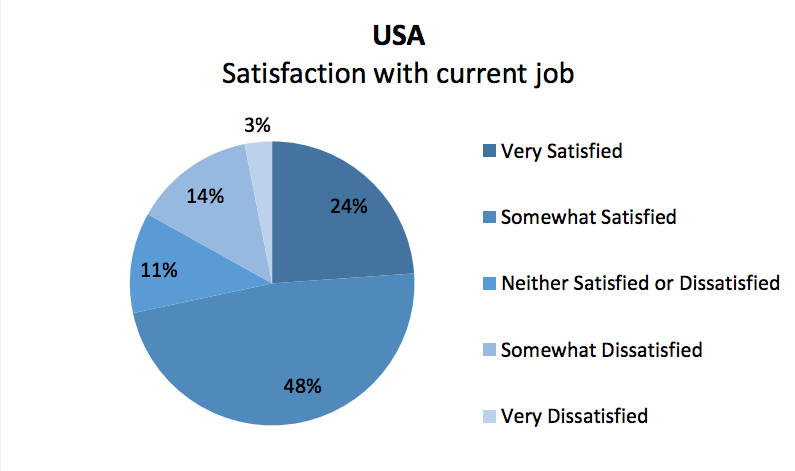
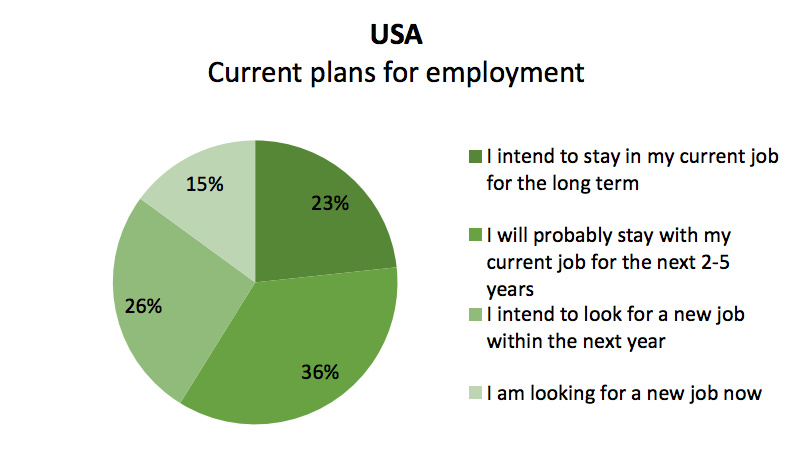
According to a recent survey of 3,300 employees across 14 countries by Dale Carnegie Training, 26% of U.S. employees say they will look for a new job within the next 12 months, and 15% are already actively looking for a new job. In total, more than 40% of all employees are at risk of leaving their job in the coming year.

Like this Article ?  Share It !    You now can easily enjoy/follow/share Today our Award Winning Articles/Blogs with Now Over 2.5 Million Growing  Participates Worldwide in our various Social Media formats below:

FSC LinkedIn Network: (Over 15K+ Members & Growing !)   www.linkedin.com/in/frankfsc/en

Facebook: (over 12K)   http://www.facebook.com/pages/First-Sun-Consulting-LLC-Outplacement-Services/213542315355343?sk=wall

  • Google+: (over 800K)https://plus.google.com/115673713231115398101/posts?hl=en
  • Twitter: Follow us @ firstsunllc

educate/collaborate/network….Look forward to your Participation !

Continue of article:

According to this study, a primary reason for leaving is poor management. Researchers found that an employee is nearly 10 times more likely to be very satisfied with their job when they are led by someone they feel is honest and trustworthy. Those who feel that their superiors do not exhibit such behaviors are four times more likely to be looking for a different job. This squares with results from a 2015 report by Weber Shandwick that found a chief executive’s reputation influences employees’ decisions to remain at their company.

The Dale Carnegie study revealed a wide variety of discrepancies between the leadership attributes they want to see in their supervisors and the characteristics they actually exhibit. For example, the study found that 84% of U.S. employees believe it’s important for supervisors and managers to admit mistakes, yet only 51% of U.S. workers say their employer or supervisor takes responsibility for their own actions.

Similarly, 85% of employees believe it’s important for managers to show sincere appreciation, yet less than half say their supervisors do so consistently. Expressing gratitude can be a powerful agent for retention while promoting well-being, according to a meta-analysis of several studies by Harvard Health. The researchers concluded, “Gratitude helps people feel more positive emotions, relish good experiences, improve their health, deal with adversity, and build strong relationships.”

Based on the study, authors suggest five strategies for employers and managers who want to retain some of those staff members that are currently looking for the exit sign.

1.ALLOW EMPLOYEES TO SAVE FACE IN DIFFICULT SITUATIONS

Sixty percent of U.S. respondents say that great bosses give employees who have made a mistake or feel embarrassed the chance to recover and do better moving forward.

2. ACKNOWLEDGE THEIR OWN MISTAKES BEFORE CRITICIZING EMPLOYEES

Sixty-eight percent of workers said they are motivated by supervisors who are bold enough to recognize their own shortcomings and don’t jump to criticize others.

3. RECOGNIZE IMPROVED PERFORMANCE

Seventy-two percent of respondents say this is one of the most important traits a manager can have.

4. GIVE PRAISE AND APPRECIATION

Seventy-four percent of respondents say great bosses praise and express appreciation for an employee’s work.

5. ENCOURAGE IMPROVEMENT

Nearly 80% of respondents say that inspiring leaders encourage and help employees improve.

It is important to note that despite the percentage of employees looking to quit, more U.S. employees are highly satisfied with their jobs than the average across the 14 countries examined in this study, which include Brazil, Canada, China, France, Germany, India, Indonesia, Japan, Mexico, Singapore, South Korea, Taiwan, and the U.K.

An average of 18% of employees across these countries indicated they were very satisfied with their jobs compared with 24% of Americans. Furthermore, while 41% of U.S. employees are looking for a new job or intend to within the next year, that number rises to 45% among international respondents.

Related: Take This Job And Shove It, Say The Majority Of Employees Who Quit

FastCompany.com | JARED LINDZON |  11.21.16 10:52 AM


https://www.firstsun.com/wp-content/uploads/2016/10/Man-at-Computer-sending-Email.jpg 720 1280 First Sun Team https://www.firstsun.com/wp-content/uploads/2018/05/logo-min-300x123.jpg First Sun Team2016-11-21 16:42:512020-09-30 20:49:56#Leadership : Why Nearly Half Of Workers Globally Could Leave Their Jobs In 2017…Managers can Help Retain their Staff by Applying these Five Strategies.

#BestofFSCBlog : 34 Things you Should Remove from your Résumé Immediately. A MUst Read!

November 21, 2016/in First Sun Blog/by First Sun Team

If you want to pass that test, you need to have some solid qualifications — and the perfect résumé to highlight them.

0218_land-interview-resume_650x4551-300x210 (1)

Here are 34 things you should strike from your résumé right now.

1. An objective

If you applied, it’s already obvious you want the job.

The exception: If you’re in a unique situation, such as changing industries completely, it may be useful to include a brief summary.

2. Irrelevant work experiences

Yes, you might have been the “king of making milkshakes” at the restaurant you worked for in high school. But unless you are planning on redeeming that title, it is time to get rid of all that clutter.

But as Alyssa Gelbard, career expert and founder of career-consulting firm Résumé Strategists, points out: Past work experience that might not appear to be directly relevant to the job at hand might show another dimension, depth, ability, or skill that actually is relevant or applicable.

Only include this experience if it really showcases additional skills that can translate to the position you’re applying for.

3. Personal details

Don’t include your marital status, religious preference, or Social Security number.

This might have been the standard in the past, but all of this information could lead to discrimination, which is illegal, so there’s no need to include it.


Like this Article ?  Share It !    You now can easily enjoy/follow/share Today our Award Winning Articles/Blogs with Now Over 2.5 Million Growing  Participates Worldwide in our various Social Media formats below:

FSC LinkedIn Network: (Over 15K+ Members & Growing !)   www.linkedin.com/in/frankfsc/en

Facebook: (over 12K)   http://www.facebook.com/pages/First-Sun-Consulting-LLC-Outplacement-Services/213542315355343?sk=wall

  • Google+: (over 800K)https://plus.google.com/115673713231115398101/posts?hl=en
  • Twitter: Follow us @ firstsunllc

educate/collaborate/network….Look forward to your Participation !

Continue of article:

4. Your full mailing address

A full street address is the first thing Amanda Augustine, a career-advice expert for TopResume, looks for to immediately cut from a résumé.

“Nobody needs to have that on their résumé anymore, and, to be quite honest, it’s a security concern,” she tells Business Insider.

5. More than one phone number

Augustine suggests only including one phone number on your résumé, and that number should really be your cell phone, so you can control who answers your incoming phone calls, when, and what the voicemail sounds like.

“Also, you don’t want employers trying to contact you in five different places, because then you have to keep track of that,” she says.

6. Your hobbies

In many cases, nobody cares.

If it’s not relevant to the job you’re applying for, it’s a waste of space and a waste of the company’s time.

Free- Man on Skateboard with Sign on Ground

7. Blatant lies

A CareerBuilder survey asked 2,000 hiring managers for memorable résumé mistakes, and blatant lies were a popular choice. One candidate claimed to be the former CEO of the company to which he was applying, another claimed to be a Nobel Prize winner, and one more claimed he attended a college that didn’t exist.

Rosemary Haefner, chief human-resources officer at CareerBuilder, says these lies may be “misguided attempts to compensate for lacking 10o% of the qualifications specified in the job posting.”

But Haefner says candidates should concentrate on the skills they can offer, rather than the skills they can’t offer.

“Hiring managers are more forgiving than job seekers may think,” Haefner explains. “About 42% of employers surveyed said they would consider a candidate who met only three out of five key qualifications for a specific role.”

8. Too much text

When you use a 0.5-inch margin and eight-point font in an effort to get everything to fit on one page, this is an “epic fail,” says J.T. O’Donnell, a career and workplace expert, founder of career-advice site Careerealism.com, and author of “Careerealism: The Smart Approach to a Satisfying Career.”

She recommends lots of white space and no more than a 0.8 margin.

Augustine agrees, warning particularly against dense blocks of text.

“Let’s be honest: You’re looking this over quickly, you’re glancing through it, your eyes glaze over when you get to a big, long paragraph,” she says.

9. Too many bullets

In the same vein, you can also overload your résumé with too many bullet points, which Augustine calls “death by bullets.”

“If absolutely everything is bulleted, it has the same effect as big dense blocks of text — your eyes just glaze over it,” she says.

Augustine explains that bullets are only to be used to draw attention to the most important information. “If you bullet everything, everything is important, which means really nothing stands out,” she says.

Free- Time Mans Watch

10. Time off

If you took time off to travel or raise a family, Gelbard doesn’t recommend including that information on your résumé. “In some countries, it is acceptable to include this information, especially travel, but it is not appropriate to include that in the body of a résumé in the US.”

11. Details that give away your age

If you don’t want to be discriminated against for a position because of your age, it’s time to remove your graduation date, says Catherine Jewell, author of “New Résumé, New Career.”

Another surprising way your résumé could give away your age: double spaces after a period.

12. References

If your employers want to speak to your references, they’ll ask you. Also, it’s better if you have a chance to tell your references ahead of time that a future employer might be calling.

If you write “references upon request” at the bottom of your résumé, you’re merely wasting a valuable line, career coach Eli Amdur says.

13. Inconsistent formatting

The format of your résumé is just as important as its content, Augustine says.

She says the best format is the format that will make it easiest for the hiring manager to scan your résumé and still be able to pick out your key qualifications and career goals.

Once you pick a format, stick with it. If you write the day, month, and year for one date, then use that same format throughout the rest of the résumé.

14. Personal pronouns

Your résumé shouldn’t include the words “I,” “me,” “she,” or “my,” says Tina Nicolai, executive career coach and founder of Resume Writers’ Ink.

“Don’t write your résumé in the third or first person. It’s understood that everything on your résumé is about you and your experiences.”

15. Present tense for a past job

Never describe past work experience using the present tense. Only your current job should be written in the present tense, Gelbard says.

16. A less-than-professional email address

If you still use an old email address, like BeerLover123@gmail.com or CuteChick4life@yahoo.com, it’s time to pick a new one.

It only takes a minute or two, and it’s free.

17. Any unnecessary, obvious words

Amdur says there is no reason to put the word “phone” in front of the actual number.

“It’s pretty silly. They know it’s your phone number.” The same rule applies to email.

18. Your current business-contact info

Amdur writes at NorthJersey.com:

This is not only dangerous; it’s stupid. Do you really want employers calling you at work? How are you going to handle that? Oh, and by the way, your current employer can monitor your emails and phone calls. So if you’re not in the mood to get fired, or potentially charged with theft of services (really), then leave the business info off.

19. Headers, footers, tables, images, or charts

These fancy embeddings will have hiring managers thinking, “Could you not?”

While a well-formatted header and footer may look professional, and some cool tables, images, or charts may boost your credibility, they also confuse the applicant-tracking systems that companies use nowadays, Augustine tells Business Insider.

The system will react by scrambling up your résumé and spitting out a poorly formatted one that may no longer include your header or charts. Even if you were an ideal candidate for the position, now the hiring manager has no way to contact you for an interview.

Free- Business Desk

20. Your boss’ name

Don’t include your boss’ name on your résumé unless you’re OK with your potential employer contacting him or her. Even then, Gelbard says the only reason your boss’ name should be on your résumé is if the person is someone noteworthy, and if it would be really impressive.

21. Company-specific jargon

“Companies often have their own internal names for things like customized software, technologies, and processes that are only known within that organization and not by those who work outside of it,” Gelbard says. “Be sure to exclude terms on your résumé that are known only to one specific organization.”

22. Social-media URLs that are not related to the targeted position

Links to your opinionated blogs, Pinterest page, or Instagram account have no business taking up prime résumé real estate. “Candidates who tend to think their personal social media sites are valuable are putting themselves at risk of landing in the ‘no’ pile,” Nicolai says.

“But you should list relevant URLs, such as your LinkedIn page or any others that are professional and directly related to the position you are trying to acquire,” she says.

23. More than 15 years of experience

When you start including jobs from before 2000, you start to lose the hiring manager’s interest.

Your most relevant experience should be from the past 15 years, so hiring managers only need to see that, Augustine says.

On the same note, never include dates on education and certifications that are older than 15 years.

24. Salary information

“Some people include past hourly rates for jobs they held in college,” Nicolai says. This information is completely unnecessary and may send the wrong message.

Amy Hoover, president of Talent Zoo, says you also shouldn’t address your desired salary in a résumé. “This document is intended to showcase your professional experience and skills. Salary comes later in the interview process.”

25. Outdated fonts

“Don’t use Times New Roman and serif fonts, as they’re outdated and old-fashioned,” Hoover says. “Use a standard, sans-serif font like Arial.”

Also, be aware of the font size, she says. Your goal should be to make it look nice and sleek — but also easy to read.

26. Fancy fonts

Curly tailed fonts are also a turn-off, according to O’Donnell. “People try to make their résumé look classier with a fancy font, but studies show they are harder to read and the recruiter absorbs less about you.”

27. Annoying buzzwords

CareerBuilder asked 2,201 US hiring managers: “What résumé terms are the biggest turnoffs?” They cited words and phrases such as, “best of breed,” “go-getter,” “think outside the box,” “synergy,” and “people pleaser.”

Terms employers do like to see on résumés include: “achieved,” “managed,” “resolved,” and “launched” — but only if they’re used in moderation.

Close-up of businessman preparing bomb in office

28. Reasons you left a company or position

Candidates often think, “If I explain why I left the position on my résumé, maybe my chances will improve.”

“Wrong,” Nicolai says. “Listing why you left is irrelevant on your résumé. It’s not the time or place to bring up transitions from one company to the next.”

Use your interview to address this.

29. Your GPA

Once you’re out of school, your grades aren’t so relevant.

If you’re a new college graduate and your GPA was a 3.8 or higher — it’s OK to leave it. But, if you’re more than three years out of school, or if your GPA was lower than a 3.8, ditch it.

30. A photo of yourself

This may become the norm at some point in the future, but it’s just weird — and tacky and distracting — to include a photo with your résumé for now.

31. An explanation of why you want the job

That’s what the cover letter and interviews are for!

Your résumé is not the place to start explaining why you’d be a great fit or why you want the job. Your skills and qualifications should be able to do that for you — and if they don’t, then your résumé is either in bad shape, or this isn’t the right job for you.

32. Opinions, not facts

Don’t try to sell yourself by using all sorts of subjective words to describe yourself, O’Donnell says. “I’m an excellent communicator” or “highly organized and motivated” are opinions of yourself and not necessarily the truth. “Recruiters want facts only. They’ll decide if you are those things after they meet you,” she says.

33. Generic explanations of accomplishments

Don’t just say you accomplished X, Y, or Z — show it by quantifying the facts.

For instance, instead of, “Grew revenues” try, “X project resulted in an Y% increase in revenues.”

34. Short-term employment

Avoid including a job on your résumé if you only held the position for a short period of time, Gelbard says. You should especially avoid including jobs you were let go from or didn’t like.

Vivian Giang and Natalie Walters contributed to earlier versions of this article.

Businessinsider.com | November 21, 2016 | Jacquelyn Smith and Rachel Gillett


https://www.firstsun.com/wp-content/uploads/2013/09/0218_land-interview-resume_650x4551-300x210-1.jpg 210 300 First Sun Team https://www.firstsun.com/wp-content/uploads/2018/05/logo-min-300x123.jpg First Sun Team2016-11-21 14:10:252020-10-14 16:04:57#BestofFSCBlog : 34 Things you Should Remove from your Résumé Immediately. A MUst Read!

#Leadership : 5 Ways to Keep Your Productivity High All Day…Ever Hear of the Ivy Lee Productivity Method? You’re About To.

November 20, 2016/in First Sun Blog/by First Sun Team

In 1918 Ivy Lee, a productivity consultant, counseled Charles Schwab, then the president of Bethlehem Steel, to adopt this plan for his employees. Schwab did just that, saw productivity soar and presented the consultant with a $25,000 check — a princely sum back in those days.

iron works steel and machine parts modern factory indoor hall

There are a few things we can actually control in our life; sadly, time isn’t one of them. But we can control how productively we use it. Certainly we need to: Most of us have been in situations where we wished there were “more hours in the day” to get things done.

Related: 4 Productivity Tips That Changed My Life This Year

However, a recent Stanford study throws water on that notion, suggesting that simply devoting more time to getting things done isn’t as helpful as it would seem.

The study revealed that productivity falls off dramatically after a 50-hour work week, and that those working 70 hours accomplish little more with those additional 20 hours. So, the issue isn’t about having more time to get things done, it’s about using the time you already have more wisely. Consider these five productivity hacks to optimize your daily hustle.

1. Start your morning right.

How you start your morning sets the tone for the entire day.

Waking up earlier and getting into full activity mode can help you get more done the entire day. You should also start your day on a positive note. While most people tend to focus on what they’ve not been able to accomplish the previous day, resetting your priorities and attacking the new day’s goals is key to making the best use of your time.

Keep the phone and emails aside and start with some mind-stimulating exercises such as lifting weights and doing yoga. The workouts will get your blood flowing  and pump you up for work, while yoga will help you clear your mind.

Related: The Secret to Increased Productivity: Taking Time Off


Like this Article ?  Share It !    You now can easily enjoy/follow/share Today our Award Winning Articles/Blogs with Now Over 2.5 Million Growing  Participates Worldwide in our various Social Media formats below:

FSC LinkedIn Network: (Over 15K+ Members & Growing !)   www.linkedin.com/in/frankfsc/en

Facebook: (over 12K)   http://www.facebook.com/pages/First-Sun-Consulting-LLC-Outplacement-Services/213542315355343?sk=wall

  • Google+: (over 800K)https://plus.google.com/115673713231115398101/posts?hl=en
  • Twitter: Follow us @ firstsunllc

educate/collaborate/network….Look forward to your Participation !

Continue of article:

2. Employ the Ivy Lee productivity method.

This an old productivity strategy recommends that you close each day by writing down a list of six important things you want to do the next day. Each task is listed according to its level of importance. The most important one comes first, the least important, last.

Your aim is not to clear your tasks as soon as possible but to focus only on completing the first task. Move on to the next task only once you’ve completed the first one. Do this until everything is done.

James Clear, productivity expert and author, explains in a blog post how in 1918 Ivy Lee, a productivity consultant, counseled Charles Schwab, then the president of Bethlehem Steel, to adopt this plan for his employees. Schwab did just that, saw productivity soar and presented the consultant with a $25,000 check — a princely sum back in those days.

3. Try polyphasic sleep.

According to research reported in the New York Times Magazine, sleep deprivation costs businesses in America more than $63 billion annually. While it’s in our nature to sleep only at nights — which for most people is insufficient — taking short naps or siestas during the day may be just what you need to keep your productivity high.

Polyphasic sleep is a sleep hack that aims to boost productivity by disrupting the normal straight seven-hour sleep (monophasic sleep). With polyphasic sleep, you sleep only 30 minutes every six hours. This approach gives you roughly five hours’ extra sleep in a day, while your body still gets the rewards of a normal six-to-seven-hour sleep.

4. Always wear a cheerful outlook.

Our productivity seems to be connected to our mood. That statement seems obvious, but now there’s proof: A University of Warwick study found that happy employees work harder. The study established that by working alongside cheerful people, employees studied were 12 percent more productive.

If you yourself aim to see increased productivity at your business, stick with employees who are cheerful and happy and stay away from those who tend to share negative stuff. You can also contribute to the productivity levels of others by staying happy yourself — which is great for everybody.

5. Drink coffee.

Hey, all you java fans, multiple studies show that drinking coffee can boost our productivity levels. Jeff Bickley, founder of Gayo Kopi, an exclusive coffee brand, validates this in a chat.

“Coffee can play a powerful role in boosting our productivity,” he says. “Throughout the day, a compound known as adenosine is produced, as neurons in the brain are fired. We end up feeling tired and worn down as a result of its  continuous production.

Coffee helps combat this by impersonating the A1 receptor, which helps block adenosine.”

Related: 7 Healthy Habits That Maximize Your Productivity Every Day

So bring on that mocha latte.


Entrepreneur.com | November 20, 2016  | Ayodeji Onibalusi

https://www.firstsun.com/wp-content/uploads/2016/04/free-Gears-on-Machine.jpg 538 800 First Sun Team https://www.firstsun.com/wp-content/uploads/2018/05/logo-min-300x123.jpg First Sun Team2016-11-20 16:20:132020-09-30 20:49:58#Leadership : 5 Ways to Keep Your Productivity High All Day…Ever Hear of the Ivy Lee Productivity Method? You’re About To.

#Leadership : From Cold Emails That Work To Finding Your Purpose: This Week’s Top Leadership Stories…This Week’s Top Stories May Get you to ReThink the Much-Reviled Cold Email and Ask the Right Questions to Find your Company’s Purpose.

November 19, 2016/in First Sun Blog/by First Sun Team
This week we learned why cold emailing may not be as useless as many believe, how a condiment company used its own history as the starting point for writing a mission statement, and why one Thiel Fellow is washing his hands of the Trump ally’s organization.

These were the stories you loved in Leadership for the week of November 14:

1. SIR KENSINGTON’S: THREE QUESTIONS FOR FINDING YOUR PURPOSE

Can this condiment company help your business find its mission? Maybe. Sir Kensington’s, which makes ketchups, mustards, and more, didn’t just pluck its corporate “purpose” out of the sky or have a CSR officer draft a memo. It looked back on what had actually led to the company’s success. These simple questions can lead to the type of self-examination to help you do the same.

Like this Article ?  Share It !    You now can easily enjoy/follow/share Today our Award Winning Articles/Blogs with Now Over 2.5 Million Growing  Participates Worldwide in our various Social Media formats below:

FSC LinkedIn Network: (Over 15K+ Members & Growing !)   www.linkedin.com/in/frankfsc/en

Facebook: (over 12K)   http://www.facebook.com/pages/First-Sun-Consulting-LLC-Outplacement-Services/213542315355343?sk=wall

  • Google+: (over 800K)https://plus.google.com/115673713231115398101/posts?hl=en
  • Twitter: Follow us @ firstsunllc

educate/collaborate/network….Look forward to your Participation !

Continue of article:

2. MENTORSHIP AND THE ART OF THE COLD EMAIL

“I’m all about cold emailing,” says Jennifer Fitzgerald, CEO and cofounder of PolicyGenius. That may be surprising for some to hear, but it’s helped Fitzgerald secure some of her most prized mentors. She isn’t alone. Here’s what fellow startup founders have discovered about putting a widely reviled networking method to good use.

3. FORMER FELLOW TO PETER THIEL: YOU CAN HAVE YOUR MONEY BACK

The Thiel Fellowship awards $100,000 grants to students under 22 years old to drop out of school and pursue an innovative project. But since the program’s billionaire benefactor Peter Thiel is a high-profile Trump supporter and now part of the president-elect’s transition team, one fellow says he’s had enough. This week, Cosmo Scharf explained why he cut ties.

4. FOUR EMAIL SUBJECT LINES THAT MAKE EVERYONE HATE YOU

Your simple follow-up email may seem harmless enough, but on the other end, somebody is staring at their inbox and grinding their teeth. This week we learned why certain email subject lines are likely to backfire, leaving others feeling more aggravated than interested in helping you.

5. THIS PROJECT MANAGER’S WORKFLOW HACK TRANSFORMED HOW GE BUILDS AIRPLANE ENGINES

One Air Force veteran who now works with GE Aviation says his military experience taught him to spot problems that impact others and take action quickly. That training came in handy when Paul Thienprayoon saw how badly his team’s inventory system was slowing down the assembly and repair of GE-made airplane engines. Here’s how he took a simple Excel sheet and turned it into a software tool that streamlined the Aviation division’s workflow.


FastCompany.com | FAST COMPANY STAFF  | 11.18.16 5:00 AM

https://www.firstsun.com/wp-content/uploads/2016/11/meeting-a-small-group.jpg 1080 1920 First Sun Team https://www.firstsun.com/wp-content/uploads/2018/05/logo-min-300x123.jpg First Sun Team2016-11-19 16:44:592020-09-30 20:49:59#Leadership : From Cold Emails That Work To Finding Your Purpose: This Week’s Top Leadership Stories…This Week’s Top Stories May Get you to ReThink the Much-Reviled Cold Email and Ask the Right Questions to Find your Company’s Purpose.

#Leadership : 14 Scientific Reasons to Disconnect Over the Weekend (Infographic)…Start Enjoying your Weekends.

November 19, 2016/in First Sun Blog/by First Sun Team

Work hard, play hard. We’ve all heard that expression — and it does hold some truth. If you find yourself burnt out and stressed over the weekend, it’s time to reassess how you approach your work-life balance.

free- man at bench in desert

Related: 5 Ways Weekends Can Boost Your Productivity Monday Through Friday

Taking time off is healthy — and even though many of us can’t swing a weeklong vacation to de-stress, we can at least take advantage of our Saturdays and Sundays. Disconnecting from work over the weekend has a number of benefits — increased productivity, job satisfaction, performance and creativity.

So sit back and relax. Here are 14 way scientific reasons why you should disconnect over the weekend, compiled in an infographic by Net Credit.


Entrepreneur.com | November 19, 2016 | Rose Leadem

https://www.firstsun.com/wp-content/uploads/2016/07/free-man-at-bench-in-desert.jpeg 350 525 First Sun Team https://www.firstsun.com/wp-content/uploads/2018/05/logo-min-300x123.jpg First Sun Team2016-11-19 14:06:292020-09-30 20:50:00#Leadership : 14 Scientific Reasons to Disconnect Over the Weekend (Infographic)…Start Enjoying your Weekends.
Page 145 of 235«‹143144145146147›»

Blog Search

Login/Register

  • Log in
  • Entries feed
  • Comments feed
  • WordPress.org

FSC Career Videos

  • Job Search Techniques | Start Here
  • Resume/Cover Letter
  • Interviewing
  • Additional Career Videos
  • FSC Career Blog – #1 Career Library LinkedIn

Recent Posts

  • #Resume : How To Start A Resume To Secure Interviews For $100,000+ Jobs. A MUst REad! March 12, 2026
  • #JobOpenings : 3 Fully Remote Jobs Just Doubled Hiring And Pay Up To $100,000+. Curious About Which Roles have Doubled in Remote Hiring?  Great Read! March 10, 2026
  • #YourCareer : AI Won’t Decide Your Career. Your Habits Will. Four AI Practices Worth Considering Now! MUst REad! February 24, 2026
© Copyright - First Sun Consultation - Website Maintained by BsnTech Networks - Enfold WordPress Theme by Kriesi
Scroll to top